Table of Contents >> Show >> Hide
- What the Black Long Scoop Actually Is
- The Brand Behind the Scoop
- Why the Design Works So Well
- More Than a Pantry Tool
- How It Fits Into Everyday Use
- Care, Maintenance, and Longevity
- Who This Scoop Is Really For
- Is Blackcreek Mercantile & Trading Co.'s Black Long Scoop Worth the Attention?
- Everyday Experiences With the Black Long Scoop
- Final Thoughts
Some kitchen tools exist to solve a problem. Others exist to make you feel slightly more civilized while solving it. Blackcreek Mercantile & Trading Co.’s Black Long Scoop manages to do both, which is honestly a little rude to every flimsy plastic scoop hiding in pantry bins across America.
This hand-carved wooden scoop stands out because it is not trying to look like a gadget. It looks more like a small sculpture that happened to pick up a side hustle in the kitchen. That is exactly why it has become such a compelling object in the design world. Created by Blackcreek Mercantile & Trading Co., the Kingston, New York studio founded by Joshua Vogel, the Black Long Scoop sits at the intersection of utility, craftsmanship, and quiet drama. It is a humble tool, yes, but it also makes a strong argument that even ordinary tasks like scooping rice or filling a canister deserve a little beauty.
In a market full of mass-produced utensils, the Black Long Scoop feels refreshingly intentional. It is part of a design language that values handmade work, honest materials, and pieces that grow more interesting the more you live with them. That makes it worth discussing not just as a product, but as a small example of why thoughtful objects still matter in modern homes.
What the Black Long Scoop Actually Is
At its core, the Black Long Scoop is a hand-carved wooden kitchen tool made in the United States. Published product details have described it as part of a limited edition of sculptural kitchen tools, crafted from a solid piece of wood, finished in black, and sized at approximately 14 inches long by 2.5 inches wide. Those dimensions matter. This is not a tiny seasoning spoon, nor is it an oversized farm-style showpiece that hogs your countertop like it pays rent. It is long, lean, and practical enough to reach into deep containers while still looking refined.
The phrase “sculptural kitchen tool” can sound suspiciously like something invented by a marketing team after one too many espressos. Here, though, it fits. The scoop was conceived as a freeform, functional object, which explains why it feels more expressive than a standard pantry utensil. Its job is simple: move dry goods from one place to another. But the way it is shaped gives that job more grace than you would expect from an everyday implement.
That balance between usefulness and artistic presence is central to the appeal. The Black Long Scoop is sturdy enough to work, elegant enough to display, and distinctive enough to make guests ask, “What is that?” in a tone that suggests they suddenly feel under-accessorized.
The Brand Behind the Scoop
Joshua Vogel’s Handmade Philosophy
To understand the Black Long Scoop, it helps to understand the worldview behind it. Blackcreek Mercantile & Trading Co. was created by Joshua Vogel after years in the furniture and interiors world. The company’s stated focus has long been small-scale product design, handmade production, and a reconnection to the craft of making. That background matters because the scoop is not an isolated novelty. It belongs to a larger body of work shaped by the same values: utility, material honesty, and a belief that handmade objects can feel intimate without being precious.
Vogel is also the author of The Artful Wooden Spoon, a book that helped introduce more people to his approach to carved wooden kitchen tools. That connection is important. He is not a designer dabbling in kitchenware for trend value. He is someone whose reputation has been built in part around turning wood into objects that are both tactile and deeply considered.
Made in Kingston, New York
Blackcreek Mercantile & Trading Co. has been closely associated with Kingston, New York, where its studio work has been described as careful, hands-on, and materially driven. The company’s philosophy emphasizes enduring, beautiful, functional objects made with care. That wording may sound lofty, but in practice it means the brand has spent years resisting disposable design. Instead of chasing novelty for novelty’s sake, it leans into pieces that feel grounded, substantial, and meant to stay in your life for a long time.
That is part of what gives the Black Long Scoop credibility. It is not pretending to be handmade. It comes from a brand whose identity is built on exactly that kind of work.
Why the Design Works So Well
Long Proportions, Better Reach
The long silhouette is more than a style move. In practical terms, a longer scoop is helpful when you are reaching into deeper jars, bags, or pantry bins. It keeps your hand farther from the ingredients, which is useful for flour, grains, sugar, coffee, beans, and other dry goods that have an annoying habit of settling into corners. The length also gives the piece a cleaner visual line. It looks elegant even at rest, which is not something you can usually say about a scoop unless you have very strong feelings about restaurant supply stores.
A Shape That Feels Carved, Not Engineered
One reason this scoop feels special is that it does not look stamped, molded, or overly standardized. It looks carved. That may seem obvious, but it changes the emotional experience of using it. Manufactured tools often prioritize perfect repetition. Handmade tools allow for small irregularities, softened edges, and proportions that feel more alive. In the Black Long Scoop, that quality makes the piece feel closer to an object you discover than an object you merely buy.
The Black Finish Adds Drama Without Noise
Color plays a surprisingly large role here. Wooden utensils often come in pale honey or medium brown tones, which are lovely but familiar. The black finish gives this scoop a sharper graphic presence. It feels a bit moodier, a bit more architectural, and far less country-cottage than the average wooden kitchen tool. That makes it especially attractive in minimalist kitchens, darker interiors, or spaces where every visible object has to earn its keep aesthetically.
At the same time, black keeps the scoop versatile. It can sit next to stoneware, brass, linen, steel, marble, or natural wood without throwing a tantrum.
More Than a Pantry Tool
The most interesting thing about the Black Long Scoop is that it resists being reduced to one job. Yes, it is excellent for pantry work. But it also belongs to a tradition of kitchen tools that blur the line between utility and display. Design coverage of Blackcreek Mercantile has repeatedly framed Vogel’s work as both functional and sculptural, and that description holds up here.
Leave this scoop in a crock on an open shelf, and it reads as decor. Hang it near a cutting board, and it looks like a studio piece. Use it daily, and it begins to take on the quiet authority of a favorite tool. That flexibility is hard to fake. Plenty of products are decorative but annoying to use. Plenty are useful but visually forgettable. The Black Long Scoop avoids both traps.
It also taps into a larger shift in how people think about kitchens. The modern kitchen is not just a workspace anymore. It is often part showroom, part gathering spot, part ritual center. Objects in that space have to do more than function. They have to contribute to the atmosphere. This scoop understands the assignment.
How It Fits Into Everyday Use
In a real home, the Black Long Scoop works best for dry, loose ingredients and daily pantry rituals. Think rice, oats, lentils, flour, sugar, cornmeal, coffee beans, or even dog treats if your pet has excellent taste in design. The elongated form makes it easy to reach into taller canisters, and the carved bowl gives it a satisfying sense of volume without making it bulky.
It is also the kind of tool that encourages better habits. You are more likely to decant ingredients into jars when you have a scoop worthy of the job. You are more likely to keep your pantry looking orderly when the objects inside it feel intentional. This may sound ridiculous, but beautiful tools do influence behavior. A good scoop does not just move ingredients. It can make the entire act of cooking feel a little more deliberate.
That is one reason design-minded cooks are drawn to pieces like this. They bring a slower, more tactile rhythm to the kitchen. Instead of tearing open a bag of rice and making a dusty mess that looks like a tiny grain tornado hit the counter, you start reaching for a tool that makes the process cleaner and more enjoyable.
Care, Maintenance, and Longevity
Published product guidance for the scoop has advised washing it with soap and hot water before initial use and after each use. That is a solid starting point. More broadly, reputable kitchen care guidance for wooden utensils agrees on a few basics: hand-wash them, avoid soaking them for long periods, skip the dishwasher, and let them dry thoroughly before putting them away.
Wooden utensils also benefit from occasional conditioning with a food-safe oil or balm. Mineral oil and board conditioners are common options. This is less about fussing over the scoop like it is a museum artifact and more about preserving the wood so it does not dry out, roughen, or crack prematurely. In other words, a little maintenance goes a long way.
The payoff is durability. Good wooden tools age differently from cheap plastic or low-quality composites. They develop character. They soften visually. They start to feel like part of the kitchen instead of temporary equipment. That aging process is a major part of the appeal of Blackcreek Mercantile’s work in general. These are not objects designed to look factory-fresh forever. They are designed to live with you.
Who This Scoop Is Really For
The Black Long Scoop is not for everyone, and that is perfectly fine. If your top priority is grabbing the cheapest possible scoop and forgetting about it forever, this piece is probably not your soulmate. But if you care about craftsmanship, enjoy tactile materials, appreciate understated design, and want your kitchen tools to feel thoughtful rather than disposable, it makes a strong case for itself.
It is especially appealing for people who treat the kitchen as a lived-in design space. It suits homeowners who decant pantry staples into glass jars, cooks who enjoy the ritual of prep, and gift-givers who want something more memorable than another generic kitchen set. It also makes sense for collectors of handmade objects who want pieces they can actually use instead of merely dusting around them once a week.
Perhaps the simplest way to say it is this: the Black Long Scoop is for people who understand that daily life is made of small actions, and those small actions can be improved by better tools.
Is Blackcreek Mercantile & Trading Co.’s Black Long Scoop Worth the Attention?
Yes, because it represents something larger than itself. It is not just a scoop. It is a compact example of what happens when a designer takes ordinary utility seriously. The Black Long Scoop reflects the values that have made Blackcreek Mercantile & Trading Co. so admired in design circles: handmade production, strong material presence, sculptural restraint, and a refusal to separate beauty from use.
In practical terms, it is a handsome, functional wooden scoop with generous reach, strong visual identity, and meaningful handmade appeal. In cultural terms, it speaks to the enduring desire for objects that feel personal, tactile, and rooted in real craft. That combination is rare enough to matter.
So no, this is not merely a fancy scoop for people who alphabetize their spice jars. It is a kitchen tool with point of view. And frankly, the world could use more of those.
Everyday Experiences With the Black Long Scoop
Living with a tool like the Black Long Scoop is less about dramatic transformation and more about the accumulation of small satisfactions. That may not sound thrilling in an age of app-connected appliances and aggressively smart refrigerators, but there is something deeply refreshing about an object that asks only to be held, used, washed, and used again. No charger. No settings. No mysterious blinking light. Just wood, form, and purpose.
The first experience most people notice is tactile. A handmade scoop feels different in the hand than a mass-produced one. There is usually a softness to the edges, a weight that feels deliberate, and a sense that the object was shaped rather than merely manufactured. That tactile quality changes how you interact with it. You do not grab it absentmindedly the way you would a random plastic scoop from the back of a drawer. You pick it up with a little more attention, and oddly enough, that attention makes the entire kitchen moment feel calmer.
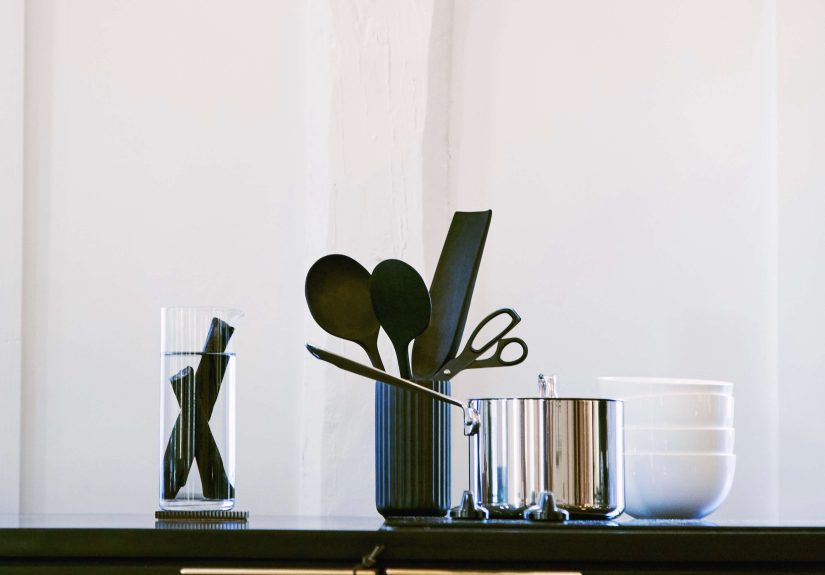
Then there is the visual experience. The black finish gives the scoop a quiet authority. Against pale flour, white sugar, or tan oats, it creates a striking contrast. In a pantry canister, it looks composed. On an open shelf, it looks intentional. In a utensil jar, it does not disappear into the usual jumble of whisks, spatulas, and wooden spoons. It holds its own. That matters more than it sounds, because kitchens are now some of the most photographed, shared, and stylistically considered rooms in the home.
There is also a ritual element. A beautiful scoop encourages repetitive tasks to feel less mechanical. Filling a jar with rice, measuring coffee beans, or portioning dry ingredients for baking can become less of a chore and more of a rhythm. The scoop’s length and shape invite a smooth motion: dip, lift, pour, repeat. It is the kind of movement that feels almost meditative when the kitchen is quiet and the morning has not fully started making demands yet.
Over time, the experience becomes emotional as well as practical. Handmade kitchen tools often develop a subtle companionship with their owners. That may sound wildly sentimental for a scoop, but anyone who has a favorite knife, mug, or cutting board already understands the phenomenon. Familiar tools anchor routines. They create continuity. They make the kitchen feel like yours rather than like a collection of random equipment gathered during sales and impulse purchases.
The Black Long Scoop also offers a different kind of experience for guests. It is a conversation piece, but not in a loud, trying-too-hard way. It is the sort of object someone notices while you are making coffee or scooping flour for pancakes. They ask about it because it looks unusual, and suddenly you are talking about handmade work, American craftsmanship, or why some objects feel better simply because a person, not a machine, gave them their final form. Not bad for something whose official job description is basically “moves oats around.”
Ultimately, the lived experience of this scoop is about presence. It turns a minor kitchen task into a slightly more tactile, beautiful, and grounded moment. That is not a miracle. It is just good design. And in daily life, good design tends to matter exactly where people underestimate it most: in the small things we touch all the time.
Final Thoughts
Blackcreek Mercantile & Trading Co.’s Black Long Scoop succeeds because it never treats usefulness and beauty as opposing forces. It proves that even a simple scoop can reflect discipline, material intelligence, and strong artistic judgment. For people who value handmade objects and want their kitchens to feel both functional and deeply considered, this piece earns its place.
In the end, the Black Long Scoop is not trying to reinvent the kitchen. It is doing something smarter. It is reminding us that everyday tools can still have soul.