Table of Contents >> Show >> Hide
If you’ve ever stared at your analytics dashboard and wondered, “Where on earth do all these users go?”,
you’re ready for a product funnel. Think of it as Google Maps for your customer journey: it shows where
people discover you, where they stall, where they leave, and what finally turns them into loyal, paying
fans. In this guide, we’ll break down what a product funnel is, how it differs from marketing and sales
funnels, and how to build one step by stepwithout needing a PhD in data science.
What Is a Product Funnel?
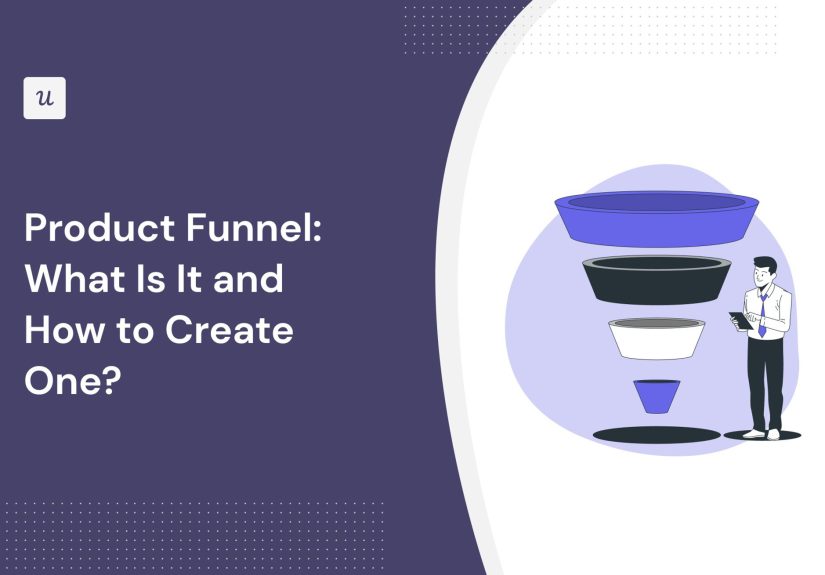
A product funnel is a framework that maps the entire journey a user takes with your
productfrom first discovering it to becoming a repeat customer and enthusiastic advocate. While a
marketing funnel focuses on bringing people in and a sales funnel focuses on closing deals, a product
funnel zooms in on what happens inside the product itself.
In simple terms, your product funnel answers questions like:
- How do people find and first experience the product?
- What convinces them to stick around after sign-up?
- Which behaviors predict whether they’ll become power users?
- Where do they drop off, churn, or get stuck?
Instead of just tracking clicks on ads or open rates on emails, a product funnel uses in-app behaviors:
account creation, onboarding completion, key feature usage, upgrades, renewals, referrals, and so on.
That’s why it’s especially beloved in SaaS, apps, e-commerce, and any business where the product is used
multiple times, not just bought once and forgotten.
Product Funnel vs. Marketing and Sales Funnels
Product, marketing, and sales funnels are like three siblings in the same business familythey bicker,
overlap, and yet can’t function well without each other.
Marketing Funnel
A marketing funnel is mainly about getting attention and interest. It covers stages like:
awareness, interest, and consideration. It lives mostly outside your product: ads, social media, SEO,
content marketing, webinars, lead magnets, and email nurturing.
Sales Funnel
A sales funnel picks things up when a prospect is warm enough to talk about money. It
includes activities like demos, calls, proposals, negotiations, and closing. It’s common in B2B, high-ticket
services, and enterprise SaaS.
Product Funnel
The product funnel focuses on the user’s in-product journey and experience. It starts
when they sign up, install your app, or create an account, and continues as they:
- Activate (experience the “aha!” moment)
- Adopt your core features
- Keep coming back (retention)
- Upgrade, add seats, or buy more (expansion)
- Recommend you to others (advocacy)
In many modern businesses, all three funnels should be connected. Marketing brings in qualified visitors,
sales converts them in complex or high-value deals, and the product funnel ensures they get ongoing value
so they stay, pay, and refer.
Key Stages of a Product Funnel
Different companies label these stages in different ways, but most effective product funnels share five
core stages.
1. Discovery
This is the “I just heard about you” moment. Users may arrive from a blog post, app store search, social
media, word of mouth, or an invite from a friend. In the product funnel, we’re interested in the
point where curiosity turns into a concrete action like visiting your site, clicking “Sign up,” or
installing your app.
Example: A user sees a TikTok video about your habit-tracking app, clicks the link, lands
on your site, and hits the “Get Started Free” button.
2. Activation
Activation is where users first experience real valuethe famous “aha!” moment. It’s not just signing up;
it’s doing the key thing that shows them the product is worth their time.
Examples:
- A project management tool: creating the first project and adding tasks.
- An email service: sending the first campaign.
- A budgeting app: linking a bank account and seeing categorized spending.
Your goal here is to reduce friction, remove distractions, and guide users to that aha moment as fast and
as clearly as possible.
3. Adoption
Adoption is about habit. A user has activated once; now you want them to repeatedly use your main features.
They start exploring deeper functionality, integrating your product into their daily or weekly workflows.
This is where onboarding checklists, tooltips, templates, and contextual tips shine. You’re helping users
move from “I see the value” to “I rely on this.”
4. Retention
Retention is the less glamorous but utterly crucial stage. If users stop coming back, your funnel turns
into a leaky bucket. Retention looks like consistent logins, repeat purchases, or steady usage over time.
Typical retention tactics include well-timed email nudges, in-app notifications, rewards, loyalty programs,
and improving UX based on customer feedback and behavior analysis.
5. Expansion and Advocacy
Once users are happy and engaged, you can unlock the final stage: expansion and advocacy.
- Expansion: upsells, cross-sells, seat upgrades, add-ons, premium tiers.
- Advocacy: referrals, reviews, testimonial videos, sharing on social media.
At this stage, users aren’t just buying; they’re helping you sell. That’s when your product funnel starts
to compound like interest.
How to Create a Product Funnel Step by Step
Building a product funnel doesn’t require a fancy MBA. It does require clarity, data, and a willingness to
iterate. Here’s a practical process you can follow.
Step 1: Define Your Ideal Customer and Core Value
Before mapping funnels, map people. Who are you building for, and what problem are you solving?
Ask questions like:
- Who gets the most value from our product today?
- What painful problem are they trying to fix?
- What is the “job” they hire our product to do?
Translate this into a clear core value proposition. When you know exactly what “success” looks like for
users, you can design funnel stages that lead them there.
Step 2: Map the Customer Journey
Grab a whiteboard, digital canvas, or a pile of sticky notes. Map the typical steps a customer takes from
discovering you for the first time to being a loyal fan.
For each step, note:
- What the user is trying to achieve
- What they feel (excited, skeptical, confused, overwhelmed)
- What touchpoints they interact with (ads, landing pages, in-app screens, support)
This journey map becomes the skeleton of your product funnel. The funnel is simply that journey quantified
and optimized.
Step 3: Define Funnel Stages and Key Events
Now, assign concrete product events to each funnel stage. You don’t want vague stages like “interested”
without a measurable action tied to them.
For a SaaS product, your funnel might look like:
- Discovery: Signed up for a trial
- Activation: Completed onboarding checklist and used a key feature
- Adoption: Logged in 3 times in the first week and created at least 3 projects
- Retention: Active weekly for 3 consecutive months
- Expansion: Upgraded from basic to pro, invited additional team members
Pick a small number of meaningful events, not 50 micro-events that nobody will remember or monitor.
Step 4: Instrument Your Product Analytics
Once you know what events matter, you need to track them. This usually means setting up a product analytics
tool and instrumenting key actions: sign-ups, logins, feature usage, upgrades, cancellations, and so on.
The goal is to see, in real numbers, how many users move from one stage to the next. You’ll start noticing
patterns like:
- “40% of sign-ups never complete onboarding.”
- “Users who invite a teammate are 2x more likely to upgrade.”
- “Mobile users activate faster than desktop users.”
These patterns are gold. They tell you where to focus your experiments.
Step 5: Design Experiences and Offers for Each Stage
A funnel isn’t just a diagram; it’s a set of deliberate experiences. For each stage, ask: “What can we do
here to nudge users forward?”
Discovery stage ideas:
- Clear, benefit-led landing pages
- Simple pricing overview and risk-free trials
- Social proof: reviews, case studies, testimonials
Activation stage ideas:
- Guided onboarding flows
- Checklists that celebrate small wins
- Interactive tours, templates, or starter projects
Adoption and retention stage ideas:
- Contextual tips that surface relevant features at the right time
- Lifecycle emails highlighting underused features
- In-app messages triggered by inactivity or milestones
Expansion and advocacy stage ideas:
- Usage-based upgrade prompts (“You’re about to hit your limit, here’s a better plan.”)
- Referral programs with mutual rewards
- VIP features, beta access, or early-bird discounts for loyal users
Step 6: Set Metrics and Benchmarks
You can’t improve what you don’t measure, and you definitely can’t brag about it to your team. For each
funnel stage, define a primary metric:
- Discovery → Trial sign-up rate, app installs
- Activation → Percentage of new users hitting the key activation event
- Adoption → Weekly or monthly active users (WAU/MAU)
- Retention → Churn rate, customer lifetime value (LTV)
- Expansion → Average revenue per user (ARPU), upgrade rate, expansion MRR
You don’t need perfect numbers on day one. Start with baselines, then improve stage by stage.
Step 7: Experiment, Learn, and Iterate
A product funnel is never “done.” As your product changes, your market shifts, and your users evolve, so
does the funnel. Treat it as a living system.
Run experiments like:
- A/B testing different onboarding flows
- Changing CTAs on your landing pages
- Adding tooltips to a confusing feature
- Introducing new upgrade prompts or referral incentives
Track the impact of each experiment on your funnel metrics. Keep what works, discard what doesn’t, and
don’t take it personally when the “genius” idea flopsit happens to everyone.
Product Funnel Examples
Example 1: SaaS Collaboration Tool
Imagine a team collaboration app that wants small businesses as its core customers.
- Discovery: User reads a blog post about remote teamwork and clicks a “Try it Free” CTA.
- Activation: They create a workspace, invite one teammate, and send their first message.
- Adoption: The team starts using channels, file sharing, and integrations several times per week.
- Retention: The app becomes the team’s main communication hub.
- Expansion: The company grows, adds more users, and upgrades to a paid plan.
The product team would focus on features and nudges that encourage inviting teammates early, because that
behavior might correlate strongly with long-term retention and upgrades.
Example 2: E-commerce Store
For an online store selling eco-friendly skincare:
- Discovery: Customer finds the brand through an Instagram reel.
- Activation: They add a product to their cart and complete their first purchase.
- Adoption: They sign up for a subscription for monthly refills.
- Retention: They continue to receive and use products, leaving positive reviews.
- Expansion: They add complementary products and refer a friend via a referral program.
Here, the product funnel includes the on-site experience (product detail pages, checkout flow) and the
post-purchase experience (emails, packaging, subscription management).
Example 3: Online Course Creator
An educator selling a premium course on productivity might design a funnel where:
- Discovery: Viewers watch a free mini-class on YouTube.
- Activation: They enroll in a free starter module and complete the first lesson.
- Adoption: They complete at least 40% of the course and join the community.
- Retention: They keep engaging in live Q&A sessions and community events.
- Expansion: They purchase advanced courses or coaching packages.
The key product funnel metrics here might include lesson completion rates, community engagement, and
upsell conversions.
Common Product Funnel Mistakes to Avoid
1. Treating All Users the Same
Not all users have the same goals or level of experience. If you show advanced tooltips to beginners or
beginner tutorials to power users, both will be annoyed. Segment by behavior and tailor the experience.
2. Tracking Everything but Learning Nothing
It’s tempting to track every click, scroll, and hover. But more data is not the same as more insight. Focus
on a handful of meaningful metrics for each stage and act on them.
3. Ignoring Post-Purchase or Post-Sign-Up Experience
Many teams pour energy into the top of the funnel and neglect the rest. But the real magic happens after a
user signs up or buys. That’s where retention, expansion, and word-of-mouth live.
4. Building the Funnel Once and Never Updating It
Markets change, features ship, user expectations evolve. If your funnel diagram still mentions features
you retired two years ago, it’s time for a refresh.
Real-World Lessons from Building Product Funnels
Theory is nice, but product funnels really start to make sense when you’ve watched real users getting stuck
in real places. Here are some practical lessons and “wish I’d known that earlier” moments that often show up
when teams design, launch, and refine their product funnels.
Lesson 1: Your “Aha!” Moment Is Not What You Think
Many teams assume activation happens when a user completes something big: a full profile, a long form, or
a complete workflow. In reality, activation is often much smaller and faster. Maybe the true aha moment is
when a user sees their first report, gets their first notification, or successfully performs one simple,
satisfying action.
A common experience is discovering that users who perform one tiny actionlike inviting a teammate, adding
a second task, or saving a presethave dramatically higher retention. Once you uncover that pattern, you
can redesign onboarding to push more users toward that specific action within minutes of sign-up.
Lesson 2: Friction Isn’t Always the Enemy
The internet loves to shout “reduce friction!” at every problem, but not all friction is bad. Sometimes a
little intentional friction filters out low-intent users and improves your funnel quality. For example,
adding a short qualification question can reduce spam sign-ups and make your sales or success teams more
effective.
The real trick is to decide where friction belongs. Friction in payment forms or basic navigation is
terrible. But small, thoughtful friction in pricing discussions, advanced feature access, or certain
upgrade flows can attract users who are genuinely invested, not just casually browsing.
Lesson 3: Your Funnel Lives Beyond the Product Screens
It’s easy to stare only at in-app behavior and forget everything else. But emails, help docs, community
spaces, and even customer support are all part of the product funnel. A user doesn’t care which team owns
which channel; they just experience “your product.”
Teams that share funnel metrics across marketing, product, support, and sales usually learn faster.
Everyone sees where users drop off and can coordinate fixes. Maybe the activation issue isn’t the UI
maybe it’s that people misunderstood the promise in the ad or never opened the follow-up email.
Lesson 4: Small, Boring Fixes Can Move Big Numbers
When people imagine “funnel optimization,” they picture radical redesigns and flashy new features. In
practice, many of the highest-impact changes are unglamorous:
- Renaming a confusing button
- Shortening a form from eight fields to four
- Reordering onboarding steps so value appears earlier
- Adding a simple empty state that explains what to do next
Teams often report that these small tweaks move key metricslike activation or retentionfar more than big,
risky overhauls. The funnel rewards consistent, incremental improvements.
Lesson 5: The Best Funnels Are Built with Users, Not Just for Them
Surveys, interviews, support conversations, and user testing sessions are some of the most underrated
funnel tools. Data tells you where people drop off; talking to users tells you why.
Combining both is where the magic happens.
Product teams that regularly watch users interact with onboarding, pricing pages, or core features often
gain insights they never would’ve guessed from dashboards alone. The end result is a funnel that feels less
like a manipulative trick and more like a helpful path that users genuinely appreciate.
The ultimate experience of working with product funnels is realizing they’re not just about squeezing extra
dollars from a spreadsheet. They’re about designing a journey where users feel guided, supported, and
successful at every step. When you get that right, revenue growth is not just higherit’s a lot more
sustainable and a lot more fun.
SEO JSON