Table of Contents >> Show >> Hide
- The “Traditional” Formula (And Why It Works)
- Traditional Herb Bread Stuffing Ingredients
- Step-by-Step: How to Make Traditional Bread Stuffing with Herbs
- Stuffing vs. Dressing: Should You Cook It Inside the Turkey?
- Moisture Math: How Much Broth Do You Really Need?
- Make-Ahead, Storage, and Reheating Tips
- Troubleshooting: Fix Common Stuffing Problems
- Classic Variations (Still Traditional Enough to Avoid Family Drama)
- Serving Ideas: How to Make Stuffing the Star Without Saying It Out Loud
- FAQ: Quick Answers for Busy Kitchens
- Stuffing Stories: of Real-World Kitchen Experience (So You Don’t Have to Learn the Hard Way)
- Conclusion
Stuffing is the side dish that somehow steals the show from a 15-pound bird that took up half your fridge. It’s also the dish most likely to start a friendly family debate: “Stuffing” if it’s cooked in the turkey, “dressing” if it’s baked in a dish… and “please don’t bring up the boxed mix” if you want to keep Thanksgiving peaceful.
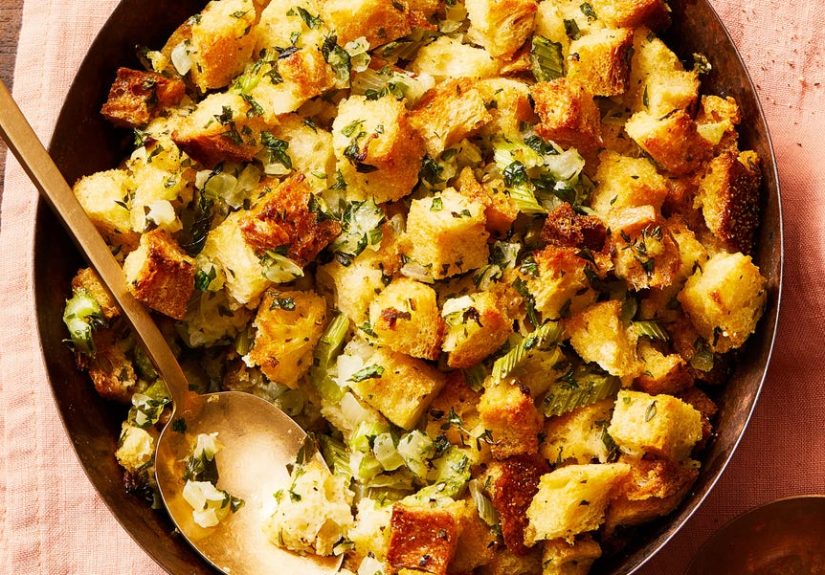
This recipe is the classic, old-school, herb-forward bread stuffing: buttery sautéed celery and onion, a cozy handful of sage and friends, and enough broth to make it tender in the middle with a crispy, golden top. It’s traditional, reliable, and forgivinglike a good holiday sweater that still looks decent after the third helping.
The “Traditional” Formula (And Why It Works)
1) Dry bread = structure + flavor sponge
Traditional bread stuffing needs bread that’s dry enough to soak up broth without turning into mashed regret. Drying the cubes (either air-drying overnight or oven-drying) gives you stuffing that holds its shape, tastes toasty, and still turns tender once the broth hits.
2) Aromatics build the base
Celery and onion sautéed in butter are the classic backbone. They add sweetness, savoriness, and that “it smells like the holidays in here” effect that makes people wander into the kitchen pretending to help.
3) Herbs make it unmistakably “stuffing”
Sage is the lead singer. Thyme harmonizes. Rosemary shows up with big “I’m here!” energy, so use it with a light hand. Parsley keeps everything bright and not too heavy.
4) Broth is the moisture dial
Too little broth and the stuffing eats your saliva like it’s getting paid. Too much and it turns pudding-ish. Adding broth gradually is the secret move.
5) Eggs are optionalbut helpful
Some classic recipes use eggs to lightly bind the stuffing so it slices and serves more cleanly. If you like a looser, scoopable stuffing, you can reduce or skip them.
Traditional Herb Bread Stuffing Ingredients
This makes a generous 10–12 servings (or 6 servings if your family “just wants a little spoonful” and then returns with a shovel).
Core ingredients
- Bread: 12 cups (about 1 pound) bread cubes, 3/4- to 1-inch pieces
- Butter: 10 tablespoons (1 stick + 2 tablespoons), unsalted preferred
- Onion: 1 large yellow onion, finely chopped
- Celery: 4 ribs, finely chopped (include some leaves if you have them)
- Garlic: 2–3 cloves, minced (optional but widely loved)
- Herbs: 1/4 cup chopped fresh parsley
- Sage: 1 tablespoon chopped fresh sage (or 1 teaspoon dried)
- Thyme: 1 tablespoon chopped fresh thyme (or 1 teaspoon dried)
- Rosemary: 1 teaspoon chopped fresh rosemary (or 1/4 teaspoon dried)
- Broth: 2 1/2 to 3 1/2 cups warm turkey or chicken broth (low-sodium is ideal)
- Eggs: 2 large eggs, lightly beaten (optional but recommended)
- Seasoning: 1 1/2 teaspoons kosher salt + black pepper to taste
Optional flavor boosters (pick one “extra” so it stays classic)
- Turkey drippings: Swap 1/2 cup broth for drippings (defat first)
- Poultry seasoning: 1 teaspoon for extra nostalgic “grandma’s kitchen” vibes
- Fresh lemon zest: 1/2 teaspoon for brightness (surprisingly nice)
- Extra crunch: 1/2 cup toasted pecans (optional, still pretty traditional)
Best bread choices
Classic stuffing shines with sturdy, mildly flavored bread: white sandwich bread, country loaf, French bread, or a mix. Sourdough works if you like a little tang. Avoid very soft enriched breads unless you love extra-tender stuffing (they can skew mushy if over-broth’d).
Step-by-Step: How to Make Traditional Bread Stuffing with Herbs
Step 1: Dry the bread
If your bread is already stale/dry, you’re ahead. If not, dry it quickly:
- Preheat oven to 275°F.
- Spread bread cubes on 1–2 baking sheets in a single layer.
- Bake for 35–50 minutes, tossing once or twice, until dry and crisp but not deeply browned.
- Cool completely (warm bread steams, and steamed bread is… not the plan).
Step 2: Build the buttery aromatic base
- Increase oven to 375°F (or keep it there if you prefer baking stuffing at 350–375°F).
- Melt butter in a large skillet over medium heat.
- Add onion and celery. Cook 8–10 minutes until softened, not browned.
- Stir in garlic (if using) for 30 seconds.
- Add sage, thyme, rosemary, parsley, salt, and pepper. Cook 30–60 seconds until fragrant.
Step 3: Combine and control the moisture
- Put dried bread cubes in a large mixing bowl (the biggest one you ownthis is not the time for a cute little bowl).
- Pour the warm veggie-herb mixture over the bread and toss well.
- Add 2 1/2 cups warm broth and toss again.
- If using eggs, drizzle beaten eggs over the mixture and toss gently.
- Let the mixture sit 5 minutes, then assess. Add more broth 1/4 cup at a time until the bread is moist throughout but not soupy. (You want “hydrated” bread cubes, not “bread soup.”)
Step 4: Bake until crisp on top, tender inside
- Butter a 9×13-inch baking dish (or similar 3-quart dish).
- Spoon stuffing into the dish, mounding slightly.
- Cover tightly with foil and bake 25 minutes.
- Uncover and bake 15–25 minutes more until the top is golden and crisp.
- Rest 10 minutes before serving (it sets, and your mouth keeps its roof intact).
Texture tip: Want extra crunch? Broil for 1–2 minutes at the endwatch closely like it owes you money.
Stuffing vs. Dressing: Should You Cook It Inside the Turkey?
Here’s the honest, holiday-friendly answer: baking stuffing in a dish is the easiest way to get consistent texture and make sure everything cooks safely. Cooking it inside the turkey can be delicious (hello, turkey juices), but it complicates timing and temperature.
If you bake it separately (recommended)
- More even cooking
- Crispy top and edges (the best part, legally speaking)
- Easier to control moisture
- No “is the center hot enough?” stress spiral
If you stuff the turkey anyway
- Only stuff the bird right before roasting (not hours ahead)
- Pack it loosely so heat can circulate
- Use a thermometer: the center of stuffing must reach 165°F
- Expect the turkey to take longer to cook
- Let the turkey rest, then remove stuffing carefully and serve hot
If you want the best of both worlds, do a “split batch”: bake most in a dish for crispy edges, and tuck a small amount in the turkey cavity for that classic turkey-kissed flavor. It’s the culinary version of hedging your betsresponsibly.
Moisture Math: How Much Broth Do You Really Need?
Bread varies wildly. One loaf drinks broth like it’s at an open bar; another gets soggy from a stern look. The safest approach is to add broth gradually and pause to let it absorb.
A reliable starting point
- 12 cups dried bread cubes: start with 2 1/2 cups broth
- Add up to 1 more cup, 1/4 cup at a time, as needed
How to tell it’s “just right”
- Most cubes feel moist when squeezed gently
- No liquid pooling at the bottom of the bowl
- Mixture holds together lightly but still has visible cube structure
Pro move: Warm broth absorbs faster and more evenly than cold. Also, low-sodium broth gives you controlbecause stuffing can go from “perfectly seasoned” to “salt lick” faster than you can say “pass the gravy.”
Make-Ahead, Storage, and Reheating Tips
Make-ahead options
- Dry bread cubes: up to 3 days ahead, stored airtight at room temp
- Cook veggies: 1 day ahead, refrigerate; warm slightly before mixing
- Assemble (unbaked): up to 1 day ahead, cover and refrigerate; bake as directed
Leftovers
- Refrigerate in a shallow container within 2 hours of serving.
- Reheat covered at 350°F until hot throughout; uncover to re-crisp the top.
- Leftover stuffing also makes elite breakfast waffles (yes, really) or a next-day skillet crisp-up.
Troubleshooting: Fix Common Stuffing Problems
“My stuffing is dry.”
- Drizzle warm broth over the baked stuffing, cover with foil, and heat 10 minutes.
- Next time: add broth more confidently before baking, and don’t over-bake uncovered.
“My stuffing is soggy.”
- Spread it in a wider dish and bake uncovered 10–15 minutes to evaporate moisture.
- Next time: dry the bread more thoroughly and add broth slowly with a pause to absorb.
“It tastes bland.”
- Add salt gradually, plus extra black pepper and a small pinch of poultry seasoning.
- Use fresh herbs when possible; if using dried, bloom them briefly in butter for more aroma.
“The top browned too fast.”
- Tent with foil and lower the oven rack to the middle position.
- Next time: uncover later, or bake at 350°F for a gentler finish.
Classic Variations (Still Traditional Enough to Avoid Family Drama)
Sausage and sage
Brown 1/2 to 1 pound breakfast sausage, then sauté onions and celery in some of the rendered fat (keep a bit of butter toothis is stuffing, not a detox plan).
Apple-herb stuffing
Add 1 chopped tart apple (like Granny Smith) and cook it with the onions and celery until just softened. It adds brightness without turning the stuffing into dessert.
Mushroom and thyme
Sauté 8 ounces chopped mushrooms until browned, then fold in. This adds savory depth and makes the dish feel extra “grown-up Thanksgiving.”
Cornbread blend
Replace 1/3 of the bread cubes with dry cornbread cubes. Keep the herbs classic and watch the broth levelcornbread can drink more.
Serving Ideas: How to Make Stuffing the Star Without Saying It Out Loud
- Serve with gravy (obvious, necessary, beautiful).
- Pair with cranberry sauce for sweet-tart contrast.
- Use leftovers in a turkey sandwich like a soft, herby “bread layer.”
- Make stuffing muffins: press into a muffin tin and bake until crispbuilt-in crunchy edges for everyone.
FAQ: Quick Answers for Busy Kitchens
Do I have to use fresh herbs?
Fresh herbs give the brightest flavor, but dried works well. Use about one-third the amount of dried herbs compared to fresh, and let them warm in butter briefly to wake them up.
Can I make it without eggs?
Yes. The texture will be looser and more spoonable. If you prefer a more “sliceable” stuffing, use eggs.
What’s the best baking temperature?
Anywhere from 350°F to 375°F works. Higher heat gives a crispier top; lower heat is gentler and forgiving. Use foil-first, then uncover for crunch.
How do I scale it?
A good rule of thumb is about 1 cup of dried bread cubes per person (more if your family loves stuffing). Keep the onion/celery/butter ratios proportional and add broth gradually as always.
Stuffing Stories: of Real-World Kitchen Experience (So You Don’t Have to Learn the Hard Way)
If stuffing had a personality, it would be the charming friend who’s easy to lovebut only if you respect its boundaries. The boundary, in this case, is moisture. People don’t usually mess up stuffing because they chose the “wrong” herb. They mess up stuffing because they treated broth like a set measurement instead of a conversation.
In a lot of kitchens, stuffing starts the same way: someone cubes bread the night before, proudly leaving it out to “stale,” only to discover the next day that some cubes are dry, some are chewy, and a few feel like they’ve achieved leather jacket status. That’s why so many experienced home cooks quietly rely on oven-drying. It’s not cheating; it’s just choosing predictability over suspense.
Then there’s the mixing bowl momentwhen the house smells like butter and celery and the holidays are basically guaranteed. This is where stuffing tries to trick you. The bread looks like it needs more broth, so you add more broth. You feel generous. You feel confident. Five minutes later, the bread absorbs everything and suddenly looks dry again, so you add even more. Congratulations: you have now entered the “soggy risk zone.”
The secret that shows up again and again at successful Thanksgiving tables is the pause. Add some warm broth, toss thoroughly, then wait a few minutes. That small break gives the bread time to hydrate evenly. It also gives you time to taste and adjust seasoning before you commit. Stuffing rewards patience more than almost any other holiday side dish.
Another common real-life lesson: people underestimate how much the baking dish matters. A deeper casserole makes a softer stuffing (more steam, less surface area). A wider dish creates more crispy top, more browned edges, and that coveted contrast between crunchy and tender. If your family fights over the crispy bits, a wider dish is basically conflict resolution in ceramic form.
And yes, many cooks grew up with stuffing inside the turkey, which can taste wonderfully rich. But modern Thanksgiving tends to run like a small production linetimers going off, oven space at a premium, someone asking where the serving spoon is while holding the serving spoon. In that chaos, baking stuffing separately can be the calm, dependable choice. You control the texture. You control the temperature. And you don’t have to choose between “dry turkey” and “stuffing that might not be hot enough.”
Finally, the most consistent “experienced cook” move is keeping stuffing simple, then making it feel special with one thoughtful upgrade: a splash of turkey drippings, a little extra fresh sage, or a quick broil at the end for a crackly top. That’s how classic stuffing stays classicreliable at its core, with just enough personality to make people ask for the recipe.