Table of Contents >> Show >> Hide
- Meet the Blue Crab: A “Beautiful, Savory Swimmer” With Attitude
- 15 Interesting Facts About Blue Crabs
- 1) They’re built for speed (and style)
- 2) You can tell males and females by their “apron”
- 3) Adult females get a fashion upgrade: red-tipped claws
- 4) They grow by “escaping” their own armor
- 5) “Peeler” crabs come with a built-in countdown timer
- 6) Soft-shell crab is just a blue crab in its post-molt glow-up
- 7) Females stop growing after their “terminal molt”
- 8) The crab dating ritual is called “doublers,” and it’s oddly sweet
- 9) Female blue crabs can store sperm (nature said “plan ahead”)
- 10) One crab can carry an egg mass with over a million eggs
- 11) Their babies start life as microscopic drifters in salty water
- 12) It’s a long, complicated commute back to the Bay
- 13) Males and females often prefer different parts of an estuary
- 14) Winter turns them into mud-burrowing homebodies
- 15) Their diet is basically “yes”
- Bonus Facts That Make Blue Crabs Even More Interesting
- Why Blue Crab Facts Matter (Beyond Trivia Night)
- FAQ: Quick Answers to Common Blue Crab Questions
- Experiences Related to Blue Crabs (The “From Dock to Dinner” Reality)
- Conclusion
- SEO Tags
Blue crabs are basically the action heroes of the estuary: fast swimmers, fearless eaters, expert escape artists, andwhen they feel like itmasters of disguise (by “disguise,” I mean “burying themselves in mud like a tiny aquatic couch potato”). Whether you know them as the star of a Maryland crab feast or the reason your dock smells faintly like bait, the blue crab is one of America’s most iconic coastal creatures.
Below are genuinely interesting, science-backed facts about blue crabshow they grow, where they roam, why soft-shell season is basically a holiday, and what makes this “beautiful savory swimmer” such a big deal in U.S. waters.
Meet the Blue Crab: A “Beautiful, Savory Swimmer” With Attitude
The blue crab’s scientific name is Callinectes sapidus, often translated as “beautiful savory swimmer.” Translation: even scientists were like, “Yep, this one’s delicious.” Blue crabs belong to the swimming crab family, which makes sense once you see their back legsflattened like paddles for cruising through the water instead of just awkwardly scooting along the bottom.
In the U.S., blue crabs are especially famous in the Chesapeake Bay region, but they’re also a major part of coastal life up and down the Atlantic seaboard and across the Gulf of Mexico. They’re a big deal economically, culturally, and ecologicallyone of those rare animals that’s both a seafood celebrity and a serious ecosystem player.
15 Interesting Facts About Blue Crabs
1) They’re built for speed (and style)
Those paddle-shaped rear legs aren’t just cutethey turn a crab into a strong swimmer. Blue crabs can dart, turn, and scoot through the water with a kind of “sideways swagger” that makes you think they’re always late for an important crab meeting.
2) You can tell males and females by their “apron”
Flip a crab over (gentlyno one likes surprise acrobatics). The flap on the underside is called the apron. Males have a narrow, more T-shaped apron; females have a wider, rounded apronoften compared to the U.S. Capitol dome in Chesapeake Bay lore. It’s one of the easiest ways to identify sex in the field.
3) Adult females get a fashion upgrade: red-tipped claws
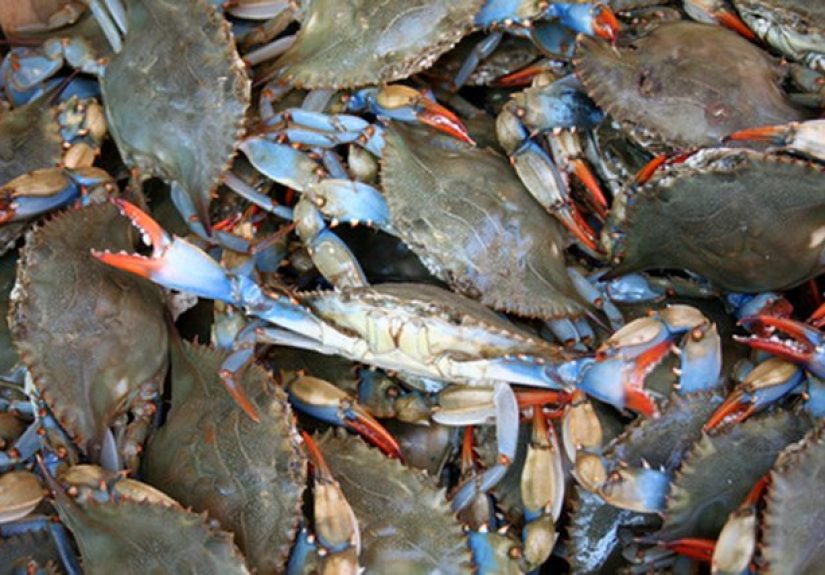
While both sexes have bright blue claws, mature females often have red tips on their claws. It’s a handy visual clueand a reminder that in the crab world, looking fabulous and being fiercely capable are not mutually exclusive.
4) They grow by “escaping” their own armor
Blue crabs can’t just stretch their shells as they grow. Instead, they moltshedding their hard shell and emerging in a brand-new, soft one underneath. This is how they get bigger, but it’s also when they’re most vulnerable, because they’ve basically taken off their protective jacket and left it on the floor.
5) “Peeler” crabs come with a built-in countdown timer
Right before molting, a crab is developing a new shell beneath the old one. In Chesapeake Bay country, crabs close to molting are often called “peelers” or “shedders.” Fisheries folks can spot subtle signs that a molt is comingbecause timing is everything when you’re trying to understand crab populations (or when a seafood menu is waiting).
6) Soft-shell crab is just a blue crab in its post-molt glow-up
Immediately after molting, the crab’s new shell is pliable and stretchythis is the soft-shell stage that seafood lovers celebrate with the enthusiasm usually reserved for fireworks. The shell begins to harden fairly quickly, and within a day you’re moving through “paper shell” territory. In other words: soft-shell season is a narrow window, and blue crabs do not keep it open just because you’re hungry.
7) Females stop growing after their “terminal molt”
Male blue crabs continue molting and growing through life, but females typically stop after reaching sexual maturity. The “terminal molt” is the female’s final moltand it’s a major life event, because mating is tied to this transition.
8) The crab dating ritual is called “doublers,” and it’s oddly sweet
When an immature female is nearing her terminal molt, a male may cradle her in a protective holdsometimes for daysbefore and after she molts. This pair is often called a “doubler.” It looks like a crab piggyback ride, but with higher stakes: the male is guarding a future mate and helping reduce the chance she’s eaten while her new shell is soft.
9) Female blue crabs can store sperm (nature said “plan ahead”)
After mating, fertilization doesn’t necessarily happen immediately. Females can store sperm and delay fertilization until conditions like temperature, salinity, and food availability are favorable for offspring survival. It’s a remarkably strategic approach for an animal that also sometimes solves problems by pinching them.
10) One crab can carry an egg mass with over a million eggs
When a female develops her egg massoften called a “sponge”it can contain more than a million eggs. In some Chesapeake Bay reporting, egg counts per brood can range widely, reaching into the millions. And here’s the extra plot twist: a female can produce more than one egg mass from a single mating event. That’s efficiency with a side of wow.
11) Their babies start life as microscopic drifters in salty water
Blue crab larvae (called zoea) are tiny and planktonicfloating with currents rather than crawling the bottom. In Chesapeake Bay life-cycle descriptions, eggs and early larvae need relatively high salinity to survive. The larvae often drift out toward coastal ocean waters before later stages return to the estuary.
12) It’s a long, complicated commute back to the Bay
After weeks of larval development, the blue crab reaches a later larval stage often called the megalopa (or “megalops” in some resources). At this stage, it can crawl along the bottom and feed, and it begins the journey back into estuaries. Once it transforms into the “first crab” stage, it becomes a tiny juvenilealready equipped with claws and a full-time appetite.
Some educational resources note juveniles can molt many more times over roughly a year to a year and a half before reaching maturity. The main point: blue crabs don’t just “show up.” They earn their place in the estuary with a life cycle that’s part ocean voyage, part obstacle course.
13) Males and females often prefer different parts of an estuary
In Chesapeake Bay science summaries, males tend to be found more often in fresher, upper areas and tributaries, while females more often use saltier waters closer to the oceanespecially around spawning. This split isn’t just a fun trivia fact; it affects how fisheries manage harvest and how scientists interpret surveys.
14) Winter turns them into mud-burrowing homebodies
When temperatures drop, blue crabs can burrow into sediment in deeper waters and essentially “ride out” the season. If you’ve ever wondered why your summer crabbing spot feels empty in colder months, it’s not because the crabs moved to a tropical resort. They’re just tucked in, conserving energy and staying protected.
15) Their diet is basically “yes”
Blue crabs are opportunistic feederspredators, scavengers, and general-purpose coastal cleanup crews. They eat clams, oysters, mussels, snails, worms, fish, detritus, and, when the moment is right (or wrong), smaller or soft-shelled blue crabs. In marshes, they’ll even venture into grassy areas at high tide to hunt. If there were a crab résumé, “flexible eater” would be bolded.
Bonus Facts That Make Blue Crabs Even More Interesting
They can regenerate limbs
Lose a leg? Blue crab response: “I’ll grow another.” Blue crabs can regrow lost limbs over subsequent molts. It’s one reason you’ll sometimes see crabs missing a claw or a legand it’s also a reminder that crab life can be rough out there.
They’re sensitive to low oxygen and water quality
Blue crabs live in estuariesplaces where rivers meet the seaso they experience big swings in salinity, temperature, and oxygen. Some state wildlife resources emphasize that low oxygen conditions can stress crabs, and that runoff and pollution can harm crab habitat. Translation: when estuaries are healthy, blue crabs tend to do better. When estuaries struggle, crabs often feel it.
They’re a “keystone” kind of creature in the Chesapeake Bay
In Chesapeake Bay management discussions, blue crabs are often described as ecologically important because they influence bottom-dwelling communities as predators and also serve as prey for larger fish, birds, and other wildlife. That double rolehunter and huntedhelps keep food webs humming.
They come with a whole dictionary of nicknames
In crab country, you’ll hear plenty of local terms: hard-shells (not molting), peelers (about to molt), soft-shells (just molted), “sponge” crabs (egg-carrying females), and more. These aren’t just cute namesthey reflect real biological stages that matter for fishing rules, population health, and what ends up on a plate.
Why Blue Crab Facts Matter (Beyond Trivia Night)
Blue crabs are valuable because they sit at the intersection of ecology, economy, and culture. They’re a top commercial species in parts of the U.S., especially around the Chesapeake Bay, and they’re also tied to habitat conditions like submerged aquatic vegetation, marsh health, and water quality. Managers track populations using surveys and harvest reporting, and many places adjust rules to protect spawning females and keep the fishery sustainable.
In other words: learning blue crab facts isn’t just for impressing friends at a crab boil. It’s also a way to understand what’s happening in America’s estuariesbecause blue crabs respond to changes in habitat, climate, and fishing pressure in ways scientists and communities pay close attention to.
FAQ: Quick Answers to Common Blue Crab Questions
How big do blue crabs get?
Adults can reach around 9 inches across the carapace (shell), though many are harvested before that. Rare, record-sized crabs can be even bigger in tip-to-tip measurements.
How long do blue crabs live?
In many U.S. references, blue crabs are considered relatively short-livedoften a few yearsgrowing fast and reaching maturity in roughly 12–18 months depending on water temperature and region.
What’s the difference between hard-shell and soft-shell crabs?
Hard-shell crabs are in their normal, hardened exoskeleton. Soft-shell crabs are blue crabs immediately after molting, before the shell hardens. Same animaldifferent timing.
Do blue crabs migrate?
Yes, especially within estuaries. In places like the Chesapeake Bay, mature females often move toward saltier waters near the mouth of the bay for spawning, while males commonly remain in fresher areas.
Are blue crabs important to the ecosystem?
Very. They’re predators of many bottom-dwelling organisms and also prey for larger animals, making them a key link in coastal food webs.
Experiences Related to Blue Crabs (The “From Dock to Dinner” Reality)
If you live anywhere near the Atlantic or Gulf coasts, blue crabs have a way of turning an ordinary afternoon into an event. It starts with the setting: a dock that creaks under your feet, a marsh that smells like salt and sun-warmed mud, and water that looks calm right up until something tugs your line like it’s trying to negotiate a contract. The first time you see a blue crab up close, you notice two things immediately: it’s prettier than you expected (that blue-and-olive shell is seriously photogenic), and it looks like it’s ready to throw hands at a moment’s notice.
A lot of people’s blue crab “origin story” is simple: you’re handed a net and told, “Be patient.” Blue crabs are opportunists, but they’re not obligated to be convenient. You wait, you watch, and you learn the rhythm of tide and timing. When a crab finally shows, the moment is half excitement and half comedybecause the crab is absolutely convinced it’s the one in charge. Even if you’ve only met for 10 seconds, it has already decided you are suspicious.
Then comes the hands-on part, and this is where the experience gets real. You learn to respect the pinch. You learn that “just grab it” is advice best delivered by someone who isn’t doing the grabbing. And you quickly understand why crabbers talk about gloves, quick movements, and paying attention. Blue crabs aren’t out to be villains; they’re just extremely committed to personal space.
The most memorable crab experiences often happen in the kitchen (or the backyard) rather than on the water. There’s a certain music to a crab feast: the clack of shells, the laughter when someone finally figures out how to crack a claw cleanly, and the inevitable debate about seasoning. In the Mid-Atlantic, Old Bay is practically a personality trait. In other coastal regions, you’ll find local blends, boils, sauces, and family traditions that people defend with the seriousness of a courtroom closing argument.
Soft-shell season adds a whole other layer of excitement. People talk about it like it’s a limited-time concert tour: you catch it when it’s here, because the window is short and the demand is high. Restaurants put soft-shell sandwiches on special menus. Seafood counters suddenly have customers asking very specific questions. And if you’ve never watched someone describe a perfect soft-shell crab, imagine a food critic, a fisherman, and a proud parent all rolled into one.
Even if you’re not eating them, blue crabs can be unforgettable in the wild. Spotting one in seagrass or along an oyster reef feels like finding a living piece of the estuary’s engine roomsomething that’s actively shaping the ecosystem while you watch. And once you learn the basicsmolting, doublers, egg “sponges,” migrationsyou stop seeing “just a crab.” You start seeing a creature with a complicated life story, a tough job in the food web, and a direct connection to the health of the water itself.
Conclusion
Blue crabs are more than a seafood staplethey’re fast-swimming, shell-shedding, habitat-hopping survivors with a life cycle that spans estuaries and the open ocean. Their “interesting facts” aren’t random trivia; they’re clues to how coastal ecosystems work, why water quality matters, and how careful management can keep a beloved fishery thriving. So the next time you see a crab scuttle by (or show up steamed on a table), you’ll know: there’s a whole epic story underneath that shell.