Table of Contents >> Show >> Hide
- Why Feng Shui Mistakes Matter More Than People Think
- Feng Shui Faux Pas #1: Treating the Entryway Like a Storage Unit
- Feng Shui Faux Pas #2: Putting a Mirror Directly Opposite the Front Door
- Feng Shui Faux Pas #3: Ignoring the Command Position
- Feng Shui Faux Pas #4: Shoving the Bed Into a Corner
- Feng Shui Faux Pas #5: Storing Your Entire Secret Life Under the Bed
- Feng Shui Faux Pas #6: Letting Clutter Become the Home’s Personality
- Feng Shui Faux Pas #7: Keeping Broken Items and Dead Plants Around
- Feng Shui Faux Pas #8: Using the Bedroom as an Office, Gym, TV Lounge, and Snack Lab
- Feng Shui Faux Pas #9: Hanging Mirrors Where They Reflect the Bed
- Feng Shui Faux Pas #10: Forgetting Balance in Furniture and Decor
- How to Correct Feng Shui Mistakes Without Overcomplicating Everything
- Everyday Experiences With Feng Shui Mistakes People Make
- Conclusion
Feng shui has a funny reputation. Some people hear the term and imagine a perfectly placed bamboo plant, a mysterious crystal, and a living room so serene it practically whispers, “Namaste.” But in real life, feng shui is often less about buying quirky objects and more about fixing the everyday habits that make a home feel chaotic, cramped, or oddly exhausting.
At its core, feng shui is about flow, balance, and the relationship between you and your environment. Translation: if your front door opens into a mountain of shoes, your bed is shoved into a sad corner, and your bedroom doubles as a tax office, your home may be sending your nervous system a not-so-subtle message. The good news is that many of the most common feng shui mistakes are also the easiest to correct.
So let’s talk about the feng shui faux pas you’re probably making without realizing it, why they matter, and how to fix them without turning your house into a themed spa.
Why Feng Shui Mistakes Matter More Than People Think
Whether you approach feng shui as a spiritual practice, a design philosophy, or a practical way to make your home feel better, the basic idea is surprisingly relatable: your space affects your mood. A cluttered room can feel mentally loud. A blocked entry can make a home feel unwelcoming. A bed in the wrong position can make a bedroom feel strangely tense, even if you cannot explain why.
That is why many feng shui principles overlap with common-sense design advice. You want clear paths, balanced furniture placement, comfortable lighting, and rooms that support the activities that happen in them. The difference is that feng shui gives these choices a deeper framework. It asks not only, “Does this room look good?” but also, “Does this room support the life I want to live?”
Feng Shui Faux Pas #1: Treating the Entryway Like a Storage Unit
Your front door is one of the biggest deals in feng shui. It is considered the “mouth of qi,” or the main point where energy enters the home. If that entrance feels cramped, dirty, dark, or chaotic, the first impression is not exactly “welcome in, lovely opportunities.” It is more like, “Proceed at your own risk.”
What this mistake looks like
Shoes scattered everywhere, unopened packages piled by the wall, a broken light fixture, dead leaves at the threshold, or furniture that makes the door hard to open fully.
Why it is a problem
A cluttered entry can symbolically and practically block flow. Even if you are not thinking in traditional feng shui terms, a messy entrance can make a home feel stressful before you have even set down your keys.
How to fix it
Keep the path to the door open and clean. Make sure the door can open all the way. Add good lighting. Use a narrow console, a tray for keys, a closed shoe cabinet, or a simple plant if the area has enough light. The goal is not a museum lobby. The goal is an entry that feels inviting instead of ambushing you with sneakers.
Feng Shui Faux Pas #2: Putting a Mirror Directly Opposite the Front Door
Mirrors are useful in feng shui, but they are not a free-for-all. One of the most repeated warnings is about placing a mirror directly across from the front door. In feng shui thinking, that setup can bounce incoming energy right back out before it has a chance to settle into the home.
Even if you are not sold on the energy explanation, there is a practical one: a mirror facing the door can create a jarring, hyper-alert feeling when you walk in and suddenly meet your own reflection like an unexpected houseguest.
If you want a mirror in the entryway, place it to the side rather than directly in line with the door. That way it can still reflect light and make the space feel bigger without acting like an energetic boomerang.
Feng Shui Faux Pas #3: Ignoring the Command Position
If feng shui had a greatest hits album, the command position would be track one. This principle says that the bed, desk, and often the stove should be placed where you can see the door without being directly in line with it. Ideally, there is also a solid wall behind you for support.
Why it matters
Command position is about feeling safe, aware, and supported. When your back is to the door or your bed is lined up like a runway to the hallway, the room can feel subtly unsettling. Your body likes to know what is coming and going. Apparently, your nervous system is not a fan of jump scares.
Common command position mistakes
Desks facing a blank wall with the door behind you, beds directly in line with the bedroom door, or sofas arranged so no one can see who enters the room.
How to fix it
If possible, angle your bed or desk so you can see the door diagonally. Keep a solid wall or strong headboard behind the bed. If your layout is awkward, a strategically placed mirror may help you visually catch the door without moving every piece of furniture you own.
Feng Shui Faux Pas #4: Shoving the Bed Into a Corner
Small bedrooms create tough choices, but one classic feng shui mistake is pushing the bed against a wall on one side when you do not absolutely have to. It may save floor space, but it can create imbalance, especially if the room is meant for two people.
In feng shui, a bed with access on both sides supports balance and ease. In everyday terms, it also prevents one partner from climbing over the other like a ninja every time nature calls at 2 a.m.
Try to leave a little breathing room on both sides of the bed, even if it is modest. Use slimmer nightstands or wall-mounted shelves if space is tight. The room does not need to be huge. It just needs to stop treating one side of the bed like a punishment zone.
Feng Shui Faux Pas #5: Storing Your Entire Secret Life Under the Bed
Under-bed storage is common, especially in smaller homes. Feng shui is not always thrilled about it. The idea is that energy should circulate freely around the body while you sleep, and cramming bins, boxes, and emotional clutter under the bed can contribute to stagnant energy.
The type of storage matters too. Extra linens and soft sleep-related items are usually considered less disruptive than old paperwork, sentimental baggage, fitness gear, or random cords from electronics you no longer own but cannot part with because “you never know.”
If you can clear the space under the bed, great. If you cannot, keep it light, clean, and limited to restful items.
Feng Shui Faux Pas #6: Letting Clutter Become the Home’s Personality
This is the big one. Clutter is probably the most widely discussed feng shui issue because it affects every room. Clutter slows movement, creates visual stress, and can make even a beautiful home feel heavy.
Feng shui does not demand sterile minimalism. It does, however, encourage intentionality. That means your home should look lived in, not like it is in a long-term relationship with unopened mail, dying chargers, and a chair that exists solely to hold clothes.
Where clutter matters most
The entryway, bedroom, desk, hallway, and any pathways between rooms. These areas influence how easily energy and people move through the home.
Simple decluttering rule
If an object is broken, dead, expired, meaningless, or actively annoying you, it is probably not helping your space.
Feng Shui Faux Pas #7: Keeping Broken Items and Dead Plants Around
A cracked lamp, a chipped mirror, a drawer that never closes right, a wilted plant in the corner pretending things are fine. Feng shui generally sees broken or dying items as signs of stuck or depleted energy. Again, even without the symbolism, this tracks. Broken things create low-level irritation. Dead plants do not exactly radiate vitality.
Walk through your home and notice what is quietly asking for attention. Repair it, replace it, or remove it. This one small habit can make a space feel instantly more cared for.
Feng Shui Faux Pas #8: Using the Bedroom as an Office, Gym, TV Lounge, and Snack Lab
The bedroom is supposed to support rest and intimacy. When it also becomes a workplace, cardio station, and streaming bunker, the energy gets mixed. Feng shui favors bedrooms that feel calm, simple, and restorative.
Of course, modern life is not always generous with square footage. If you must work in your bedroom, create separation. Use a screen, a curtain, a bookcase, or even a folding desk that can be closed at the end of the day. The point is to tell your brain, “We are done replying to emails. We are now people who sleep.”
The same logic applies to exercise equipment, piles of laundry, and glowing electronics. If your bedroom feels too active, your mind often follows.
Feng Shui Faux Pas #9: Hanging Mirrors Where They Reflect the Bed
Bedroom mirrors are one of the most debated feng shui topics, but a common caution remains: avoid placing mirrors where they directly reflect the bed. Many practitioners believe mirrors can amplify energy and make the room feel too stimulating for sleep.
Even from a purely design perspective, a big mirror reflecting movement, light, or clutter can create a restless feeling. If you want a mirror in the bedroom, place it where it does not face the bed directly. A closet door mirror, side wall mirror, or a mirror angled toward natural light tends to feel more balanced.
Feng Shui Faux Pas #10: Forgetting Balance in Furniture and Decor
Sometimes a room feels off not because of one dramatic mistake, but because everything leans too hard in one direction. Too many sharp angles. Too much oversized furniture. Too much visual noise. Too little softness. Feng shui encourages balance through shape, scale, color, and the five elements: wood, fire, earth, metal, and water.
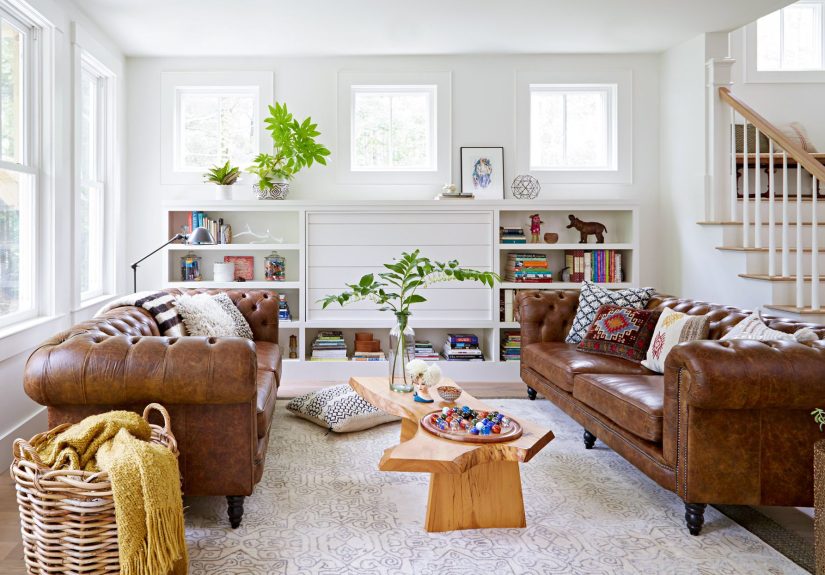
No, you do not need to turn your living room into a symbolic scavenger hunt. You just want a mix of textures and forms. Pair sharp-edged furniture with softer textiles. Use natural materials. Bring in a healthy plant. Let in light. Add grounding colors where needed. Balance tends to feel better than excess, and homes usually know it.
How to Correct Feng Shui Mistakes Without Overcomplicating Everything
The easiest way to improve feng shui is to start with what bothers you most. Is your entry always chaotic? Fix that first. Does your bedroom feel stressful instead of restful? Look at bed position, mirrors, and clutter. Is your desk making you feel boxed in and distracted? Rework the layout so it feels more supportive.
Good feng shui is not about perfection. It is about paying attention. A home does not need to be huge, expensive, or styled within an inch of its life to feel good. It needs clear flow, thoughtful placement, and a little breathing room.
And honestly, that may be the most refreshing thing about feng shui. Beneath all the terminology, it reminds us that our spaces are always talking back to us. If your home has been screaming lately, it may be time to stop and listen.
Everyday Experiences With Feng Shui Mistakes People Make
One of the reasons feng shui keeps resurfacing in home design conversations is that people often notice the effects of these mistakes before they know the rules behind them. Someone moves into a new apartment and cannot figure out why they never fully relax in the bedroom. Later, they realize the bed is directly aligned with the door, the mirror reflects the mattress, and the room is doing triple duty as an office, closet overflow zone, and late-night scrolling arena. Suddenly, the restless vibe makes a little more sense.
Another common experience happens at the front door. Plenty of people say they want their home to feel calm and welcoming, but the first five feet inside the entrance are a traffic jam of shoes, bags, delivery boxes, and coats. The result is a home that feels busy before the day has even begun. Once that area is simplified, many people describe the space as lighter and easier to maintain. It is not magic. It is what happens when your entry stops acting like a pileup on a freeway ramp.
The same thing happens in home offices. People often set up a desk wherever it fits, then wonder why they feel distracted, tense, or constantly drained. A desk facing a wall with the door behind you can feel oddly vulnerable. A desk lost in clutter can make work feel endless. But when the workstation is repositioned so there is a better sense of command, more light, and less visual mess, the room can suddenly feel like a place for focus instead of survival.
Bedrooms are probably where people notice feng shui shifts most dramatically. A person clears out under-bed storage, removes a mirror facing the bed, and swaps random piles for two intentional nightstands. Nothing about the square footage changes, but the room starts feeling more supportive. More settled. More like a place designed for sleep instead of an all-purpose holding pen for modern life.
Then there is the emotional side. Broken objects, dead plants, and neglected corners have a way of fading into the background until one day they do not. Once you start noticing them, they can feel like tiny unfinished conversations all over the house. Fixing them often creates a surprising sense of relief. Not because a repaired lamp transforms destiny overnight, but because cared-for spaces tend to make people feel more cared for too.
That is the real experience many people have with feng shui. It is less about chasing perfect luck and more about noticing how a home supports or drains you. The faux pas are common because they are easy to make. The fixes are powerful because they are usually simple. Clear the path. Move the mirror. Edit the clutter. Let the room do one job well. Sometimes better energy looks an awful lot like better habits.
Conclusion
The most common feng shui mistakes are rarely dramatic. They are the ordinary habits that slowly make a home feel harder to live in: blocked entryways, poorly placed beds, overstimulating bedrooms, too much clutter, and forgotten broken things. The good news is that most of these faux pas can be corrected with simple, thoughtful changes. When you give your home better flow, more balance, and a clearer purpose, it often starts giving the same thing back to you.