Table of Contents >> Show >> Hide
- Why an old T-shirt feels better than a new one
- Why we get attached to certain shirts
- The cultural brilliance of the T-shirt
- Why your old T-shirt can smell like memory
- Taking care of a favorite old T-shirt without ruining it
- Why keeping and reusing old shirts actually matters
- The real reason your favorite old T-shirt is awesome
- 500 more words on the experience of loving an old T-shirt
- Conclusion
There are expensive clothes, stylish clothes, aspirational clothes, and then there is the shirt. The one that has survived three apartments, two emotional eras, one suspicious ketchup incident, and at least a dozen promises that you were “definitely going to throw it out this year.” You never do. Of course you do not. That old, comfy T-shirt is not just a shirt. It is a loyal sidekick, a soft-spoken therapist, and a fabric-based time machine with a stretched collar.
Somehow, it always wins. It beats the crisp new tee that looked amazing online. It beats the trendy top with a dramatic cut and the personality of a folding chair. It beats anything that needs “special care.” Your favorite old T-shirt asks for very little. It shows up, feels good, and minds its business. That is a level of emotional maturity many people never reach.
And there is a reason this humble piece of cotton glory feels so powerful. The magic is not just sentimental. It is physical, psychological, cultural, and surprisingly practical. The old T-shirt has earned its place through softness, familiarity, memory, and usefulness. It is one of the greatest everyday luxuries in modern life precisely because it is so ordinary.
Why an old T-shirt feels better than a new one
Let us begin with the obvious truth: old T-shirts usually feel better because they actually feel better. Time changes fabric. Repeated washing, wearing, and movement can make a shirt more flexible, less stiff, and more responsive to your body. The shirt stops acting like a product and starts acting like a teammate.
This matters because comfort is not an imaginary quality. People genuinely respond to different fibers and fabric structures in different ways. Cotton has long held a strong place in T-shirt culture because it is breathable, familiar, soft against the skin, and easy to live with. That helps explain why so many people reach for cotton basics when they want dependable comfort instead of drama disguised as fashion.
But your favorite old tee is not just cotton. It is broken in. It has adapted to the shape of your shoulders, the rhythm of your weekends, and your very specific habit of pulling the hem down before sitting on the couch. New shirts still feel like they are auditioning. Old shirts have already been cast.
The softness is physical, but the ease is emotional
There is also something deeply calming about clothing that asks nothing of you. A new shirt can feel like an event. Does it shrink? Does it cling? Is it one of those shirts that looks amazing if you stand perfectly still and never breathe? Your old T-shirt is free of those little negotiations. You know exactly how it fits, where it sits, and what kind of day it belongs to.
That predictability is a hidden luxury. In a world full of updates, passwords, notifications, and people saying “circle back,” familiar comfort carries real value. An old T-shirt gives your brain one less thing to manage. It is easy. It is reliable. It is the clothing version of hearing, “No worries, I already handled it.”
Why we get attached to certain shirts
If your favorite old T-shirt were just soft, you could replace it with any decent lounge tee. But you usually cannot. That is because attachment to clothing is rarely about fabric alone. Clothes collect meaning. They absorb chapters of your life, then quietly hold onto them until you put them on again.
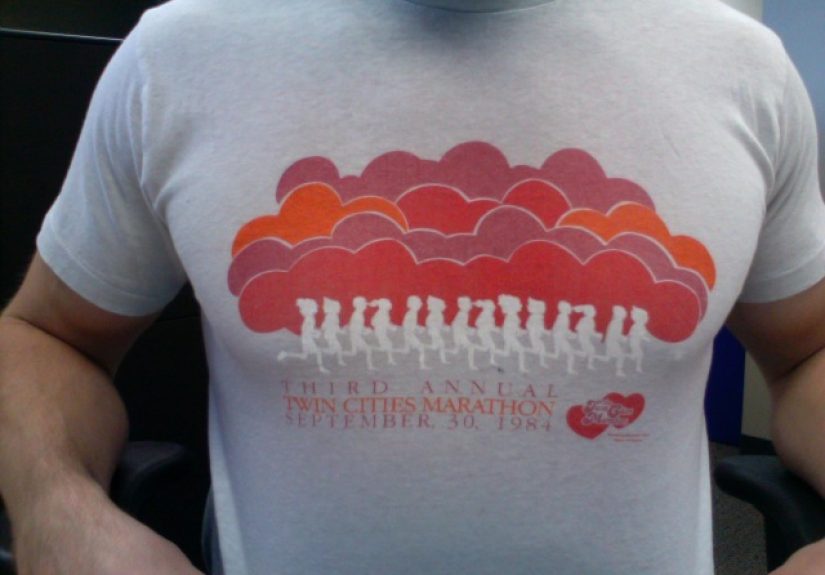
A concert tee is never just a concert tee. It is the night your voice disappeared from singing too loudly. A faded college shirt is not just a campus souvenir. It is late-night pizza, crowded hallways, and the version of you who thought sleep was optional. A softball shirt with cracked lettering might carry the memory of summer evenings, terrible team nicknames, and one miraculous catch that you still mention whenever possible.
Researchers have long observed that clothing can function like a memory trigger and a piece of identity at the same time. That makes perfect sense in real life. We do not simply wear clothes; we wear stages of ourselves. A favorite old T-shirt becomes a portable archive. It can remind you who you were, who you loved, where you belonged, and what felt possible then.
Nostalgia is part of the magic
Nostalgia gets mocked sometimes, as if it is just emotional scrapbooking with extra sighing. But nostalgia can be useful. It helps people feel anchored during change, connected during lonely seasons, and steadier during uncertainty. That is one reason old objects matter. They reassure us that not everything good has vanished just because time has moved on.
Your favorite old T-shirt is excellent at this job. It can pull an entire season back into the room without making a speech. The softness, the faded logo, the tiny hole near the hem, the old detergent smell buried somewhere in the fibers, all of it says: you have been here before, and you were okay.
That may sound dramatic for a shirt that once doubled as a paint rag, but honestly, that only makes it better. The best comfort objects are rarely glamorous. They are trustworthy. Your old T-shirt has seen you sick, sleepy, heartbroken, happy, overfed, undercaffeinated, and deeply committed to doing absolutely nothing on a Sunday. It knows too much to judge you now.
The cultural brilliance of the T-shirt
The T-shirt is also one of the great democratic items in American style. It is practical, casual, and wonderfully adaptable. Over time, the broader family of casual shirts helped transform everyday dress in the United States, making comfort and informality feel not lazy, but normal. That shift matters because it changed what clothing could do: instead of signaling only status or formality, it could signal personality, ease, and belonging.
The T-shirt eventually became a billboard, a souvenir, a statement, a uniform, and a blank page all at once. It could advertise a band, a camp, a protest, a school, a bar, a tech startup, or your uncle’s suspiciously proud landscaping business. It could say almost anything, which is exactly why your oldest one often says the most without trying.
That is the strange power of the old tee. It may be the least impressive item in your closet, yet it often feels the most honest. Formal clothes present a version of you. Your old T-shirt reveals one.
Why your old T-shirt can smell like memory
There is another layer to this story, and yes, it is a little weird, but also very human: scent. Smell has a direct line to memory and emotion. That is why the scent of sunscreen can bring back childhood summers, and the smell of old laundry can suddenly remind you of a bedroom you have not seen in ten years.
Clothing holds scent traces more intimately than many other objects because it lives so close to the body. That means an old shirt can carry not only visual memories, but sensory ones. Sometimes the comfort of a favorite tee is not just in how it feels on your skin. It is in the familiar signal it sends to your nervous system: this is home, this is safe, this is known.
No, this is not permission to preserve your shirt in a state of biological warfare. Cleanliness still matters. But it does explain why a well-loved shirt can feel oddly grounding in a way that a brand-new garment never does.
Taking care of a favorite old T-shirt without ruining it
Now for the practical part, because every beloved T-shirt eventually faces three major threats: heat, over-drying, and your own confidence in “just tossing it in with everything else.” If you want that shirt to survive another glorious decade, a little care goes a long way.
Wash gently, not dramatically
For most everyday washing, colder water is your friend. It is easier on color, gentler on fibers, and less likely to create the tragic “why is this shirt suddenly child-sized?” moment. If the shirt is lightly soiled, there is usually no need to blast it with high heat like you are interrogating it for state secrets.
Turning the shirt inside out before washing can also help preserve graphics, prints, and surface wear. That matters if your favorite old tee contains the last surviving evidence that you once attended a music festival in 2014 and considered yourself outdoorsy for nearly six hours.
Do not over-dry the poor thing
Dryers are useful, but they are not known for tenderness. Over-drying can stress fabric, fade color, and make beloved shirts age in the wrong way. There is a difference between “soft and lived-in” and “one more cycle away from becoming a cleaning rag.” Air-drying or pulling the shirt out while it is just dry can help preserve its shape and feel.
Treat stains before they become permanent roommates
The faster you deal with stains, the better the odds of saving the shirt. Once a stain gets baked in by heat, it can become a long-term resident. That is how your favorite shirt turns into “the one I only wear at home,” and then “the one I wear for yard work,” and then finally “the fabric we use to test whether paint is dry.”
Some decline is natural, of course. A little fade can be charming. A softened graphic can look cooler than a fresh one. But keeping a favorite T-shirt wearable is often less about perfection and more about slowing the chaos.
Why keeping and reusing old shirts actually matters
There is also a bigger reason to appreciate your old T-shirt: extending the life of clothing is one of the simplest ways to reduce waste. Americans generate an enormous amount of textile waste, and a large share of it still ends up in landfills. Keeping a good shirt in use longer is not a grand political act, but it is a practical, low-effort decision that makes sense.
That does not mean every shirt deserves immortality. Some garments have clearly entered their final form and now exist only to absorb spills with dignity. But many old T-shirts can be reworn, repaired, restyled, donated responsibly, or upcycled once they have retired from public life.
In other words, your favorite old tee is not just emotionally satisfying. It is the opposite of disposable thinking. It represents the underrated pleasure of using something long enough for it to become fully yours.
The real reason your favorite old T-shirt is awesome
At first glance, an old T-shirt seems like a tiny thing. It is fabric. It is stitching. It is a faded message, maybe crooked. But that is exactly why it is so impressive. It proves that comfort does not need spectacle. Joy does not always arrive in expensive packaging. Sometimes the best things in life are already in your drawer, slightly wrinkled, impossible to replace, and suspiciously better than anything new.
Your favorite old, comfy T-shirt earns its place because it delivers on several fronts at once. It feels good. It remembers things. It asks very little. It adapts. It forgives. It does not care whether you are thriving, spiraling, or just reheating leftovers at 11:30 p.m. It is there either way.
And maybe that is why it belongs on a list of awesome things. Not because it is flashy, rare, or impressive on social media, but because it participates in real life. It becomes better through use. It becomes more valuable through time. It becomes more beautiful through familiarity. Frankly, many of us would be lucky to age half as well.
500 more words on the experience of loving an old T-shirt
Everyone has a story shirt. Maybe yours is a navy camp tee that now feels as thin as onion skin and somehow still survives every wash. Maybe it is a giant gray college shirt that should have been retired during the Obama administration but keeps getting called back for one more tour of duty. Maybe it is white in theory, beige in practice, and emotionally priceless in every possible way.
The experience of wearing that shirt is hard to explain to people who think clothing is mostly about appearance. An old T-shirt does not usually make you look “put together.” It makes you feel put back together. That is different. It is the shirt you reach for after a bad day, after a long trip, after a breakup, after a haircut that did not go according to plan, or after a family gathering that required suspiciously advanced diplomatic skills.
There is often a ritual to it. You come home, drop your keys, kick off your shoes, and change into the T-shirt like a person clocking out of civilization. The fabric lands on your shoulders and your body immediately understands the assignment: we are safe now. We are no longer presenting. We are now in our natural habitat, which may include snacks and horizontal living.
Old T-shirts are also strangely honest. They do not flatter much. They do not sculpt. They do not “elevate your look.” They are not here to elevate anything. They are here to accompany your existence while you fold laundry badly, watch one more episode you absolutely did not plan to start, or stare into the fridge as if answers live behind the mustard.
Sometimes the shirt carries social memory too. You borrow one from a parent and suddenly understand why they never got rid of it. You keep one from a school event, a road race, a volunteer project, or a summer job, and years later the cracked ink still feels like proof that those days really happened. Even when the people drift, the places change, and the routine disappears, the shirt remains like a soft receipt from another life.
Then there is the day you realize the shirt has crossed into sacred territory. You stop wearing it casually because you are afraid of losing it. It is too fragile for regular duty. It has become a relic. Maybe you wear it only on sick days, only at home, only while reading, only on rainy Saturdays. It is no longer just wardrobe. It is emotional infrastructure.
And if it finally does wear out, that can feel ridiculous and surprisingly sad. You are not mourning cotton. You are mourning the version of life that shirt helped hold together. That is why people turn old tees into quilts, sleep shirts, gym rags, memory boxes, or drawer liners. We are not always trying to save the fabric. We are trying to save the feeling.
So yes, your favorite old T-shirt deserves respect. It has comforted you through ordinary days that later became important. It has shown that softness can be durable, that usefulness can be lovable, and that the best possessions are often the ones that quietly merge with your story. In a world obsessed with the next new thing, an old shirt offers a gentle, cotton-colored counterargument: some things become truly great only after they have been lived in.
Conclusion
Your favorite old, comfy T-shirt is one of life’s most underrated masterpieces. It blends tactile comfort, emotional familiarity, cultural history, and everyday practicality into one gloriously unpretentious package. It is what you wear when you want to feel like yourself again. And honestly, anything that can compete with modern stress, laundry heat, and the passage of time while still feeling amazing deserves a standing ovation from the couch.