Table of Contents >> Show >> Hide
- What Are Miniaturized Organs?
- How Scientists Make Miniaturized Organs
- Why Miniaturized Organs Matter
- Real Examples of Miniaturized Organs in Action
- What Miniaturized Organs Still Cannot Do
- The Ethical Questions Around Miniaturized Organs
- How Miniaturized Organs Could Change the Future of Medicine
- Experiences Related to Miniaturized Organs
- Conclusion
- SEO Tags
Miniaturized organs sound like something a sci-fi screenwriter dreamed up after too much coffee, but they are very real, very useful, and very much changing modern medicine. Scientists often call them organoids or, in some cases, organs-on-chips. These tiny lab-grown systems are not full-size transplant-ready organs shrunken in the wash. Instead, they are carefully engineered models that mimic important features of human tissues and organs.
That distinction matters. Traditional research tools, like flat cell cultures in petri dishes, often miss the rich complexity of real human tissue. Animal models can be incredibly valuable, but they do not always predict what will happen in the human body. Miniaturized organs step into that gap. They give researchers a more human-like model for studying disease, testing drugs, and exploring personalized treatment strategies. In other words, they are helping science stop guessing quite so much.
From tiny intestines that model inflammatory bowel disease to mini-brains used in neurological research, these systems are already reshaping how scientists ask questions. The field is moving fast, and while there is still plenty of hype to sweep off the floor, the progress is impressive. Tiny organs are doing some very big work.
What Are Miniaturized Organs?
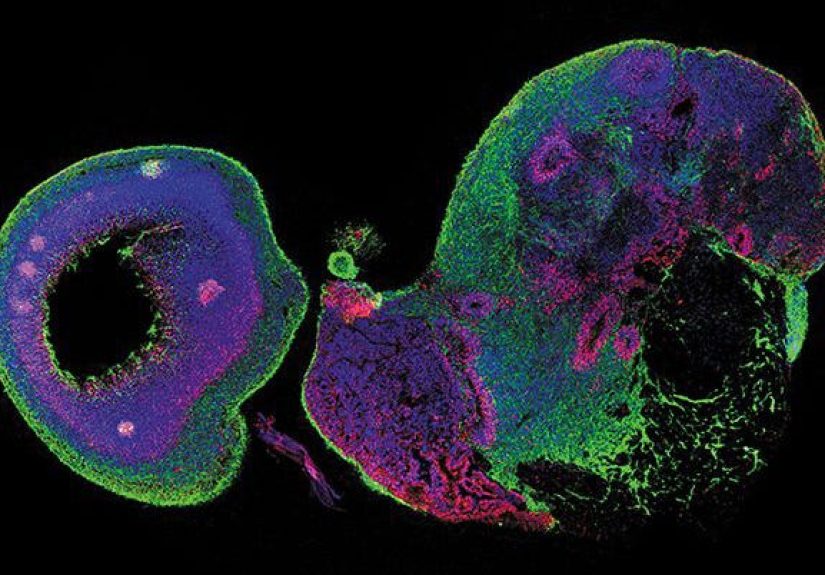
Miniaturized organs are small, three-dimensional biological systems grown from human cells. The best-known version is the organoid, a cluster of cells that self-organizes into a structure resembling part of an organ. These mini-models can be created from pluripotent stem cells, adult stem cells, or patient-derived cells that are coaxed into becoming specific tissue types.
The result is a living structure that can reproduce some of the architecture and function of an organ. A brain organoid may organize into layers that resemble developing brain tissue. A gut organoid may form a lining that behaves like intestinal tissue. A liver organoid may carry out some metabolic functions. No, they are not applying for driver’s licenses anytime soon, but they can behave enough like real human tissue to be incredibly informative.
Organoids vs. Organs-on-Chips
People often use these terms interchangeably, but they are not exactly the same thing. Organoids are self-organizing 3D structures grown from cells. Organs-on-chips are microengineered devices that place living cells in tiny channels and chambers to simulate the physical environment of an organ, including fluid flow, mechanical stress, and tissue interfaces.
If organoids are like miniature neighborhoods of cells, organs-on-chips are more like highly organized tiny apartments with plumbing, ventilation, and rules about where everyone stands. Both are part of a broader group of technologies sometimes called microphysiological systems. In many labs, researchers are beginning to combine organoids with chip platforms to build models that are even more realistic.
How Scientists Make Miniaturized Organs
The basic recipe starts with cells that still have developmental flexibility. Researchers provide those cells with carefully timed chemical signals, growth factors, and a supportive matrix that mimics the environment cells experience in the body. Under the right conditions, the cells begin to organize themselves into tissue-like structures.
This process is part biology, part engineering, and part extreme patience. Scientists must fine-tune nutrients, temperature, timing, and physical support. Even then, cells sometimes behave like talented but dramatic actors: brilliant on some days, unpredictable on others. Reproducibility remains one of the biggest technical challenges in the field.
Some of the most exciting models are patient-derived organoids, which are grown from a patient’s own tissue or reprogrammed cells. That means researchers can create a mini-version of tissue that carries the patient’s genetics and, in some cases, disease-specific traits. This opens the door to more precise drug screening and better understanding of why one person responds to treatment while another does not.
Why Miniaturized Organs Matter
The promise of miniaturized organs is simple to explain and hard to overstate: they may help researchers study human biology in a way that is closer to the real thing than many traditional lab models. That could make medical research faster, safer, and more relevant to actual patients.
Better Drug Testing
Drug development has a brutal failure rate. A compound can look promising in early testing and then collapse in clinical trials because it does not work in people or causes side effects that earlier models missed. Miniaturized organs offer a better preview. Researchers can test how human-like liver tissue metabolizes a drug, how lung tissue reacts to inhaled compounds, or how tumor organoids respond to cancer therapies.
This does not mean organoids have replaced clinical trials, and anyone selling that idea should probably be gently escorted away from the microphone. But these models can help identify promising treatments earlier and screen out risky candidates before they move into costly human studies.
Disease Modeling
Miniaturized organs allow scientists to study diseases in a controlled, human-based system. Brain organoids have been used to investigate neurodevelopmental disorders and viral infections. Gut organoids are helping researchers understand inflammatory bowel disease. Lung organoids have been used to study respiratory disease and infection. Tumor organoids can reflect features of a patient’s cancer and allow rapid testing of different treatment options.
This is especially useful for diseases that are difficult to model in animals or that behave differently in human tissue. A tiny organoid can reveal how cells interact, how tissues develop abnormally, and how disease unfolds over time.
Precision Medicine
One of the most exciting applications is personalized care. In theory, if researchers can grow a miniaturized organ from a patient’s cells, they may be able to test several therapies on that model before choosing a treatment plan. Cancer research has embraced this idea most visibly, but the same logic applies to gastrointestinal disease, rare genetic disorders, and more.
That does not mean your doctor will soon grow a mini-you in a coffee mug and ask it for medical advice. Still, patient-derived organoids are pushing medicine toward treatments that are more tailored and less trial-and-error.
Regenerative Medicine
Miniaturized organs are also helping researchers understand how tissues grow, repair themselves, and respond to damage. Even when the goal is not to transplant an organoid directly, the knowledge gained can inform tissue engineering, cell therapy, and regenerative medicine. Scientists are exploring ways to create better vascularization, improve tissue maturation, and combine multiple tissue types into more advanced systems.
Real Examples of Miniaturized Organs in Action
Mini-guts are among the most established examples. Researchers have grown intestinal organoids that mimic important functions of the digestive tract, including mucus production and metabolic activity. These models are being used to study inflammatory bowel disease, infection, and the interaction between gut tissue and microbes.
Mini-brains, or brain organoids, have drawn enormous interest because they offer a way to study aspects of human brain development that are otherwise hard to observe. They have been used to examine developmental disorders, viral damage, and gene activity related to stress or neurological disease. These are not tiny conscious brains plotting a lab uprising, but they are biologically sophisticated enough to raise important scientific and ethical questions.
Mini-lungs give researchers tools to study respiratory disease, infection, and tissue injury. Because the lung includes many specialized cell types and complex architecture, improved 3D models are especially valuable.
Mini-hearts and mini-livers are also moving forward. Recent work on vascularized organoids is particularly important because one of the biggest barriers in organoid science has been the lack of robust blood vessel networks. Better vascularization may help organoids survive longer, mature more fully, and behave more like living tissue.
Tumor organoids may be the most immediately practical for patients. A tumor sample can sometimes be used to grow a mini-model of a person’s cancer, allowing researchers to test which drugs appear most effective. This does not guarantee identical results in the body, but it can provide a more tailored starting point than choosing therapy with limited individualized data.
What Miniaturized Organs Still Cannot Do
For all their promise, miniaturized organs are not complete replacements for living human organs. Most organoids still lack full blood vessel networks, immune system integration, hormonal signaling, and the large-scale structural organization of a real organ. Many models represent early developmental stages better than mature adult tissue. Others vary from batch to batch, making standardization difficult.
That means researchers must interpret results carefully. An organoid can be an extraordinary model for one question and a terrible model for another. A mini-liver may be useful for studying certain forms of toxicity but less effective for capturing the full-body effects of a disease. A brain organoid may illuminate early neural development while still missing the broader circuitry and sensory input of an actual brain.
In short, miniaturized organs are not magic. They are powerful tools, and like all tools, they work best when everyone admits what they can and cannot do.
The Ethical Questions Around Miniaturized Organs
Any technology that imitates human tissue closely enough to be medically useful will raise ethical questions. Most of those questions are manageable, but they are worth taking seriously.
The biggest public concern often centers on brain organoids. As these systems become more complex, bioethicists and scientists continue discussing whether advanced neural models might someday require additional oversight. Current evidence does not suggest that existing brain organoids are conscious in the way people fear, but the discussion is not science fiction fluff. It is a responsible response to a fast-moving field.
Other ethical issues include donor consent, ownership of patient-derived tissue, commercialization, equitable access to therapies, and the possibility that advanced miniaturized tissues could be used in animal research or transplantation in ways that require careful governance. The right response is not panic. It is smart oversight, transparency, and clear ethical standards that evolve with the science.
How Miniaturized Organs Could Change the Future of Medicine
The field is heading toward more complex, integrated systems. Researchers are building better biobanks of patient-derived organoids, creating more standardized manufacturing methods, and combining organoids with microfluidic chips, sensors, and computational tools. Some teams are working on multi-organ systems that connect mini tissues to simulate how organs interact across the body.
That matters because disease rarely happens in isolation. A drug may help the liver but harm the heart. An immune response in the gut may affect the brain. The future of miniaturized organs is not just smaller tissues. It is smarter systems that capture more of the body’s interconnected biology.
Regulators are paying attention too. As alternative methods gain traction in toxicology and drug development, organoids and microphysiological systems are increasingly being considered as part of the evidence base for evaluating safety and effectiveness. That does not mean the old model disappears overnight. It means the research toolbox is getting much more sophisticated.
And perhaps that is the most exciting part. Miniaturized organs are not trying to replace medicine as we know it with a tiny plastic future. They are helping researchers build better questions, better models, and eventually better care. That is a big job for something smaller than a raisin.
Experiences Related to Miniaturized Organs
One of the most interesting things about miniaturized organs is how they change the experience of research itself. Scientists who work with organoids often describe a strange mix of control and surprise. On paper, they are following a protocol: add this growth factor, wait this many days, adjust the matrix, check morphology. In real life, it can feel more like gardening in a very expensive incubator. Some cell cultures organize beautifully. Others decide, with all the confidence of a cat ignoring instructions, to do something else entirely. That unpredictability can be frustrating, but it is also part of what makes organoids so biologically meaningful. They are not static plastic models. They are living systems with their own developmental logic.
For clinicians and translational researchers, the experience is often more emotional. Imagine treating a patient with an aggressive disease and knowing that standard options may not tell the whole story. A patient-derived organoid can make the science feel more personal because the model is not abstract. It is built from that patient’s biology. Researchers may watch a treatment succeed or fail in a dish and feel, in a very concrete way, that the lab bench and the hospital bed are no longer worlds apart. That does not erase uncertainty, but it changes the tone of decision-making. The research becomes less about average biology and more about an individual human being.
Patients and families who hear about miniaturized organs often experience a mix of hope, curiosity, and understandable confusion. The phrase itself sounds futuristic, and sometimes a little alarming, as if scientists are assembling tiny replacement humans in a drawer somewhere. Once explained clearly, though, many people respond with relief. They understand the appeal of testing therapies on a realistic model before using them in a person. For families dealing with rare disease, miniaturized organs can represent something even more important: attention. A rare condition that used to have few relevant lab models may finally have a biological system that reflects the disease more accurately.
There is also an experience of humility built into this field. Researchers often begin with excitement over how much an organoid can do, then quickly run into the equally important reality of what it cannot do. A mini-brain may reveal patterns of development, but it cannot capture a whole person’s life, sensory world, or behavior. A tumor organoid may predict drug response better than older systems, but it still does not reproduce every immune interaction or every variable inside the body. Working with miniaturized organs constantly reminds scientists that biology is layered, messy, and not particularly interested in neat PowerPoint slides.
Still, the experience surrounding these technologies is overwhelmingly one of momentum. In labs, clinics, and research centers, miniaturized organs are giving people a new way to see human disease up close. They make medicine feel more precise, more creative, and sometimes more hopeful. For a field built on things too small to notice without a microscope, that is a surprisingly large emotional footprint.
Conclusion
Miniaturized organs are one of the most exciting developments in biomedical science because they bring researchers closer to real human biology without needing a full human body to answer every question. They are already helping scientists study development, model disease, test therapies, and move toward precision medicine. At the same time, they come with technical limits and ethical questions that deserve serious attention.
The smartest way to think about them is neither as miracle products nor as overhyped lab toys. They are advanced research tools that are steadily becoming more realistic, more useful, and more integrated into how medicine is developed. Tiny though they are, miniaturized organs may help produce some of the biggest shifts in healthcare over the next decade.