Table of Contents >> Show >> Hide
Hollywood loves a surprise, but every now and then it gets one that feels less like a publicity stunt and more like a charming plot twist nobody saw coming. That is exactly why the buzz around Meryl Streep and Martin Short has been so irresistible. The conversation started with Only Murders in the Building, where Streep joined the Hulu hit as Loretta Durkin, an actress with a battered résumé, a giant heart, and a connection to Short’s Oliver Putnam that quickly became one of the show’s warmest storylines. Then the usual fan chatter turned into a full-blown pop-culture hobby: are these two simply giving us elite screen chemistry, or is there something sweeter happening off-camera too?
What made the story explode was not just hand-holding photos, red-carpet body language, or the internet’s well-known inability to behave normally when two charismatic stars smile at each other. It was creator commentary. Only Murders co-creator and showrunner John Hoffman did not exactly pour cold water on the fascination. Quite the opposite. He described Streep and Short’s connection in glowing terms, calling it one of the most unexpected turns and recalling how naturally they delighted in each other while working together. Suddenly, this was no longer just a fan fiction factory running on espresso. The man helping steer the series was basically saying, “Yes, the chemistry is real. We noticed too.”
And that is what makes this story so delicious for television fans, celebrity-watchers, and anyone who enjoys the rare sight of romance coverage involving two adults who actually know what a landline is. Whether you call it a friendship, a rumored relationship, an off-screen spark, or a beautifully timed cultural obsession, the Streep-Short saga works because it sits at the intersection of performance, timing, affection, and public fascination.
How Only Murders in the Building Set the Stage
Before the rumor mill started humming, John Hoffman had already imagined something special for Oliver Putnam. He has said that he always wanted Meryl Streep to play Oliver’s love interest, which makes the whole thing feel less random and more like one of those rare moments when TV casting aligns with the stars, the writers, and maybe the gods of delightful gossip. Loretta was built as a late-blooming actress with deep feeling, old disappointments, and a romantic path that could give Oliver something richer than another punchline.
That mattered. Oliver is hilarious, theatrical, vain, dramatic, ridiculous, and lovable, but he is also vulnerable in a way Martin Short plays beautifully. Pairing him with Streep was not a cheap stunt. It was a clever narrative choice. Loretta was not there just to flutter eyelashes, cue violin music, and disappear into the wallpaper. She came with mystery, pain, ambition, and emotional gravity. That let the show build a romance that felt earned instead of gimmicky.
Hoffman has talked openly about how “unexpected” the pairing seemed on paper, but that is exactly why it landed. Streep and Short did not play the romance like a sitcom side quest. They played it like two people surprised by tenderness and slightly stunned that life could still hand them something good. On television, that kind of emotional truth is catnip.
In Season 3 especially, the relationship between Oliver and Loretta became one of the series’ strongest emotional engines. While the show still delivered murders, clues, jokes, and New York weirdness by the truckload, it also gave viewers something unexpectedly moving: a mature love story that was funny, awkward, romantic, and occasionally heartbreaking. It was not trying to be young. It was trying to be human. That made it better.
What John Hoffman Actually Revealed
The reason this topic refuses to leave the group chat is John Hoffman’s own language. He did not describe Streep and Short like two professionals politely hitting their marks and then wandering back to craft services. He described something more electric. He said watching them together was unbelievable, and remembered how they laughed constantly and delighted in each other on screen and off screen. That is not the kind of description that kills speculation. That is the kind of description that sends speculation to the gym and gives it a protein shake.
Hoffman also shared one of the sweetest details in the entire story: after filming a romantic ferry scene in Season 3, Streep reportedly waited for him and thanked him emotionally for giving her the chance to play a romantic scene “at this age” in that way. It is a lovely detail for two reasons. First, it speaks to how meaningful the material was for her as an actor. Second, it explains why the Oliver-Loretta storyline resonated beyond ordinary TV romance beats. The people making it understood they were doing something rare.
That rare thing was not simply pairing two legends. Hollywood does that all the time and usually expects applause for basic arithmetic. What Hoffman and the series pulled off was giving mature performers a romance with sincerity, dignity, playfulness, and dramatic charge. No snickering. No wink-wink “look at the older people kissing” nonsense. Just a story that trusted viewers to care.
And viewers absolutely did care. Once Hoffman framed the connection as creatively magical, fans began reading every appearance through that lens. Suddenly, every glance, every shared laugh, and every public outing looked like evidence in a mystery one level below the actual murders in the building.
Why Fans Became So Invested
Part of the frenzy is simple: Meryl Streep and Martin Short are deeply beloved performers with wildly different but complementary energies. Streep brings precision, warmth, and emotional command. Short brings speed, sparkle, mischief, and the ability to turn even a pause into a comic event. Put them together and audiences get a combination that feels both classy and a little dangerous, like champagne in a clown car.
Another reason is timing. Streep joined the show in Season 3, and soon after, public conversation around her personal life changed when it became widely reported that she had long been separated from Don Gummer. Meanwhile, Short, who has spoken movingly over the years about the loss of his wife Nancy Dolman, has long been seen as one of entertainment’s great resilient charm machines. That background gave the public a narrative frame they immediately understood: two seasoned, adored performers finding comfort and joy in each other. Whether or not that narrative has ever been formally confirmed, it is emotionally legible, and the public loves emotionally legible stories.
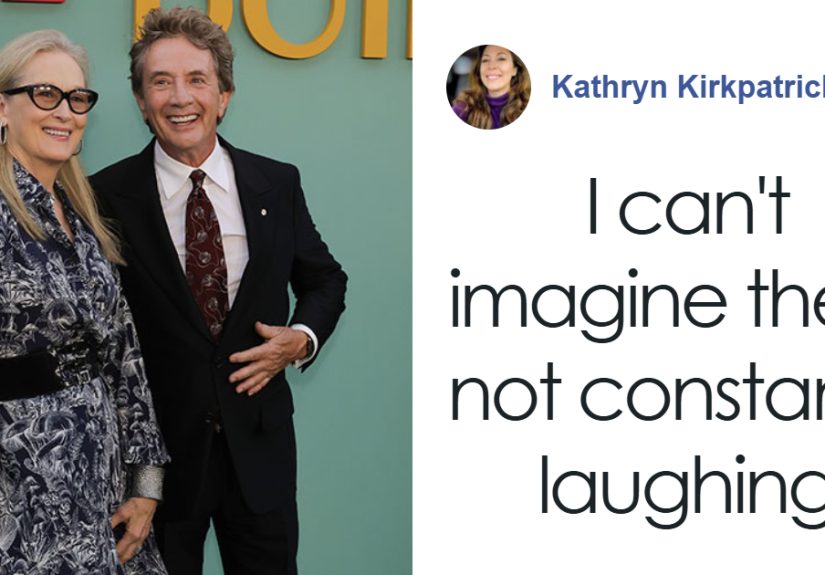
The rumor cycle also had fuel. The two were seen together at major events, including the Only Murders Season 4 premiere and afterparty, where they were photographed holding hands. They were also seated together at the Emmys, appeared together at other public outings, and kept giving the internet new material to overanalyze like under-caffeinated detectives with Wi-Fi. At one point, even Steve Martin added to the chatter with a cheeky social media post that fans treated like a soft-launch prank from the world’s driest accomplice.
Still, the public record has remained messy in the most fascinating way. Short and his rep publicly denied that the two were a couple, describing them as very good friends. That denial did not end the discussion. If anything, it gave the whole thing another layer. Now fans were no longer just reading body language; they were decoding the tension between public statements and visible closeness. In celebrity culture, that is basically rocket fuel.
The Real Story Might Be Bigger Than “Are They Dating?”
Here is the interesting part: the most compelling angle is not necessarily whether there is a label on the relationship. The better story is what Streep and Short represent together. They represent the return of mature romance to the center of the frame. Not as a side dish. Not as a joke. Not as a sentimental afterthought. As a fully satisfying narrative event.
That is what Hoffman seemed to understand from the start. He has emphasized the emotional truth and magic they created together, and that matters more than gossip-site certainty. Their pairing worked because it let audiences see chemistry that was tender instead of frantic, playful instead of cynical, and intimate without feeling manufactured. In an era when so much celebrity coverage feels aggressively branded, this one felt oddly old-fashioned. Two gifted people worked together, seemed to enjoy each other enormously, and accidentally turned into a cultural mood.
It also helped that Only Murders in the Building already thrives on blurring tones. It can be absurd and melancholy in the same episode. It can be silly, heartbreaking, and self-aware before the opening credits are done stretching. A romance between Oliver and Loretta fit that ecosystem perfectly. So when fans started projecting some of that magic onto Streep and Short off screen, it did not feel ridiculous. It felt like the natural extension of a show built on charm, secrets, and emotional surprise.
What Their Dynamic Says About Only Murders as a Show
The Streep-Short phenomenon also reveals something important about why Only Murders in the Building keeps working. The series is not just about murder puzzles. It is about lonely people discovering connection in places where they expected routine. Charles, Oliver, and Mabel begin as neighbors with baggage; they become a chosen family. The show understands that mystery is fun, but attachment is what keeps people coming back.
Oliver and Loretta fit that philosophy exactly. Their romance gave the series a softer heartbeat. It reminded viewers that the stakes in Only Murders are not only about who killed whom, but about whether damaged, eccentric, hopeful people can still be surprised by joy. That may sound like something printed on an expensive candle, but in this case it is also true.
So when Hoffman talks about Streep and Short with such affection, he is not just feeding a celebrity-news cycle. He is highlighting the very thing the show does best: taking characters and relationships that should not work on paper and making them feel inevitable by the end. That is not an accident. That is craft.
The Experience of Watching This “Unexpected” Romance Unfold
One reason people have latched onto this story so intensely is that it mirrors a familiar emotional experience: sometimes the pairings that look odd from a distance make perfect sense once you actually witness them. Viewers have had that experience with coworkers, relatives, friends, and even their own love lives. The person who seems like a mismatch on paper turns out to be exactly right in motion. That is the Streep-Short effect. It is not neat, obvious, or algorithm-friendly. It is alive.
There is also something deeply satisfying about watching two people of enormous accomplishment still look delighted by each other. In celebrity culture, we are trained to expect polished coolness, strategic ambiguity, and carefully ironed emotions. What audiences saw around Streep and Short was something lighter. They seemed amused. Comfortable. Energized. Like two people enjoying a private joke while the entire internet attempted to write a thesis about it. That combination is catnip because it feels human rather than scripted.
For older viewers, the fascination can feel especially personal. The storyline pushes back against the lazy idea that meaningful romance belongs mostly to the young, the glossy, and the shirtless. It says attraction can still surprise you later in life, tenderness can still arrive unannounced, and emotional adventure does not expire just because your reading glasses are getting stronger. That is part of why Streep’s reported gratitude for getting to play a romantic scene “at this age” struck such a nerve. It was not just about acting. It was about visibility.
Younger viewers, meanwhile, seem drawn to the lack of performance in the whole thing. The appeal is not “Look at this hot new power couple launching a fragrance line.” The appeal is “Wait, are these two just genuinely enjoying each other?” That question feels refreshing in a media environment where romance is often packaged like a product demo. With Streep and Short, the public response has been less thirsty frenzy and more delighted detective work. People are not just shipping them; they are charmed by the possibility that life can still throw a curveball in the shape of companionship.
Then there is the workplace angle, which makes the story feel familiar in a completely non-Hollywood way. Many people know what it is like to discover unexpected affection through collaboration: shared jokes, mutual respect, long days, creative trust, the odd magic of seeing someone do what they do well. That does not automatically become romance, of course, but it does create intimacy. Whether viewers interpret Streep and Short as close friends, kindred spirits, or something more, they recognize the emotional ingredients. The setting may be a hit Hulu series instead of an office break room, but the emotional architecture is surprisingly relatable.
Most of all, the experience of following this story has been fun because it has not been mean. So much celebrity coverage feeds on collapse, betrayal, chaos, or humiliation. This one feeds on affection. People are drawn to it because the energy around it has felt warm, mischievous, and hopeful. Even the uncertainty adds to the appeal. We may never get a giant neon answer, and honestly, that might be why the story works so well. It lets audiences enjoy the possibility instead of arguing over a press release.
In that sense, the “unexpected” romance is not just about Meryl Streep and Martin Short. It is about the experience of being pleasantly surprised by chemistry, by kindness, by timing, and by the reminder that grown-up love stories can still dominate the conversation without trying too hard. In a culture that often mistakes noise for excitement, that feels almost radical.
Conclusion
Meryl Streep and Martin Short may never give the public the neat, official answer that gossip culture craves. But thanks to Only Murders in the Building and John Hoffman’s candid, affectionate reflections, the fascination makes perfect sense. He did not just cast a legendary actress opposite a legendary comedian. He helped create a pairing that felt tender, funny, emotionally rich, and improbably perfect. Then the world watched that connection spill beyond the screen and did what the world always does when presented with irresistible chemistry: it leaned in hard.
So is this an unexpected romance? In the cultural sense, absolutely. In the storytelling sense, maybe not. Once you watch Meryl Streep and Martin Short together, it starts to feel less like a shock and more like one of those rare television choices that makes you wonder why nobody thought of it sooner. Some mysteries need a detective board. This one mostly needs a smile.