Table of Contents >> Show >> Hide
- What the 90/90 Hip Switch Actually Tests
- 1) You’re Missing Hip Internal Rotation (The #1 Culprit)
- 2) Your Hip External Rotation Is Limited (Front Leg Says “Nope”)
- 3) You Don’t Have Enough Hip Flexion, So Rotation Feels Like a Trap
- 4) Your Body Is Cheating Through Your Low Back (And That’s Not a Moral Failure)
- 5) You’re Strong… Just Not in This Specific Range
- 6) Your Hip Joint Structure Is Working With Different Hardware
- 7) A Labral Tear or Cartilage Irritation Can Make Rotation Feel “Catchy”
- 8) Osteoarthritis (or “Older Joint” Changes) Can Reduce Rotation
- 9) You’re Forcing the Knees and Ankles to Do a Hip Job
- 10) Your Setup Is Working Against You (And Instagram Didn’t Mention That)
- How to Troubleshoot Your Limiter (Without Turning It Into a Drama)
- A Simple Progression That Doesn’t Hate You Back
- Conclusion: It’s Not Just “Tight Hips”It’s a Clue Map
- Experiences: What People Usually Mean When They Say “I Can’t Do It”
You saw it on a reel: someone sits in the classic 90/90 position, flips their legs like windshield wipers, and somehow looks relaxed doing it. You try it and… your knees levitate, your torso tips over, and your hips feel like they’re negotiating a union contract.
First: you’re not “bad at stretching.” The 90/90 hip switch is a sneaky combo of hip rotation (internal + external), hip flexion, pelvic control, and tolerance of joint tissues. If any one piece is missing, the move can feel impossible. The good news: the way you fail can tell you why you failand what to do next.
What the 90/90 Hip Switch Actually Tests
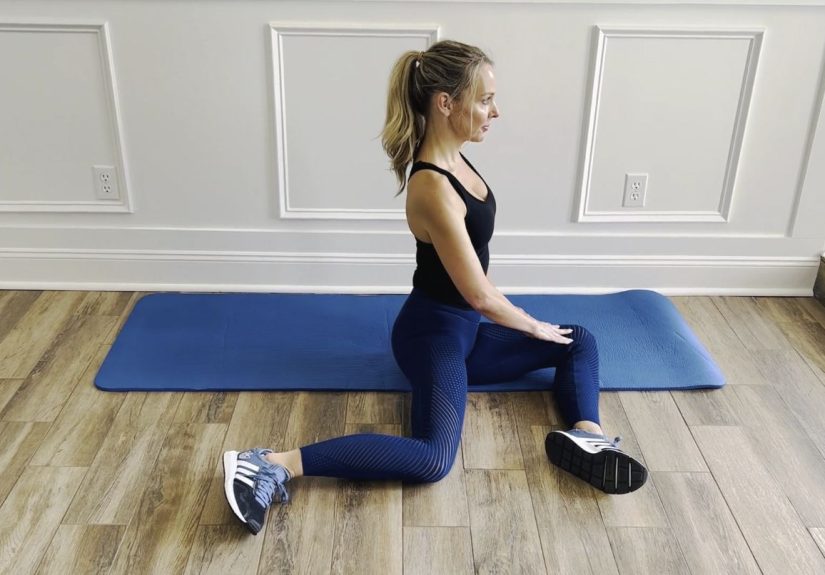
In the 90/90 setup, one hip is mostly in external rotation (front leg) while the other is mostly in internal rotation (back leg), both with the hips flexed. A “switch” asks you to rotate both hips in the opposite directions without cheating through your spine, knees, or feet.
- If your front knee can’t drop: you may lack hip external rotation (or hip flexion, or tolerance in the front-hip capsule).
- If your back shin won’t swing behind you: you may lack hip internal rotation (a very common bottleneck).
- If you can get there but can’t move between sides: that’s often active control and strength, not just “tightness.”
- If it pinches in the groin or clicks/catches: that’s a big “listen up” signalyour joint may be irritated or structurally limited.
1) You’re Missing Hip Internal Rotation (The #1 Culprit)
Most people blame “tight hips,” but what they’re often missing is internal rotationthe ability of your thigh to rotate inward in the hip socket. Without it, the back leg in 90/90 feels glued in place, and switching becomes a dramatic reenactment of a stuck shopping cart wheel.
Why internal rotation gets limited
- Sitting-heavy lifestyle: lots of time in hip flexion can bias tissues toward stiffness and poor rotation control.
- Overactive external rotators: muscles like the deep rotators can “guard” the joint, especially if you’ve had pain before.
- Stiff joint capsule: the hip capsule can get less compliant, making rotation feel blocked rather than stretchy.
- Bone shape and mechanics: some hips simply have less available internal rotation (more on that below).
What it looks like
Your back knee won’t travel toward the floor, the back foot wants to pop up, and your pelvis twists to fake the motion. You might also notice your feet turn outward when you walk or squat because your body prefers external rotation.
2) Your Hip External Rotation Is Limited (Front Leg Says “Nope”)
If the front knee floats high and you feel a strong stretch in the outer hip or deep butt, your external rotation may be the limiter. Sometimes this is muscular (glutes/piriformis region), sometimes it’s capsular, and sometimes it’s just your current tolerance to the position.
Common reasons
- Posterior hip stiffness: tissues in the back of the hip can limit how comfortably the thigh rotates outward.
- Adductor and groin tension: the inner thigh can resist the angle needed to drop the knee.
- Hip flexion limitation: if your hip can’t flex well, external rotation in 90/90 can feel jammed.
3) You Don’t Have Enough Hip Flexion, So Rotation Feels Like a Trap
The 90/90 position isn’t just rotationit’s rotation while the hip is bent. If deep hip flexion bothers you, the switch can feel like you’re trying to fold a chair that’s already locked open.
People often feel this as a pinch in the front of the hip/groin when they lean forward, or they can’t sit upright without rounding hard. That pinch matters, because it can be a sign your joint is irritated, compressed, or simply doesn’t love that angle right now.
4) Your Body Is Cheating Through Your Low Back (And That’s Not a Moral Failure)
When hips don’t rotate, the body borrows motion from nearby placesusually the lumbar spine and pelvis. That’s why the switch can feel wobbly: your hips are asking your spine to do a job your hips aren’t currently doing.
Signs you’re “spine-switching” instead of hip-switching
- Your ribs flare or your torso whips around to “throw” the legs over.
- Your pelvis tilts and rotates dramatically, even when your legs barely move.
- You can only switch if you use momentum (a.k.a. “yeet technique”).
The fix here is usually support + slow control: put hands behind you, elevate your hips, and reduce the range until you can move smoothly.
5) You’re Strong… Just Not in This Specific Range
This one annoys athletes: you can deadlift your bodyweight, sprint, jump, and climb stairs like a mountain goat but the 90/90 hip switch humbles you like you owe it money.
That’s because the switch demands active rotation strength at end ranges, especially the internal rotators, plus coordination between both hips. Many training plans hammer hip extension (hinges, bridges) but barely touch controlled internal rotation.
Clue: “I can get into 90/90, but I can’t switch without hands.”
If the position is possible but the transition isn’t, you likely need more strength and controlthink “practice,” not “punishment.”
6) Your Hip Joint Structure Is Working With Different Hardware
Not everyone’s hip anatomy is built the same. Bone shape and alignment can influence how much internal and external rotation is available, especially in hip flexion. That doesn’t mean you’re brokenit means your “normal” might look different than someone else’s.
Examples of structural factors that can limit the switch
- Femoroacetabular impingement (FAI): extra bone shape can cause the hip to pinch in flexion/rotation and reduce motion.
- Femoral version differences: some people naturally have more internal rotation (anteversion) or more external rotation (retroversion).
- Hip dysplasia or instability patterns: some hips avoid certain positions because they feel unsafe or painful.
Practical takeaway: if your hip feels like it hits a hard stop (not a stretch) or causes sharp pinching, forcing it usually backfires. Your goal becomes improving what’s safely available, not winning a flexibility contest.
7) A Labral Tear or Cartilage Irritation Can Make Rotation Feel “Catchy”
The hip labrum helps the ball-and-socket joint stay stable. When it’s irritated or torn, people can notice clicking, catching, locking sensations, pain in the groin/hip, or reduced range of motionespecially with flexion and rotation.
Not every click is scary. But if you have clicking/catching with pain, or your hip feels like it “gets stuck,” that’s a good reason to get evaluated by a qualified clinician (sports med, physical therapist, orthopedist).
8) Osteoarthritis (or “Older Joint” Changes) Can Reduce Rotation
Hip osteoarthritis doesn’t always announce itself with dramatic pain at first. A common early feature can be reduced hip range of motionoften internal rotationalong with stiffness, discomfort with walking or prolonged sitting, and general “rusty” vibes.
If your hip feels stiff every morning, improves as you move, and rotation is consistently limited on one side, the 90/90 hip switch may simply be asking for range your joint doesn’t want to give right now. That doesn’t mean “don’t move”it means choose a friendlier variation and build capacity gradually.
9) You’re Forcing the Knees and Ankles to Do a Hip Job
In a true 90/90 switch, the rotation is happening at the hip. But when the hip is limited, the body tries to twist elsewhere: knee torque, ankle wobble, foot cranking, and a general sense that your joints are filing a complaint.
Quick check
- If your knees feel stressed, you’re probably pushing the lower leg around instead of rotating the thigh in the socket.
- If your feet twist aggressively, you’re chasing motion at the wrong joint.
Solution: reduce the range, slow the tempo, and keep the feet “along for the ride,” not driving the motion.
10) Your Setup Is Working Against You (And Instagram Didn’t Mention That)
Sometimes the problem isn’t your hipsit’s the way you’re attempting the move. The 90/90 position is customizable. If you set it up like a rigid geometry problem, your body might fail the test even if your hips are fine.
Common setup mistakes
- Hips too low: sitting flat on the floor increases demand. Elevate on a yoga block or folded towel.
- Forcing perfect 90-degree angles: start wider or closer as needed. Your “90/90” can be “75/110” today.
- No hand support: hands behind you reduce balance demands and let the hips do the work.
- Rushing the switch: momentum hides the real limiter and can irritate the joint.
How to Troubleshoot Your Limiter (Without Turning It Into a Drama)
If internal rotation is the limiter
- Start with supported switches: hands behind, move slowly, stop before you twist your spine.
- Try “mini switches” in a smaller range you can control.
- Add internal-rotation strength work (light, controlled reps) in positions you can tolerate.
If external rotation is the limiter
- Use a prop under the front knee so the hip can relax into the angle.
- Work on gentle forward leans only if the hip feels like a stretch, not a pinch.
- Pair mobility with strength (controlled holds) so the range “sticks.”
If you feel pinching, sharp pain, or painful catching
- Back off the range immediatelydon’t “push through” sharp hip pain.
- Try a higher seat, smaller rotation, or supine windshield-wiper style motions.
- Consider professional evaluation, especially if symptoms persist or worsen.
A Simple Progression That Doesn’t Hate You Back
- Elevate your hips: sit on a block/towel to reduce demand.
- Use hands behind you: earn control first, then reduce support later.
- Go slow: 3–5 second transitions, no momentum.
- Own the endpoints: pause for 2–3 breaths on each side.
- Build active control: small lift-offs or gentle isometrics where you can keep good form.
Conclusion: It’s Not Just “Tight Hips”It’s a Clue Map
If you can’t do the 90/90 hip switch, your body isn’t failing a trendy mobility challengeit’s giving you information. The limiter might be internal rotation, external rotation, hip flexion, pelvic control, end-range strength, or joint tolerance. And sometimes, it’s anatomy or irritation that deserves respect, not brute force.
Treat the switch like a diagnostic conversation, not a fight. Adjust the setup, scale the range, build control, and if pain or catching shows up, get eyes on it. Your hips will usually cooperate once they trust what you’re asking them to do.
Experiences: What People Usually Mean When They Say “I Can’t Do It”
The funniest part about the 90/90 hip switch is that everyone thinks they’re the only one strugglinglike the floor is judging them personally. In reality, the “I can’t” stories tend to fall into a few very predictable buckets. Here are the ones I hear most often (and what usually fixes them), told in the kind of real-world language people actually use when they’re not trying to sound like an anatomy textbook.
Story #1: The Desk-Sitter With the Floating Knee. This person can sit in 90/90, but the front knee hovers like it’s allergic to the floor. They feel a deep stretch in the outer hip and say, “My hip is tight, so I just need to stretch more.” What usually helps isn’t endless stretching it’s making the position friendlier. A yoga block under the hips instantly changes the vibe. A pillow under the knee turns “fight mode” into “practice mode.” Once the nervous system stops bracing, the knee often drops a little more… and the person realizes their hip wasn’t a steel cable, it was just irritated by being forced into a range it didn’t trust yet.
Story #2: The Athlete Who Can’t Switch Without Momentum. This person is strong, fast, and can squat deepyet the switch is chaos. They fling the legs over, their torso whips around, and they land in the new position like they just survived turbulence. When we slow it down, it becomes obvious: the hips don’t have active rotation control. The fix looks almost too simple: hands behind for support, smaller range, and painfully slow reps. The first few sessions feel humbling (“Why is this so hard?”), but within a couple of weeks the movement gets quieter and smoother. The athlete usually has a lightbulb moment: “Oh… I wasn’t weak. I was weak here.”
Story #3: The Pinchy Hip That Makes People Nervous. This is the person who feels a sharp pinch in the front of the hip or groin, especially when they lean forward. Sometimes there’s clicking or catching. They keep trying because someone told them, “Just open your hips,” but every session leaves them sore in a not-good way. The breakthrough is learning that not every hip loves deep flexion + rotation. We elevate the seat, reduce the angle, and swap in gentler variations (even lying on the back for “windshield wipers”). Often, the hip tolerates movement again once it’s not being shoved into the exact corner it hates. And if symptoms persist, getting evaluated is a reliefbecause it replaces vague fear with a clear plan.
Story #4: The “One Side Is Fine, The Other Side Is a Brick.” This is incredibly common. One hip switches smoothly; the other feels blocked. People assume they’re “uneven” because they slept wrong in 2019. Usually it’s a combo of habit, history (old injury, old sport), and anatomy. The best experience-based advice here is to stop chasing symmetry like it’s a moral achievement. Work the stiffer side with more support and less range, but keep the easy side honest and controlled too. Over time, the gap often narrowsjust not overnight.
The biggest practical lesson from all these experiences is that progress happens when the 90/90 hip switch becomes a skill, not a test. When people scale it, slow it, and build control, the move stops feeling like a punishment and starts feeling like a warm-up.