Table of Contents >> Show >> Hide
- Why Glass Shower Doors Get Cloudy So Fast
- Why Cleaning Pros Love Baking Soda for Shower Glass
- What You Need Before You Start
- The Pro Method: How to Clean Glass Shower Doors With Baking Soda
- How Pros Handle Really Stubborn Spots
- Common Mistakes That Keep Shower Glass Looking Dingy
- How to Keep Glass Shower Doors Sparkling Longer
- Why This Method Works So Well for Real Homes
- Experiences People Commonly Have With This Method
- Conclusion
Glass shower doors have a special talent: they can look freshly installed on Monday and like they have been through a minor weather event by Friday. One minute they are clear and glossy; the next they are covered in cloudy streaks, hard-water spots, and soap scum that seems to cling on out of pure spite. The good news is that cleaning pros do not usually attack that mess with a cabinet full of expensive products. Very often, they reach for one humble box from the pantry: baking soda.
Used the right way, baking soda can help restore glass shower doors without scratching them up or filling your bathroom with overpowering chemical fumes. The trick is not just what you use, but how you use it. Professionals rely on a few smart steps: soften the buildup first, scrub gently, rinse thoroughly, and dry the glass like they mean it. When those steps come together, the result is the kind of sparkle that makes you wonder whether you accidentally upgraded your bathroom overnight.
Here is how cleaning pros get glass shower doors sparkling with baking soda, why the method works so well, and how to keep that fresh-clean look from disappearing after exactly one shower.
Why Glass Shower Doors Get Cloudy So Fast
If your shower doors always look dull no matter how often you wipe them, you are not imagining things. Glass shower doors collect two main offenders: hard-water minerals and soap scum. Hard water leaves behind calcium and magnesium deposits that dry into spots and a chalky film. Soap scum forms when soap ingredients react with those minerals, creating a stubborn residue that clings to glass like it pays rent there.
Then there is the bathroom environment itself. Steam, splashing water, shampoo residue, body oils, and poor ventilation all work together to create a perfect storm of haze. That is why the door may still look dirty even after a quick wipe-down. Surface smudges are easy. Mineral buildup and soap scum are a whole different personality.
This is exactly where baking soda shines. It does not magically vaporize every stain on contact, but it gives pros a safe, affordable way to lift grime without turning the glass into a scratch test.
Why Cleaning Pros Love Baking Soda for Shower Glass
Baking soda is the overachiever of household cleaning. On glass shower doors, its biggest advantage is that it works as a gentle abrasive. That means it can help loosen and lift buildup without being harsh like steel wool, gritty scrub powders, or rough brushes that can leave permanent marks behind. In plain English: it scrubs, but it does not go feral.
Pros also like baking soda because it is easy to control. You can turn it into a soft paste with water, combine it with a drop or two of dish soap for extra grease-cutting power, or use it after a vinegar treatment to tackle the residue that softens but does not fully dissolve. It is inexpensive, easy to store, and versatile enough to clean the glass, the door tracks, and even nearby tile if needed.
Another reason professionals use it is simple: it plays well in a step-by-step process. Baking soda is rarely the only move, but it is often the hero move. When hard-water film has been loosened first, baking soda becomes the gentle finishing scrub that takes the door from “better” to “wow, I can actually see the shampoo bottles again.”
What You Need Before You Start
You do not need a fancy cleaning caddy for this job. Most pros keep the tool list simple and focused on protecting the glass while removing buildup effectively.
- Baking soda
- Warm water
- Distilled white vinegar or a mild vinegar solution for pretreating buildup
- A small bowl for mixing paste
- Microfiber cloths
- A soft sponge or non-scratch sponge
- An old toothbrush or soft detail brush for corners and tracks
- A squeegee
- A dry microfiber towel for buffing
- Gloves, if preferred
If your shower is surrounded by natural stone, be careful with vinegar. Pros avoid letting acidic cleaners sit on stone because they can etch the finish. In that case, keep vinegar only on the glass or stick with a baking soda-and-water paste plus mild dish soap where needed.
The Pro Method: How to Clean Glass Shower Doors With Baking Soda
1. Start by softening the buildup
Cleaning pros rarely go straight to scrubbing dry, cloudy glass. That is like trying to frost a cake before it cools down: technically possible, emotionally unwise. First, they soften the grime. You can do that by spraying the glass with warm distilled white vinegar, a vinegar-and-water mix, or a vinegar solution with a drop of dish soap. Let it sit for about 5 to 15 minutes for everyday buildup, or longer for heavier hard-water spots.
For really stubborn mineral film, some pros soak paper towels in warm vinegar and press them directly onto the glass so the solution stays in contact longer. This gives the acid time to loosen the chalky deposits instead of asking your arm muscles to do all the work later.
2. Make a baking soda paste
While the pretreatment works, mix your baking soda paste. A simple ratio is about three parts baking soda to one part water, though you can adjust it until it looks like a spreadable paste rather than a runny science project. For greasy residue or heavy soap scum, some cleaners add a small amount of dish soap instead of some of the water. That gives the paste more cling and a little extra cleaning muscle.
The texture matters. A good paste should stay where you put it, especially on vertical glass. If it slides off immediately, add a bit more baking soda. If it is stiff and crumbly, add a few drops of water.
3. Scrub gently, not aggressively
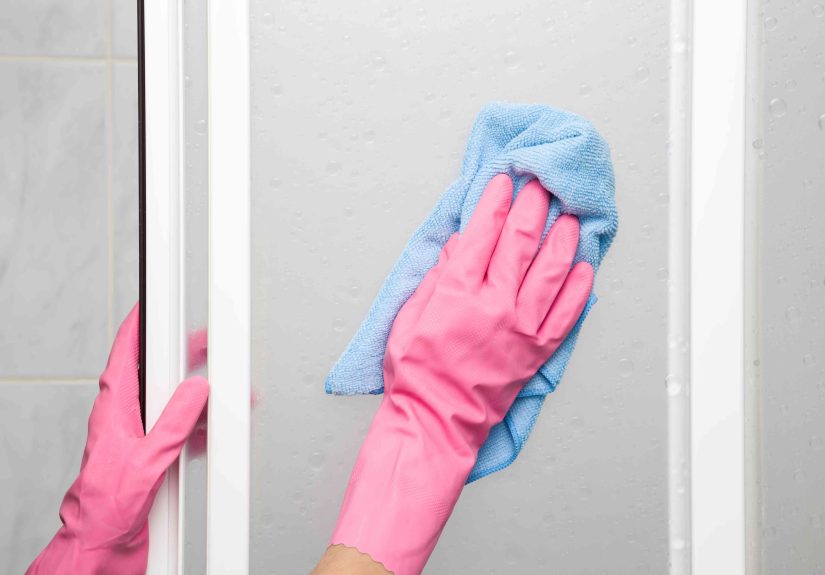
Dip a microfiber cloth or soft sponge into the paste and apply it to the glass using circular motions or a top-to-bottom pattern. Focus on visibly cloudy areas, water spots, and the lower half of the door where buildup is usually worst. If you are dealing with corners, hardware edges, or door tracks, switch to a soft toothbrush.
This is the part where many people overdo it. Pros do not bear down like they are sanding a deck. They scrub gently and steadily, letting the paste and the pretreatment do the heavy lifting. A light touch protects the glass and still gets results.
4. Give the paste a few minutes to work
If the buildup is moderate to heavy, let the baking soda paste sit for around 5 to 15 minutes before scrubbing again. This extra dwell time helps lift residue and makes the second pass easier. On badly neglected doors, you may need to repeat the process once more. That is normal. A shower door that has not been deep-cleaned since the last presidential administration may need two rounds.
5. Rinse thoroughly
Once the haze loosens, rinse the glass with warm water or distilled water. Distilled water is a pro favorite because it does not leave behind the same minerals that caused the problem in the first place. Make sure every trace of paste is gone, especially around the edges and tracks. Leftover baking soda residue can dull the finish you just worked so hard to restore.
6. Dry and buff immediately
This step is not optional if you want that clear, streak-free finish. Use a squeegee first, then follow with a dry microfiber cloth. Work from top to bottom. Wipe the squeegee blade between passes so you do not just smear water back onto the glass. Finish by buffing any remaining streaks with a clean, dry cloth.
This final dry-down is one of the biggest differences between how pros clean and how most of us clean in a hurry. The rinse removes the grime, but the drying step creates the sparkle.
How Pros Handle Really Stubborn Spots
Sometimes the glass has so much mineral buildup that one round of baking soda is not enough. When that happens, cleaning pros usually escalate in a smart order instead of instantly jumping to the harshest product on the shelf. First, they increase the soak time. Second, they repeat the baking soda paste treatment. Third, they target only the problem spots rather than redoing the entire door from scratch.
A cut lemon dipped in baking soda can also work well for isolated hard-water stains. The mild acid helps loosen deposits while the baking soda gently scrubs. It is a handy option when you want a quick spot treatment and a fresh-smelling bathroom that does not smell like a chemistry lab.
If the door is still cloudy after repeated cleaning, the issue may be etching rather than residue. Etching means the surface has been permanently dulled over time, often from mineral exposure or improper cleaners. At that point, no pantry miracle will fully reverse the damage, though regular maintenance can still improve the look.
Common Mistakes That Keep Shower Glass Looking Dingy
Using the wrong scrubber
Harsh pads, stiff brushes, and abrasive powders can scratch glass or damage finishes around the shower door. Pros stick with microfiber cloths, soft sponges, and non-scratch tools.
Skipping the pretreatment
Baking soda is excellent, but it works better when buildup is softened first. If you scrub dry mineral deposits without loosening them, you make the job harder and risk leaving streaks.
Letting residue sit after cleaning
If you do not rinse well, the door can dry with a chalky film. That means your “clean” door still looks foggy. Not ideal.
Not drying the glass
Air-drying may sound easy, but it often leads to new spots. Drying the glass right away is what creates that polished, professional finish.
Using vinegar carelessly around stone
Vinegar may be great on glass, but it is not great on natural stone. If your shower has marble, travertine, or another stone surface nearby, keep acidic cleaners off those areas.
How to Keep Glass Shower Doors Sparkling Longer
Here is the truth pros know: the best way to clean shower glass is to stop the buildup from getting dramatic in the first place. Maintenance matters more than marathon scrubbing sessions once every three months.
- Use a squeegee after every shower.
- Dry the glass with a microfiber cloth if you want an extra-clear finish.
- Keep a simple daily shower spray nearby for quick upkeep.
- Deep-clean weekly if you have hard water, or at least regularly enough that buildup never gets thick.
- Clean the door tracks before they turn into a swampy side quest.
- Consider switching from bar soap to liquid body wash if soap scum is a constant problem.
Some pros also apply a glass protectant to help water bead up and roll away more easily. It is not required, but it can reduce how quickly spots return and make future cleaning much easier.
Why This Method Works So Well for Real Homes
The reason the baking soda method keeps showing up in professional advice is simple: it is practical. It does not require special equipment, it is budget-friendly, and it works on the kind of mess real bathrooms actually have. That matters because most people are not cleaning a showroom. They are cleaning the shower used by two adults, one teenager, three half-empty shampoo bottles, and whatever happened during leg-shaving day.
Baking soda also gives you control. You can keep it mild for weekly maintenance, or you can turn it into a thicker paste for the lower corners of the glass where soap scum likes to settle in and start a family. It is effective without being fussy, which is exactly why pros keep returning to it.
Experiences People Commonly Have With This Method
One of the most common experiences people have when cleaning glass shower doors with baking soda is surprise at how much better the glass looks after the drying step, not just the scrubbing step. Many people assume the cleaning paste is the whole story. Then they rinse the door, stand back, and think, “Well, that helped, but it still looks a little tired.” A few passes with a squeegee and a dry microfiber cloth later, the shine suddenly appears. It is one of those oddly satisfying household moments that makes you feel far more competent than a Tuesday afternoon usually allows.
Another very real experience is discovering that the lower half of the shower door is always worse than the top. This is not bad luck. It is where soap, splashback, and mineral-rich water tend to collect the most. People often start cleaning the whole door evenly, then realize the bottom section needs a second round. Cleaning pros expect that. They do not panic, and they do not assume the method failed. They simply reapply the paste where the buildup is thickest and give it more dwell time.
Homes with hard water usually have the biggest “before and after” difference. In these bathrooms, shower doors can look permanently fogged, even right after a regular wipe-down. When baking soda is paired with a vinegar pretreatment, the improvement can be dramatic. Not always perfect on the first try, but dramatic enough that the door goes from dull and spotted to clear enough to reflect light again. People in hard-water areas often describe this as the first cleaning method that made the door look genuinely refreshed rather than just “less bad.”
There is also a learning curve with the paste itself. The first time around, some people make it too watery, and it slides down the glass before it has time to do much. Others make it too thick and crumbly, so it feels like trying to spread wet sand on a window. After one or two attempts, most land on the sweet spot: a smooth, spreadable paste that sticks to the door and stays put long enough to work. Once you get that consistency right, the entire job gets easier.
People also tend to notice that this method feels more manageable than using a harsh cleaner. There is less overwhelming odor, less worry about damaging the glass, and less reluctance to clean the bathroom in the first place. That matters. A method you are willing to repeat is better than a “miracle” product you dread using.
Finally, there is the maintenance revelation. After doing one proper deep clean with baking soda, many people realize the door stays cleaner much longer when they spend 20 seconds with a squeegee after each shower. It is not glamorous. No one is posting a dramatic movie montage about it. But it works. The big experience lesson here is that baking soda restores the glass, while consistency keeps it sparkling. Together, those habits make the shower door look less like a cloudy inconvenience and more like part of a bathroom that actually feels clean.
Conclusion
If you want sparkling glass shower doors without overcomplicating the job, baking soda is one of the smartest tools you can use. Cleaning pros rely on it because it is gentle, affordable, and effective when paired with the right technique. Loosen the buildup first, apply a well-mixed paste, scrub with a light hand, rinse thoroughly, and dry the glass immediately. That is the formula.
In other words, the secret is not a magical product hiding in a janitor’s closet. It is a simple process done well. And once you see what baking soda can do for cloudy shower glass, you may start looking around the bathroom wondering what else that orange box can rescue next.
: