Table of Contents >> Show >> Hide
- Why “Stopping the Train” Usually Means Alerting the Crew
- Step 1: Stay Calm and Identify the Actual Emergency
- Step 2: Know What Counts as a True Stop-Now Emergency
- Step 3: Alert the Crew Immediately
- Step 4: Use the Emergency Brake Only if Continued Movement Is the Danger
- Step 5: Do Not Force Doors, Open Windows, or Exit Onto the Tracks on Your Own
- Step 6: Move Away From the Immediate Hazard Inside the Car
- Step 7: Give Precise Information to the Crew or Responders
- Step 8: Help Other Passengers the Smart Way
- Step 9: Evacuate Only When Instructedand Evacuate Carefully
- Step 10: After the Stop, Cooperate, Recover, and Report What You Saw
- Common Mistakes to Avoid in a Train Emergency
- Final Thoughts
- Passenger Experiences and Lessons From Real-World Train Emergencies
- SEO Tags
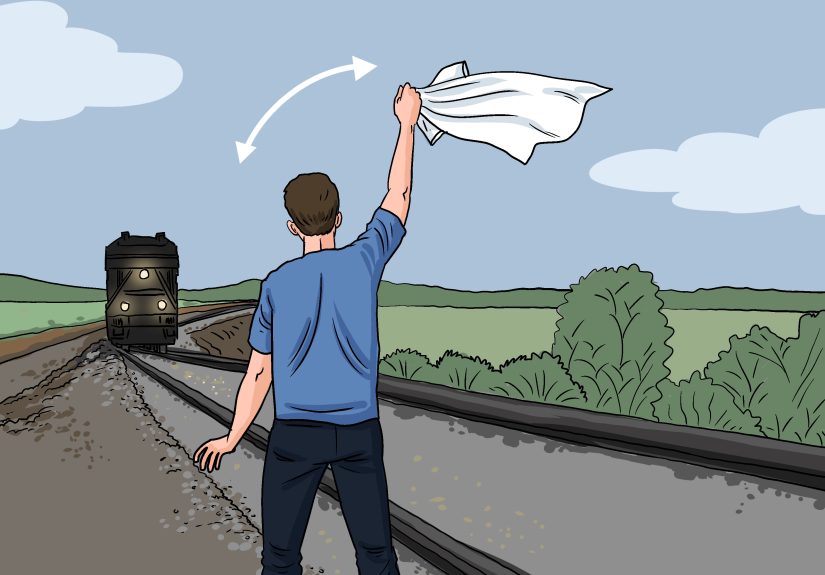
If the title sounds a little dramatic, that’s because it is. Trains are not bicycles, scooters, or shopping carts with delusions of grandeur. You do not “just stop one” by getting creative. In a real emergency, the safest goal is not to play movie hero. It is to help the right people stop the train safely, protect the passengers around you, and avoid turning one bad situation into a full-blown disaster with bonus panic.
So here’s the big truth up front: unless you are authorized train crew or emergency personnel, your job is usually not to manually stop or interfere with a train. Your job is to report the danger fast, use emergency tools only when the situation truly calls for them, and follow trained instructions. That may sound less glamorous than leaping for a mysterious red handle, but it is much more likely to end with everyone going home in one piece.
This guide breaks down 10 practical steps for what passengers should do when they believe a train must stop in an emergency. It also explains when not to act, because sometimes the safest move is the one that feels frustratingly uncinematic.
Why “Stopping the Train” Usually Means Alerting the Crew
On passenger rail systems, emergency stopping and evacuation are built into larger safety procedures. Conductors, engineers, operators, dispatchers, and control centers are trained to evaluate hazards such as smoke, fire, medical emergencies, blocked tracks, suspicious packages, loss of power, and unsafe conditions near tunnels or electrified rails. In plain English: there is a system for this.
That is why many rail agencies tell riders to use intercoms, emergency call buttons, or onboard staff before touching any emergency brake or door release. A sudden stop in the wrong place can create new risks. Think tunnels, bridges, viaducts, curves, nearby moving trains, electrified third rails, overhead wires, or passengers who were standing and suddenly become unwilling acrobats.
In other words, a train stopping unsafely is not a win. A train stopping in the right place, at the right time, for the right reason is the real goal.
Step 1: Stay Calm and Identify the Actual Emergency
Your first job is not to sprint. It is to think.
Ask yourself a few quick questions:
- Is there an immediate threat to life, such as fire, smoke, a person trapped, violent danger, or the train moving into a clearly hazardous situation?
- Is this a medical emergency that requires urgent help but not necessarily an instant stop?
- Is the problem annoying, scary, or unusualbut not immediately life-threatening?
This matters because not every emergency requires a passenger-triggered stop. A person fainting, for example, absolutely needs fast help. But yanking an emergency brake in a tunnel may not be the safest first move. Reporting the situation to the crew is often faster and smarter, because they can communicate with control, dispatch first responders, and stop at the safest location.
Calm is contagious. Panic is too. If you can keep your voice steady, you instantly become more useful than the person shouting, “We’re all doomed!” after a flickering light.
Step 2: Know What Counts as a True Stop-Now Emergency
If you’re wondering when emergency stopping might be justified, think in terms of immediate danger caused by the train’s continued movement. That is the key idea.
Examples may include:
- A rider or object is trapped in a way that creates imminent danger if the train keeps moving.
- You see fire, heavy smoke, or sparks that suggest an immediate onboard hazard.
- There is a violent, life-threatening event where seconds matter and you cannot reach crew another way.
- The train is moving while a condition clearly threatens life and limb right now.
What usually doesn’t qualify? Missing your stop. A door not reopening fast enough. A loud argument that has not escalated. Someone vaping like they’re auditioning to be a weather system. Those are reportable problems, not reasons to interfere with train movement.
The rule of thumb is simple: if the train’s motion is the danger, emergency stopping tools may be relevant. If the emergency exists but movement is not the main threat, contact the crew first.
Step 3: Alert the Crew Immediately
This is the move that solves more emergencies than passengers realize.
Most passenger trains and rail cars have one or more of the following:
- Passenger emergency intercoms
- Call buttons
- Emergency communication panels
- Onboard conductors or attendants
- Platform call boxes or station phones
Use them fast and use them clearly. Do not deliver a 14-part TED Talk. Give the crew the basics:
- What is happening
- Which car you are in
- Whether anyone is injured
- Whether the danger is immediate
A strong report sounds like this: “Medical emergency in car 4 near the rear door. Passenger is unconscious and not responding.”
Or this: “Smoke in the middle of car 2. It smells electrical. People are coughing.”
That is far more useful than: “Something weird is happening and everybody is freaking out!” Accurate information helps the crew decide whether to stop, hold, reroute, call EMS, isolate a car, or begin evacuation procedures.
Step 4: Use the Emergency Brake Only if Continued Movement Is the Danger
Here is the part that deserves flashing lights, bold fonts, and maybe a choir: do not use a passenger emergency brake just because you are scared, angry, impatient, or guessing.
Emergency brake handles, cords, or valves are for situations where the train’s continued motion presents immediate danger. Pulling them unnecessarily can stop the train in a worse location, delay emergency access, strand passengers in tunnels, and create hazards that did not exist 10 seconds earlier.
If, however, you truly cannot reach crew and there is an imminent life-threatening risk tied to the train’s motion, use the emergency brake according to posted instructions. Then immediately tell other passengers what happened and try to notify the crew through an intercom or by speaking to staff if available.
This is not the place for improvisation. Use the emergency device only when the danger is real, immediate, and connected to continued movement.
Step 5: Do Not Force Doors, Open Windows, or Exit Onto the Tracks on Your Own
When people feel trapped, they want to do something dramatic. That instinct is understandable. It is also how emergencies get messier.
Do not pry doors open. Do not climb out because the train has stopped and you assume that means it is safe outside. Do not step onto tracks unless crew or first responders direct you to evacuate.
Why? Because outside the train may be far more dangerous than inside it. Hazards can include:
- Electrified third rails
- Downed power lines
- Another train on an adjacent track
- Narrow walkways
- Poor lighting in tunnels
- Trip hazards and ballast
- Smoke movement or limited visibility
Rail agencies repeatedly make the same point: in many emergencies, the safest place to remain is on the train until trained personnel tell you otherwise. That may feel counterintuitive. It is also usually correct.
Step 6: Move Away From the Immediate Hazard Inside the Car
If the emergency is localized, create distance without creating chaos.
For example:
- If there is smoke in one end of the car, move to the other end or into another car if it is safe and allowed.
- If a person is behaving violently, put distance between them and other passengers while notifying crew.
- If there is a spill, broken glass, or electrical smell, clear the area and keep others back.
Keep aisles as open as possible. Avoid crowding doors. If children, older adults, or passengers with disabilities are nearby, help them relocate calmly. The goal is not a stampede. It is controlled movement away from the danger while the crew manages the train.
This is one of the least glamorous steps and one of the most effective. A neat, orderly shuffle beats a panicked rugby scrum every time.
Step 7: Give Precise Information to the Crew or Responders
Once contact is made, details matter.
Try to provide:
- Your car number or approximate location
- The nature of the emergency
- How many people are affected
- Whether smoke, fire, blood, weapons, or electrical hazards are present
- Whether the emergency is getting worse
If someone is ill or injured, note whether they are breathing, conscious, bleeding, or trapped. If you have called 911 from your phone, mention that too. The crew may already be coordinating with a control center, but duplicate reporting is better than helpful silence.
Specificity saves time. “Man collapsed near center doors in car 3, breathing but not responsive” is gold. “A guy looks bad” is… less gold.
Step 8: Help Other Passengers the Smart Way
Emergency response is a team sport, but not everyone needs to be team captain.
Here are useful ways to help:
- Keep children close to caregivers
- Offer a seat or space to someone who is faint, injured, or panicking
- Help translate if you speak another language and crew needs support
- Assist someone with mobility, hearing, or vision needs if they ask or clearly need help
- Repeat official instructions in a calm voice
Here are less useful ways to help:
- Shouting over announcements
- Posting before assisting
- Arguing about what “probably” should happen
- Turning yourself into a self-appointed train mechanic
If you have first-aid skills, use them within reason. If you do not, focus on crowd control, clear communication, and keeping pathways open. That is genuinely helpful.
Step 9: Evacuate Only When Instructedand Evacuate Carefully
If the crew or first responders order an evacuation, then the mission changes. Now it is all about getting out safely, not quickly in the sloppy sense.
When evacuation is ordered:
- Listen for the designated exit route
- Leave large bags behind if told to do so
- Watch your step carefully
- Use handrails and marked exits
- Help those who need assistance
- Stay clear of tracks, third rails, and downed wires
- Move to the assembly area or safe location indicated by responders
Do not wander off because you “see daylight over there.” Emergency evacuations are not scavenger hunts. Crews may be accounting for passengers, coordinating power shutdowns, and securing adjacent tracks. Following the assigned path helps everyone.
If you use a mobility device or have other accessibility needs, tell crew immediately. Emergency plans typically include assistance procedures, but responders need to know who needs help and where they are.
Step 10: After the Stop, Cooperate, Recover, and Report What You Saw
Once the train has stopped and the immediate danger has eased, stay useful.
That means:
- Follow responder instructions
- Do not reboard unless told to do so
- Give witness information if requested
- Report exactly what you saw, heard, and did
- Seek medical attention if you inhaled smoke, fell, or feel unwell
Even if you think you are fine, adrenaline can be sneaky. People sometimes discover later that they twisted an ankle, inhaled more smoke than they realized, or forgot key details that investigators need.
If your emergency action prevented harm, that is great. If it turns out the situation was less severe than it appeared, honesty still matters. Describe your observations, not your dramatic theories. “I smelled strong smoke and saw sparks near the panel” is better than “I’m pretty sure the whole train was about to explode.”
Common Mistakes to Avoid in a Train Emergency
- Pulling an emergency brake for a non-emergency: This can create more danger and delay real help.
- Blocking doors: It interferes with train operation and emergency procedures.
- Self-evacuating onto tracks: This is one of the riskiest mistakes passengers can make.
- Ignoring crew announcements: The instructions may change as conditions change.
- Crowding one exit: Use the route you are directed to use, not the one everyone emotionally falls in love with.
- Assuming silence means no one is responding: Crew may be communicating with control even if you cannot hear it.
Final Thoughts
So, how do you stop a train in an emergency?
For most passengers, the real answer is this: you help trained professionals stop it safely. You assess the threat, alert the crew, use emergency devices only when continued movement presents immediate danger, avoid reckless self-evacuation, and follow instructions with the kind of calm confidence that makes other people breathe easier.
It is not Hollywood. It is better. Hollywood loves chaos. Real safety loves communication, timing, and people who know that the bravest move is often the smartest one.
If you ride trains regularly, take one minute the next time you board to notice the intercom, emergency signage, and nearest exits. That tiny habit may feel boring in the moment. In a true emergency, it becomes extremely interesting.
Passenger Experiences and Lessons From Real-World Train Emergencies
Ask frequent rail riders about emergencies, and you’ll hear a pattern. The most memorable part is often not the original problem. It is the uncertainty. A stalled train in a tunnel feels longer than it is. A faint electrical smell can make every rider suddenly become a detective. A medical emergency in a crowded car can transform a routine commute into a scene where calm, communication, and basic courtesy matter more than people expect.
One common experience is the “silent stop.” The train halts between stations, the lights stay on, and everyone looks up from their phones at the exact same moment, as if they’ve all been cast in the same suspicious documentary. In many of these cases, the safest thing passengers can do is wait for instructions while someone uses the intercom or alerts a conductor. What makes the situation worse is usually not the stop itself. It is rumors spreading car to car: smoke that turns out to be brake dust, a “fire” that is really a minor equipment issue, or claims that everyone needs to get out immediately when no such order has been given.
Another common scenario involves a passenger medical crisis. Riders who have been through this often remember how fast a calm voice helped. One person contacted the operator. Another cleared space. Someone with first-aid knowledge checked the passenger. Others simply moved back and stopped crowding the area. That is what effective emergency response looks like on a train: not ten heroes, but several useful people doing small, smart things.
Then there are smoke or odor events, which tend to spike anxiety immediately. Passengers often describe these moments as confusing because they do not know whether the danger is minor, major, or somewhere in between. The best outcomes usually happen when the crew communicates clearly and passengers avoid freelancing. People who stay put, listen, and prepare to move if directed often have a much safer experience than those who force doors or try to self-evacuate.
There have also been situations where riders exited trains on their own and later learned that the area outside carried risks they could not see: nearby active tracks, limited tunnel access, or electrified rail systems. That lesson comes up again and again. Outside the train is not automatically safer just because it feels less confined.
The human side of these experiences is worth remembering. People remember the stranger who helped an older rider step down safely, the parent who kept kids calm by turning instructions into a game, or the passenger who repeated the conductor’s announcement in plain language so everyone could hear. Emergencies on trains are stressful, yesbut they also reveal how much safer a group becomes when even a few people stay levelheaded.
The takeaway is simple: preparation beats panic. Notice the safety features before you need them. Trust trained crews. And remember that in a rail emergency, smart behavior is often the thing that passengers appreciateand rememberlong after the train starts moving again.