Table of Contents >> Show >> Hide
- What “locally transmitted” malaria actually means
- Why the recent U.S. cases grabbed attention
- Why locally transmitted malaria cases in the U.S. are a big deal
- 1. They break the illusion that malaria is someone else’s problem
- 2. Malaria is not just a bad mosquito bite story
- 3. The mosquito vectors are still here
- 4. Imported malaria can become a local public health test
- 5. These cases stress-test public health readiness
- 6. It has implications beyond mosquito bites
- 7. Climate and travel make the background risk harder to ignore
- This is a warning shot, not a prophecy
- What ordinary people should do
- Experience on the ground: what this issue feels like in real life
- Final thoughts
When most Americans hear the word “malaria,” they think of a disease that happens far away, somewhere beyond the horizon of suburban lawns, soccer practice, and iced coffee runs. It is not supposed to be part of the local forecast. That is exactly why locally transmitted malaria cases in the United States are such a big deal. They are rare, yes. They are not a reason to panic, also yes. But they are a flashing yellow light for public health, clinical medicine, mosquito control, blood safety, and plain old common sense.
In other words, this is not a “hide in your house and declare war on every puddle” story. It is a “pay attention, because systems matter” story.
Recent U.S. cases reminded health officials of something important: malaria was eliminated as an ongoing public health problem in the United States decades ago, but the ingredients needed for occasional local spread never fully vanished. The mosquito vectors are still here. International travel is constant. Imported infections arrive every year. And when those ingredients line up at the wrong time and in the wrong place, local transmission can happen. Rarely, but very much really.
What “locally transmitted” malaria actually means
Let’s clear up the big definition first. Most malaria cases diagnosed in the United States are imported. That means someone was infected in a country where malaria is more common and then became sick after arriving in the U.S. That pattern is far more typical than catching malaria from a mosquito in your own county.
Locally transmitted malaria is different. It means a mosquito in the United States bit a person carrying malaria parasites, picked up the parasite, and then bit another person nearby. That second person did not need international travel to get sick. The infection was acquired right here on American soil.
That distinction matters. Imported cases tell us malaria is entering the country through travel, which public health experts already know and monitor. Local transmission tells us the parasite has briefly completed part of its life cycle inside the U.S. That is the difference between “the spark arrived in someone’s suitcase” and “the spark found dry grass.” Not a wildfire, but definitely not nothing.
Why the recent U.S. cases grabbed attention
The alarm was not about huge numbers. It was about what those numbers represented. After about 20 years without locally acquired mosquito-borne malaria in the United States, cases were identified again in 2023. Florida reported multiple cases, Texas reported one, Maryland reported one, and Arkansas later reported another. Put together, that made 10 locally acquired cases in four states.
Ten cases in a nation of more than 300 million people is not a mass outbreak. Ten cases after a two-decade stretch, however, is a very loud reminder that local transmission is still biologically possible. Public health does not wait for a hundred alarms before it checks the wiring.
The recent cases also stood out because they involved different species and different settings. Florida and Texas involved Plasmodium vivax, while Maryland’s case involved Plasmodium falciparum, the species most associated with severe illness and death worldwide. That raised the stakes. A locally acquired falciparum case is not just an epidemiology footnote. It is a giant sticky note on the nation’s medical chart that says: diagnose fast, treat fast, and do not assume malaria is impossible just because the patient has not left the country.
Why locally transmitted malaria cases in the U.S. are a big deal
1. They break the illusion that malaria is someone else’s problem
Americans are used to thinking of malaria as a travel disease. That is mostly true, but “mostly” is doing a lot of work there. Once local transmission happens, even in a tiny cluster, the old mental shortcut stops working. A physician who hears “fever, chills, body aches” in Florida or Texas might initially think flu, COVID, dengue, or some other mosquito-borne illness. Malaria may not make the first page of the mental playbook. That delay matters, because malaria is treatable, but speed counts.
One of the biggest dangers of rare diseases is not that they are everywhere. It is that they are easy to miss.
2. Malaria is not just a bad mosquito bite story
Malaria can begin like a lot of infections: fever, chills, headache, sweating, fatigue, nausea, body aches. Nothing about that symptom list screams “fancy tropical parasite” to the average patient. It screams “I got hit by a truck and maybe need soup.” That is part of the problem.
If the disease is not recognized and treated quickly, it can become severe. Complications may include anemia, kidney failure, seizures, mental confusion, breathing problems, coma, and death. In severe cases, the parasite can turn the bloodstream into a traffic jam with terrible consequences for the brain and other organs. Malaria is not dramatic because it is exotic. It is dramatic because it can go from vague flu-like misery to life-threatening emergency faster than many people realize.
3. The mosquito vectors are still here
This is one of the least comforting but most important facts. Malaria did not disappear from the U.S. because American mosquitoes got a career change. The mosquitoes capable of carrying malaria are still present across much of the continental United States. The country eliminated regular transmission through a mix of surveillance, treatment, improved housing, mosquito control, and public health infrastructure. In other words, the U.S. removed the conditions that made malaria thrive. It did not erase biology.
That means local spread remains possible whenever a person with malaria is bitten by a local Anopheles mosquito in the right environmental conditions. The recent cases are evidence that the mosquito side of the equation has never fully left the chat.
4. Imported malaria can become a local public health test
The U.S. reports around 2,000 malaria cases in a typical year, and most are linked to travel. That alone creates a steady stream of opportunities for local mosquitoes to encounter infected people. The good news is that such encounters rarely lead to local transmission. The bad news is that “rarely” is not the same as “never.”
That is why every imported case is also a public health moment. It requires diagnosis, reporting, sometimes mosquito control, and sometimes community messaging. A travel-associated infection is not just one patient’s problem if the person becomes part of a local mosquito feeding loop. Suddenly a passport stamp turns into a neighborhood issue.
5. These cases stress-test public health readiness
When locally transmitted malaria shows up, public health agencies do not get to shrug and say, “Well, that was weird.” They need to move. Fast. That means investigating the case, identifying where exposure may have happened, ramping up mosquito surveillance, controlling breeding sites, alerting clinicians, making sure laboratories can test properly, and telling the public how to protect themselves without setting off a panic parade.
That kind of response takes coordination. Health departments, hospitals, labs, mosquito control teams, and federal agencies all have to talk to one another. When they do it well, the result is boring in the best way: no big outbreak. When they do it poorly, a rare case can become a much messier event. Locally transmitted malaria matters because it reveals whether the public health machine still knows how to do the hard, unglamorous work that keeps rare threats rare.
6. It has implications beyond mosquito bites
Malaria is mainly a mosquito-borne disease, but it also matters to blood safety. Historically, blood systems have treated malaria exposure as a serious screening issue because the parasite can, in some circumstances, be transmitted through transfusion. That is one reason blood donation rules have long asked detailed questions about travel and malaria risk.
Recent U.S. concern over malaria exposure also pushed regulators to refine how blood systems think about risk, including updated attention to selective testing of at-risk donations. Translation: when local transmission appears, the consequences are not limited to backyard mosquitoes and bug spray. It can ripple into how the healthcare system screens and protects the blood supply.
7. Climate and travel make the background risk harder to ignore
It is tempting to blame everything on climate change, but that shortcut can be sloppy. The more accurate answer is that climate is one factor among several. Weather, temperature, humidity, rainfall, land use, housing conditions, mosquito control, human behavior, and access to healthcare all shape vector-borne disease risk.
Still, warmer weather and shifting environmental conditions can make mosquito seasons longer or alter where vectors thrive. Add heavy international travel and imported infections, and the background conditions for occasional local transmission become more relevant, not less. Malaria is not about to reclaim the United States as a routine disease, but the environmental and social pieces that influence mosquito-borne illness are changing enough that health officials cannot afford nostalgia as a strategy.
This is a warning shot, not a prophecy
Here is the balanced takeaway: locally transmitted malaria cases in the U.S. do not mean the country is sliding back to pre-elimination days. They do not mean your next barbecue is an act of biological bravery. And they do not mean malaria is suddenly common in America.
What they do mean is that the public health systems built to catch rare threats still need investment, staffing, training, diagnostics, and fast communication. A disease can remain uncommon and still reveal major weaknesses when it appears. In fact, rare events are often the best tests of readiness because they expose the blind spots created by long periods of calm.
Think of it this way: if the smoke detector goes off once after years of silence, you do not assume the house is doomed. You also do not remove the batteries and call it emotional growth.
What ordinary people should do
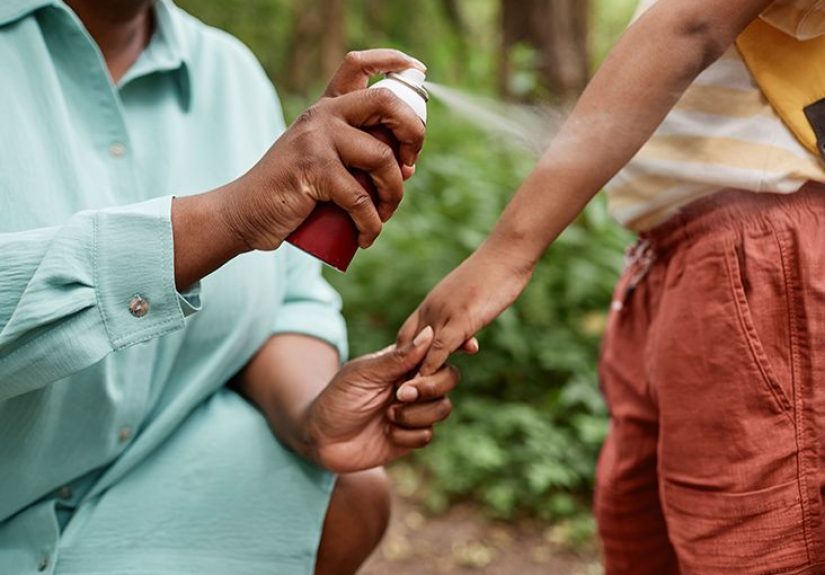
For most Americans, the practical advice is not complicated. Prevent mosquito bites. Use EPA-registered repellents. Wear long sleeves and pants when mosquitoes are active. Drain standing water around the home. Pay attention to local health alerts if cases are reported nearby.
And if you develop fever, chills, headache, sweats, nausea, or flu-like symptoms after mosquito exposure or after travel to a malaria-endemic region, seek medical care and mention the travel history clearly. Doctors are good, but they are not mind readers with stethoscopes.
For clinicians, the lesson is even sharper: do not rule out malaria automatically just because a patient has not left the country. Rare local transmission means unexplained fever in the right place and time deserves a wider lens.
Experience on the ground: what this issue feels like in real life
To understand why locally transmitted malaria cases in the U.S. matter, it helps to imagine the experience beyond the headline. Not as a dramatic movie trailer, but as a series of very human, very practical moments.
Start with the patient. Maybe it is a person who works outdoors in brutal summer heat and assumes the chills are just dehydration or a virus. They take some acetaminophen, try to sleep it off, and tell themselves they will go to urgent care if tomorrow is worse. Tomorrow is worse. The fever comes in waves. The body aches feel strangely punishing. There is no international travel to mention, so malaria does not even cross their mind. Why would it? They have been in the same county, the same job, the same routine. That disconnect is exactly what makes local transmission so unsettling. It breaks the ordinary logic people use to judge risk.
Then there is the clinician. A patient walks in with fever, chills, headache, and fatigue in the middle of mosquito season. The early differential diagnosis is crowded: flu, COVID, dengue, West Nile, a random summer virus, maybe even heat-related illness. If malaria is rare in the area, it may not be the first thought. But once local cases are reported, every similar symptom gets re-read through a different lens. Suddenly the question is not just “What is most common?” but “What can I not afford to miss?” That shift in thinking is a real experience for doctors and nurses. Rare diseases change the emotional math of decision-making.
Now picture the mosquito control team. Their work is not glamorous. It is field maps, traps, standing water, larvicides, neighborhood visits, and lots of careful surveillance. When a local malaria case appears, these workers become part detective, part biologist, part public educator. They are not just swatting bugs. They are trying to break a transmission chain before it grows legs, wings, and a zip code. For them, one local malaria case is not a trivia fact. It is a call to move faster than the mosquito lifecycle.
There is also the community experience. Residents hear “local malaria” and immediately fill in the blanks with fear. Some people overreact. Others shrug. Both reactions can be unhelpful. The healthiest public response is informed alertness: understand the risk is low, understand the disease is serious, and understand that prevention works. Public trust becomes part of the response. If people believe the health message, they use repellent, dump standing water, and seek care sooner. If they tune it out, the window for prevention narrows.
That is why these cases feel bigger than their case count. They reveal how a rare disease moves through a modern American system: through a tired patient, a busy clinic, a local lab, a mosquito district, a health department, a blood safety discussion, and a neighborhood trying to decide whether to worry. The real experience is not just about parasites. It is about whether a country remembers how to notice something unusual before unusual becomes expensive.
Final thoughts
Locally transmitted malaria cases in the United States are a big deal because they expose the thin line between “controlled” and “ignored.” The nation’s risk is still low. That part matters. But so does everything the recent cases revealed: malaria can be missed, local mosquito vectors still exist, travel-associated infections can seed local spread, severe disease can develop quickly, and strong public health infrastructure is what keeps a few cases from becoming many.
The smart response is neither panic nor apathy. It is vigilance with a backbone. If the U.S. wants malaria to remain rare, it has to keep doing the wonderfully unsexy work that rare disease prevention always depends on: surveillance, rapid diagnosis, treatment access, mosquito control, public communication, and respect for the fact that microbes do not care what century we think we live in.