Table of Contents >> Show >> Hide
- What Is Artemis II?
- Meet O2O: Orion’s Laser Communications System
- How Laser Communications Work in Space
- Why 260 Mbps From the Moon Is a Big Deal
- Why NASA Still Needs Radio
- The Ground Stations Catching Moonlight Data
- Why Artemis II Needs Better Bandwidth
- From Apollo Static to Artemis 4K
- What Makes Laser Links So Efficient?
- The Challenge: Aiming a Laser Across Space
- The Moon Still Blocks the Call
- What Artemis II Teaches Future Moon and Mars Missions
- Why This Matters Beyond NASA
- Artemis II and the Public Imagination
- Common Questions About Artemis II Laser Communications
- Experience Notes: What This Laser Moon Call Feels Like From Earth
- Conclusion
The phrase “phone home” used to mean a scratchy voice signal, a blinking antenna, and maybe a photo that arrived with all the grace of a dial-up modem having a bad Tuesday. Artemis II, however, is giving that old space-age expression a glamorous upgrade. NASA’s Orion spacecraft is not just calling Earth from the neighborhood of the Moon; it is doing it with laser beams.
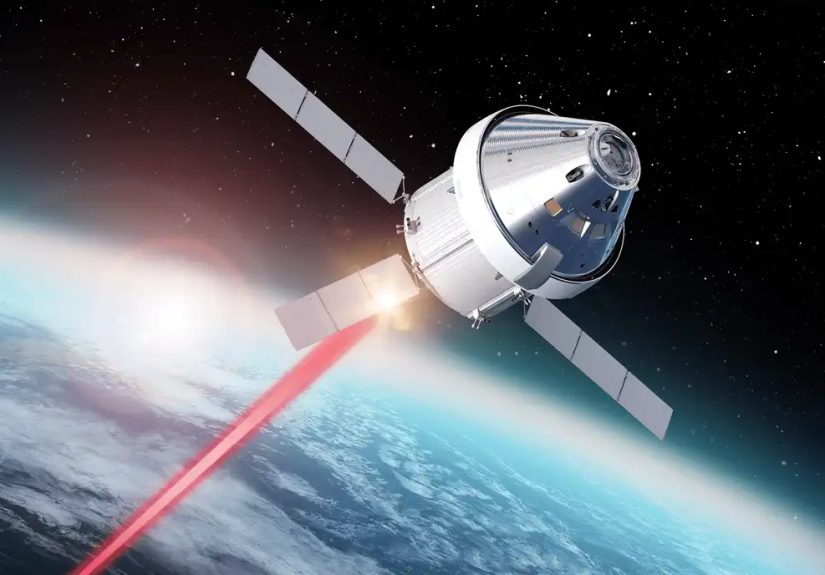
Yes, laser beams. Not the dramatic movie kind attached to a villain’s secret volcano lair, but tightly focused infrared light designed to move mission data, images, voice, procedures, and high-definition video across roughly a quarter million miles of space. The star of the show is the Orion Artemis II Optical Communications System, better known as O2O. This laser communications payload turns Orion into a deep-space data machine, giving astronauts and mission control a faster, sharper, and more flexible way to share information.
For the Artemis program, that matters. NASA is not only returning humans to lunar space; it is preparing for a long-term presence near and on the Moon, followed by deeper journeys toward Mars. Those goals require more than rockets, spacesuits, and excellent snacks. They require communication systems that can handle modern science, real-time operations, high-resolution imagery, and the public’s completely reasonable desire to see the Moon in glorious 4K instead of “mystery gray potato.”
What Is Artemis II?
Artemis II is NASA’s first crewed mission of the Artemis era and a major step after the uncrewed Artemis I flight tested the Space Launch System rocket and Orion spacecraft. The mission sends astronauts around the Moon and back to Earth, proving critical systems before future Artemis missions attempt crewed lunar landings.
The crew includes NASA astronauts Reid Wiseman, Victor Glover, and Christina Koch, along with Canadian Space Agency astronaut Jeremy Hansen. Their journey is not a Moon landing mission, but it is historic all the same. Artemis II marks the return of humans to deep space after decades of crewed spaceflight mostly focused on low Earth orbit. It also introduces something Apollo never had: a spacecraft capable of sending ultra-high-definition views home through optical communications.
Meet O2O: Orion’s Laser Communications System
O2O stands for Orion Artemis II Optical Communications System. It is a laser-based communications terminal installed on Orion to demonstrate high-bandwidth data links between deep space and Earth. Instead of relying only on traditional radio-frequency signals, O2O uses invisible infrared light to transmit information.
Traditional radio communications are still essential. Orion does not throw away the proven systems that keep astronauts safe and mission control connected. The Deep Space Network and Near Space Network continue to play a core role. O2O adds a new capability: a narrow, powerful optical link that can carry far more data than older systems of comparable size and power.
Think of radio communications as a reliable highway that has served space exploration beautifully for decades. Now imagine laser communications as a high-speed express lane built for data-hungry missions. The lane is narrower and needs excellent aim, but when everything lines up, the throughput is impressive.
How Laser Communications Work in Space
Optical communications use light to carry information. In NASA’s system, the data is encoded onto laser light, sent from the spacecraft toward Earth, and received by specialized ground stations. The beam is extremely narrow, which is both the magic and the headache.
The magic is efficiency. A focused laser beam can concentrate signal energy tightly, allowing more data to be transmitted with less waste. The headache is precision. Orion is moving through deep space, Earth is rotating, the receiving station is tiny compared with the distance involved, and the laser must hit its target with extraordinary accuracy. It is less like shouting across a room and more like pointing a flashlight at a postage stamp from another zip code.
O2O’s job is to manage that challenge. The system includes optical hardware, pointing mechanisms, electronics, and software that help Orion lock onto ground receivers and maintain the link. The spacecraft can send data down to Earth, while commands and information can also travel back up to Orion through the optical system.
Why 260 Mbps From the Moon Is a Big Deal
O2O is designed to send data from the Moon at up to 260 megabits per second. In everyday internet terms, that sounds like a solid home broadband connection. In deep-space terms, it is a small miracle wearing a headset.
The significance is not just speed for speed’s sake. Higher data rates allow Orion to send richer mission content: 4K video, high-resolution photos, science data, operational files, crew procedures, flight plans, and engineering information. During earlier space eras, mission teams had to be selective about what could be transmitted and when. With optical communications, far more information can be moved quickly, giving engineers and scientists a better view of spacecraft performance and lunar surroundings.
This matters for safety, science, and storytelling. Engineers can inspect data sooner. Scientists can study images in better detail. The public can experience lunar exploration with a clarity that previous generations could only imagine. Apollo gave humanity unforgettable grainy footage. Artemis II is bringing the Moon closer to “streaming era” expectations.
Why NASA Still Needs Radio
Laser communications are powerful, but they are not replacing radio overnight. Radio-frequency systems remain more forgiving in some situations. Radio beams spread wider, which makes them easier to receive when spacecraft pointing is less exact. They can also be more reliable in poor weather at ground stations, because clouds and atmospheric conditions can interfere with optical links.
That is why Artemis II uses a layered communications strategy. The traditional radio network provides essential coverage and reliability, while O2O demonstrates the high-data-rate future. It is not a cage match between radio and lasers. It is more like a buddy-cop movie where one partner is dependable and seasoned, and the other shows up with futuristic sunglasses and a data pipe big enough for 4K video.
The Ground Stations Catching Moonlight Data
Sending a laser from Orion is only half the story. Earth needs somewhere to catch it. O2O communicates with optical ground stations, including facilities selected for conditions that help laser reception. Clear skies matter because clouds are not polite to laser beams. A cloud passing over a receiver can interrupt the optical path, which is why future operational systems may use multiple ground stations around the world to improve availability.
The receiving stations work like deep-space light collectors. They capture the incoming laser signal, decode the data, and route it into NASA’s mission systems. From there, the information can support mission control, engineering analysis, science teams, and public communications.
Why Artemis II Needs Better Bandwidth
Modern spacecraft are data factories. Cameras, sensors, navigation systems, health-monitoring tools, crew equipment, and flight computers all produce information. During a crewed lunar mission, that information is more than interesting; it can be operationally important.
Higher bandwidth helps teams understand what is happening sooner. If Orion captures detailed video of the lunar surface, engineers and scientists can review it quickly. If a system produces diagnostic data, mission teams can analyze it without waiting for the spacecraft to return. If astronauts need updated procedures, communications systems can help move those files efficiently.
The deeper humans go into space, the more this matters. A lunar flyby is challenging. A lunar surface base is even more demanding. A Mars mission would produce enormous amounts of data while operating with long delays and limited opportunities for direct communication. Artemis II’s laser demonstration is therefore not a flashy side quest. It is a technology rehearsal for exploration that must become more data-rich, more autonomous, and more resilient.
From Apollo Static to Artemis 4K
The Apollo missions changed human history with television images that were technically limited but emotionally enormous. Viewers did not need 4K resolution to feel the shock of seeing people walking on another world. Still, those images belonged to their time: low-resolution, ghostly, and unforgettable.
Artemis II belongs to a different media universe. People carry cameras in their pockets that outperform professional broadcast tools from earlier decades. Students watch science videos in high definition. Space fans expect livestreams, mission graphics, and crisp images. NASA’s communications systems must serve not only mission operations but also a public that experiences exploration through screens.
O2O helps close that gap. By enabling 4K video from lunar distances, it turns space communication into something more immediate. The Moon stops feeling like a distant gray icon in a textbook and starts looking like a place humans are actively revisiting.
What Makes Laser Links So Efficient?
Laser communications operate at much shorter wavelengths than traditional radio systems. Shorter wavelengths allow narrower beams and higher data-carrying capacity. Because the beam spreads less over distance, more energy reaches the receiver. That can translate into better performance with smaller, lighter hardware.
Size and weight matter enormously in space. Every kilogram launched must justify itself. If a communications terminal can move more data while using less mass and power than an equivalent radio system, mission designers gain flexibility. Those savings can support other instruments, life-support margins, science payloads, or future mission architecture.
Security is another advantage. A narrow laser beam is harder to intercept casually than a wider radio signal. That does not make it magical or invincible, but it does add useful characteristics for mission communications. In space, as on Earth, sending the right information to the right receiver matters.
The Challenge: Aiming a Laser Across Space
The biggest technical challenge is pointing. A laser beam from deep space has to be aimed with tremendous accuracy. Orion is not parked on a tripod. It is flying through space, rotating, maneuvering, and maintaining its mission trajectory. Earth is also moving, and the receiving station is fixed to a rotating planet.
O2O must account for all of that. The system has to acquire the ground station, maintain the link, and compensate for motion and vibration. Even tiny pointing errors can matter when the target is hundreds of thousands of miles away. If traditional radio is like broadcasting with a megaphone, optical communications are like using a laser pointer during an earthquake while riding a roller coaster. Engineers, naturally, heard that and said, “Great, let’s build it.”
The Moon Still Blocks the Call
Laser beams do not bend around the Moon, and neither do radio signals. When Orion passes behind the Moon from Earth’s perspective, communications can experience a planned blackout. This is not a failure; it is geometry being stubborn.
Similar blackouts occurred during Apollo missions. The difference today is that mission planners have far better modeling, automation, and data systems. When Orion reemerges, communication can be restored, and data stored onboard can be transmitted. Future lunar infrastructure, such as relay satellites, may reduce or eliminate these gaps for missions on the far side or near the lunar south pole.
What Artemis II Teaches Future Moon and Mars Missions
Artemis II is a proving ground. The mission demonstrates whether laser communications can be integrated into crewed deep-space operations in a useful, dependable way. That includes not only the hardware but also the workflows: how astronauts use the system, how mission control manages optical links, how data is prioritized, and how ground teams respond when conditions change.
These lessons matter for Artemis base camps, Gateway operations, lunar science missions, and eventually Mars. A Mars crew will need robust communications for navigation, science, health monitoring, engineering support, and personal connection with Earth. The distances will be much greater, and delays will be unavoidable. High-capacity laser communications could help future missions send detailed science data and immersive imagery back home.
In other words, Artemis II’s laser call from the Moon is not just a cool headline. It is a rehearsal for an interplanetary internet, one careful beam at a time.
Why This Matters Beyond NASA
Space communications are becoming more crowded and more important. Earth-observing satellites, commercial spacecraft, lunar landers, space stations, and deep-space probes all need reliable data links. Radio spectrum is limited, and demand keeps growing. Optical communications offer a way to expand capacity without relying entirely on the same crowded frequency bands.
The technology also overlaps with commercial space. Companies building satellite networks, lunar delivery systems, private space stations, and Earth-imaging platforms all care about moving data quickly. A successful crewed lunar demonstration helps validate optical communications as a practical tool rather than a laboratory curiosity.
That does not mean every spacecraft will suddenly sprout a laser terminal. Mission design is always a trade-off. But Artemis II helps prove that laser communications can support real human exploration, not just robotic experiments or near-Earth demonstrations.
Artemis II and the Public Imagination
There is also a human side to better communication. Exploration becomes more powerful when people can see it clearly. A sharp image of Earth from lunar distance can remind viewers that our planet is beautiful, fragile, and shared. A high-resolution video of the Moon can make students ask better questions. A live conversation with astronauts can turn spaceflight from an abstract achievement into something personal.
NASA understands that inspiration is part of the mission. Public excitement supports education, science literacy, and long-term exploration goals. When Artemis II sends home crisp views through laser light, it is not merely transferring data. It is transferring wonder, which is admittedly harder to measure in megabits per second but still extremely useful.
Common Questions About Artemis II Laser Communications
Does Artemis II use laser beams instead of radio?
Not entirely. Orion still relies on traditional radio communications for core mission support. O2O adds a high-bandwidth optical link that demonstrates how lasers can enhance future deep-space communications.
Can the laser system send live 4K video?
O2O is designed to support 4K high-definition video from lunar distances, along with images, procedures, flight plans, science data, and communication between Orion and mission control.
Why not use lasers for every space mission?
Laser communications require precise pointing and clear atmospheric conditions at receiving stations. Radio remains valuable because it is proven, robust, and better suited for some mission phases. The future will likely use both.
Will laser communications help future Mars missions?
Yes, potentially. Mars missions will need to move large amounts of science and engineering data across huge distances. Optical communications could help provide the higher data rates needed for those missions.
Experience Notes: What This Laser Moon Call Feels Like From Earth
The most exciting thing about Artemis II’s laser communications is not only the engineering. It is the way the technology changes the experience of following a Moon mission from home. For decades, space fans have learned to accept a certain delay between “something amazing happened” and “here is a good image of it.” Deep-space data often arrived slowly, and the public version was even slower. Laser communications make the mission feel more immediate, almost as if the Moon has moved a little closer to the living room.
Imagine a classroom watching Artemis II coverage. A teacher explains that the spacecraft is near the Moon, and instead of showing a blurry still image, the class can discuss high-resolution video sent by laser light. That changes the lesson. Students can talk about physics, optics, engineering, orbital mechanics, and the history of exploration all at once. The laser link becomes a bridge between subjects that are too often separated into different textbooks.
For engineers and mission planners, the experience is more practical but just as meaningful. Faster data return means less waiting and more informed decision-making. When a spacecraft sends back rich imagery and system data quickly, teams can compare predictions with reality. Did the camera capture the expected view? Did the hardware behave correctly? Did the spacecraft orientation support the optical link? Each answer improves the next mission.
For the general public, the experience is emotional. A crisp view of the Moon from a crewed spacecraft reminds people that exploration is not just a government project or a technical milestone. It is a shared human moment. Better video does not replace courage, science, or engineering, but it helps more people feel connected to them. The difference between reading “astronauts flew around the Moon” and seeing what they saw is enormous.
There is also something poetic about using light to tell the story. The Moon shines by reflected sunlight, and Artemis II sends its own carefully shaped light back to Earth. A laser beam carries images, data, voices, and proof that human beings are again learning how to operate beyond our home planet. That is not just bandwidth. That is a message.
The best space technologies often become invisible when they work well. Nobody watching a beautiful lunar video wants to think about pointing assemblies, atmospheric interference, packet handling, or optical ground terminals. They simply see the Moon. But behind that simple experience is a chain of inventions that had to work together across an absurd distance. Artemis II’s laser communications system makes deep-space exploration feel more present, more vivid, and more real.
In the long run, this may be one of the mission’s quiet revolutions. Rockets get the thunder. Astronauts get the applause. But communications make the entire journey understandable. Without the link home, exploration becomes a sealed box. With laser communications, the box opens wider, faster, and in sharper detail. Artemis II is not just phoning home from the Moon. It is upgrading the call from a crackly long-distance connection to a beam of information bright enough to help light the path to Mars.
Conclusion
Artemis II’s laser communications demonstration is one of those technologies that sounds futuristic because it genuinely is. The Orion Artemis II Optical Communications System shows how deep-space missions can move beyond the limits of traditional data links while still relying on radio for dependable mission support. With the ability to transmit 4K video, high-resolution imagery, operational files, and mission data from lunar distances, O2O gives NASA a powerful preview of how future Moon and Mars missions may stay connected.
The mission’s real achievement is not simply that Orion can send data with laser beams. It is that human exploration now demands this kind of capability. Future astronauts will generate more science, more imagery, more engineering data, and more public engagement than ever before. Artemis II proves that the communications backbone of exploration is evolving right along with the rockets and spacecraft.
If Apollo taught the world to look up, Artemis II teaches us to expect a clearer picture when we do. The Moon is calling again, and this time the signal is riding on light.