Table of Contents >> Show >> Hide
- Before You Plant: What “Shade” Really Means in a Container
- Quick Container Rules for Shady Spots
- The 11 Great Shade Plants for Containers
- 1) Hosta (Hosta spp.) The “I Woke Up Like This” Foliage Plant
- 2) Coral Bells (Heuchera spp.) Colorful Leaves That Don’t Need Flowers to Show Off
- 3) Japanese Forest Grass (Hakonechloa macra) The Soft, Waterfall “Spiller” for Shade
- 4) Japanese Painted Fern (Athyrium niponicum ‘Pictum’) Shade Glamour in Silver and Burgundy
- 5) Boston Fern (Nephrolepis exaltata ‘Bostoniensis’) The Hanging Basket MVP
- 6) Caladium (Caladium bicolor / Caladium × hortulanum) Tropical Color for Bright Shade
- 7) Coleus (Coleus scutellarioides) The “Color in the Dark” Cheat Code
- 8) Begonias (Wax, Tuberous, and Friends) Shade-First Bloom Machines
- 9) Impatiens (Impatiens walleriana & New Guinea types) The Classic Shade Flower for a Reason
- 10) Torenia (Torenia fournieri) Wishbone Flower That Actually Likes Shade
- 11) Lobelia (Lobelia erinus) The Blue Edging Plant That Cool Shade Loves
- Shade Container “Recipes” You Can Copy Without Overthinking
- Common Shade-Container Problems (and the Fixes)
- Experience-Based Tips to Make Shade Containers Easier (About )
- Conclusion
- SEO Tags
Shade gets a bad reputation in the container-gardening world. People act like “no full sun” means “no fun,” as if your porch is doomed to a lifetime
of sad, green silence. Not true. Shade is basically nature’s softbox lightingperfect for foliage color, rich textures, and blooms that don’t crisp up
the minute the temperature hits “oven.”
The trick is choosing the right shade plants for container gardensplants that actually like low lightand then giving them the kind of
pot setup that makes them feel like they moved into a luxury condo with excellent drainage.
Before You Plant: What “Shade” Really Means in a Container
Full shade, part shade, and “bright shade” aren’t the same
Most “shade” containers succeed in part shade or bright shade: think morning sun + afternoon shade, dappled light under
trees, or a north-facing porch that still gets plenty of daylight. Deep, all-day darkness is tough on most plants (and most people, honestly).
Yes, shade pots still dry out
Shade lowers evaporation, but containers have limited soil volume. Your pot can go from “moist” to “why is this plant fainting?” faster than you’d expect,
especially in wind or heat. So we plan for moisturewithout turning your pot into a swamp.
Quick Container Rules for Shady Spots
- Use potting mix, not garden soil. It’s lighter, drains better, and supports healthier roots in containers.
- Drainage holes are non-negotiable. Shade + soggy soil is the fastest route to root problems.
- Water deeply, then check soil again later. Don’t guessstick a finger a couple inches down and see what’s happening.
- Feed lightly but consistently. Container plants often need regular nutrients because watering flushes fertilizer out over time.
- Group plants with similar needs. Pair moisture-lovers together; don’t put a “likes it dry” plant next to a fern that wants spa humidity.
The 11 Great Shade Plants for Containers
1) Hosta (Hosta spp.) The “I Woke Up Like This” Foliage Plant
Hostas are classic shade-loving perennials with bold leaves that look expensive even when you’re using a $9.99 pot.
They’re happiest in part shade to full shade and love evenly moist, rich soil.
- Best for: Large patio pots, entry containers, shaded decks
- Container tip: Choose compact varieties for smaller pots; bigger types need wider containers to balance their leaf mass.
- Looks great with: Japanese forest grass, heuchera, lobelia edging
2) Coral Bells (Heuchera spp.) Colorful Leaves That Don’t Need Flowers to Show Off
Heuchera brings dramatic foliagelime, caramel, plum, silverso your container looks designed even if you’re “just seeing what happens.”
It performs well in part shade and bright shade, and many varieties keep their color for months.
- Best for: Mid-size containers, mixed shade planters
- Container tip: Keep crowns at soil level (don’t bury them); good drainage prevents stress.
- Looks great with: Begonias, hostas, ferns
3) Japanese Forest Grass (Hakonechloa macra) The Soft, Waterfall “Spiller” for Shade
This graceful grass arches and drapes like a fountain, making it an ideal texture plant for shade containers.
It prefers consistently moist, humusy soil and does best in part shade; too much sun can scorch it, and too much deep shade can dull color.
- Best for: Woodland-style pots, modern minimalist planters
- Container tip: Give it room to cascadetry a slightly taller pot or pedestal planter.
- Looks great with: Hostas, heuchera, astilbe
4) Japanese Painted Fern (Athyrium niponicum ‘Pictum’) Shade Glamour in Silver and Burgundy
Japanese painted fern brings metallic-looking frondssilvery tones with purple-red accentsthat brighten shade without a single bloom.
It’s a top pick for cool, refined containers.
- Best for: Cool-toned containers, “quiet luxury” shade gardens
- Container tip: Keep soil consistently moist; avoid hot afternoon sun that can scorch fronds.
- Looks great with: Heuchera (especially darker cultivars), lobelia, hostas
5) Boston Fern (Nephrolepis exaltata ‘Bostoniensis’) The Hanging Basket MVP
If you’ve ever seen a porch basket that looks like a green waterfall, it’s probably a Boston fern living its best life.
Outdoors, it appreciates full or partial shade and consistent moisture.
- Best for: Hanging baskets, tall containers, porch corners
- Container tip: Ferns hate drying outuse a moisture-retentive potting mix and check water often in summer winds.
- Looks great with: Caladiums, impatiens, trailing begonias
6) Caladium (Caladium bicolor / Caladium × hortulanum) Tropical Color for Bright Shade
Caladiums are basically stained-glass windows in leaf formpink, red, white, green, often all at once.
They thrive in partial shade or filtered sun, and leaf color is often more vibrant when they’re protected from harsh sun.
- Best for: Bright shade containers, tropical-themed pots
- Container tip: Keep soil evenly moist (not soggy). In cooler climates, treat as seasonal color or overwinter tubers indoors.
- Looks great with: Coleus, begonias, ferns
7) Coleus (Coleus scutellarioides) The “Color in the Dark” Cheat Code
Coleus is one of the easiest ways to get bold color in shade containers because the leaves are the show.
It grows best in moist, rich soil in part shade and can tolerate full shade, though too little light may make it leggy (easy fix: pinch it back).
- Best for: Instant color, beginner-friendly shade pots
- Container tip: Pinch stem tips to encourage bushiness, especially if it starts stretching.
- Looks great with: Impatiens, caladium, lobelia edging
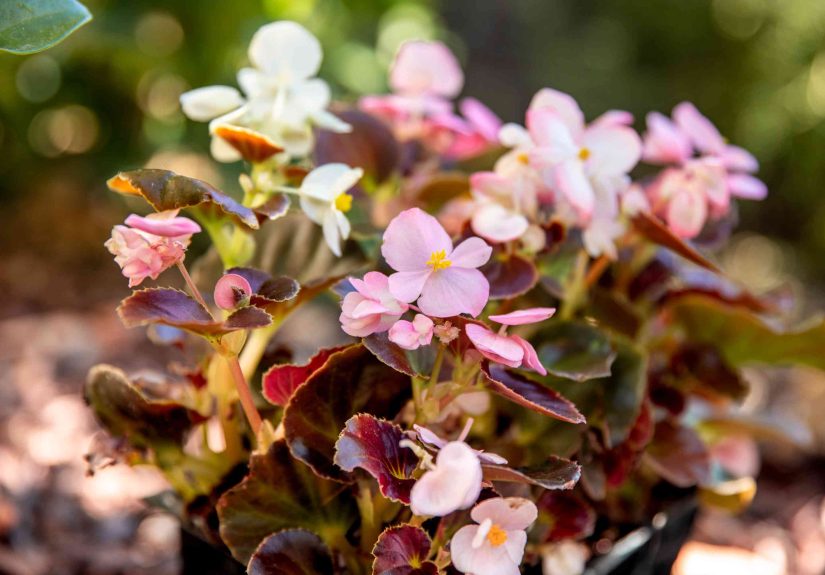
8) Begonias (Wax, Tuberous, and Friends) Shade-First Bloom Machines
Begonias are a go-to for shade because many types prefer shade over direct sun, and they offer both flowers and attractive foliage.
Wax begonias are especially flexible for containers, while tuberous begonias bring dramatic blooms in the right microclimate.
- Best for: Shady porch pots, mixed flower containers, hanging baskets
- Container tip: Keep soil consistently moist and avoid scorching sun; tuberous types especially dislike drying out.
- Looks great with: Ferns, heuchera, lobelia
9) Impatiens (Impatiens walleriana & New Guinea types) The Classic Shade Flower for a Reason
Impatiens bring nonstop color in shade and bright shade, and they’re famously easy to growjust don’t let them dry out.
In containers, they usually need more frequent watering than in-ground plantings.
- Best for: Reliable shade blooms, mass color in pots
- Container tip: Fertilize lightly every couple of weeks during active growth for steady flowering.
- Looks great with: Coleus, begonias, ferns
10) Torenia (Torenia fournieri) Wishbone Flower That Actually Likes Shade
Torenia (wishbone flower) produces cheerful, snapdragon-like blooms and performs best in partial shade with moist, fertile soil.
It’s a great “hidden gem” for shaded planters that still need flowers.
- Best for: Part-shade containers, porch planters, mixed annual pots
- Container tip: Water regularly, but don’t let the pot sit in water; fertilize every 2–4 weeks for best performance.
- Looks great with: Begonias, coleus, ferns
11) Lobelia (Lobelia erinus) The Blue Edging Plant That Cool Shade Loves
Lobelia brings that rare “true blue” punch and works well from sun to shade depending on your climate.
In warmer regions, partial shade helps it survive summer heat, and it appreciates rich soil and consistent moisture.
- Best for: Edging, trailing accents, cool-toned containers
- Container tip: Keep it evenly moist; shear back after the first flush of bloom to encourage a comeback.
- Looks great with: Japanese painted fern, hostas, begonias
Shade Container “Recipes” You Can Copy Without Overthinking
Recipe 1: Woodland Calm (18–20" wide pot)
- 1 compact hosta (center “thriller”)
- 2 coral bells (mid-layer color)
- 1 Japanese forest grass (soft “spiller”)
- Optional: tuck in lobelia around the rim for seasonal bloom
Recipe 2: Tropical Punch (16–18" pot)
- 2 caladiums (big leaf drama)
- 1 coleus (color echo + height)
- 2 begonias (steady bloom)
- Edge with lobelia if your summers aren’t brutally hot
Recipe 3: Porch Basket Classic (hanging basket)
- 1 Boston fern (the main event)
- 3–5 impatiens tucked around the edge (color confetti)
- Optional: one trailing begonia for extra bloom depth
Common Shade-Container Problems (and the Fixes)
“My plant is leggy.”
Usually a light issue. Move the container to brighter shade (more daylight, less direct sun), and pinch back plants like coleus or impatiens to force branching.
“The soil stays wet forever.”
That’s the shade effect plus container reality. Make sure your pot has drainage holes, use a well-draining potting mix, and avoid “just in case” watering.
Moist is good; bog is not.
“Leaves look chewed.”
Slugs and snails love shady, moist spacesespecially around hostas. Use physical barriers, hand-pick at night, or choose less tempting plants for problem spots.
Experience-Based Tips to Make Shade Containers Easier (About )
When gardeners talk about shade containers, the most common “surprise” isn’t that plants struggleit’s that shade pots can feel harder to read.
In full sun, a droopy plant screams, “Water me!” In shade, plants are quieter. They don’t wilt as fast, but they also don’t dry as predictably. That’s why
one of the best real-world habits is switching from schedule-watering to soil-check watering. The finger test sounds old-school because it is old-school,
but it works: if the soil is dry a couple inches down, water. If it’s still damp, wait. This single habit prevents the most common shade-container mistake:
accidental overwatering.
Another pattern gardeners notice is that “shade” changes through the season. A spring porch might be bright and open, then suddenly the nearby tree leafs out
and your container moves from part shade to deeper shade. Plants respond. Coleus might stretch, lobelia might slow down in heat, and begonias might suddenly
look happier because they’re no longer dodging hot sun. A quick midseason adjustmentsliding a pot a few feet toward brighter lightcan be the difference
between “meh” and “magazine cover.”
Color planning in shade also works differently. Since shade softens contrast, bold foliage earns its keep. This is why people who “weren’t hosta fans”
become hosta fans the moment they put one in a container by the front door. Big leaves read clearly from a distance. Same with caladiums: the patterns look
like stained glass in bright shade, and the leaves can make a container feel full even before flowers show up. If you want a pot to look good all season with
minimal effort, build your design around foliage first, then add flowers as the accessorylike earrings, but for plants.
Moisture management is the other big lived experience. Shade pots can stay wet longer after rain, especially under eaves where airflow is limited. If your
container is in a truly sheltered nook, consider a slightly lighter potting mix and be cautious with saucers that trap water. On the flip side, windy porches
can dry containers quickly even without sun. Boston ferns in hanging baskets are famous for this: they look lush until a warm breeze turns the basket into a
dehydration machine. Many gardeners solve this by using larger baskets (more soil volume), adding water-retentive components to the mix, and watering early
in the day so the plant goes into afternoon heat fully hydrated.
Finally, shade containers often become “people spaces.” They’re on porches, patios, stepsplaces you actually walk by. Use that to your advantage. If you
place your shade container where you’ll see it daily, you’ll catch small changes early: a leaf scorch on hakone grass, a stretching coleus, a begonia that
wants slightly more moisture. Shade gardening rewards gentle attention, not constant fussing. Think of it as low-light houseplant energy, but outdoors.
Conclusion
Great shade containers aren’t about “settling” for green. They’re about choosing plants that thrive in lower lighthostas, heuchera, ferns, caladiums,
begonias, impatiens, torenia, lobeliaand then giving them smart container basics: airy potting mix, real drainage, consistent moisture, and light feeding.
Do that, and your shady porch won’t look like the “before” photo. It’ll look like the goal.