Table of Contents >> Show >> Hide
- What Is a Lung CT Scan?
- What Does a Normal Lung CT Look Like?
- What Does Emphysema Look Like on CT?
- Normal Lung CT vs. Emphysema: Key Differences
- Types of Emphysema Seen on CT
- How Accurate Is CT for Detecting Emphysema?
- Types of CT Scans Used for Lung Evaluation
- When Might a Doctor Recommend a CT Scan?
- Limitations and Risks of Lung CT
- What Happens After CT Shows Emphysema?
- Patient Experience: What a Lung CT Feels Like
- Experiences Related to Normal Lung CT vs. Emphysema
- Conclusion
A lung CT scan can look a little like a weather map for your chest. In healthy lungs, the view is mostly open, balanced, and surprisingly elegant. In emphysema, the map changes: some areas become darker, stretched, damaged, or overinflated because tiny air sacs have lost their structure. The difference can be subtle in early disease and dramatic in advanced cases, which is why CT imaging has become such an important tool in evaluating emphysema.
Still, a CT scan is not a magic crystal ball. It can show structural lung damage, help classify the type of emphysema, and guide treatment planning, but it does not replace breathing tests, symptoms, medical history, or a clinician’s judgment. In other words, CT is the high-definition camera; spirometry is the performance test; and your symptoms are the real-life review.
This guide explains what a normal lung CT looks like compared with emphysema, the major emphysema types, how accurate CT scans are, when doctors may order them, and what patients often experience during the process.
What Is a Lung CT Scan?
A computed tomography scan, commonly called a CT scan, uses X-rays and computer processing to create detailed cross-sectional images of the body. For lung evaluation, CT provides much more detail than a standard chest X-ray. Instead of one flat picture, a CT scan produces many thin image slices, allowing radiologists to examine lung tissue, airways, blood vessels, and surrounding structures with impressive precision.
Doctors may order a lung CT scan to evaluate unexplained shortness of breath, chronic cough, abnormal chest X-ray findings, suspected emphysema, COPD progression, lung nodules, infections, scarring, or lung cancer screening eligibility. In emphysema, CT is especially useful because it can reveal damage to the air sacs, patterns of overinflation, and areas where lung tissue has become less dense.
What Does a Normal Lung CT Look Like?
On a normal lung CT, the lungs typically appear symmetrical and well expanded without unusual areas of destruction. Because air appears dark on CT images, healthy lungs already look mostly dark, but they still have a fine network of blood vessels and delicate lung markings. These markings should gradually taper as they move toward the edges of the lungs.
Common Features of a Normal Lung CT
A normal scan usually shows clear lung fields, no major overinflation, no abnormal holes or cyst-like spaces, no suspicious masses, no significant scarring, and no obvious airway thickening. The diaphragm often has a natural dome shape, and the chest does not show signs of severe trapped air.
That said, “normal” does not always mean “perfectly identical from person to person.” Age, breathing effort during the scan, past infections, mild scarring, body position, and technical factors can slightly affect appearance. Radiologists interpret CT scans in context, not like a computer grading a multiple-choice test.
What Does Emphysema Look Like on CT?
Emphysema damages the alveoli, the tiny air sacs where oxygen and carbon dioxide exchange takes place. When these air sacs lose their walls and elasticity, air becomes trapped, the lungs may overinflate, and the useful surface area for breathing decreases.
On CT, emphysema often appears as areas of unusually low density, meaning the tissue looks darker than expected because normal lung structure has been destroyed. These damaged regions may have fewer visible blood vessels. In more advanced disease, the lungs may look enlarged, the diaphragm may appear flattened, and large air spaces called bullae may be visible.
One classic CT clue is the presence of low-attenuation areas without obvious walls. In simple terms, emphysema does not usually look like neat bubbles with thick borders. It often looks like parts of the lung have faded out, as if the architecture quietly packed its bags and left.
Normal Lung CT vs. Emphysema: Key Differences
1. Lung Density
Normal lung tissue contains air, blood vessels, and fine supporting structures. Emphysematous lung tissue has more air relative to tissue because alveolar walls are destroyed. This makes affected areas appear darker on CT.
2. Blood Vessel Pattern
In healthy lungs, vessels branch in an organized pattern. In emphysema, vessel markings may look reduced or stretched in damaged regions. This is one reason radiologists can often identify emphysema visually, even before a patient fully understands why climbing stairs suddenly feels like negotiating with a mountain.
3. Lung Volume
Normal lungs expand and deflate efficiently. Emphysema can cause air trapping and hyperinflation, making the lungs look larger than expected. In advanced cases, the diaphragm may flatten because the overexpanded lungs push downward.
4. Air Spaces and Bullae
Large emphysematous spaces may form when damaged air sacs merge. When these spaces become large, they are called bullae. Bullous emphysema can compress nearby healthier lung tissue and may increase the risk of complications such as a collapsed lung.
5. Distribution Pattern
A normal CT does not show a disease pattern. Emphysema often does. The location and shape of damage help classify emphysema into types such as centrilobular, panlobular, paraseptal, or mixed emphysema.
Types of Emphysema Seen on CT
Centrilobular Emphysema
Centrilobular emphysema, also called centriacinar emphysema, is the most common type linked with cigarette smoking. It typically affects the central portions of secondary pulmonary lobules and often appears more prominently in the upper lobes of the lungs.
On CT, centrilobular emphysema may appear as small, round, dark areas scattered within the lung, usually without visible walls. Early cases can be mild and patchy. Advanced cases may become more widespread and destructive.
Panlobular Emphysema
Panlobular emphysema, sometimes called panacinar emphysema, involves more uniform destruction across the entire lobule. It is classically associated with alpha-1 antitrypsin deficiency, a genetic condition that can increase the risk of emphysema, especially at younger ages or in people with limited smoking exposure.
On CT, panlobular emphysema may look like broad, even areas of low density. It often affects the lower lungs more than the upper lungs. Because the changes can be diffuse, mild panlobular emphysema may be harder to recognize than more focal forms.
Paraseptal Emphysema
Paraseptal emphysema tends to occur near the outer edges of the lungs, close to the pleura, or along the fissures between lobes. It may be found in people with or without major airflow obstruction.
On CT, paraseptal emphysema often appears as rows of small, dark spaces along the lung edges. Larger spaces may form bullae, particularly near the lung apex. This type matters because bullae can occasionally rupture and contribute to pneumothorax, also known as a collapsed lung.
Mixed Emphysema
Many patients do not fit into one tidy category. Mixed emphysema includes features of more than one type. A person may have centrilobular changes from smoking plus paraseptal changes near the pleura. Lungs, unfortunately, do not always respect textbook chapter headings.
How Accurate Is CT for Detecting Emphysema?
CT is one of the most sensitive imaging tools for detecting emphysema because it can show structural lung destruction before a chest X-ray becomes clearly abnormal. High-resolution CT can identify subtle changes, define the distribution of disease, and help estimate severity.
However, accuracy depends on several factors: scan quality, slice thickness, breathing level during the scan, radiologist experience, software methods, and disease stage. Mild emphysema can be difficult to separate from normal variation, especially if the scan is not optimized or the patient does not take a full breath during imaging.
Visual CT Assessment
Radiologists often assess emphysema visually by looking at the pattern, extent, and severity of low-density areas. Visual grading can be clinically useful, especially when describing centrilobular, paraseptal, or advanced destructive patterns.
Quantitative CT
Quantitative CT uses software to measure lung density. A commonly used threshold for emphysema research and analysis is the percentage of lung below approximately -950 Hounsfield units on inspiratory CT. This method can help standardize severity estimates, track progression, and support research. Still, software measurements must be interpreted carefully because technical factors can influence results.
CT vs. Spirometry
CT and spirometry answer different questions. CT shows structure: what the lungs look like. Spirometry shows function: how well air moves in and out. A person may have CT-visible emphysema with relatively preserved spirometry, especially early on. Another person may have airflow obstruction mainly from airway disease rather than emphysema.
For COPD diagnosis, spirometry remains essential because COPD is defined by persistent airflow limitation. CT can support the diagnosis, identify emphysema phenotype, detect complications, and guide treatment decisions, but it is not the only piece of the puzzle.
Types of CT Scans Used for Lung Evaluation
Standard Chest CT
A standard chest CT provides detailed images of the lungs and chest structures. It may be ordered when symptoms, exam findings, or prior imaging suggest a need for closer evaluation.
High-Resolution CT
High-resolution CT, often shortened to HRCT, uses thin slices and specific reconstruction techniques to examine lung tissue in greater detail. HRCT is valuable when doctors need a closer look at emphysema, scarring, bronchiectasis, or interstitial lung disease.
Low-Dose CT
Low-dose CT uses less radiation than a standard diagnostic CT and is commonly used in lung cancer screening for eligible high-risk adults. It can also reveal emphysema as an incidental finding. That discovery may be unexpected, but it can be useful because it may prompt smoking cessation support, spirometry, or pulmonary evaluation.
CT With or Without Contrast
Most emphysema evaluation does not require contrast dye. Contrast may be used when doctors need to evaluate blood vessels, suspected pulmonary embolism, tumors, or certain chest abnormalities. For emphysema itself, non-contrast CT is often enough.
When Might a Doctor Recommend a CT Scan?
A clinician may consider CT imaging when a person has chronic shortness of breath, long-term cough, wheezing, reduced exercise tolerance, abnormal lung function tests, a history of smoking, suspected alpha-1 antitrypsin deficiency, unexplained low oxygen levels, or chest X-ray changes that need clarification.
CT may also help determine whether someone with severe emphysema could be a candidate for lung volume reduction surgery or bronchoscopic lung volume reduction. These treatments require careful assessment of emphysema distribution, lung function, exercise capacity, and overall health.
Limitations and Risks of Lung CT
CT scans are powerful, but they are not perfect. They expose the body to radiation, although modern protocols aim to keep exposure as low as reasonably possible. CT can also find incidental abnormalities that may require follow-up, sometimes causing anxiety even when findings turn out to be harmless.
Another limitation is that CT findings do not always match symptoms. Some people with visible emphysema feel relatively well, while others with modest CT findings may feel very limited because of airway inflammation, heart disease, anemia, deconditioning, anxiety, or other health issues. Breathing is a team sport, and the lungs are only one player.
What Happens After CT Shows Emphysema?
If a CT scan suggests emphysema, the next steps often include pulmonary function testing, symptom review, smoking history assessment, oxygen measurement, and sometimes alpha-1 antitrypsin testing. Treatment depends on severity and may include smoking cessation, inhaled medications, vaccines, pulmonary rehabilitation, oxygen therapy, or advanced procedures in selected cases.
The most important step for smokers is quitting. It is the single most effective way to slow further lung damage. Even though emphysema damage cannot usually be reversed, symptoms and quality of life can often improve with the right care plan.
Patient Experience: What a Lung CT Feels Like
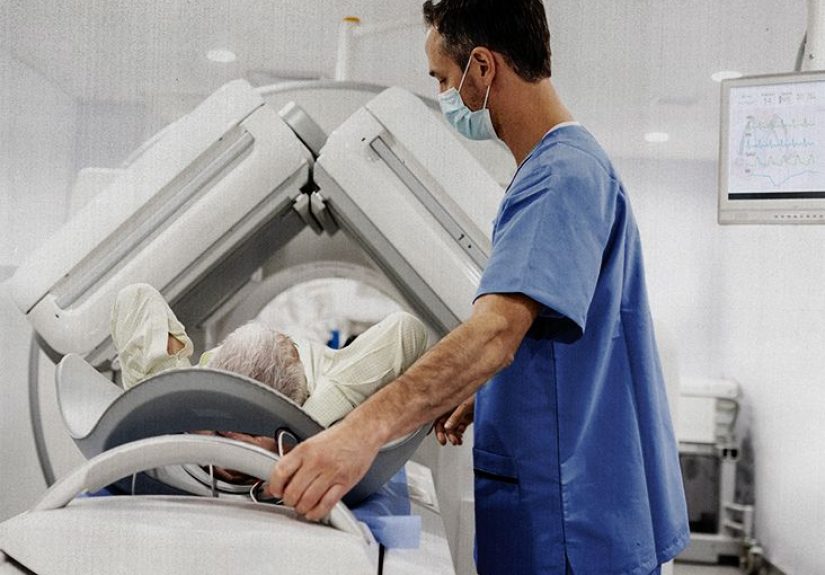
For most people, a lung CT scan is quick and painless. You lie on a narrow table that moves through a donut-shaped scanner. The machine may ask you to hold your breath for a few seconds while images are taken. The scan itself may be over faster than deciding what to watch on TV.
If contrast is not used, there is usually no needle. If contrast is needed for another reason, you may receive an IV. Some people feel warmth during contrast injection, but that is temporary. The technologist monitors you throughout the scan.
The hardest part for many patients is not the scan. It is waiting for results. Medical waiting has a special talent for making time move like cold syrup. A good strategy is to ask when results are expected, who will explain them, and whether you should schedule follow-up testing such as spirometry.
Experiences Related to Normal Lung CT vs. Emphysema
Many people first hear the word “emphysema” after a CT scan done for another reason. For example, someone may have a low-dose CT for lung cancer screening and learn that the scan also shows mild emphysema. That moment can feel confusing: “Wait, I came in looking for nodules, and now we are talking about air sacs?” It is common to feel surprised, especially if symptoms are mild or easy to blame on age, allergies, being out of shape, or climbing stairs with a laundry basket that somehow weighs as much as a small refrigerator.
A typical patient experience begins with uncertainty. A person may notice shortness of breath during exercise, a lingering cough, or fatigue after ordinary activities. A chest X-ray may look normal or only mildly abnormal. Then a CT scan provides a clearer picture, showing early emphysema in the upper lobes or small paraseptal spaces near the lung edges. In this situation, the scan can be a wake-up call rather than a final verdict. It opens the door to breathing tests, risk-factor review, and prevention steps.
Another common experience is mismatch between the CT report and how the person feels. One patient may have “mild emphysema” on CT but feel anxious because the word sounds serious. Another may have moderate CT changes but has adapted slowly over years and does not realize how much activity they have given up. They may say, “I am not short of breath; I just do fewer things that make me short of breath.” That sentence tells a whole story.
Some people also feel overwhelmed by radiology language. CT reports may mention “low attenuation,” “hyperinflation,” “bullous change,” or “centrilobular lucencies.” These terms are useful for doctors, but they can sound like a spaceship maintenance manual. Patients benefit from asking their clinician to translate the report into plain language: Where is the emphysema? How severe is it? Does it match my symptoms? Do I need spirometry? Should I be tested for alpha-1 antitrypsin deficiency? What can I do now?
For former smokers, CT-detected emphysema may stir regret. For current smokers, it may create fear. A supportive medical conversation matters here. Shame does not improve lung function. Practical support does. Smoking cessation counseling, medications, quit plans, pulmonary rehabilitation, vaccines, and follow-up care can help people take control without pretending the situation is easy.
People with normal lung CT results may also have an experience worth discussing. A normal CT can be reassuring, but it does not always explain symptoms. Shortness of breath can come from asthma, vocal cord dysfunction, heart conditions, anemia, anxiety, poor conditioning, infections, or other causes. If symptoms continue, the next step is not to shrug and say, “Well, the CT was normal, so I guess my lungs are just dramatic.” Instead, clinicians may recommend spirometry, exercise testing, lab work, or cardiac evaluation.
The most helpful mindset is to view CT as one chapter in the story. A normal lung CT is encouraging. An emphysema CT finding is important. Neither should be interpreted alone. The best answers come from combining images, breathing tests, symptoms, exposures, family history, and professional medical guidance.
Conclusion
A normal lung CT and an emphysema CT can look very different once you know what radiologists are watching for. Normal lungs show balanced structure, clear air spaces, and preserved vascular markings. Emphysema shows areas of low density, reduced tissue structure, air trapping, hyperinflation, or bullae, depending on type and severity.
CT is highly useful for detecting and characterizing emphysema, especially compared with chest X-ray, but it works best alongside spirometry and a full clinical evaluation. Whether the scan is normal, mildly abnormal, or clearly shows emphysema, the goal is the same: understand what is happening, protect lung function, and choose the right next steps.
Medical note: This article is for educational purposes only and does not replace diagnosis or treatment from a qualified healthcare professional. Anyone with shortness of breath, chronic cough, chest tightness, wheezing, or abnormal imaging results should discuss them with a clinician.