Table of Contents >> Show >> Hide
- What Actually Happened in the Record Test
- Why Scramjets Are So Hard to Build
- Why the Thrust Record Matters
- The Test Facility Was Part of the Breakthrough
- How This Fits Into the Bigger U.S. Hypersonic Story
- What a Thrust Record Does Not Mean
- The Engineering Challenges Behind the Headline
- Why the Air Force Cares So Much
- Extended Perspective: The Human Experience Behind a Scramjet Breakthrough
- Conclusion
Every few years, hypersonics crash back into the headlines like a meteor wearing a Pentagon badge. One week it is a missile test, the next it is a budget fight, and then suddenly everyone with a Wi-Fi signal is pretending they knew what a scramjet was all along. But one of the more important moments in recent U.S. hypersonic development did not come from a dramatic flight video. It came from a ground test. A brutally demanding, engineering-heavy, coffee-powered ground test.
In the milestone behind the headline “Air Force Sets New Thrust Record In Experimental Scramjet Test,” the U.S. Air Force and its partners demonstrated that American scramjet technology was not just alive, but getting a lot stronger. The result was a new Air Force record for thrust from an air-breathing hypersonic engine, a benchmark that matters because thrust is not just a flashy number. In hypersonics, thrust is a vote of confidence. It says the engine is no longer a science-fair volcano. It is starting to look like real propulsion.
The achievement also helped connect several dots in the modern U.S. hypersonic story: the legacy of NASA’s X-43A, the practical lessons of the Air Force’s X-51 Waverider, the later endurance gains seen in HAWC, and the military’s push toward more operational systems such as the Hypersonic Attack Cruise Missile. In other words, this was not a random laboratory flex. It was part of a larger effort to move scramjets from “wow, that’s neat” to “this may actually change the future of high-speed flight.”
What Actually Happened in the Record Test
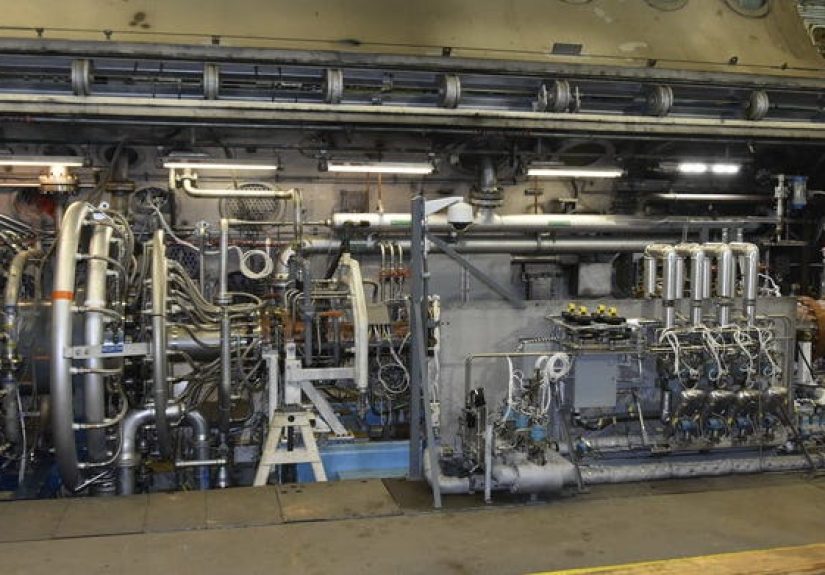
The record-setting campaign involved the Air Force Research Laboratory, the Air Force Test Center, Arnold Engineering Development Complex, and Northrop Grumman. Together, they pushed an experimental scramjet engine to produce more than 13,000 pounds of thrust during testing at Arnold Air Force Base. That was enough to set a new Air Force record for the highest thrust generated by an air-breathing hypersonic engine in the service’s history.
That number deserves a second look. Thirteen thousand pounds of thrust is not a cute academic result squeezed from a tiny lab rig. This was a large engine, about 18 feet long, described as roughly fighter-engine-sized. Over a nine-month test effort, it accumulated around a half hour of combustion time. In scramjet world, where airflow, heat, pressure, and combustion all seem personally offended by your life choices, that is a serious result.
Just as important, the test series did not aim only for one heroic number. It explored a range of hypersonic conditions and longer run times. That matters because a useful scramjet is not one that behaves for a few dramatic seconds and then throws a thermal tantrum. A useful scramjet is one that can repeatedly operate across relevant Mach conditions while engineers actually learn something from the data. The Air Force’s message was clear: this was not only a record. It was a maturity signal.
Why Scramjets Are So Hard to Build
A scramjet, short for supersonic combustion ramjet, is an air-breathing engine designed to operate at hypersonic speed, usually defined as Mach 5 and above. Unlike a conventional jet engine, a scramjet has no spinning compressor or turbine doing the polite mechanical work of squeezing air before combustion. And unlike a rocket, it does not carry onboard oxidizer for the main burn. Instead, it uses the vehicle’s own forward speed to compress incoming air, then burns fuel in that supersonic airstream.
That sounds elegant, and it is. It also sounds like a prank engineers play on each other. Imagine trying to ignite and sustain combustion in air that is blasting through the engine so quickly it barely wants to stay for introductions. Now add extreme heating, violent pressure changes, shock interactions, unforgiving materials limits, and the small inconvenience that the engine usually needs help getting to the speed where it can work at all. That is a scramjet.
The payoff is huge. Because scramjets breathe atmospheric oxygen instead of carrying all of their oxidizer like rockets, they can offer advantages in speed, packaging, and efficiency for certain mission profiles. They are especially attractive for high-speed cruise applications, where sustained atmospheric flight at hypersonic speeds could enable rapid strike options and new classes of advanced vehicles. That promise is why the technology has remained a strategic obsession despite decades of difficulty.
Why the Thrust Record Matters
It Expands Vehicle Possibilities
Bigger thrust opens the door to bigger ideas. Earlier scramjet milestones proved that hypersonic air-breathing propulsion could work. This record suggested that it could scale. According to Air Force officials, the engine tested had roughly 10 times the flow of the X-51-era propulsion concept. That kind of increase is important because it points toward a new class of scramjet vehicles rather than just a slightly better version of yesterday’s experiment.
It Reduces the “Science Project” Stigma
Hypersonics often suffer from a credibility problem: too many bold renderings, not enough repeatable hardware. A record-setting ground campaign helps change that. It tells military planners, industry teams, and skeptical budget offices that the technology base is getting sturdier. Engineers are not just drawing sharp-looking triangles anymore. They are generating hard data from serious engines under demanding conditions.
It Strengthens the Case for Operational Systems
The Air Force has pursued more than one hypersonic path, including both boost-glide concepts and air-breathing cruise missile designs. A powerful scramjet test directly supports the air-breathing branch of that strategy. When later programs such as HAWC and HACM moved forward, they did so in an environment shaped by results like this one. Records do not build missiles by themselves, but they do make future decisions easier to defend.
The Test Facility Was Part of the Breakthrough
One of the most fascinating details in this story is that the engine was not the only thing that needed development. The test infrastructure had to grow up too. Air Force officials said an evaluation of national facilities showed that none could test an engine at this scale in a thermally relevant environment. Translation: the country did not already have the right setup to safely and meaningfully push a scramjet this large.
So the Air Force and its partners upgraded the Aerodynamic and Propulsion Test Unit facility over a two-year period to make the campaign possible. That is a reminder worth underlining in red ink: hypersonics is not just about clever engines. It is also about wind tunnels, instrumentation, thermal simulation, data capture, flow control, and all the unglamorous infrastructure that keeps a record attempt from becoming an expensive metal confetti event.
In many ways, this is how real aerospace progress happens. Not with one magic component, but with an entire ecosystem maturing at once. The engine gets better. The test stand gets better. The analysis tools get better. The teams get better. And then, one day, the result looks “sudden” to the outside world even though it was built on years of very unsudden work.
How This Fits Into the Bigger U.S. Hypersonic Story
NASA’s X-43A Proved the Speed Potential
Long before this Air Force thrust milestone, NASA’s X-43A showed what scramjet-powered flight could do at the outer edge of speed. The X-43A reached nearly Mach 10 and remains a landmark in air-breathing hypersonic history. That program was critical because it demonstrated that scramjet propulsion was not just theoretically possible. It could work in flight at extraordinary speed.
X-51 Waverider Proved Practical Hypersonic Combustion
If the X-43A was the speed-showoff cousin, the X-51 Waverider was the practical one with a toolbox. The Air Force and Boeing’s X-51 helped demonstrate sustained scramjet-powered hypersonic flight, achieving around 200 seconds of powered flight and proving that the engine concept could be more than a spectacular one-off. Air Force officials later described the larger record-setting scramjet effort as part of a plan that grew out of lessons from the X-51 era.
HAWC Pushed Endurance Further
Later, the joint DARPA-Air Force HAWC program built on that foundation with successful flight tests of air-breathing hypersonic vehicles. Public reporting on one HAWC flight suggested it exceeded the X-51’s hypersonic scramjet endurance. That was another sign that U.S. air-breathing hypersonic development was not stuck in a museum display labeled “promising but temperamental.” The technology was continuing to evolve.
HACM Represents the Operational Ambition
The next logical step is operationalization. That is where the Hypersonic Attack Cruise Missile enters the chat, wearing a very serious expression. HACM is intended to turn air-breathing hypersonic progress into a more fieldable capability. The program reflects an Air Force view that scramjet-powered weapons can offer standoff reach, speed, and tactical flexibility in contested environments. The record-setting ground test did not create HACM on its own, but it helped justify the path.
What a Thrust Record Does Not Mean
It is tempting to hear “record-setting scramjet” and imagine a finished hypersonic weapon already streaking across the sky while dramatic music plays. That would be inaccurate, and honestly a little rude to the engineers still doing the hard part.
A ground-test thrust record is not the same thing as a flight speed record. It does not prove a full operational weapon is ready. It does not erase the challenges of guidance, thermal protection, manufacturing cost, integration with launch platforms, or mission planning. Hypersonic systems are not a single problem. They are a bundle of difficult problems traveling together at very inconvenient temperatures.
Still, dismissing the test because it was “only” on the ground would be equally wrong. Ground campaigns are where propulsion systems earn credibility. They are where you discover whether your engine is robust, scalable, and repeatable before attaching it to something far more expensive and dramatically airborne. In aerospace, a ground-test record is not a consolation prize. It is often the prerequisite for everything that comes next.
The Engineering Challenges Behind the Headline
Combustion at Ridiculous Speed
In a scramjet, the air remains supersonic through the combustor. That means the fuel and air must mix, ignite, and release useful energy in an incredibly short time. Combustion that is too weak kills performance. Combustion that is too aggressive can destabilize the flow. It is a little like trying to cook dinner in a hurricane using mathematics and existential dread.
Materials and Thermal Stress
Hypersonic flight and hypersonic test conditions generate punishing heat loads. Engine walls, inlets, isolators, nozzles, and nearby structures all have to survive environments that can quickly punish weak materials choices. Advances in cooling, manufacturing, and high-temperature materials are every bit as important as the combustion event itself.
Scale Changes Everything
An engine that behaves nicely at small scale may act very differently when enlarged. Flow structures shift. Heat loads change. Pressure behavior can become more complex. That is why the jump to a larger, fighter-sized scramjet mattered so much. The Air Force was not simply repeating a smaller success. It was proving that the physics and hardware could grow without immediately becoming impossible.
Why the Air Force Cares So Much
The military interest in scramjets is straightforward. Air-breathing hypersonic systems could combine speed, maneuverability, and standoff range in ways that complicate enemy defenses. For the Air Force, that can mean faster response times, more flexible strike options, and a better ability to threaten high-value targets in heavily defended areas.
There is also a force-structure angle. Air-breathing systems may offer packaging benefits compared with larger boost-glide arrangements, potentially making them better suited for certain aircraft and mission sets. That does not make them easy or cheap, but it does make them strategically appealing. In defense planning, even partial progress in a technology like this can influence acquisition decisions, industrial investments, and alliance cooperation.
Extended Perspective: The Human Experience Behind a Scramjet Breakthrough
For people outside aerospace, stories like this can sound almost abstract. Thrust numbers, Mach regimes, combustion time, facility upgradesvery impressive, sure, but also a little like being hit in the face with a PowerPoint deck. The human side is what makes the event easier to understand. A test like this is not just a machine proving a point. It is also the experience of teams spending years trying to make the impossible slightly less impossible.
Think about what that experience is probably like for the engineers and test crews. A scramjet program does not reward ego for very long. The airflow will humble you. The thermal loads will humble you. The data will definitely humble you. Progress comes from tiny improvements, repeated checks, painful redesigns, and the stubborn refusal to let one bad run become the last word. By the time a record is announced, the people involved have already lived through months or years of invisible trial and error.
There is also the strange emotional rhythm of advanced testing. Most of the work is slow, careful, and procedural. You inspect hardware. You calibrate instruments. You argue about margins. You rerun simulations. You review safety limits. Then, for a brief window, everything becomes very intense. The engine lights. The flow stabilizes or it does not. The readings come in. The room goes quiet in that particular way only highly technical people can managepart concentration, part panic, part hope. Afterward, there is no immediate movie ending. There is just more data, more analysis, and somebody asking for the plots.
For defense observers, the experience is different but just as revealing. A milestone like this changes the tone of the conversation. Hypersonics can often feel like a field divided between true believers and professional eye-rollers. One side sees revolution. The other sees cost overruns with sharp noses. A credible record test forces both camps to get more serious. It does not end the debate, but it raises the quality of it. The questions become less “Is this real?” and more “How fast can this mature?” and “Which mission sets actually benefit?”
There is even a broader national experience wrapped up in a test like this. Major technical breakthroughs remind people that aerospace progress still depends on patience, infrastructure, and deep expertise. Not every milestone can be live-streamed from a phone. Some of the most important advances happen in specialized facilities, with teams most people will never know by name, working on problems that take years to explain and even longer to solve. That may not be glamorous, but it is how serious capability gets built.
In that sense, the scramjet thrust record is more than an engineering result. It is the experience of a system learning how to move faster: a laboratory learning how to test bigger ideas, a service learning which hypersonic paths are worth funding, and an industrial base learning how to turn fragile prototypes into something sturdier. That is why the story resonates. The record is exciting, yes, but the deeper experience is one of momentum. You can almost feel the technology shifting from fragile promise to rough-edged practicality. And in aerospace, that is the moment when the future stops sounding theoretical and starts sounding like hardware.
Conclusion
The Air Force’s record-setting experimental scramjet test mattered because it showed more than raw power. It showed scale, endurance, infrastructure growth, and the kind of engineering confidence that helps move a technology from demonstration toward application. The achievement sat at the intersection of decades of hypersonic research, linking the speed lessons of NASA’s X-43A, the practical flight heritage of X-51, the later endurance progress of HAWC, and the operational ambition behind HACM.
In plain English, the headline was not just about a hotter engine. It was about a stronger case for air-breathing hypersonic propulsion as a real part of the Air Force’s future. The record did not solve every challenge, and nobody serious would claim it did. But it pushed the story forward in a meaningful way. In hypersonics, that is how history is usually madenot in one giant leap, but in a series of hard-won tests where the data finally starts smiling back.