Table of Contents >> Show >> Hide
- Why Ship a Package at the Post Office?
- What You Need Before You Go
- Step 1: Choose the Right Box or Mailer
- Step 2: Pack the Item So It Survives Real Life
- Step 3: Address the Package Correctly
- Step 4: Weigh and Measure the Package
- Step 5: Choose the Best USPS Shipping Service
- Step 6: Add Tracking, Insurance, or Other Extra Services
- Step 7: Pay for Postage at the Counter
- How Much Does It Cost to Ship a Package?
- Common Mistakes to Avoid at the Post Office
- Shipping Internationally at the Post Office
- What You Cannot or Should Not Mail
- Should You Buy Postage Online First?
- Real-World Shipping Experiences and Lessons Learned
- Final Thoughts
Shipping a package at the post office sounds simple until you’re standing in line holding a half-taped box, wondering whether you need bubble wrap, insurance, a customs form, or divine intervention. The good news? Mailing a package with USPS is actually pretty straightforward once you know the rhythm. You pack the item well, address it correctly, choose the right service, pay for postage, and send it on its merry little journey.
This guide walks you through the full process in plain American English, without the usual shipping jargon fog machine. Whether you’re mailing a birthday gift, returning online shopping regret, sending books to college, or shipping a small business order, here’s how to do it right the first time.
Why Ship a Package at the Post Office?
The post office is still one of the easiest places to mail a package in the United States. USPS reaches every address in the country, offers several mailing services for different budgets and timelines, and makes it possible to ship everything from a lightweight gift to a time-sensitive box of important items.
For most people, the biggest advantage is convenience. You can walk in with your box, ask a clerk to weigh it, compare shipping options, buy postage, and leave with a receipt and tracking number. No spreadsheets. No logistics degree. No dramatic monologue required.
What You Need Before You Go
Before heading to the post office, gather the basics. Think of this as your shipping starter kit:
- The item you’re mailing
- A sturdy box, padded mailer, or envelope that fits the item well
- Packing materials such as bubble wrap, kraft paper, or packing peanuts
- Strong packing tape, not flimsy office tape that gives up under pressure
- The recipient’s full address, including apartment or suite number if needed
- Your return address
- A payment method for postage and any extra services
If you already know your package weight and dimensions, great. If not, the post office can help. Still, measuring and weighing at home can save time and help you estimate your shipping cost before you leave.
Step 1: Choose the Right Box or Mailer
Good shipping starts with good packaging. If the item rattles around like it’s auditioning for a maraca band, your packaging needs work.
Use a box or padded envelope that gives the contents a snug fit with some room for cushioning. For items under about 10 pounds, sturdy paperboard or corrugated fiberboard boxes are a smart choice. If you reuse a box, remove or completely cover old labels, barcodes, and markings so the package does not confuse postal equipment on its way to the destination.
For soft goods like shirts, scarves, or lightweight fabric items, a poly mailer or padded envelope may be enough. For breakables, electronics, candles, mugs, or anything with a talent for cracking under pressure, use a sturdy box with generous cushioning on all sides.
When USPS Free Packaging Makes Sense
If you plan to use Priority Mail or Priority Mail Express, USPS offers free branded boxes and envelopes for those services. That can be a great value, especially when you want flat-rate packaging. Just remember the golden rule: if you use USPS flat-rate packaging, it has to match the correct USPS flat-rate service.
Step 2: Pack the Item So It Survives Real Life
The package is not traveling on a velvet pillow. It will be sorted, stacked, moved, scanned, and transported with thousands of other items. Pack accordingly.
- Wrap fragile items individually.
- Fill empty space so contents do not shift during transit.
- Seal all box seams with strong packing tape.
- For very important shipments, place a second copy of the destination and return address inside the package.
If you’re shipping liquids, batteries, or anything even slightly questionable, stop and check the rules before sealing the box like a determined raccoon. Some items are restricted, some are prohibited, and some can only travel by ground.
Step 3: Address the Package Correctly
This is the least glamorous part of mailing a package, but it matters a lot. A beautifully packed box with a messy address is like a suitcase with no destination tag: impressive effort, uncertain future.
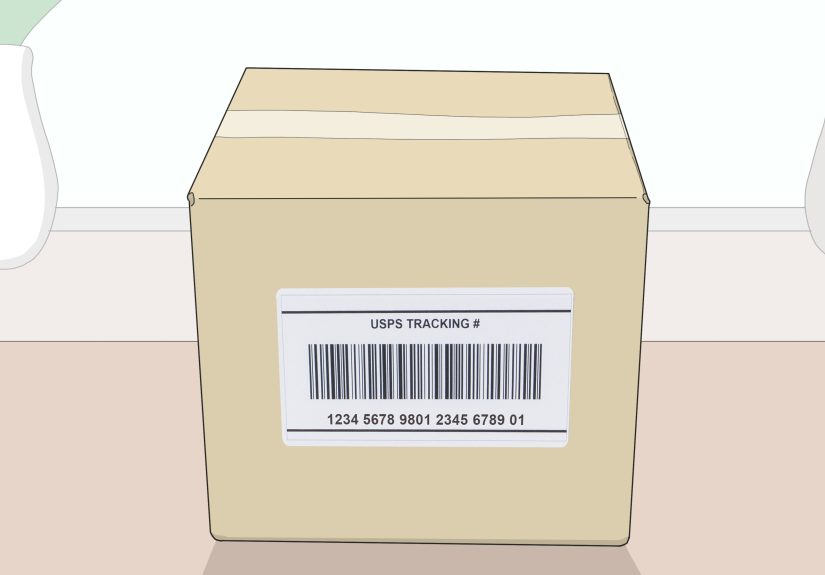
USPS recommends putting the return address in the upper left corner and the delivery address below and to the right, all on the same side of the package. If you’re using a shipping label, place it parallel to the longest side. Do not fold it over an edge, overlap it with other labels, or stick it wherever there happens to be emotional room.
Address Format Tips
- Use the recipient’s full name or company name.
- Include apartment, suite, or unit information when applicable.
- Use the full street address, city, state, and ZIP Code.
- Write clearly in permanent ink if you are hand-addressing the parcel.
If there’s an apartment or suite, include it correctly. USPS standards prefer approved unit designators such as APT or STE rather than improvising with a random pound sign when the correct designation is known.
Example Address
Jane Smith
APT 4B
1458 Oak Street
Denver, CO 80203
Step 4: Weigh and Measure the Package
Shipping cost depends heavily on weight, size, destination, and service level. The clerk at the post office can weigh and measure the package for you, but it helps to understand what matters.
In general, heavier packages cost more. Bigger packages can also cost more, especially if they are lightweight but bulky. Most USPS parcel services have size limits, and many domestic parcels are capped at a maximum combined length and girth, while Ground Advantage allows larger parcels than many other USPS services.
If you’re mailing something oddly shaped, oversized, or heavy, expect the clerk to look at it with the expression of someone solving a geometry puzzle before lunch. That’s normal.
Step 5: Choose the Best USPS Shipping Service
This is where most people hesitate, because all the service names sound like they were created in a conference room with too much coffee. Here’s the simple version.
| USPS Service | Best For | Typical Speed | Key Notes |
|---|---|---|---|
| USPS Ground Advantage | Everyday packages, budget-conscious shipping | Usually 2–5 business days | Great for most regular packages; tracking and included insurance make it a practical default choice |
| Priority Mail | Faster domestic shipping | Usually 2–3 business days | Includes tracking; flat-rate options can be excellent for dense, heavy items |
| Priority Mail Express | Urgent shipments | Usually 1–3 days | Fastest mainstream USPS package service, with money-back guarantee in many cases |
| Media Mail | Eligible books and educational media | Usually 2–8 business days | Cheaper, but contents are restricted and subject to inspection |
| First-Class Package International Service | Small, lightweight international packages | Varies by country | Best for packages under 4 pounds going abroad |
How to Pick the Right One
Choose Ground Advantage if you want a solid balance of price and reliability for a regular package. For a gift, clothing order, return, or household item that does not need rush delivery, this is often the easiest answer.
Choose Priority Mail if you want faster shipping or you’re sending a heavier item that might benefit from flat-rate packaging. Flat rate can be especially useful when your item is compact but surprisingly heavy. A box of books is the classic example. It looks innocent until you pick it up and suddenly reconsider your life choices.
Choose Priority Mail Express if the package is urgent and speed matters more than price.
Choose Media Mail only if the contents truly qualify. Books, printed music, sound recordings, and certain educational materials may be eligible. Random extras, advertising inserts, and “well, technically it contains a book” logic can get the package reclassified and charged at a higher rate.
Step 6: Add Tracking, Insurance, or Other Extra Services
Many USPS package services already include tracking, and some include insurance. That’s one reason shipping at the post office is often easier than people expect.
Still, extra services may be worth adding depending on what you’re mailing. Consider them when:
- The item is valuable
- The contents are fragile
- You need proof of mailing or delivery
- You want signature confirmation for extra peace of mind
If you’re sending something sentimental, expensive, or difficult to replace, do not be shy about asking the clerk what protection options make sense. It is much cheaper to buy the right service than to tell a heartbreaking story later about the handmade ceramic bowl that arrived as “modern gravel.”
Step 7: Pay for Postage at the Counter
At the post office counter, the clerk will weigh your package, confirm the shipping method, calculate postage, and print the label. If you have questions, this is the moment to ask them. USPS clerks do this all day, which means they can usually spot a packaging issue or service mismatch faster than most customers can say, “I thought duct tape counted.”
Once you pay, the clerk attaches the postage or label, scans the package into the system, and hands you a receipt. Keep that receipt until delivery is complete. It usually contains your tracking number and serves as proof that you mailed the item.
How Much Does It Cost to Ship a Package?
There is no one-size-fits-all answer, because postage depends on several factors:
- Weight: Heavier packages cost more.
- Size: Bigger parcels may trigger higher pricing.
- Distance: Domestic shipping rates often change based on zone.
- Speed: Faster service costs more.
- Packaging type: Flat-rate packaging can simplify pricing.
- Extra services: Insurance, signatures, and similar add-ons increase cost.
If you want the cheapest shipping option, don’t just ask, “What’s cheapest?” Ask, “What’s cheapest if it doesn’t need to arrive quickly?” That usually leads to a more useful answer. Ground service is often the budget-friendly winner for ordinary packages, while flat-rate Priority Mail can shine for dense, heavy items traveling farther away.
Common Mistakes to Avoid at the Post Office
1. Using the Wrong Packaging
Do not use a beat-up cereal box for a fragile candle and expect postal magic. Choose packaging that fits the item and the service.
2. Forgetting the Apartment or Suite Number
This tiny omission causes surprisingly large chaos. If the address has a unit number, include it.
3. Reusing a Box Without Removing Old Labels
Old barcodes and shipping labels can confuse automated sorting equipment. Cover or remove them completely.
4. Picking Media Mail for Non-Media Items
Media Mail is cheap, but it is not a loophole for everything vaguely rectangular.
5. Guessing About Restricted Items
Batteries, perfumes, alcohol, aerosols, and other potentially hazardous materials have special rules. Some can be mailed only under certain conditions, and some cannot be mailed at all.
6. Underpacking Fragile Items
One layer of tissue paper is not “protective packaging.” It is wishful thinking.
Shipping Internationally at the Post Office
International shipping adds one major ingredient: customs forms. If you’re sending a package overseas, USPS requires more detailed item descriptions than many people expect. “Stuff” is not a customs description. “Cotton baby clothes, 3 pieces” is much better.
For small lightweight parcels, First-Class Package International Service can be a practical option. For larger or faster international shipments, Priority Mail International or Priority Mail Express International may make more sense. If you are mailing to an APO, FPO, or DPO address, you generally pay domestic prices, but customs paperwork is often still required and the package must follow military and destination-country rules.
When in doubt, bring the package unsealed if the contents are unusual, or ask the clerk what documentation is needed before you finish the final label. A two-minute question at the counter can save you from a two-week delay later.
What You Cannot or Should Not Mail
USPS prohibits some items outright and restricts others. Air bags, ammunition, explosives, gasoline, and liquid mercury are among the clearly prohibited examples. Other items, such as lithium batteries or certain products containing alcohol, may be mailable only under very specific conditions.
If your package contains anything flammable, pressurized, chemical, electronic, or battery-powered, do not guess. Check the USPS restrictions before mailing. This is not the part of the process to freestyle.
Should You Buy Postage Online First?
Even if you plan to ship at the post office, it can be smart to prepare part of the shipment online. USPS Click-N-Ship lets you buy labels, print postage, and in some cases schedule a pickup. That can shorten your time at the counter or let you skip the line entirely if everything is ready to go.
But if you are new to shipping, the post office counter still has real value. A clerk can confirm your service, double-check your packaging, and answer questions in real time. For first-timers, that little bit of human backup is often worth the trip.
Real-World Shipping Experiences and Lessons Learned
The funny thing about shipping a package at the post office is that most people only become “good at it” after making one or two mildly irritating mistakes. Maybe you forget the apartment number and your package wanders around the city like a confused tourist. Maybe you choose the cheapest mailer possible for a breakable item and learn, in the most expensive way, that cardboard confidence is not the same as cardboard strength.
One common experience is the too-big-box problem. Someone ships a tiny item in a huge box because it’s what they had at home. It seems thrifty until the clerk weighs it, measures it, and the price jumps. That moment teaches a powerful lesson: package size matters almost as much as weight. A right-sized box is not just neater; it can save money.
Another classic post office experience happens with gifts. You carefully wrap the item, write a sweet card, and head out feeling efficient. Then the clerk asks whether there is anything fragile, liquid, perishable, or potentially hazardous inside, and suddenly you realize the gift basket includes a snow globe, a candle, and a battery-powered gadget. That is when shipping goes from “simple errand” to “unexpected quiz show.” The lesson: know what is in the box before you get to the counter.
Then there is the Media Mail temptation. It often starts with a person mailing books who thinks, “Great, cheap shipping.” Then they tuck in a few snacks, a bookmark set, a mug, and maybe a handwritten note on fancy stationery. Now it is no longer a simple media shipment. Media Mail rules are strict, and the post office is not famous for being charmed by creative interpretations.
Small business owners often have the opposite experience: once they learn the system, shipping becomes dramatically easier. They start weighing packages at home, keeping a stash of correctly sized boxes, and knowing when flat-rate Priority Mail makes sense versus when Ground Advantage is the better deal. The process stops feeling like a guessing game and starts feeling like a repeatable routine.
People shipping care packages to students, military addresses, or faraway family members also learn one big truth: details matter. A missing ZIP Code digit, sloppy tape job, or vague customs description can create delays that feel totally avoidable in hindsight. The best shippers are not usually the fastest people at the counter. They are the people who came prepared.
And that is really the whole secret. Shipping at the post office is not hard. It just rewards a little planning. Use the right box, pack it well, write the address clearly, pick the right service, and keep your receipt. Do that, and you will look like the kind of person who ships packages all the time instead of someone whispering, “I hope this gets there,” while handing over a suspiciously lumpy parcel.
Final Thoughts
If you’ve ever wondered how to ship a package at the post office without feeling overwhelmed, the answer is simple: prepare before you go, choose the right USPS service, and let the clerk help with the final details. USPS shipping is designed to work for regular people, not just ecommerce pros and shipping nerds.
For everyday mailing, USPS Ground Advantage is often the practical choice. For faster delivery, Priority Mail or Priority Mail Express may be worth the extra cost. For eligible books and educational materials, Media Mail can save money. And for international shipments, customs forms are part of the process, so accuracy matters.
Once you’ve done it a couple of times, shipping a package at the post office becomes one of those adult tasks that feels weirdly satisfying. You walk in with a box, make a few decisions, get a receipt, and send something useful into the world. Not bad for an errand that used to feel like a mystery.