Table of Contents >> Show >> Hide
- Introduction: A Sea Mine With a Modern Brain
- What Is the Navy’s Hammerhead Mine?
- Why the Navy Wants Hammerhead
- How Hammerhead Works at a High Level
- Hammerhead and the MK 54 Lightweight Torpedo
- What Makes Hammerhead Different From Older Mines?
- How Hammerhead Supports Maritime Deterrence
- The Role of Unmanned Underwater Vehicles
- Why Undersea Warfare Is Getting More Important
- Benefits of the Hammerhead Concept
- Challenges and Limitations
- Common Misunderstandings About Hammerhead
- Real-World Example: Why a System Like Hammerhead Matters
- The Future of Mine Warfare
- Experience-Based Perspective: What Hammerhead Teaches Us About Modern Defense
- Conclusion
Note: This article explains the Navy’s Hammerhead mine at a public, educational level. It avoids operational deployment details and focuses on defense concepts, maritime security, and why this system matters in modern naval strategy.
Introduction: A Sea Mine With a Modern Brain
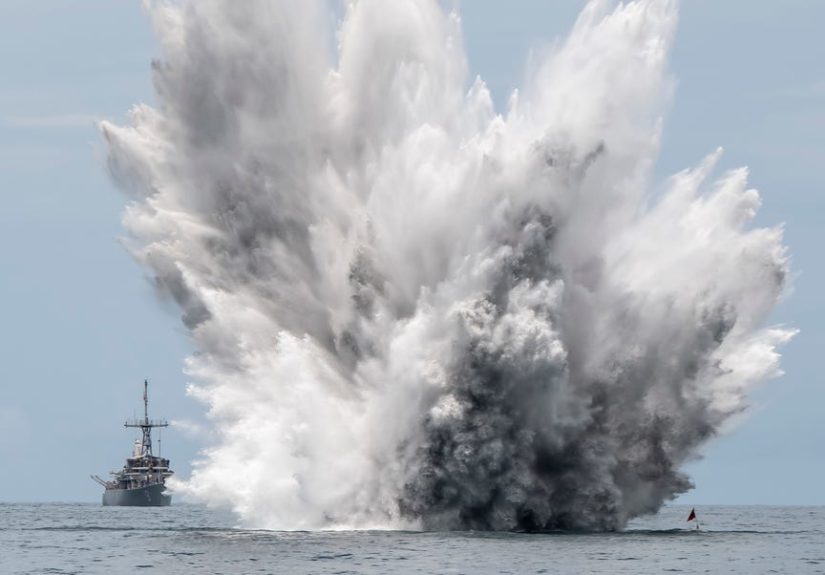
When most people hear the word “mine,” they imagine something old, rusty, and vaguely pirate-adjacent sitting at the bottom of the ocean like a grumpy metal sea urchin. The U.S. Navy’s new Hammerhead mine is not that. Officially described as the Hammerhead Encapsulated Effector, it represents a modern approach to underwater defense: a moored anti-submarine system designed to wait quietly in the ocean, detect a hostile submarine, and release a torpedo-like effector when needed.
In plain English, Hammerhead is less like a floating explosive and more like a patient underwater guard dog. It does not bark, it does not chase seagulls, and it certainly does not need a coffee break. Its job is to help protect maritime areas by making enemy submarines think twice before entering contested waters. In a world where submarines are quieter, smarter, and harder to track, that kind of undersea defense matters.
The Navy describes Hammerhead as an encapsulated torpedo used as a moored influence mine in intermediate and deep water. While attached to the sea floor, it is designed to detect passing submarines and launch its effector against the threat. That short description packs in a big shift: modern mine warfare is moving away from simple “set it and forget it” devices and toward network-aware, sensor-driven systems built for selective defense.
What Is the Navy’s Hammerhead Mine?
The Navy’s Hammerhead mine is a next-generation anti-submarine defense system. It is not primarily aimed at surface ships. Its role is undersea denial: making it harder for hostile submarines to move freely through strategically important maritime areas. These areas may include deep-water approaches, sea lanes, or regions where naval forces need to limit an adversary’s underwater options.
The system is built around the idea of an “encapsulated effector.” In this context, the effector is commonly associated with the Navy’s MK 54 lightweight torpedo, a widely used U.S. anti-submarine weapon. Instead of being launched from an aircraft, helicopter, or surface ship, the effector is housed in a seabed or moored system until the correct conditions are met.
Think of the Hammerhead as a sealed underwater station made up of several broad components: a capsule, mooring hardware, energy supply, sensors, processing electronics, communications features, and the anti-submarine effector. Public Navy and contracting information has described the system in these general terms, though the most sensitive details remain outside public view for obvious reasons. Nobody needs a “DIY undersea defense for beginners” blog post, and this is not one.
Why the Navy Wants Hammerhead
Submarines are among the most difficult military platforms to detect. They can operate quietly, move through deep water, and threaten ships, ports, sea lanes, and military operations. As rival navies invest in better submarines and underwater drones, the U.S. Navy is paying renewed attention to mine warfare and seabed defense.
Traditional mine warfare has always been about controlling movement. Naval mines can deny access, slow an adversary, force ships or submarines into less favorable routes, and create uncertainty. In strategy terms, uncertainty is powerful. A submarine commander who knows a route may contain modern anti-submarine mines must spend more time avoiding, detecting, or bypassing the risk. That delay can protect friendly forces and reshape the entire maritime chessboard.
Hammerhead fits into this larger idea. It gives the Navy a way to hold underwater space at risk without needing a ship or aircraft to remain on station every minute. Instead of chasing every submarine across the ocean, the Navy can create defensive barriers or controlled undersea zones. That does not replace submarines, destroyers, aircraft, or sonar networks. It complements them.
How Hammerhead Works at a High Level
1. It Waits in the Undersea Environment
Hammerhead is described as a moored system, meaning it is positioned in the underwater environment and connected in place rather than drifting freely. Public descriptions emphasize its use in intermediate and deep-water settings. Once positioned, it remains quiet and inactive until its sensors and logic determine that a valid target condition exists.
This waiting phase is what makes Hammerhead strategically interesting. The system does not need to advertise its presence. In undersea warfare, silence is not awkward; it is the whole personality.
2. It Uses Sensors to Detect Submarine-Like Activity
Hammerhead is designed to detect submarines, but the exact sensor details are not public in a way that should be treated as an instruction manual. Generally, underwater defense systems may rely on acoustic signatures, environmental data, processing logic, and classification methods to distinguish between background ocean noise and a possible submarine.
This matters because the ocean is noisy. Waves, marine life, ships, weather, and geology all contribute to the underwater soundtrack. If the sea had a playlist, it would be called “Random Clanks and Whale Jazz.” A modern defensive system must sort through that noise carefully. The goal is not just to hear something. The goal is to recognize the right kind of something.
3. It Classifies Before Acting
Public reporting and official descriptions commonly emphasize detection and engagement, but the key idea is selectivity. A modern mine cannot behave like an indiscriminate hazard. It must be designed with decision logic, safety controls, and target recognition principles so it acts only under specific conditions.
This is one of the biggest differences between older mine concepts and modern encapsulated systems. Hammerhead is not just a passive explosive. It is closer to a defensive station that waits, evaluates, and only then releases its effector. The classified details are not public, but the concept is clear: reduce risk to unintended targets while improving effectiveness against submarines.
4. It Releases an Anti-Submarine Effector
Once the system confirms the appropriate target conditions, Hammerhead is designed to release its encapsulated effector. Public sources connect this role with the MK 54 lightweight torpedo, a U.S. Navy anti-submarine weapon used from surface ships, helicopters, and aircraft. In Hammerhead’s case, the torpedo is housed in an undersea system instead of being launched from a traditional platform.
The practical advantage is obvious: the weapon is already near the area being defended. Instead of requiring a ship or aircraft to arrive after detection, Hammerhead shortens the response chain. In undersea warfare, time matters. Submarines do not send calendar invites before moving through sensitive areas.
Hammerhead and the MK 54 Lightweight Torpedo
The MK 54 lightweight torpedo is a central part of the public Hammerhead discussion. The Navy identifies the MK 54 as an anti-submarine weapon, and defense industry descriptions highlight its ability to track and engage underwater targets. It is already part of the U.S. Navy’s anti-submarine toolkit, which makes it a logical effector for a system designed around undersea threats.
Using an existing torpedo family can reduce development risk. Rather than inventing every piece from scratch, the Navy can integrate a proven anti-submarine effector into a new delivery and waiting architecture. That does not make the project easy. Underwater systems must survive pressure, corrosion, temperature shifts, biofouling, long standby periods, and the ocean’s general habit of bullying anything humans build.
What Makes Hammerhead Different From Older Mines?
Older naval mines were often simpler devices triggered by contact, magnetic influence, pressure changes, or acoustic signatures. They could be effective, but they also carried limitations. Once placed, they could be difficult to control, difficult to recover, and dangerous if not properly managed.
Hammerhead represents a different design philosophy. It is built around encapsulation, sensing, command processing, energy management, and a guided anti-submarine effector. That combination makes it more like a compact undersea defense node than a traditional mine. The key improvement is not merely that it can attack a submarine. It is that it can wait, discriminate, and use a torpedo rather than relying on a simple blast mechanism.
This reflects the future of naval mine warfare: smarter, more selective, and more connected to broader maritime defense planning. The word “mine” may sound old-fashioned, but Hammerhead is part of a modern trend toward autonomous and semi-autonomous undersea systems.
How Hammerhead Supports Maritime Deterrence
Deterrence is the art of making an adversary decide that a move is not worth the cost. Hammerhead supports deterrence by complicating submarine operations. If an adversary believes certain areas may be protected by modern anti-submarine mines, it must devote more time and resources to scouting, route planning, mine countermeasures, and risk reduction.
That creates several defensive benefits. First, it can slow an adversary’s timeline. Second, it can protect friendly ships and bases. Third, it can free other naval assets for missions that require mobility. Fourth, it can create psychological pressure. A hidden underwater defense system does not need to be everywhere. It only needs to make the other side wonder where it might be.
This is why mines have historically had an outsized strategic effect. They are relatively inexpensive compared with large warships, yet they can influence the movement of expensive naval forces. Hammerhead brings that old logic into a modern anti-submarine warfare environment.
The Role of Unmanned Underwater Vehicles
Public reporting has often discussed Hammerhead alongside unmanned underwater vehicles, especially large systems that could help deliver payloads into maritime areas. The broader Navy trend is clear: unmanned systems are becoming more important for mine warfare, seabed sensing, reconnaissance, and payload delivery.
Unmanned underwater vehicles can reduce risk to sailors by operating where crewed ships or submarines might face danger. They can also extend reach, carry sensors, and perform repetitive missions. For Hammerhead, the important point is not the exact method of placement, which is an operational matter, but the broader concept: future mine warfare will likely rely more heavily on robotic and autonomous support systems.
In other words, the Navy is not just building a new mine. It is building pieces of a larger undersea ecosystem: sensors, unmanned vehicles, command systems, torpedoes, and defensive planning all working together.
Why Undersea Warfare Is Getting More Important
The oceans are becoming more crowded below the surface. Submarines, underwater drones, seabed infrastructure, cables, sensors, and energy systems are all part of modern maritime competition. The undersea domain is no longer just a place where submarines hide. It is a strategic layer of global security.
This is especially relevant because sea lanes support global trade, military logistics, and energy movement. If submarines can threaten those routes, they can create enormous pressure without ever appearing on the horizon. That is why anti-submarine warfare remains a central mission for advanced navies.
Hammerhead addresses one slice of that problem. It does not solve everything, and it is not meant to. But as part of a layered defense system, it can help protect key underwater approaches and force adversaries to respect defended maritime space.
Benefits of the Hammerhead Concept
Persistent Defense
A ship can patrol an area, but it may need fuel, maintenance, crew rest, or reassignment. A moored undersea system can provide persistence in a different way. It can remain in place and monitor an area for an extended period, depending on design and mission requirements.
Reduced Risk to Crewed Forces
Undersea mine defense can reduce the need to keep sailors in dangerous areas for long periods. That does not remove human decision-making from strategy, but it can shift some risk away from crews and toward unmanned or pre-positioned systems.
Layered Anti-Submarine Warfare
Hammerhead can contribute to a layered approach that includes submarines, surface ships, aircraft, sonar arrays, unmanned vehicles, and intelligence systems. Layered defense is important because no single tool can dominate the undersea environment by itself.
Strategic Uncertainty for Adversaries
A visible ship can be tracked. A hidden seabed defense system is harder to account for. That uncertainty can change how an adversary plans, moves, and allocates resources.
Challenges and Limitations
Hammerhead is impressive, but no defense system is magic. The ocean is a brutal operating environment. Saltwater corrodes, currents shift, marine growth accumulates, and underwater sound behaves in complicated ways. Any system that waits beneath the sea must handle power management, reliability, secure communications, target discrimination, and long-term maintenance concerns.
There are also legal and operational responsibilities. Naval mines are governed by rules, doctrines, and safety requirements. Modern systems must be designed with control, accountability, and deactivation considerations. The more selective and manageable the system, the better it fits responsible military use.
Another challenge is cost. Hammerhead is more sophisticated than a simple mine, which means development, integration, testing, production, and sustainment all matter. Defense systems must not only work in theory; they must work after months in saltwater, under pressure, and during the exact moment when everyone hopes the engineering team did not cut corners.
Common Misunderstandings About Hammerhead
Misunderstanding 1: It Is Just an Old Mine With a New Name
Not quite. Hammerhead is better understood as a modern encapsulated torpedo system. The “mine” label describes its defensive waiting role, but the internal logic and effector concept are more advanced than traditional contact mines.
Misunderstanding 2: It Replaces the Navy’s Anti-Submarine Fleet
Hammerhead does not replace destroyers, submarines, aircraft, or helicopters. It adds another layer. Undersea warfare is too complex for one solution, even one with a dramatic name that sounds like it belongs in a superhero movie.
Misunderstanding 3: It Is Mainly About Attack
Hammerhead is best understood as an area-defense and deterrence tool. Its value comes from protecting maritime space, discouraging hostile submarine movement, and supporting broader naval operations.
Real-World Example: Why a System Like Hammerhead Matters
Imagine a crisis near a critical sea route. Friendly ships need to move through the area, but hostile submarines may try to track or threaten them. A traditional response might require patrol aircraft, destroyers, submarines, and surveillance assets to continuously monitor the route. Those assets are valuable, but they cannot be everywhere at once.
A system like Hammerhead can support the defense of key underwater approaches. Its presence can make an adversary’s submarine operations riskier and less predictable. Even if it never releases its effector, it may still succeed by shaping behavior. In military strategy, forcing the other side to slow down, reroute, or commit extra resources is often a win.
This is the quiet power of undersea denial. The most effective defense is not always the loudest one. Sometimes it is the system nobody sees, waiting patiently beneath the waves like a very serious metal librarian enforcing the “no hostile submarines” policy.
The Future of Mine Warfare
Hammerhead is part of a broader modernization trend in naval mine warfare. Future systems are likely to become more selective, more integrated with unmanned platforms, and more connected to maritime sensor networks. The Navy is also investing in mine countermeasures, because the same ocean that can hide defensive systems can also hide threats from adversaries.
The future will likely involve a combination of smart mines, unmanned vehicles, seabed sensors, rapid deployment options, and improved clearance capabilities. That mix reflects a central truth: controlling the undersea domain is not just about having submarines. It is about knowing, shaping, and defending the underwater battlespace.
Experience-Based Perspective: What Hammerhead Teaches Us About Modern Defense
One useful way to understand the Hammerhead mine is to step away from the hardware and think about the experience of defending a maritime area. Underwater defense is not like guarding a fence, where a person can simply look left, look right, and complain about the weather. The ocean hides almost everything. Sound bends. Visibility disappears. Distances become deceptive. Even identifying what made a noise can be difficult. A submarine is not a truck with headlights. It is a quiet, moving object in a vast, three-dimensional environment.
From the viewpoint of naval planners, that creates a stressful puzzle. They must protect ships, ports, routes, and allies without assuming that every threat will be visible. Hammerhead represents a practical lesson: modern defense is increasingly about persistence. A defensive system has to remain useful even when no crew is nearby, no aircraft is overhead, and no surface ship is sitting directly above the area. That kind of persistence changes the experience of maritime security from “chase the threat” to “shape the space.”
Engineers working on undersea systems face a different experience: the ocean is the world’s least forgiving product tester. Anything placed underwater must survive pressure, corrosion, temperature variation, biological growth, and long periods of inactivity. A laptop that freezes during a school presentation is annoying. A defense system that fails after months underwater is a much bigger problem. That is why systems like Hammerhead require careful integration, testing, power planning, and reliability engineering.
For sailors and commanders, the experience is also psychological. A visible weapon can be counted. A hidden defensive layer creates uncertainty. If an adversary submarine crew knows that an area may contain selective anti-submarine systems, their confidence changes. They may move more slowly, avoid certain routes, or spend more time searching. That hesitation can protect friendly forces before any weapon is ever used.
For the public, Hammerhead offers a reminder that national defense is not only about aircraft carriers, fighter jets, and dramatic footage on the evening news. Some of the most important military technologies are quiet, patient, and deeply unglamorous. They do not roar. They wait. They help create boundaries in places where there are no fences, no walls, and no street signs. The ocean may look peaceful from the beach, but beneath the surface it is a complicated security environment.
The broader experience connected to Hammerhead is this: modern defense depends on systems thinking. Sensors, energy, software, torpedoes, unmanned vehicles, rules of engagement, maintenance, and strategy all have to fit together. A single device is never just a device. It is part of a chain of decisions and responsibilities. That is what makes Hammerhead important. It is not merely a new mine; it is a sign of how the Navy is adapting to a quieter, deeper, and more technologically demanding battlefield.
Conclusion
The Navy’s new Hammerhead mine shows how old concepts can evolve into modern defense systems. Mines have long shaped naval warfare by controlling movement and creating uncertainty. Hammerhead updates that idea for the age of quiet submarines, unmanned underwater vehicles, advanced sensors, and layered maritime defense.
At its core, Hammerhead is a moored anti-submarine system that waits underwater, detects submarine threats, and releases an encapsulated effector when required. Its value comes not only from what it can do, but from what it forces adversaries to consider. In undersea warfare, doubt can be as powerful as steel.
As naval competition moves deeper below the surface, systems like Hammerhead will likely play a growing role in protecting sea lanes, supporting deterrence, and strengthening maritime security. The ocean is vast, dark, and difficult to monitor. Hammerhead is one answer to that problem: quiet, patient, and designed to make hostile submarines feel very unwelcome.