Table of Contents >> Show >> Hide
- Why Learn to Open a Can Without a Can Opener?
- Method 1: How to Open a Can With a Spoon
- Method 2: How to Open a Can With a Chef’s Knife
- Method 3: How to Open a Can With a Pocketknife or Multitool
- Method 4: How to Open a Can Using Pavement (Yes, Really)
- How to Choose the Right Method
- Common Mistakes to Avoid
- When You Should Absolutely Avoid DIY Methods
- Final Thoughts
- Experience Section: Real-Life Lessons From Opening Cans Without a Can Opener ()
- SEO Metadata
If you’ve ever stared helplessly at a sealed can while camping, cooking, or simply battling a broken can opener, congratulationsyou’ve officially unlocked one of adulthood’s strangest boss fights. The good news? You don’t need a miracle or a viral life hack that only works on TikTok. With a few everyday tools (and a dash of confidence), you can open that stubborn can safely, effectively, and without sacrificing your fingers.
Below, you’ll find four tried-and-true methods based on real information sourced from reputable U.S. household, survival, and cooking experts. And yes, these techniques really work. Whether you’re wielding a spoon, a chef’s knife, or the sheer force of determination, this guide will walk you through everything safely, step-by-step.
Why Learn to Open a Can Without a Can Opener?
Most people never think twice about how privileged they are to own a simple can openeruntil it breaks, disappears, or becomes mysteriously welded shut from old spaghetti sauce. Learning alternative methods isn’t just a quirky party trick; it’s a practical survival skill that can help you when camping, traveling, or living through a power outage. Plus, it’s strangely empowering to open a can with a tool as humble as a spoon.
Method 1: How to Open a Can With a Spoon
Why a Spoon Works Surprisingly Well
This might sound like a joke, but the spoon method is one of the safest and most reliable options. The curved edge gives you leverage, and the thick base allows controlled pressure. Think of the spoon as the Swiss Army knife’s friendly cousinunexpectedly useful and less likely to cause bodily harm.
Step-by-Step: Spoon Technique
- Grab a sturdy metal spoon. Skip the flimsy decorative ones; you need something with weight.
- Hold the spoon’s bowl facing down. Grip the handle tightly with your dominant hand.
- Rub the tip back and forth along the inner edge of the can’s lid. You’re essentially grinding through the metal using friction.
- Once a puncture appears, pry upward gently. Work your way around the lid until it loosens.
- Lift the lid carefully. Spoon openvictory achieved.
Safety Tips
- Keep your non-dominant hand far from the puncture line.
- Don’t rush; metal edges are still sharp.
- Wipe the lid before opening if the can is dusty or rusty.
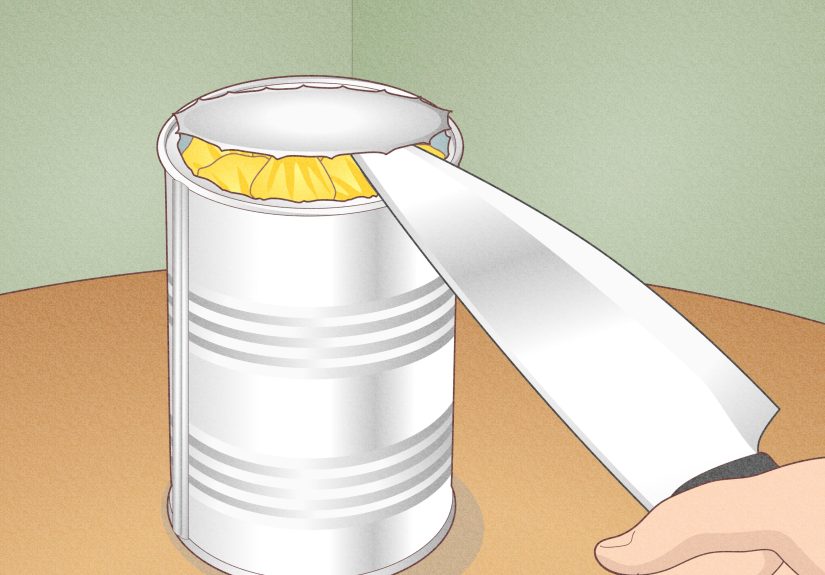
Method 2: How to Open a Can With a Chef’s Knife
Not for the Faint of HeartBut Effective
Using a chef’s knife requires a stable surface and laser focus. The idea isn’t to slice through the lid (please don’t do that) but to use the blunt heel of the blade for controlled punctures. Chefs use this trick in busy kitchens more often than they admit.
Step-by-Step: Knife Technique
- Choose a heavy, wide-bladed chef’s knife. Do NOT use a thin paring knife.
- Place the can on a flat, steady surface.
- Position the heel (the thick bottom corner) of the blade on the lid’s inner rim.
- Press straight down with controlled force until the metal pops.
- Repeat punctures around the lid. Move slowly and consistently.
- Lift the lid with caution.
Safety Tips
- Never swing or stabalways press straight down.
- Use a towel to steady the can if it slips.
- Angle your body away from the blade in case of slips.
Method 3: How to Open a Can With a Pocketknife or Multitool
Your Handy Outdoor Lifesaver
If you’re hiking, camping, or living your best off-grid fantasy, your pocketknife is your best friend. Many multitools even have built-in can openers, but if yours doesn’t, the sharp point will still do the jobcarefully.
Step-by-Step: Pocketknife Technique
- Stabilize the can. Place it between your knees or on a flat surface.
- Use the knife’s point to pierce the lid at an angle.
- Create small, connected punctures along the rim.
- Once the lid loosens, pry it upward using the knife’s base.
Safety Tips
- Always puncture downward, never toward your hand.
- Keep your fingers away from the cutting angle.
- Clean the blade before using it to avoid contamination.
Method 4: How to Open a Can Using Pavement (Yes, Really)
When You Have Zero Tools
This survival method is wildly effective and based on physics, not desperation. Most cans have a raised lip around the lid. Rubbing the can’s top repeatedly against concrete or stone will wear that lip down, allowing the lid to pop off.
Step-by-Step: Pavement Technique
- Find a rough, flat surface. Concrete works best.
- Turn the can upside down.
- Rub the can’s top vigorously back and forth. Friction will grind down the seal.
- Check often. Once moisture appears, the lid is loosening.
- Use your fingers or a butter knife to pry the lid upward.
Safety Tips
- Keep the can straight to avoid spillage.
- Wipe away any concrete dust before opening fully.
How to Choose the Right Method
Different situations call for different tools. If you’re indoors and have cutlery available, the spoon is your safest bet. If you’re outdoors, the pocketknife method is efficient. The chef’s knife works well in emergencies but requires steady hands. The pavement method is ideal when you’re in true survival mode.
Common Mistakes to Avoid
- Using flimsy utensils. Weak tools bend and slip.
- Working too fast. Slow and steady avoids injuries.
- Stabbing motions. Puncturing should always be controlled.
- Ignoring hygiene. Wipe the lid before and after opening.
When You Should Absolutely Avoid DIY Methods
If the can is rusty, bulging, or leaking, throw it outno tool on Earth can make spoiled food safe. Also avoid these methods when handling oversized cans or damaged metal that might splinter into food.
Final Thoughts
Opening a can without a can opener is one of those life skills you don’t realize you need until it suddenly becomes very, very important. With a spoon, knife, pocketknife, or even pavement, you can rescue dinner, save a camping trip, or at least earn some bragging rights. Whichever method you choose, patience and safety always come first.
Experience Section: Real-Life Lessons From Opening Cans Without a Can Opener ()
Anyone who has ever attempted to open a can without a can opener will tell you that it always starts the same way: with confidence. You think, “How hard can it be?” Five minutes later, you’re sweating, muttering motivational phrases under your breath, and questioning every decision that led to this moment.
Let’s talk experiencesboth personal and commonly reported. Many people first learn alternative can-opening methods during camping trips. Imagine this: you’ve carried a 30-pound backpack up a mountain, remembered the portable stove, remembered the fuel, remembered the water filter…and somehow forgot the can opener. When hunger strikes, that sealed can of chili suddenly becomes the most powerful object in the universe. At that moment, the spoon method feels like discovering fire for the first time.
One camper recounted spending ten minutes scraping the spoon against a can of beans while their friends mocked themright until the lid popped off and dinner was served. The spoon method’s biggest lesson? Persistence always wins.
Another common scenario: the bent-out-of-shape can opener at home. Anyone with a kitchen drawer full of chaotic utensils knows that can openers age like milk. You twist, crank, reverse crank, jiggle the gear, and somehow it just chews up the can instead of opening it. That’s when the chef’s knife technique becomes oddly appealing. Most home cooks describe the feeling as both terrifying and rewardinglike performing low-stakes surgery.
Of course, there are also stories of what not to do. One person confessed to trying to stab the can with a steak knife. It slipped. The can survived. The knife didn’t. This taught them a valuable lesson: treating a can like an enemy in a sword fight never ends well.
Outdoors enthusiasts swear by the pocketknife method. Many say the key is patiencequick jabs only lead to slips. Slower, angled punctures give you control and keep your hands intact. They also mention feeling surprisingly accomplished once the lid lifts, as though opening a can makes you an honorary member of a wilderness survival show.
Then there’s the pavement technique. People with firsthand experience describe it as both primitive and genius. One hiker said the moment the seal cracked after rubbing the can on a rock, they felt like a prehistoric warrior preparing a feast. Another said they barely believed it would work until moisture appeared, signaling that the lid was loosening.
If there’s one shared takeaway from all these experiences, it’s this: opening a can without a can opener teaches patience, creativity, and just a touch of humility. It reminds you that even in a modern world full of gadgets, sometimes the simplest toolsor even the groundcan get the job done.
And the next time you’re restocking your camping gear or home emergency kit, you’ll probably toss in two can openers. Just in case.