Table of Contents >> Show >> Hide
- What Is Chess?
- How to Set Up the Chessboard
- How Each Chess Piece Moves
- Special Chess Rules Beginners Should Know
- How to Win a Chess Game
- Basic Chess Gameplay: How a Turn Works
- Beginner Chess Strategy: What to Do in the Opening
- Middle Game Strategy for Beginners
- Basic Tactics Every Beginner Should Learn
- Endgame Basics: How to Finish the Job
- Common Beginner Mistakes to Avoid
- How to Practice Chess as a Beginner
- A Simple Beginner Game Plan
- Experiences and Practical Lessons for Learning Chess as a Beginner
- Conclusion
Learning how to play chess can feel like walking into a room where everyone is speaking in mysterious code: “fork,” “pin,” “castle,” “blunder,” “zugzwang.” Do not panic. Chess is not reserved for grandmasters, math wizards, or people who stare dramatically at boards in movies. At its heart, chess is a two-player strategy game played on 64 squares, where every move asks one simple question: “What happens next?”
This beginner-friendly guide explains the chessboard, how each piece moves, how a game is won, and the basic chess strategy that helps new players stop donating their queen like it is a free sample at the grocery store. By the end, you will understand the rules of chess, the flow of gameplay, and practical beginner tactics you can use in real games.
What Is Chess?
Chess is a strategy board game for two players: White and Black. Each player starts with 16 pieces: one king, one queen, two rooks, two bishops, two knights, and eight pawns. The goal is to checkmate your opponent’s king, which means the king is under attack and has no legal way to escape.
Unlike many games, chess has no dice, hidden cards, or lucky spinner. Every move is visible. That does not mean chess is easy, but it does mean improvement is very possible. The more you learn patterns, piece activity, and basic plans, the less random the board feels.
How to Set Up the Chessboard
A chessboard has 8 rows and 8 columns, making 64 squares total. The first setup rule is easy: place the board so that each player has a light square in the bottom-right corner. Many beginners accidentally rotate the board the wrong way. If your bottom-right square is dark, the board is rebelling. Turn it around.
Piece Placement
Place the pieces on the two rows closest to each player. The back row, from left to right, is:
- Rook
- Knight
- Bishop
- Queen
- King
- Bishop
- Knight
- Rook
The queen always starts on her own color: White queen on a light square, Black queen on a dark square. The king goes on the remaining center square beside the queen. Put all eight pawns directly in front of the main pieces. White moves first, then players alternate turns.
How Each Chess Piece Moves
Every chess piece has its own movement style. This is where chess becomes interesting. Think of your pieces like a tiny medieval office team: the queen is the overachiever, the knights are unpredictable interns, and the pawns are brave little employees who somehow do most of the hard work.
The King
The king moves one square in any direction: forward, backward, sideways, or diagonally. The king is the most important piece because losing the king’s safety loses the game. However, the king is not actually captured. Instead, the game ends when the king is checkmated.
The Queen
The queen is the most powerful piece. She moves any number of squares in a straight line: horizontally, vertically, or diagonally. Because the queen is so strong, beginners often bring her out too early. That can be dangerous because your opponent can attack her while developing their own pieces.
The Rook
The rook moves any number of squares horizontally or vertically. Rooks are especially strong on open files, which are columns without pawns blocking them. In the opening, rooks often wait quietly in the corners. Later, they become powerful attackers and defenders.
The Bishop
The bishop moves diagonally as far as the path is clear. Each player has one light-square bishop and one dark-square bishop. Bishops are long-range pieces, which means they become stronger when the board opens up.
The Knight
The knight moves in an L-shape: two squares in one direction and then one square sideways. It is the only piece that can jump over other pieces. Knights are excellent at forks, which are attacks on two pieces at the same time. They are also the reason beginners frequently say, “Wait, that piece can go there?”
The Pawn
Pawns move forward one square, but they capture diagonally one square forward. On its first move, a pawn may move one or two squares. Pawns cannot move backward. They may look weak, but pawns shape the entire game. A smart pawn move can control the center, open lines, or create a path toward promotion.
Special Chess Rules Beginners Should Know
Chess has a few special rules that can seem strange at first. Once you understand them, they become normal parts of gameplay.
Castling
Castling is a special move involving the king and one rook. The king moves two squares toward the rook, and the rook jumps to the square next to the king on the other side. Castling helps protect your king and connect your rooks.
You may castle only if neither the king nor that rook has moved, no pieces stand between them, the king is not in check, and the king does not pass through or land on an attacked square.
Pawn Promotion
When a pawn reaches the farthest row from where it started, it promotes. Most of the time, players promote to a queen because queens are powerful. Yes, your tiny pawn can become a queen. Chess believes in career growth.
En Passant
En passant is a special pawn capture. If an opponent’s pawn moves two squares forward from its starting position and lands beside your pawn, your pawn may capture it as if it moved only one square. This must be done immediately on the next move, or the chance disappears.
How to Win a Chess Game
The main way to win is by checkmate. A king is in check when it is under attack. The player in check must respond by moving the king, blocking the attack, or capturing the attacking piece. If none of those options is legal, it is checkmate.
Check vs. Checkmate
Check means, “Your king is in danger.” Checkmate means, “Your king is in danger and there is no escape.” Beginners sometimes announce checkmate too early. Before celebrating like you just won the world championship, make sure the king cannot move, block, or capture the threat.
Draws
Not every chess game has a winner. A game can end in a draw through stalemate, insufficient material, repetition, agreement, or certain move-count rules. Stalemate is especially common among beginners. It happens when a player is not in check but has no legal moves. That is a draw, not a win.
Basic Chess Gameplay: How a Turn Works
On your turn, you move one piece legally. If your move lands on a square occupied by an opponent’s piece, you capture that piece and remove it from the board. Then your opponent moves. This continues until checkmate, resignation, draw, or time runs out in timed games.
A good beginner habit is to ask three questions before every move:
- Is my king safe?
- Is any of my material under attack?
- What is my opponent threatening?
This simple checklist will prevent many painful blunders. It will not make you unbeatable overnight, but it will stop your bishop from wandering into danger like it forgot its glasses.
Beginner Chess Strategy: What to Do in the Opening
The opening is the first stage of the game. Beginners often memorize random opening names, but it is better to learn opening principles first. You do not need to know 20 moves of the Sicilian Defense to play a decent game. You need to put your pieces on useful squares and keep your king safe.
Control the Center
The center squares, especially e4, d4, e5, and d5, are important because pieces placed near the center usually have more options. Moving a central pawn early helps your bishops and queen enter the game while claiming space.
Develop Your Pieces
Development means moving your knights and bishops from their starting squares to active positions. A common beginner plan is to develop knights before bishops, castle early, and avoid moving the same piece repeatedly without a reason.
Castle Early
Castling is one of the simplest ways to improve king safety. It also helps your rooks become connected later. A king stuck in the center can become a target if the position opens quickly.
Do Not Bring the Queen Out Too Early
The queen is powerful, but early queen adventures can waste time. If your opponent attacks your queen while developing pieces, you may spend several turns moving her around while your opponent builds a strong position.
Middle Game Strategy for Beginners
The middle game begins after the opening, when pieces are developed and plans become more specific. This is where tactics, attacks, and positional ideas begin to matter.
Look for Threats
Before making a move, look for checks, captures, and attacks. These are forcing moves because your opponent usually must respond. Many beginner wins come from spotting one-move tactics that the other player missed.
Use All Your Pieces
A common beginner mistake is attacking with one or two pieces while the rest of the army naps on the back row. Strong attacks usually require teamwork. Bring rooks to open files, place bishops on active diagonals, and use knights near the center.
Protect Your Pieces
Loose pieces are easy targets. If a piece is undefended, your opponent may win it with a tactic. Try to keep your pieces protected by other pieces or pawns. A defended piece is less likely to become a free snack.
Understand Piece Value
Piece values help you decide whether a trade is good. A common beginner scale is:
- Pawn: 1 point
- Knight: 3 points
- Bishop: 3 points
- Rook: 5 points
- Queen: 9 points
The king has no point value because losing the king’s safety means losing the game. Piece values are guidelines, not absolute laws. Sometimes a knight can be stronger than a rook if it creates checkmate threats or dominates the position.
Basic Tactics Every Beginner Should Learn
Tactics are short-term moves that win material or create checkmate threats. Learning basic chess tactics is one of the fastest ways to improve.
Fork
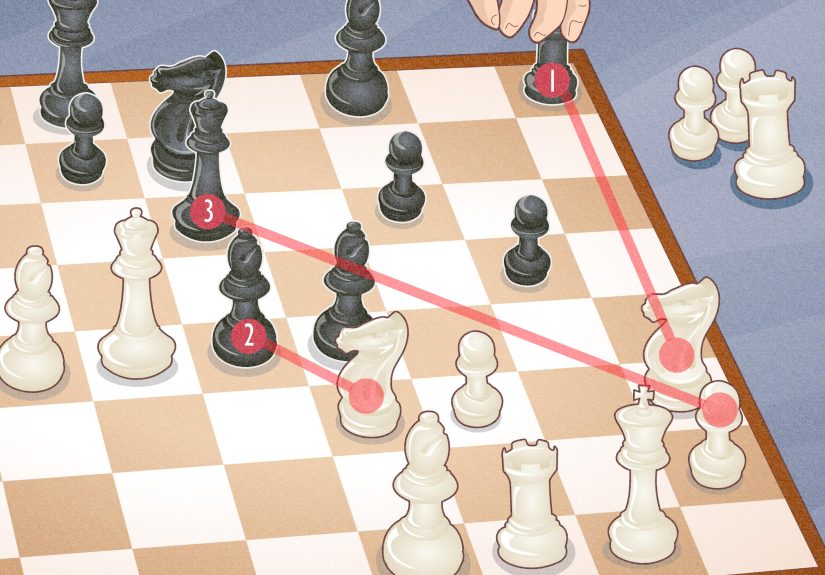
A fork attacks two or more pieces at once. Knights are famous for forks because their L-shaped movement is tricky to predict. A knight fork on the king and queen is a classic beginner nightmare.
Pin
A pin happens when a piece cannot move without exposing a more valuable piece behind it. For example, a bishop may pin a knight to the king. The knight technically sits there, but emotionally, it is trapped.
Skewer
A skewer is like a pin in reverse. A valuable piece is attacked first, and when it moves, a less valuable piece behind it can be captured.
Discovered Attack
A discovered attack happens when moving one piece reveals an attack from another piece. These tactics can be powerful because one move creates two problems at once.
Endgame Basics: How to Finish the Job
The endgame begins when many pieces have been traded. At this stage, kings become active, pawns become more important, and simple plans matter.
Activate Your King
In the opening and middle game, the king usually hides for safety. In the endgame, the king becomes a fighting piece. Use it to support pawns, attack weak pawns, and control important squares.
Push Passed Pawns
A passed pawn has no opposing pawn blocking or able to capture it on nearby files. Passed pawns can become dangerous because they may promote. Support them with your king or rook when possible.
Learn Simple Checkmates
Beginners should learn basic mates such as king and queen versus king, and king and rook versus king. These patterns teach coordination and prevent accidental stalemates.
Common Beginner Mistakes to Avoid
Everyone blunders in chess. Even strong players make mistakes, though they usually look more sophisticated while doing it. Here are common beginner errors to watch for:
- Moving too many pawns in the opening
- Ignoring king safety
- Bringing the queen out too early
- Leaving pieces undefended
- Making moves without checking the opponent’s threats
- Trading pieces without counting material
- Stalemating instead of checkmating
The best fix is not perfection. The best fix is awareness. After every game, review one or two moments where the position changed. Ask, “What did I miss?” That question is more useful than blaming the board, the chair, or Mercury being in retrograde.
How to Practice Chess as a Beginner
Practice should be simple, consistent, and enjoyable. You do not need a five-hour training schedule. Start with short games, basic puzzles, and friendly analysis.
Play Slow Games First
Fast chess is exciting, but beginners learn more from slower games. Give yourself time to think. A 10-minute or 15-minute game is usually better for learning than a bullet game where both players move like caffeinated squirrels.
Solve Beginner Puzzles
Chess puzzles train your tactical vision. Start with one-move and two-move tactics. Look for checks, captures, and threats. Over time, your brain will begin recognizing patterns automatically.
Review Your Games
After playing, review the game without shame. Find your biggest mistake and one good move. This keeps improvement balanced. If you only focus on mistakes, chess becomes homework with tiny wooden pieces.
A Simple Beginner Game Plan
If you are new to chess and do not know what to do, follow this practical plan:
- Start by moving a center pawn, usually e4 or d4.
- Develop your knights and bishops toward active squares.
- Castle to protect your king.
- Connect your rooks by moving pieces off the back row.
- Look for checks, captures, and threats every turn.
- Avoid giving away pieces for free.
- Trade when ahead in material, but avoid trades that help your opponent.
- In the endgame, activate your king and support passed pawns.
This plan will not win every game, but it gives you structure. Beginners often lose because they move without a purpose. A basic plan helps every piece get a job.
Experiences and Practical Lessons for Learning Chess as a Beginner
One of the most useful experiences for a beginner is realizing that chess improvement does not feel smooth. At first, you learn how the pieces move and feel proud. Then you lose your queen in three moves and wonder whether the horse-shaped piece is secretly evil. This is normal. Chess teaches through patterns, and patterns usually appear after repeated mistakes.
A helpful beginner experience is to play games with a clear goal that is not simply “win.” For example, play one game where your goal is to castle before move ten. Play another where your goal is to avoid moving the same piece twice in the opening. In a third game, try to check your opponent’s threats before every move. These mini-goals make learning less overwhelming and help you build real habits.
Another practical lesson is that the board often looks more complicated than it really is. When beginners see many pieces attacking many squares, they freeze. The solution is to simplify your thinking. First, check whether your king is safe. Second, look for captures. Third, look for checks. Fourth, ask what your opponent wants. This routine slows the game down and turns chaos into a checklist.
It also helps to accept that losing is part of chess. In fact, losing can be more educational than winning. A win may hide bad habits because the final result feels good. A loss points directly to what needs work. Did you forget about a back-rank mate? Did you leave a knight undefended? Did you push pawns in front of your king and invite an attack? Each mistake becomes a lesson if you review it honestly.
Beginners should also play against people slightly stronger than themselves. If your opponent is much stronger, the game may feel like trying to solve a puzzle while someone steals the puzzle pieces. If your opponent is too weak, you may win without learning. Slightly stronger opponents create the best learning zone because they punish mistakes but still give you chances.
Finally, remember that chess is supposed to be enjoyable. Study basic tactics, learn checkmates, and practice openings, but do not turn every game into a final exam. Laugh at your blunders, celebrate your clever moves, and keep playing. The beginner who plays regularly, reviews calmly, and learns one idea at a time will improve faster than the beginner who memorizes 47 opening lines and still forgets their bishop is hanging.
Conclusion
Learning how to play chess for beginners starts with the basics: set up the board correctly, understand how each piece moves, protect your king, and aim for checkmate. Once the rules feel natural, beginner chess strategy becomes the real fun. Control the center, develop your pieces, castle early, look for tactics, and review your games with curiosity instead of frustration.
Chess rewards patience, pattern recognition, and practical thinking. You do not need to be a genius to enjoy it. You only need a board, an opponent, and the willingness to ask, “What is my best move?” Sometimes the answer is brilliant. Sometimes it hangs a rook. Either way, you are learning.