Table of Contents >> Show >> Hide
- Why Display Clothes on a Wall in the First Place?
- 1. Install a Wall-Mounted Clothes Rack
- 2. Use Decorative Hooks or a Peg Rail
- 3. Add Floating Shelves for Folded Clothes and Accessories
- 4. Turn Clothes Into a Gallery-Style Display
- Styling Tips That Make Any Wall Display Look Better
- Common Mistakes to Avoid
- Conclusion
- Real-Life Experiences With Wall Clothing Displays
If your closet is bursting at the seams, your chair has become a part-time shirt valet, and your “temporary” clothing pile now has seniority in the room, it may be time for a better plan. The good news? You do not need a custom dressing room, a celebrity budget, or a magical disappearing hamper to make your clothes look good on display. In many homes, a blank wall can become stylish storage with surprisingly little effort.
Displaying clothes on a wall is one of those rare decorating tricks that is both practical and pretty. It gives you easy access to the pieces you wear most, turns favorite garments into part of the room’s design, and helps smaller spaces work harder. The key is doing it in a way that feels intentional instead of “I gave up halfway through laundry day.”
Below are four easy ways to display clothes on a wall, plus design tips, common mistakes to avoid, and real-life experiences that show how these ideas work in everyday homes.
Why Display Clothes on a Wall in the First Place?
A wall clothes display solves more than one problem at once. First, it creates visible storage. When clothes are easy to see, they are easier to wear, rotate, and maintain. Second, it frees up closet and drawer space for off-season items, basics, or less attractive essentials that do not need to be on stage. Third, it adds personality. A well-chosen jacket, a row of linen shirts, or a color-coordinated collection of hats can function almost like art.
This approach works especially well in studio apartments, small bedrooms, entryways, dressing areas, laundry rooms, and homes with limited closet space. It is also a smart solution for people who want to build capsule wardrobes, plan outfits ahead of time, or highlight statement pieces they genuinely enjoy looking at.
The secret is simple: your wall display should feel edited, not crowded. Think boutique, not bargain-bin avalanche.
1. Install a Wall-Mounted Clothes Rack
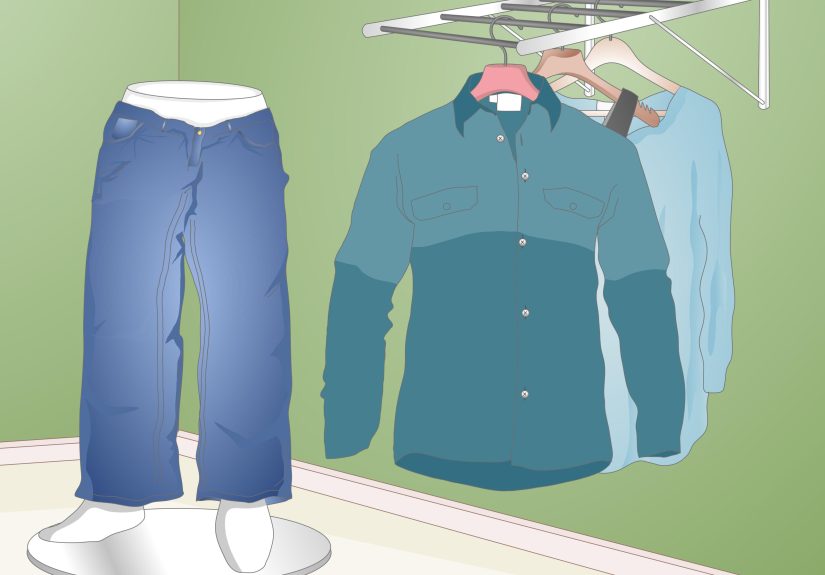
A wall-mounted clothes rack is the most straightforward way to display clothes on a wall. It is clean, functional, and ideal for garments that look better hanging than folded. Think dresses, blazers, button-downs, favorite denim jackets, and the “nice sweater” you claim you hand wash but emotionally support from a distance.
Why it works
This method gives you open access to daily outfits while creating a streamlined, modern look. It is especially effective if you want your wall clothes display to double as real storage rather than decoration alone.
Best places to use it
- Bedrooms with limited closet space
- Studio apartments
- Dressing corners
- Entryways for coats and jackets
- Laundry rooms for outfit staging
How to make it look good
Choose a rack that matches the room’s style. Black metal looks modern and industrial, brass feels more polished, wood adds warmth, and white finishes disappear nicely in lighter rooms. Keep the rack at a height that makes clothes easy to reach and lets hems hang freely without puddling on the floor.
Use matching hangers to create visual order. This is one of the easiest upgrades you can make. Mixed plastic, wire, velvet, and mystery hangers from three different decades can make even expensive clothes look chaotic. A single hanger style instantly makes the setup feel intentional.
Leave some breathing room between garments. If every item is crammed shoulder to shoulder, the display starts to look like overbooked public transit. Edit the collection so it feels curated. A little empty space is not wasted space. It is style space.
What to display
Stick to your best-looking, most frequently worn pieces. Great options include neutral jackets, structured shirts, dresses in coordinating colors, and seasonal favorites like trench coats or chunky cardigans. This is not the moment for the stretched-out sleep tee from a 5K you did not train for.
2. Use Decorative Hooks or a Peg Rail
If a full rack feels too large, too permanent, or too “I accidentally opened a mini boutique,” decorative hooks or a peg rail are a fantastic alternative. This is one of the easiest clothing wall decor ideas because it works with minimal hardware and adds charm at the same time.
Why it works
Hooks use vertical wall space efficiently and are perfect for accessories and lighter garments. They also break up a blank wall without making the room feel heavy. A peg rail adds a classic, slightly tailored look, while individual hooks can feel modern, playful, or rustic depending on the finish.
Best items for hooks
- Hats and caps
- Scarves
- Belts
- Handbags
- Light jackets
- Tomorrow’s outfit
How to style hooks beautifully
Spacing matters. Hooks installed too close together create a bunched-up mess. Spread them out enough so each item has its own little spotlight. Mix practical pieces with attractive ones: a straw hat next to a leather tote, a denim jacket beside a linen scarf, a handbag hanging under a small framed print. That combination keeps the display from looking purely utilitarian.
You can also group hooks into zones. For example, one section can hold everyday accessories, another can hold outerwear, and another can be reserved for a single styled outfit. This trick makes even a small wall feel organized and purposeful.
If you want a softer, more decorative effect, choose natural wood pegs or painted rails that blend into your room. For a bolder look, go with brass or matte black hooks and let the hardware act like jewelry for the wall.
3. Add Floating Shelves for Folded Clothes and Accessories
Not everything belongs on a hanger. Sweaters, jeans, handbags, shoes, and neatly folded tees often look better on shelves. Floating shelves are a smart way to display clothes on a wall when you want the setup to feel like home decor instead of pure storage.
Why it works
Shelves create structure. They let you combine folded clothing with decorative objects, which helps the wall feel styled rather than overloaded. A shelf display is also easier to customize over time. You can refresh it seasonally, swap in new colors, and mix in baskets, books, mirrors, or small plants.
How to arrange shelves
Think in layers. Start with practical items like folded sweaters, denim stacks, or handbags. Then add visual balance with one or two decorative accents. A framed print, a ceramic tray, or a small box for jewelry can help break up the “all clothes, all the time” look.
Color coordination goes a long way here. Fold clothes by tone so the display feels calm and cohesive. Cream, tan, gray, black, and muted blues tend to look sophisticated. Bright colors can work too, but they look best when grouped intentionally rather than tossed into a rainbow traffic jam.
Best shelf display ideas
- A top shelf for handbags and hats
- A middle shelf for folded knits
- A lower shelf for shoes or baskets
- A small ledge for sunglasses, watches, or perfume
Open shelving is ideal if you enjoy tidy systems. If you are more of a “creative chaos” person, add baskets or boxes to hide items that do not deserve public exposure.
4. Turn Clothes Into a Gallery-Style Display
If you want your clothing wall display to feel more decorative than storage-driven, create a gallery-style arrangement. This method works best for statement pieces that are visually interesting on their own. Think vintage jackets, beautiful scarves, concert tees with cool graphics, children’s special outfits, or garments with sentimental value.
Why it works
This approach blurs the line between storage and art. It is perfect for people who love fashion, collect unique pieces, or simply want their room to reflect their style in a more personal way.
Creative ways to do it
- Hang one standout garment on a beautiful hook
- Mount a short rail and display a mini color story
- Use clip hangers for scarves or fabric pieces
- Pair clothing with framed art, mirrors, or photos
- Use a ladder shelf nearby for shoes and accessories
The trick is restraint. Gallery-style clothing displays work best when they are edited tightly. One incredible leather jacket can say more than fourteen random cardigans. Let the piece breathe. Give it negative space. Treat it the way you would treat a framed print or sculpture.
This is also a lovely solution for entryways, fashion studios, kids’ rooms, and dressing nooks where the clothing itself adds warmth and personality to the space.
Styling Tips That Make Any Wall Display Look Better
Choose a color direction
Even a practical storage wall looks more polished when the colors relate to one another. Neutrals create a calm, upscale feel. Soft pastels look airy. Dark tones feel dramatic and tailored. You do not need everything to match, but it should look like the pieces know each other.
Protect the clothes
Keep delicate fabrics away from direct sunlight, steam, and splatter-prone areas. If your wall is near a window, rotate displayed pieces regularly. Open display is best for items you wear often, not heirlooms you want preserved forever.
Mix storage with decor
A mirror, small stool, basket, rug, or wall art can turn your display into a true vignette. Without those supporting elements, it may read as “closet overflow.” With them, it feels designed.
Edit regularly
Do not let your display become the place where random items go to avoid being folded. Refresh it every few weeks. Swap seasonal pieces, remove anything wrinkled, and keep only what still looks intentional.
Common Mistakes to Avoid
- Overloading the wall: Too much weight or too many items can look cluttered and strain hardware.
- Ignoring installation quality: A stylish rack is only charming until it falls off the wall at 2 a.m. Use appropriate anchors and solid mounting.
- Displaying everything: Not every garment deserves exhibition status. Curate the wall.
- Using mismatched hangers: Small detail, huge impact.
- Choosing the wrong location: Avoid damp areas, harsh sunlight, and narrow pathways where clothes will get bumped constantly.
Conclusion
Displaying clothes on a wall is one of the easiest ways to blend fashion, function, and home design. Whether you choose a wall-mounted clothes rack, decorative hooks, floating shelves, or a gallery-style arrangement, the goal is the same: make your space work better while making it look better too.
The best clothing wall decor ideas are not the fanciest ones. They are the ones that fit your room, your habits, and your wardrobe. Start with a simple system, style it thoughtfully, and keep it edited. Soon your clothes will stop hiding in dark corners and start doing what they were clearly born to do: look fabulous and earn their square footage.
Real-Life Experiences With Wall Clothing Displays
One of the most common experiences people have with a wall clothes display is realizing how much easier mornings become when the right pieces are visible. Instead of digging through drawers like a raccoon with a deadline, they can see what they own at a glance. A small wall rack with five to seven go-to items often becomes the unofficial command center of the room. Favorite jeans, a blazer, a neutral shirt, and a reliable jacket suddenly do more work simply because they are right there in plain sight.
Another common experience is discovering that displaying clothes on a wall changes shopping habits. When garments are visible, it becomes painfully obvious which items are actually worn and which ones are just paying rent. Many people notice they stop buying random duplicates because they can already see the black cardigan, the other black cardigan, and the “slightly different” black cardigan hanging in full view. Wall displays can quietly encourage better wardrobe editing without a dramatic closet-cleanout speech.
Small-space dwellers often report the biggest benefits. In apartments without proper closets, a wall-mounted clothes rack can make the room feel more functional almost overnight. What starts as a practical fix often turns into a design feature. A neat row of neutral garments, a shelf above for bags, and a small mirror nearby can create a boutique effect that feels much more stylish than bulky furniture. It is one of those rare home projects that can make a room feel larger because it replaces visual confusion with deliberate structure.
There is also the emotional side of it. People tend to treat displayed clothes better. Items that are folded into oblivion or buried on a chair are easier to forget, wrinkle, or neglect. Once those same pieces are hung neatly on a wall, they often get worn more often and cared for more consistently. The display creates a little bit of respect between the person and the garment. Yes, that sounds dramatic. No, it is not wrong.
Of course, the experience is not perfect if the system is poorly edited. A wall display only feels calm when it stays curated. Many people learn this the hard way after hanging too many items too close together. What looked charming in theory can quickly turn into a fabric traffic jam. The lesson is simple: less looks better. A smaller, well-styled display usually feels more luxurious than a crowded one.
People also learn that maintenance matters. Dust, wrinkles, and visual clutter show up faster with open storage. The upside is that this often leads to better habits. A quick weekly reset, a hanger check, and a seasonal swap are usually enough to keep everything looking fresh. In return, the space feels more personal, more functional, and much easier to enjoy.
In the end, the experience of displaying clothes on a wall is usually about more than storage. It is about seeing your wardrobe differently. It turns clothing from hidden clutter into part of the room’s identity. For many people, that shift makes the entire space feel more organized, more stylish, and a lot more like home.