Table of Contents >> Show >> Hide
- The B-1B Lancer: A Bomber That Refuses to Retire Quietly
- Why Aircraft Carriers Changed the Conversation
- LRASM: The Missile That Gave the B-1B a Maritime Mission
- Could a B-1B Actually Kill an Aircraft Carrier?
- The “Deadly Version”: B-1B With LRASM
- The B-1R: The Regional Bomber That Never Happened
- Arsenal Plane Thinking: More Missiles, More Problems
- Why the B-1B Is Not a Stealth Bomber Like the B-2 or B-21
- Why Carrier-Killing Is Harder Than Headlines Suggest
- What Makes the B-1B/LRASM Combination So Dangerous?
- Specific Example: From Land Bomber to Ship Threat
- Limitations: The B-1B Still Has Problems
- Experience-Based Perspective: What Studying the B-1 Bomber Teaches Aviation Fans
- Conclusion
- SEO Tags
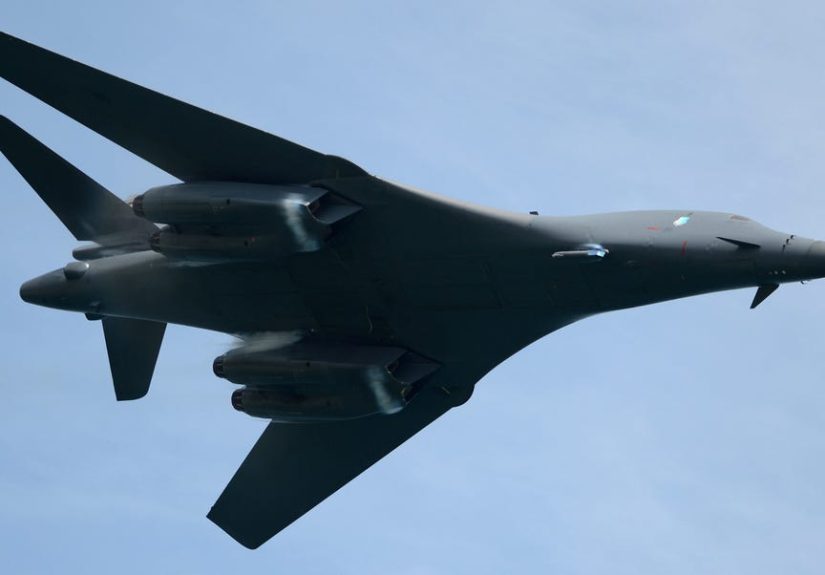
The B-1 bomber has always looked like it was designed by someone who took a fighter jet, stretched it on a medieval rack, gave it four engines, and said, “Excellent, now make it carry a ridiculous amount of ordnance.” Nicknamed the “Bone,” the B-1B Lancer is one of the most recognizable aircraft in the U.S. Air Force: sleek, loud, fast, and not exactly subtle when it shows up on a runway.
But the most fascinating thing about the B-1 is not just that it is big or fast. It is that this Cold War bomber keeps finding new jobs. Originally built as a long-range strategic bomber, later converted into a conventional strike aircraft, and now tied to anti-ship warfare through the Long Range Anti-Ship Missile, the B-1B has become a serious player in discussions about aircraft carrier threats.
So what is the “deadly version” of the B-1 bomber? The answer is not a single secret airplane hiding in a hangar like a military-themed Batman vehicle. It is a mix of real capability and proposed evolution: the current B-1B armed with LRASM, the proposed B-1R “regional” bomber concept, and the newer idea of turning the aircraft into an arsenal-style missile carrier. Together, these ideas explain why analysts sometimes describe the B-1 as a potential aircraft carrier killer.
The B-1B Lancer: A Bomber That Refuses to Retire Quietly
The B-1B Lancer entered U.S. Air Force service in the 1980s as a long-range, supersonic bomber. Unlike the B-52, which looks like it could have been assembled with a slide rule and patriotic stubbornness, the B-1B has variable-sweep wings, a smooth blended body, and the ability to fly at high speed at low altitude. It was built for penetration missions during the Cold War, then later shifted into conventional bombing after the United States removed it from the nuclear mission.
That change turned out to be more important than it sounded. Once the B-1B became a conventional-only bomber, it gained a new identity as a heavy payload truck for precision weapons. In conflicts after the Cold War, the aircraft proved useful because it could stay airborne for long periods, carry large weapon loads, and respond quickly when forces on the ground needed support.
In plain English: the B-1B is not the newest bomber, but it can still bring a very large toolbox to a very bad day.
Why Aircraft Carriers Changed the Conversation
Aircraft carriers are floating airbases, national symbols, and giant “please do not mess with us” signs painted in gray steel. A modern carrier strike group is not just one ship. It includes escorts, aircraft, sensors, submarines, logistics support, and layered defenses. That makes attacking one extremely difficult.
However, modern warfare has changed the math. Long-range anti-ship missiles, improved sensors, electronic warfare, and networked targeting have made large surface ships more vulnerable than they were in earlier decades. No serious analyst thinks sinking or disabling a carrier is easy. But many agree that the weapons needed to threaten a carrier group are becoming more capable.
This is where the B-1B with LRASM enters the room, wearing sunglasses indoors.
LRASM: The Missile That Gave the B-1B a Maritime Mission
The Long Range Anti-Ship Missile, usually called LRASM, is an air-launched anti-ship cruise missile developed to give U.S. forces a more advanced way to threaten hostile surface ships from standoff range. It is derived from the AGM-158 JASSM family but adapted for maritime targets.
The important idea is not simply range. It is survivability. LRASM was designed for contested environments where GPS may be jammed, communications may be disrupted, and targets may be defended by modern naval systems. Public descriptions emphasize its ability to operate with a degree of autonomy, discriminate among maritime targets, and strike from extended distance.
When paired with the B-1B, LRASM changes the bomber’s role. The aircraft is no longer just a land-attack bomber. It becomes a long-range maritime strike platform capable of carrying multiple anti-ship missiles. That is why the phrase “carrier killer” keeps appearing in defense commentary.
Could a B-1B Actually Kill an Aircraft Carrier?
The careful answer is: in theory, a B-1B armed with LRASM could contribute to a strike that might disable or destroy major surface warships, including carrier escorts or possibly a carrier itself. The less careful answer, which usually appears in dramatic headlines, is: yes, this bomber could make a carrier captain’s day significantly worse.
But the real world is not a video game. A carrier strike group has defensive aircraft, destroyers, cruisers, electronic warfare systems, decoys, sensors, and layered missile defenses. A bomber would also depend on intelligence, surveillance, targeting data, mission planning, and support from other forces. The B-1B is powerful, but it is not a magic wand with afterburners.
The threat comes from scale and reach. A bomber that can fly long distances and carry a heavy load of standoff missiles gives commanders options. Instead of relying only on ships or tactical fighters, the United States can project anti-ship firepower from far away. That complicates an adversary’s planning and forces enemy naval groups to worry about threats from wider angles.
The “Deadly Version”: B-1B With LRASM
The most realistic deadly version of the B-1 bomber is the B-1B configured for maritime strike with LRASM. This is not science fiction. The B-1B has been integrated with LRASM, and public test reports have described launches from the bomber. The aircraft’s combination of speed, range, and payload makes it a natural carrier for large standoff weapons.
In this role, the B-1B acts like a heavyweight puncher. It does not need to sneak directly over a target like a World War II dive bomber. Instead, it can carry long-range missiles and release them from a safer distance. That standoff model matters because modern naval air defenses are dangerous, and no crew wants to discover the maximum effective range of a ship’s defense system the hard way.
This is also why the B-1B fits Indo-Pacific strategy discussions. The Pacific is enormous. Distances are brutal. A short-range aircraft can feel like a bicycle in a continent-sized parking lot. Long-range bombers help solve that geography problem by carrying firepower across vast distances.
The B-1R: The Regional Bomber That Never Happened
Another version often discussed by aviation fans is the B-1R. The “R” stood for “regional,” and the concept involved upgrading the B-1B with more powerful engines, modern radar, air-to-air missiles for self-defense, and improved external weapons carriage. Public discussions of the concept often describe replacing the B-1B’s F101 engines with F119 engines related to those used by the F-22 Raptor.
The result, at least on paper, would have been a faster, more flexible bomber with a top speed sometimes claimed around Mach 2.2. That sounds spectacular, although it would likely come with trade-offs in range, cost, maintenance, and practicality. Military aircraft design is basically a never-ending argument between speed, payload, stealth, range, and the finance department.
The B-1R was never fielded. Still, it remains interesting because it shows how defense planners and aerospace companies thought about the bomber’s future. Instead of seeing the B-1 only as an aging Cold War relic, they imagined it as a fast missile truck, able to carry air-to-ground and even air-to-air weapons in large numbers.
Arsenal Plane Thinking: More Missiles, More Problems
The arsenal-plane concept is simple: take an aircraft with lots of payload capacity and use it to carry many long-range weapons. Instead of making every aircraft stealthy, small, and expensive, let stealthier platforms or other sensors find targets while a large aircraft carries the bulk of the missiles.
The B-1B is attractive for this idea because it has large internal weapons bays and potential external carriage options. Public reporting has discussed efforts to expand what the B-1B can carry externally, including the Load Adaptable Modular pylon. The goal is not to turn the aircraft into a flying porcupine for decoration. It is to increase flexibility for future standoff weapons.
For anti-ship warfare, this concept matters because naval defense is partly a numbers game. A heavily defended ship group may be able to defeat a small number of incoming weapons. A larger coordinated strike, however, creates more stress on defensive systems. This does not guarantee success, but it changes the problem from “Can they stop one missile?” to “Can they handle a complex attack from multiple directions and platforms?”
Why the B-1B Is Not a Stealth Bomber Like the B-2 or B-21
The B-1B has some radar-signature-reduction features compared with older bombers, but it is not a true stealth aircraft like the B-2 Spirit or the new B-21 Raider. That distinction matters. In highly defended airspace, the B-1B would be more vulnerable than a stealth bomber if it had to fly close to advanced defenses.
That is why standoff weapons are central to its modern relevance. The B-1B does not need to be invisible if it can launch capable weapons from far enough away and operate as part of a broader network. Think of it less as a ninja and more as a very fast delivery truck with an extremely serious cargo policy.
The B-21 will eventually replace much of the role now filled by older bombers, including the B-1B. But until that transition is complete, the B-1 remains useful because it carries a lot, flies far, and has already been adapted for modern precision weapons.
Why Carrier-Killing Is Harder Than Headlines Suggest
The phrase “carrier killer” is catchy. It is also a little too neat. Aircraft carriers do not sail alone, and they do not sit still waiting for someone to test a new missile like a floating piñata. A carrier strike group is defended by aircraft, ships, submarines, sensors, and electronic warfare. It is also constantly moving, communicating, and trying to complicate enemy targeting.
To threaten a carrier, a force must find it, track it, classify it correctly, communicate target data, launch weapons, and overcome defenses. Every step can fail. Bad intelligence, jamming, decoys, weather, timing problems, or defensive intercepts can ruin a plan.
That said, the B-1B with LRASM matters because it adds pressure to every part of that defensive chain. A carrier group must plan for the possibility that bombers outside the immediate battle area could still launch dangerous weapons. In military terms, that expands the threat envelope. In normal human terms, it means the ocean feels smaller and less friendly.
What Makes the B-1B/LRASM Combination So Dangerous?
1. Long Range
The B-1B is built for long-distance missions. Pairing it with a standoff anti-ship missile gives commanders the ability to project maritime strike power across wide areas. This is especially important in the Pacific, where bases, ships, and targets may be separated by huge distances.
2. Large Payload
The B-1B is known for carrying one of the largest conventional payloads in the U.S. Air Force inventory. That makes it suitable for missions where volume matters. In a maritime strike scenario, more missiles can mean more pressure on ship defenses.
3. Speed
The B-1B is not a slow bomber. Its supersonic dash capability allows it to reposition faster than older heavy bombers. Speed does not make it invincible, but it helps with response time and mission flexibility.
4. Standoff Weapons
LRASM allows the B-1B to contribute from outside the most dangerous defensive zones. Standoff strike is one of the key ideas in modern air warfare because it reduces risk to aircraft while extending the reach of the force.
5. Networked Warfare
The B-1B is most dangerous when it is part of a broader system. Satellites, patrol aircraft, fighters, submarines, surface ships, and command networks all contribute to maritime strike. The bomber is the hammer, but someone still has to help identify the nail.
Specific Example: From Land Bomber to Ship Threat
A good way to understand the B-1B’s transformation is to compare its older role with its modern one. During much of its post-Cold War service, the B-1B was associated with land attack and close air support. It carried precision-guided bombs and supported operations in places like Afghanistan and Iraq.
With LRASM, the same basic aircraft gains a maritime mission. Instead of focusing mainly on fixed land targets, it can now threaten moving surface ships. That is a major shift. Ships move, defend themselves, use decoys, and operate in groups. A weapon designed for that environment must be smarter than a simple bomb falling on a fixed coordinate.
This is why LRASM integration was such a big deal. It did not merely add another weapon to the B-1B’s menu. It changed the kind of target set the bomber could credibly hold at risk.
Limitations: The B-1B Still Has Problems
No aircraft is perfect, and the B-1B has had its share of maintenance and readiness challenges. It is an aging platform that has been flown hard for decades. Low-level flight, heavy payloads, and repeated deployments are not exactly spa treatments for airframes.
The aircraft also lacks the deep stealth characteristics of newer bombers. Against an advanced opponent, it would need careful mission planning and support. Its best future role is likely not flying alone into the most dangerous airspace, but launching long-range weapons as part of a coordinated force.
That does not make it irrelevant. It makes it specialized. In modern warfare, being specialized can be enough if the job is important. And maritime strike is very important.
Experience-Based Perspective: What Studying the B-1 Bomber Teaches Aviation Fans
For anyone who has followed military aviation for years, the B-1B is one of those aircraft that refuses to fit neatly into one box. It is not as old-school as the B-52, not as stealthy as the B-2, and not as futuristic as the B-21. Yet it keeps showing up in serious conversations because it has something every air force loves: useful capacity.
The experience of researching the B-1B is a little like opening a garage and finding an old muscle car that has somehow been upgraded with modern navigation, new tires, better electronics, and a trailer hitch for hauling something absurdly heavy. You know it is not brand-new. You also know you should not underestimate it.
Military aviation history is full of aircraft that found second lives. The B-52 became a cruise missile carrier. The F-15 evolved far beyond its original air-superiority mission. The A-10 survived multiple debates about retirement. The B-1B belongs in that same category of machines that planners keep trying to retire, modify, reuse, and argue about over coffee strong enough to qualify as jet fuel.
The carrier-killer discussion is especially interesting because it shows how platforms and weapons evolve together. A bomber by itself is just an aircraft. A missile by itself is just a weapon. But combine long-range sensors, standoff missiles, modern targeting networks, and a bomber with huge payload capacity, and suddenly an old aircraft becomes relevant to a new strategic problem.
There is also a lesson in humility. Headlines love clean answers. “This bomber can kill carriers” sounds exciting. The real answer is more complicated and more useful: the B-1B with LRASM can contribute to a serious anti-ship threat, but success would depend on targeting, coordination, defense suppression, electronic warfare, and the enemy’s response. That may not fit on a bumper sticker, but it is closer to reality.
From an enthusiast’s point of view, the B-1B is fascinating because it represents adaptation. It was born from Cold War assumptions, reshaped by arms-control decisions, hardened by decades of conventional war, and then pulled into the maritime strike conversation because the Pacific theater demands range and payload. That is an impressive career arc. Most machines do not get that many reinventions unless they are smartphones or suspiciously expensive kitchen appliances.
The B-1B also reminds us that military power is not just about the newest platform. Sometimes the decisive factor is how creatively an existing system can be used. A bomber designed decades ago can still matter if it carries the right weapons, receives the right upgrades, and fits into the right strategy.
That is why the “deadly version” of the B-1 bomber is not merely a fantasy variant or a single upgrade package. It is the broader idea of turning a fast, long-range, heavy-payload bomber into a maritime strike asset. Whether through LRASM, external carriage upgrades, or arsenal-plane concepts, the B-1B has become far more than a Cold War leftover. It is a reminder that in defense technology, old bones can still bite.
Conclusion
The B-1B Lancer is not a perfect aircraft, and it is not a magic carrier-erasing machine. But armed with LRASM and supported by modern targeting networks, it becomes a serious maritime strike platform. Proposed concepts like the B-1R and newer arsenal-plane ideas only make the discussion more interesting, showing how an aging bomber could be reimagined for high-end conflict.
The real story is not that one bomber can casually destroy an aircraft carrier. The real story is that long-range bombers carrying advanced anti-ship missiles can change naval calculations. They force carrier groups to think about threats from farther away, across wider areas, and from platforms that were once mainly associated with land attack.
In other words, the B-1B may be old, but it is not harmless. Give it the right weapons, the right mission, and the right support, and the Bone still has plenty of bite.
SEO Tags
Note: This article is written for public, educational analysis of military aviation history and technology. It avoids operational instructions and focuses on broad strategic context.