Table of Contents >> Show >> Hide
- What Is Raw-Beet Carpaccio?
- Why This Raw Beet Carpaccio Recipe Works
- Ingredients for the Best Raw-Beet Carpaccio
- How to Make Raw-Beet Carpaccio
- Recipe Card: Raw-Beet Carpaccio
- Pro Tips for Perfect Raw Beet Carpaccio
- Flavor Variations
- What to Serve With Raw-Beet Carpaccio
- Storage and Make-Ahead Advice
- Common Mistakes to Avoid
- Nutrition Notes
- Personal Kitchen Experience: Making Raw-Beet Carpaccio Feel Effortless
- Conclusion
Raw beet carpaccio is the kind of recipe that makes people pause at the table and ask, “Wait, did you really make this in 15 minutes?” Yes. Yes, you did. This bright, jewel-toned appetizer turns humble beets into paper-thin, glossy rounds dressed with a tangy honey-tarragon vinaigrette, citrus, herbs, greens, and a salty crumble of cheese. It looks restaurant-level fancy, but the hardest part is convincing your cutting board that it is not permanently magenta now.
Inspired by the clean, elegant style of a Good Housekeeping recipe, this raw-beet carpaccio celebrates everything that makes beets so lovable: their earthy sweetness, dramatic color, natural crunch, and ability to play nicely with sharp vinegar, creamy cheese, peppery greens, and citrus. Unlike roasted beet salad, this version skips the oven entirely. No foil packets, no one-hour roasting session, no “I forgot the beets were still cooling” moment. Just scrub, slice, dress, plate, and serve.
What Is Raw-Beet Carpaccio?
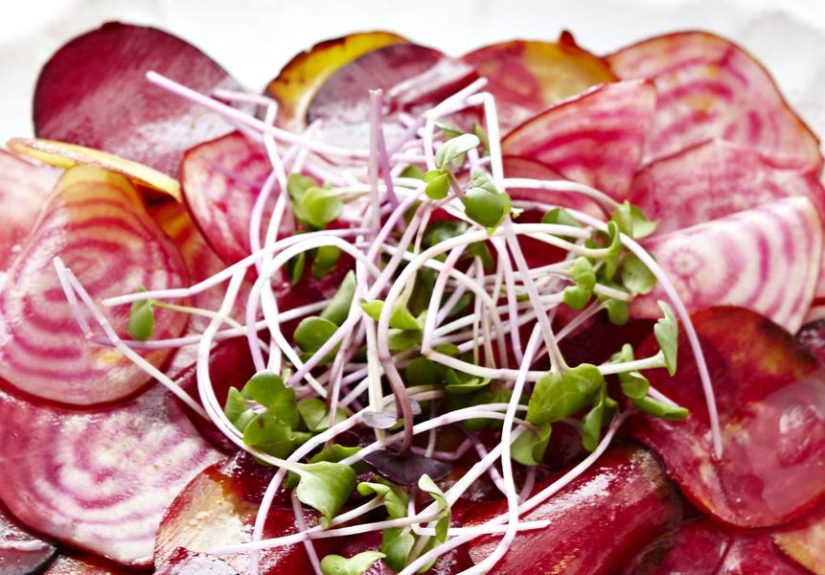
Traditional carpaccio is usually made with very thin slices of raw beef or fish. Beet carpaccio borrows that elegant presentation and gives it a vegetarian twist. The beets are sliced so thin that they become delicate, almost translucent, and then they are arranged in overlapping circles on a platter. The result is part salad, part appetizer, and part edible stained-glass window.
Raw beets have a firmer bite than roasted beets, which is exactly the point. When sliced thinly and lightly marinated, they soften just enough while keeping a refreshing crunch. Think of it as beet salad wearing a tuxedo. The vinaigrette adds acidity, honey rounds out the earthiness, and tarragon brings a gentle anise-like aroma that makes the dish taste thoughtful instead of “I sliced a root vegetable and hoped for applause.”
Why This Raw Beet Carpaccio Recipe Works
It balances earthy, sweet, tangy, and salty flavors
Beets can taste deeply earthy, especially when served raw. The secret is balance. Red wine vinegar or white wine vinegar cuts through the sweetness. Honey softens the sharp edges. Citrus adds brightness. Feta or goat cheese brings salt and creaminess. Fresh herbs keep everything lively. When these elements come together, the beet flavor becomes polished, not muddy.
It uses texture like a professional recipe
A great raw beet carpaccio needs more than pretty slices. The best versions include contrast: crisp beets, tender greens, juicy orange segments, creamy cheese, and perhaps toasted walnuts or pistachios. Every bite should have a little snap, a little tang, and a little richness.
It is fast, colorful, and make-ahead friendly
Because the beets are not cooked, this recipe comes together quickly. You can slice the beets shortly before serving, or marinate them for 15 to 30 minutes if you prefer a softer texture. It is ideal for dinner parties, holiday starters, light lunches, brunch spreads, or any meal that needs a pop of color without asking you to babysit the oven.
Ingredients for the Best Raw-Beet Carpaccio
- 6 small red, golden, or Chioggia beets: Choose firm beets with smooth skins. Smaller beets are usually sweeter and more tender.
- 3 tablespoons extra-virgin olive oil: Use a fruity, good-quality oil because the dressing is simple.
- 1 1/2 tablespoons red wine vinegar: White wine vinegar or champagne vinegar also works.
- 1 tablespoon fresh lemon juice: Adds brightness and helps sharpen the flavor.
- 1 teaspoon honey: Balances the vinegar and highlights the natural sweetness of the beets.
- 1 teaspoon Dijon mustard: Helps emulsify the dressing and adds a subtle savory kick.
- 2 teaspoons chopped fresh tarragon: Elegant, aromatic, and excellent with beets.
- 2 oranges: Segmented for juicy sweetness and color contrast.
- 3 cups frisée, arugula, or baby greens: Peppery or slightly bitter greens work beautifully.
- 1/3 cup crumbled feta or soft goat cheese: Salty, creamy, and classic.
- 2 tablespoons toasted walnuts or pistachios: Optional, but highly recommended for crunch.
- Flaky sea salt and black pepper: For finishing.
- Microgreens or fresh mint: Optional garnish for a restaurant-style finish.
How to Make Raw-Beet Carpaccio
Step 1: Wash and prep the beets
Scrub the beets thoroughly under cool running water. Because this recipe is raw, cleanliness matters. Trim the root ends and tops, then peel the beets with a vegetable peeler. If you are using very fresh organic beets and prefer keeping the skin, scrub them especially well. Wear gloves if you do not want red beet fingers, unless you enjoy looking like you just solved a mystery in a crime drama.
Step 2: Slice the beets paper-thin
Use a mandoline for the most even slices. Set it to a very thin setting and use the hand guard every single time. A sharp chef’s knife also works, but take your time. The thinner the slices, the more elegant and tender the carpaccio will be. If slices are thick, the dish will taste more like raw beet coins than carpaccio.
Step 3: Make the vinaigrette
In a small bowl, whisk together the olive oil, red wine vinegar, lemon juice, honey, Dijon mustard, chopped tarragon, a pinch of kosher salt, and a few grinds of black pepper. Taste it. The dressing should be bright and slightly punchy because the beets will mellow it.
Step 4: Marinate briefly
Place the beet slices in a shallow bowl and drizzle with half of the vinaigrette. Toss gently so the slices are lightly coated. Let them sit for 10 to 20 minutes. This short rest softens the raw edge of the beets and gives the dressing time to sneak into every slice.
Step 5: Segment the oranges
Cut away the peel and white pith from the oranges, then slice between the membranes to release clean segments. If that sounds too fussy, use thin orange rounds or small pieces. The recipe will not call the culinary police.
Step 6: Plate like you mean it
Arrange the beet slices on a large platter, overlapping them slightly. Scatter the greens and orange segments over the top. Add feta or goat cheese, toasted nuts, and microgreens or mint if using. Drizzle with the remaining vinaigrette and finish with flaky sea salt and black pepper.
Recipe Card: Raw-Beet Carpaccio
Prep Time
15 minutes
Total Time
15 to 25 minutes, depending on marinating time
Servings
4 appetizer servings
Ingredients
- 6 small beets, scrubbed, trimmed, and peeled
- 3 tablespoons extra-virgin olive oil
- 1 1/2 tablespoons red wine vinegar
- 1 tablespoon fresh lemon juice
- 1 teaspoon honey
- 1 teaspoon Dijon mustard
- 2 teaspoons chopped fresh tarragon
- Kosher salt and freshly ground black pepper
- 2 oranges, segmented
- 3 cups frisée, arugula, or baby greens
- 1/3 cup crumbled feta or goat cheese
- 2 tablespoons toasted walnuts or pistachios
- Flaky sea salt, for serving
- Microgreens or fresh mint, optional
Directions
- Scrub, trim, and peel the beets. Slice them very thinly using a mandoline or sharp knife.
- Whisk olive oil, vinegar, lemon juice, honey, Dijon, tarragon, kosher salt, and pepper in a small bowl.
- Toss beet slices with half of the vinaigrette and let stand for 10 to 20 minutes.
- Arrange beets on a platter. Add greens, orange segments, cheese, and nuts.
- Drizzle with remaining vinaigrette. Finish with flaky sea salt, pepper, and microgreens or mint.
- Serve immediately while the beets are crisp and glossy.
Pro Tips for Perfect Raw Beet Carpaccio
Use small, firm beets
Large beets can be woody, which is a polite way of saying they may chew like a root vegetable with a gym membership. Smaller beets tend to be sweeter and easier to slice thinly.
Mix beet colors carefully
Red beets stain golden and candy-striped beets quickly. If you want a dramatic multicolor platter, slice and dress each color separately, then arrange them just before serving.
Do not drown the beets
Carpaccio should be lightly dressed, not swimming. Too much vinaigrette can make the beets slippery and overpower their natural flavor. Add a little, taste, and then add more only if needed.
Choose the right cheese
Feta gives a salty, crumbly finish. Goat cheese is softer and tangier. Ricotta salata, shaved Parmesan, or blue cheese can also work if you want a stronger flavor. For a dairy-free version, use toasted nuts, avocado slices, or a sprinkle of nutritional yeast.
Flavor Variations
Citrus Beet Carpaccio
Use orange, grapefruit, and lemon juice in the dressing. Add fresh mint and pistachios for a refreshing spring or summer appetizer.
Mediterranean Beet Carpaccio
Add feta, cucumber ribbons, dill, and a few olives. Swap tarragon for parsley or oregano and finish with a spoonful of Greek yogurt on the side.
Holiday Beet Carpaccio
Use red and golden beets, pomegranate seeds, candied walnuts, and goat cheese. It looks festive enough to distract everyone from the fact that the mashed potatoes are taking longer than expected.
Spicy Beet Carpaccio
Add a pinch of crushed red pepper or a drizzle of hot honey to the vinaigrette. The heat plays nicely with the sweet beets and creamy cheese.
What to Serve With Raw-Beet Carpaccio
Raw-beet carpaccio works beautifully as a starter before roasted chicken, grilled fish, steak, lentil soup, pasta, or a vegetarian grain bowl. It also pairs well with crusty bread, whipped ricotta toast, or a simple omelet for brunch. For drinks, try sparkling water with lemon, a crisp white wine, rosé, or a light herbal iced tea.
If you are building a full menu, keep the rest of the meal relatively simple. The carpaccio already brings color, acidity, freshness, and crunch. Follow it with something warm and savory, and you have a balanced meal that feels special without turning your kitchen into a cooking competition set.
Storage and Make-Ahead Advice
Whole fresh beets keep best when stored cold and humid, ideally with the greens trimmed. Once beets are peeled and sliced, treat them like other cut produce: refrigerate promptly in an airtight container. For the best texture, slice raw beets the day you plan to serve them. You can make the vinaigrette up to three days ahead and store it in the refrigerator. Shake or whisk before using.
Leftover dressed beet carpaccio can be refrigerated for one day, but the texture will soften and the colors may bleed. It will still taste good, especially tucked into a sandwich, tossed with quinoa, or piled onto a bowl of greens. The presentation, however, is best on day one.
Common Mistakes to Avoid
Slicing too thick
Thick beet slices are crunchy in a way that says “root cellar,” not “elegant appetizer.” Go thin. If you are nervous about a mandoline, use a sharp knife and patience.
Skipping acid
Vinegar and citrus are not optional decoration. They brighten the beets and help tame the earthy flavor. Without acid, raw beets can taste flat.
Forgetting salt
A pinch of flaky salt at the end makes the entire platter taste more alive. It also helps the sweetness of the beets pop.
Using tired herbs
Fresh herbs matter here. Tarragon, mint, dill, parsley, or basil can all work, but they should look perky. Limp herbs do not bring “fresh appetizer energy.” They bring “bottom of the produce drawer energy.”
Nutrition Notes
Beets are naturally colorful, low in fat, and known for nutrients such as folate, potassium, fiber, and plant compounds called betalains. They also contain dietary nitrates, which are often discussed in relation to blood flow and exercise performance. This recipe keeps the beets raw, so it preserves their crisp texture and fresh flavor. As always, nutrition is about the whole meal, not one magical vegetable wearing vinaigrette.
If you are watching sodium, go lighter on the feta and flaky salt. If you want more protein, serve the carpaccio with grilled chicken, salmon, chickpeas, lentils, or a scoop of Greek yogurt. If you want a vegan version, skip the cheese and add toasted pistachios, pumpkin seeds, or avocado.
Personal Kitchen Experience: Making Raw-Beet Carpaccio Feel Effortless
The first time I made raw-beet carpaccio, I underestimated two things: how beautiful raw beets can be and how committed they are to staining everything they touch. I started with red beets, a white cutting board, and the confidence of a person who had not yet learned a valuable kitchen lesson. Five minutes later, the cutting board looked like modern art, my fingertips looked suspicious, and the platter looked so gorgeous that I immediately forgave the beets for their crimes.
What surprised me most was the flavor. I expected raw beets to be harsh, but when sliced thinly and dressed with vinegar, citrus, honey, and herbs, they became crisp, sweet, and refreshing. The key was not treating them like cooked beets. Roasted beets are soft and mellow, so they can handle heavier dressings. Raw beets need brightness and restraint. Too much oil makes them feel heavy. Too little acid makes them taste dusty. The sweet spot is a vinaigrette that is sharp enough to wake up the beets but gentle enough to let their natural sweetness show.
I also learned that plating matters more than usual with this recipe. If you toss everything in a bowl, it becomes a perfectly nice beet salad. But if you overlap the slices on a platter, add orange segments here and there, sprinkle cheese lightly, and finish with herbs, suddenly it looks like something from a restaurant where the napkins are folded into architectural shapes. It is the same food, but the presentation changes the whole experience.
My favorite version uses a mix of red and golden beets, though I keep them separate until the last possible second. Red beets are enthusiastic artists and will turn golden beets pink if given the chance. I dress them in separate bowls, arrange the golden slices first, then tuck in the red slices for contrast. A little arugula adds peppery bite, while feta gives the dish the salty punch it needs. Toasted pistachios are my favorite finishing touch because they add crunch without stealing attention.
This dish has become one of my go-to starters when I want dinner to feel intentional but not exhausting. It is especially useful when the main course is rich, like pasta, roast chicken, or anything creamy. The carpaccio cuts through heavier foods and makes the table look instantly brighter. It is also a great conversation starter because someone always says, “I did not know you could eat beets raw.” You can smile calmly, as though you are the beet whisperer, and pass the platter.
The biggest practical tip is to prep smart. Wash the beets well, use gloves if staining bothers you, and keep a damp towel under your cutting board so it does not slide while slicing. If using a mandoline, slow down and use the guard. No appetizer is worth sacrificing a fingertip. Once the beets are sliced, the recipe becomes wonderfully simple. Whisk, drizzle, scatter, serve. That is the beauty of raw-beet carpaccio: it looks dramatic, tastes fresh, and asks very little from the cook beyond a sharp blade and a tiny bit of confidence.
Conclusion
The best raw-beet carpaccio recipe is simple, colorful, and built on balance. Thinly sliced beets provide crunch and earthy sweetness, while vinegar, citrus, honey, herbs, greens, cheese, and nuts turn them into a polished appetizer that feels far more complicated than it is. Whether you serve it for a holiday meal, a dinner party, a healthy lunch, or a “look, I made something pretty” Tuesday, this dish proves that raw beets deserve a place beyond juice bars and salad bars.
Keep the slices thin, the dressing bright, and the toppings thoughtful. Do that, and you will have a beet carpaccio that is fresh, elegant, and just dramatic enough to make the table more interesting.