Table of Contents >> Show >> Hide
- Why a CNC Scroll Saw Is Such a Weirdly Brilliant Idea
- The Big Challenge: A Scroll Saw Blade Is Directional
- What Changed in the Redesigned Version?
- Why Spiral Blades Are Not the Simple Escape Hatch
- How CNC Thinking Changes Scroll Saw Woodworking
- Scroll Saw Strengths That Make Automation Worth Exploring
- Where the Redesigned CNC Scroll Saw Could Be Useful
- The Engineering Lessons Hidden in the Sawdust
- CNC Scroll Saw vs. CNC Router vs. Laser Cutter
- Safety and Practical Reality
- Why This Project Keeps Getting Attention
- Experiences and Practical Reflections: What This Project Feels Like in the Workshop
- Conclusion: A Small Blade, a Big Idea, and a Very Stubborn Machine
Every once in a while, a workshop project rolls into view and makes you ask, “Wait, why does this exist?” Then, about thirty seconds later, you ask the much better question: “Why didn’t someone try this sooner?” That is the charm of the redesigned CNC scroll saw. It lives in the wonderfully strange intersection of woodworking, automation, engineering stubbornness, and the kind of garage creativity that treats “impractical” as a polite invitation.
A traditional scroll saw is already a precision tool. It uses a thin reciprocating blade to make tight curves, delicate interior cutouts, fretwork, puzzle pieces, decorative panels, and other designs that would make a jigsaw sweat through its plastic handle. A CNC machine, meanwhile, follows programmed toolpaths with computer-guided accuracy. Put those two ideas together and you get something that sounds simple: a computer-controlled scroll saw. In reality, it is a deliciously complicated mechanical puzzle with sawdust on its shoes.
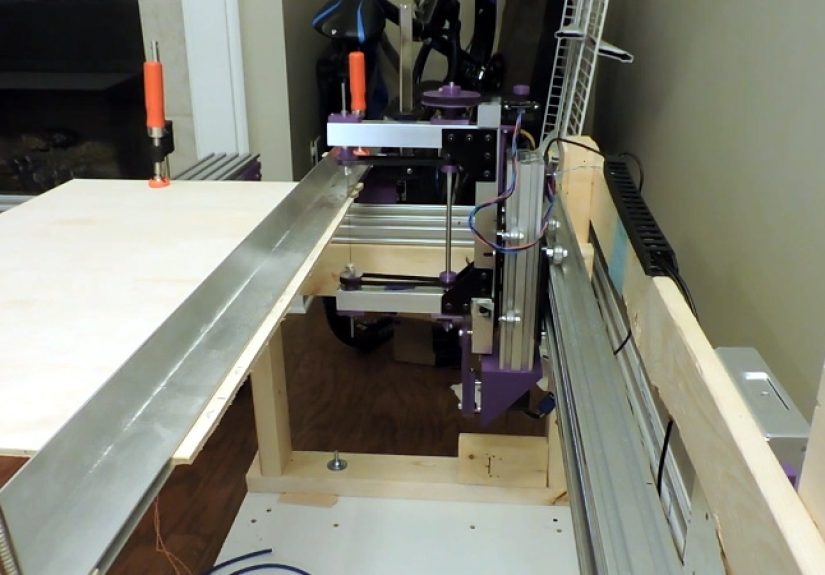
The redesigned CNC scroll saw, inspired by maker Andrew Consroe’s experimental build, is not just a router with a different haircut. It is a fresh attempt to automate a tool that was never designed to behave like a CNC router or laser cutter. The result is a machine that highlights what scroll saws do beautifully, what CNC machines do efficiently, and why combining them requires more cleverness than simply bolting a motor to a table and calling it innovation.
Why a CNC Scroll Saw Is Such a Weirdly Brilliant Idea
At first glance, a CNC scroll saw seems like a niche machine for people who alphabetize their scrap wood. But the concept solves a real problem. CNC routers are versatile, powerful, and widely used in modern woodworking, yet they have one unavoidable limitation: the spinning bit has a diameter. That diameter leaves rounded inside corners. For signs, cabinets, and relief carving, that may be acceptable. For puzzle pieces, detailed fretwork, tiny inlays, and crisp interior shapes, the router’s round bit can be a dealbreaker.
A scroll saw blade is much thinner than a router bit, producing a narrow kerf and allowing very tight turns. It can cut inside a workpiece after a small starter hole is made, which is why scroll saws are beloved for decorative woodworking, intarsia, ornaments, and intricate patterns. The blade does not chew away a wide channel like a router. It slices. That tiny difference is everything.
So, naturally, the maker brain asks: what if we could automate scroll saw cutting the same way we automate CNC routing? What if detailed patterns could be cut with the delicacy of a scroll saw and the repeatability of CNC? That question is where the adventure begins. It is also where the machine looks back at the builder and says, “Cute idea. Now solve my geometry problem.”
The Big Challenge: A Scroll Saw Blade Is Directional
The heart of the redesigned CNC scroll saw story is blade direction. A CNC router bit spins, so it can cut as it moves in almost any direction along the X and Y axes. A laser cutter also has no preferred cutting direction in the same mechanical sense. But a standard scroll saw blade has teeth arranged to cut primarily in one direction. It wants the workpiece to approach the blade correctly. Push it sideways, ask it to drift through a curve without proper orientation, and the blade may twist, wander, break, or produce a cut that looks like it made several poor life choices.
That means a CNC scroll saw cannot simply move a board under the blade like a pen plotter drawing on paper. Either the blade must rotate to face the direction of travel, or the workpiece must rotate while the blade stays oriented. This is the core engineering riddle. The cutting path is not only a matter of X and Y movement; it also needs orientation control. Suddenly, a simple two-axis project becomes a coordinated dance between linear motion, rotation, blade tension, feed rate, and material behavior.
In the earlier version of the project, the design used an overhead gantry and a rotary table concept. The idea was to move the material in X and Y while rotating it so the blade stayed aligned with the direction of the cut. That approach was clever because it respected the scroll saw’s cutting nature. But it also created a new problem: moving and rotating the workpiece adds mass, inertia, and complexity. Wood is not weightless, and neither is the mechanism holding it.
What Changed in the Redesigned Version?
The redesigned CNC scroll saw improved the concept by reconsidering what should move and what should stay still. In machine design, moving mass is the enemy of speed and precision. The heavier the moving assembly, the harder it is to accelerate, stop, reverse direction, and maintain accuracy without vibration. For a scroll saw, vibration is already part of the conversation because the blade moves up and down rapidly. Add a large moving platform and the machine may start behaving less like a precision cutter and more like a caffeinated ironing board.
The redesign explored ways to reduce that moving mass by shifting more of the orientation work toward the blade assembly rather than forcing the entire workpiece to rotate dramatically. This is an important leap. If the blade can be rotated or guided more intelligently, the table and material do not need to perform as much mechanical gymnastics. In theory, that can improve cutting speed, reduce stress on the frame, and make the machine more practical for repeated use.
Of course, “rotate the blade” sounds easy until you remember that a scroll saw blade is a thin tensioned strip moving up and down at high speed. It needs to remain aligned, tensioned, and supported. It also needs to avoid twisting beyond its tolerance. The blade is not a magic noodle. It has limits, and a successful CNC scroll saw must respect them.
Why Spiral Blades Are Not the Simple Escape Hatch
Scroll saw users know that spiral blades exist. These blades have teeth arranged around the blade, allowing them to cut in multiple directions without constantly turning the workpiece. That sounds like a perfect solution, right? Just use a spiral blade and head to lunch.
Not quite. Spiral blades are useful, especiallyp>
Not quite. Spiral blades are useful, especially for complex fretwork, but they behave differently from flat blades. They can be harder to control, may leave a wider or rougher cut depending on the material and blade type, and may not deliver the same crisp directional precision that makes traditional scroll saw work so appealing. In a human-operated scroll saw, an experienced user can compensate with touch, pressure, and patience. In a CNC setup, the machine needs predictable cutting behavior. Predictability is the golden retriever of automation: loyal, helpful, and missed immediately when absent.
That is why the redesigned CNC scroll saw is interesting. It does not simply dodge the problem by changing the blade style. It attempts to solve the deeper challenge of automating a traditional scroll saw action. That makes it more than a shortcut; it becomes an engineering experiment.
How CNC Thinking Changes Scroll Saw Woodworking
CNC workflows usually begin with a digital design. A pattern is drawn in CAD software, converted into toolpaths through CAM software, and then interpreted by a controller that moves motors along planned coordinates. For routers and mills, the software thinks in terms of tool diameter, depth of cut, feeds, speeds, and material removal. For a CNC scroll saw, the toolpath must also consider blade direction, curvature, entry points, and the physical limits of a reciprocating blade.
This creates an unusual software and motion-planning problem. Sharp corners, tight curves, and interior cutouts are exactly where scroll saws shine, but they are also where automated orientation becomes most demanding. A human scroll saw artist can slow down, rotate the wood gently, back off slightly, and listen to the blade. A CNC machine needs rules. It needs the path to explain when to slow, when to rotate, and how to avoid asking the blade to perform yoga poses it did not consent to.
The redesigned CNC scroll saw therefore sits at the edge of mechanical design and algorithmic planning. It is not enough to build a rigid frame. The machine also needs motion logic that understands the difference between a gentle curve and a corner that could snap a blade faster than you can say “replacement pack.”
Scroll Saw Strengths That Make Automation Worth Exploring
Why go through all this trouble when CNC routers, laser cutters, and drag knives already exist? Because each cutting method has its own personality.
1. Thin Kerf and Fine Detail
A scroll saw removes very little material compared with many rotary tools. That makes it attractive for puzzle making, inlay work, delicate ornaments, and tightly nested designs. Less waste also matters when working with beautiful hardwoods that cost enough to make you whisper respectfully before cutting.
2. Crisp Interior Geometry
Router bits leave inside radii. Scroll saw blades can create much sharper internal shapes. For certain designs, especially decorative panels and mechanical puzzles, that difference is not cosmetic; it changes the fit and feel of the final piece.
3. Lower Cutting Forces
A scroll saw blade does not apply the same lateral force as a large spinning router bit. That can be useful for thin materials, fragile patterns, and pieces where tear-out or aggressive cutting would be a problem. The tradeoff is speed. Scroll saws are not famous for winning drag races.
4. Interior Cutouts Without Edge Entry
One of the scroll saw’s classic advantages is the ability to cut internal shapes. In manual work, the blade can be threaded through a starter hole and reattached. Automating that process fully is not simple, but the capability is central to why scroll saws remain valuable in detailed woodworking.
Where the Redesigned CNC Scroll Saw Could Be Useful
This machine is unlikely to replace a production CNC router in a cabinet shop. It is also not going to scare industrial laser cutters into early retirement. Its sweet spot is more specialized and arguably more interesting.
Imagine small-batch puzzle makers producing custom wooden jigsaw puzzles with extremely tight kerfs. Picture artists creating layered fretwork panels from hardwood veneers. Think of educational makerspaces where students can see the relationship between digital design and physical cutting without reducing every project to another router job. The CNC scroll saw could also be useful for cutting thin plywood, decorative signs, ornaments, model parts, and inlay components where clean detail matters more than raw speed.
The machine also has value as a teaching project. It forces builders to think about kinematics, blade mechanics, backlash, vibration, toolpath planning, and the difference between “a machine moves” and “a machine cuts well.” Those are not the same thing. Any robot can wave a tool around. A good CNC machine must control the interaction between tool and material.
The Engineering Lessons Hidden in the Sawdust
The redesigned CNC scroll saw teaches several lessons that apply far beyond woodworking.
Reducing Moving Mass Matters
Every moving part carries consequences. Heavy assemblies require stronger motors, stiffer frames, slower acceleration, and more careful tuning. By looking for ways to move less mass, the redesign follows a principle found in many successful CNC machines: make the structure rigid, keep motion efficient, and avoid asking motors to fight unnecessary weight.
Tool Geometry Controls Machine Design
The tool determines the machine. A router, laser, drag knife, oscillating knife, plasma torch, and scroll saw blade all demand different motion strategies. The CNC scroll saw is fascinating because the blade’s one-direction cutting behavior reshapes the entire machine architecture.
Precision Is More Than Position
It is easy to think CNC accuracy means hitting coordinates. But cutting accuracy also depends on blade flex, material grain, tension, vibration, feed rate, and tool wear. A scroll saw blade may be positioned correctly and still deflect if the cutting load is wrong. The machine needs accuracy in motion and sensitivity in cutting behavior.
Good Prototypes Ask Better Questions
The first version of an experimental machine often exists to reveal what the second version should fix. That is not failure; that is engineering wearing work boots. The redesigned CNC scroll saw is compelling because it shows iteration. It identifies the weak points of the earlier concept and explores a smarter mechanical path.
CNC Scroll Saw vs. CNC Router vs. Laser Cutter
A CNC router is still the more practical choice for many woodworking jobs. It can pocket, engrave, profile, flatten, and carve 3D reliefs. It is faster and more flexible for general shop work. A laser cutter offers fine detail, no cutting force, and excellent repeatability on suitable materials, though it can leave darkened edges on wood and has its own material limitations.
The CNC scroll saw occupies a different lane. It is slower, more mechanically complicated, and less universal. But it may offer a combination of narrow kerf, crisp detail, and traditional sawn edges that neither routers nor lasers perfectly match. That does not make it the “best” machine. It makes it a specialized machine, and specialized machines are often where the fun hides.
In a modern shop, the question is rarely “Which tool wins?” A better question is “Which tool gives the desired result with the least compromise?” For rounded signs and carved panels, use a router. For fast decorative sheet cutting, use a laser where appropriate. For fine interior cuts with a true saw kerf, a CNC scroll saw starts to look less like a novelty and more like a clever answer to a narrow but real problem.
Safety and Practical Reality
Any discussion of automated cutting tools should include a sensible safety reminder. A scroll saw is often considered less aggressive than many larger shop tools, but it still uses a moving blade. A CNC system adds motors, electronics, programmed motion, and the possibility that the machine will keep moving even when a human would instinctively stop. Proper guards, emergency stops, secure workholding, dust control, eye protection, and manufacturer guidance are not optional decorations. They are the difference between a productive shop and a very awkward afternoon.
For makerspaces and classrooms, the redesigned CNC scroll saw concept is especially valuable when treated as an engineering demonstration rather than a casual weekend appliance. It should be tested carefully, supervised responsibly, and operated only by trained users. The machine may look charming, but charming machines can still bite.
Why This Project Keeps Getting Attention
The redesigned CNC scroll saw attracts attention because it is not merely another “I added Wi-Fi to my toaster” project. It takes a familiar tool and asks whether digital fabrication can expand its abilities without erasing what made the tool useful in the first place. That is a more thoughtful kind of innovation.
Many maker projects are exciting because they are fast, flashy, or absurdly overpowered. This one is exciting because it is stubborn. It wrestles with a real mechanical constraint. It does not pretend the problem is easy. It evolves through prototypes. It makes the viewer think about tool design in a new way. Also, it has the delightful energy of a machine that might cut a perfect wooden puzzle piece after spending six months arguing with trigonometry.
Experiences and Practical Reflections: What This Project Feels Like in the Workshop
Spending time around a concept like the redesigned CNC scroll saw changes how you look at both traditional woodworking and digital fabrication. At first, it is tempting to judge the machine by normal CNC standards. Is it fast? Is it rigid? Can it run production jobs all day? Can it outperform a router? Those are fair questions, but they miss part of the story. The better experience is to watch the machine as a conversation between old and new methods.
A manual scroll saw has a rhythm. The operator guides the wood by feel, responding to the blade’s sound, the grain’s resistance, and the curve of the pattern. There is something almost musical about it, especially when the blade tension is right and the cut line stays clean. A CNC machine has a different rhythm. It follows coordinates. It does not get bored, distracted, or overconfident after coffee. Combining those worlds creates a strange and fascinating workshop personality: a machine trying to learn a craftsperson’s patience.
One of the most useful experiences connected to this topic is realizing how much human judgment is hidden inside “simple” hand-tool or power-tool work. A skilled scroll saw user does not merely push wood into a blade. They manage pressure, speed, turning radius, and blade behavior second by second. When you try to automate that, every tiny instinct must become a design decision. The machine needs to know when a curve is too tight, when the material should slow down, when the blade may flex, and how to keep the cut from drifting. Suddenly, respect for experienced scrollers goes way up.
Another workshop lesson is that prototypes are not supposed to be perfect. The redesigned CNC scroll saw is appealing because it shows the messy middle of invention. A first version may prove the concept but expose weaknesses. A second version may solve one problem while revealing two new ones wearing fake mustaches. That is normal. In fact, that is the point. Good prototypes do not simply confirm ideas; they uncover reality.
For woodworkers who are used to traditional tools, the CNC scroll saw suggests that automation does not have to replace craft. It can preserve certain craft qualities while making repeatable work easier. For CNC users, it is a reminder that not every cutting problem should be attacked with a spinning bit. Sometimes the old-fashioned thin blade has advantages the shiny router spindle cannot match.
The most enjoyable part of the CNC scroll saw idea is its personality. It is not the obvious solution. It is not the fastest machine in the shop. It is not the cleanest business case if your only goal is maximum output per hour. But it is deeply instructive. It shows how creativity often lives in the gap between “this is inefficient” and “this teaches us something valuable.” That is the workshop equivalent of finding a hidden drawer in an old desk.
If this project inspires anything, it should inspire makers to question assumptions. A scroll saw does not have to remain entirely manual. CNC does not have to mean router bits and dust shoes. A failed prototype is not wasted time if it reveals the next version. And sometimes, the most memorable machines are not the ones that make the most money or cut the fastest. They are the ones that make builders grin, scratch their heads, and reach for the notebook again.
Conclusion: A Small Blade, a Big Idea, and a Very Stubborn Machine
The redesigned CNC scroll saw rides again because it deserves another lap around the workshop. It is a thoughtful experiment in precision cutting, motion control, and tool design. By combining the delicate kerf of a scroll saw with the repeatability of CNC, the project explores a specialized but compelling corner of digital woodworking.
Will every shop need one? Probably not. Will every maker understand why someone would spend serious time redesigning one? Also probably not. But that is part of the charm. The redesigned CNC scroll saw is not just about making cuts. It is about solving a problem that only looks simple from across the room. Up close, it is a puzzle of blade direction, moving mass, toolpath planning, vibration, and material behavior.
In other words, it is exactly the kind of project that keeps the maker world interesting. It reminds us that innovation does not always arrive as a sleek commercial product. Sometimes it shows up as a strange machine on a workbench, waving a tiny blade and saying, “I have returned, and this time I brought better geometry.”