Table of Contents >> Show >> Hide
- What Makes 'The Kelly Clarkson Show' Different?
- Where the Show Tapes: 30 Rock Energy
- How to Get Tickets to 'The Kelly Clarkson Show'
- Checking In: The Calm Before the Kellyoke
- Inside the Studio: Smaller, Brighter, Louder
- Kelly Clarkson in Person: The Host Effect
- The Guests, Segments, and Surprise Factor
- What the Cameras Do Not Show
- Tips for Attending a Taping
- Why the Taping Feels So Memorable
- Extra Experience Notes: What It Really Feels Like to Be There
- Conclusion
There are television tapings, and then there is the particular burst of sunshine, vocal power, New York energy, and audience-chair wiggle room known as The Kelly Clarkson Show. Walking into a taping feels a little like stepping inside a daytime TV snow globe: everything is bright, polished, friendly, carefully timed, and somehow still loose enough that you expect someone to burst into song. Which, because this is Kelly Clarkson we are talking about, is not just possible. It is basically part of the job description.
For fans searching for what it is really like inside a taping of The Kelly Clarkson Show, the answer is part concert, part talk show, part motivational group hug, and part “please turn your phone all the way off or television magic will frown at you.” The Emmy-winning daytime series has built its reputation on humor, heart, celebrity conversations, everyday heroes, surprise moments, and the wildly popular Kellyoke performances that open many episodes. Since moving production to NBC Studios at 30 Rockefeller Plaza in New York City, the show has also gained a fresh big-city sparkle that fits Kelly’s energy surprisingly well.
This guide takes you behind the curtain: how the ticket process works, what the studio atmosphere feels like, what the audience actually does, why the taping day runs like a cheerful machine, and why a show that looks casual on TV is, behind the scenes, a very disciplined production with a lot of moving parts. Think of it as your backstage pass, minus the lanyard you would definitely keep as a souvenir.
What Makes ‘The Kelly Clarkson Show’ Different?
The Kelly Clarkson Show is not built like an old-school daytime program where a host simply sits behind a desk and politely moves from guest to guest. The format blends a variety talk show, live music, human-interest storytelling, comedy bits, audience interaction, and celebrity interviews into one upbeat hour. It is produced for daytime television, but the mood often feels more like a cozy evening hangout where somebody remembered to install professional lighting and a full band.
The show premiered in 2019 and quickly became one of daytime TV’s most recognizable success stories. A major reason is Kelly herself. She has the rare celebrity-host combination of being famous enough to make A-list guests comfortable and down-to-earth enough to make regular audience members feel like she might ask them where they bought their boots. Her interview style is famously conversational. She reacts big, laughs loudly, asks follow-up questions, and has a gift for making scripted television feel unscripted.
At a taping, that quality is even clearer. The cameras, cue cards, producers, floor managers, makeup touch-ups, and stage lights are all there, but Kelly’s warmth keeps the room from feeling stiff. She can move from a joke to a serious moment without making the emotional gear shift feel awkward. That is one of the show’s secret ingredients: it is polished, but not plastic.
Where the Show Tapes: 30 Rock Energy
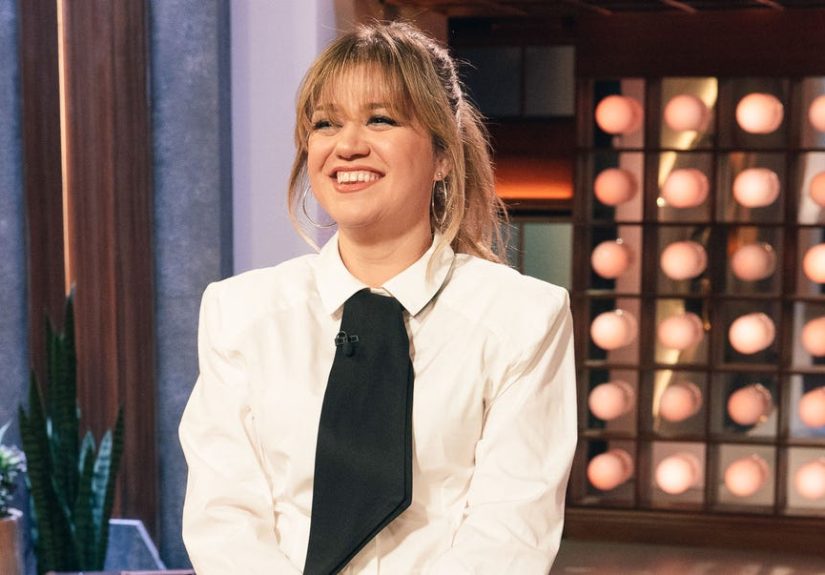
Today, The Kelly Clarkson Show taping takes place at NBC Studios inside 30 Rockefeller Plaza in Manhattan. The move from Los Angeles to New York gave the series a new visual personality. The current set in Studio 6A has been described as having an urban, recording-studio-inspired feel, with warm textures, a modern layout, and design choices that nod to Kelly’s musical roots.
That location matters. Rockefeller Center is not just a building; it is a television landmark. You are walking into the same larger NBC universe associated with legendary live and late-night shows. Even before you sit down, the environment does half the mood-setting. There are tourists taking photos outside, office workers speed-walking with coffee, NBC Pages guiding guests, and fans trying to look calm while clearly vibrating with excitement.
Inside the studio, the set is smaller than many people expect. Television is sneaky like that. On screen, everything looks expansive. In person, the room feels intimate, almost like a stylish music lounge that happens to have cameras the size of compact refrigerators. That closeness is a big part of the charm. The audience is not watching from some distant balcony. You can feel the rhythm of the production: the band warming up, staff moving into place, guests entering, and Kelly shifting from backstage to center stage like the room just got plugged into a brighter outlet.
How to Get Tickets to ‘The Kelly Clarkson Show’
Tickets to The Kelly Clarkson Show are free, but free does not mean automatic. Fans generally request tickets through the show’s official ticketing path, which redirects to 1iota, the platform commonly used for TV audience reservations. Available taping dates appear on a calendar, and guests can request seats when a show is open for ticket requests.
The process usually starts with creating a free account, selecting a date, and submitting a request. If your request is accepted, your status may change to available, and you will need to confirm your ticket. This is an important step. A request is not the same as a confirmed seat. In the world of TV tapings, hope is lovely, but confirmation is king.
The show typically tapes multiple episodes on selected days, often with morning and afternoon taping windows. Exact schedules can vary, so the instructions on the ticket confirmation matter more than anything you read elsewhere. If the ticket says arrive during a specific check-in window, treat that window with respect. Television does not wait because you stopped for a bagel, even if it was a very emotionally important bagel.
Important Ticket Rules to Know
- Tickets are free and should only be obtained through official ticketing channels.
- All audience members must bring valid photo identification.
- Audience members are generally required to be at least 18 years old.
- Phones may be allowed in the building but must be completely turned off before entering the studio.
- A confirmed ticket does not always guarantee entry if you arrive late or fail to follow instructions.
There may also be standby opportunities on some taping days. Standby does not guarantee a seat, but it can be a good option for flexible fans who are already in New York and willing to follow the day’s instructions carefully. As with any live-audience production, the show wants a full, energetic room, so audience coordination is a serious operation.
Checking In: The Calm Before the Kellyoke
The check-in process is where the fantasy of television meets the reality of logistics. You arrive, show your ID, follow staff directions, wait with other audience members, and slowly begin to realize that everyone in line has the same expression: half “I am a mature adult” and half “What if Kelly sings my favorite song?”
Expect some waiting. That is normal for TV tapings. Production teams need time to verify guests, seat the audience, prepare the studio, coordinate guests, test sound, and handle the thousand invisible details that make a show look effortless. The waiting area can feel like the lobby before a concert, except instead of people debating the setlist, they are wondering which celebrity guest might walk out.
Audience staff usually help warm up the crowd before the taping begins. Their job is to explain rules, get everyone comfortable, and raise the room’s energy. You may be asked to clap, cheer, react naturally, and keep the enthusiasm going. This is not the place for your “too cool to smile” era. Daytime TV likes energy. If you bring the enthusiasm of a houseplant, a warm-up comedian somewhere will sense it and become personally challenged.
Inside the Studio: Smaller, Brighter, Louder
Once seated, the first thing many attendees notice is how vivid everything looks. The set is warm and inviting, but the lighting is intense enough to remind you that television has its own version of sunlight. The colors are richer, the stage feels closer, and the crew seems to move in a language of hand signals, headsets, and quiet urgency.
The audience seating is arranged to support interaction. Because the set is designed for both interviews and music, there is a sense of flexibility. One moment the room feels like a talk show stage; the next, it feels like a mini concert venue. That matters because Kellyoke is one of the signature reasons fans want to attend a taping. Hearing Kelly Clarkson sing live, in a studio, is different from hearing it through television speakers. Her voice has a physical presence. It fills the room in a way that makes even the most composed audience member suddenly reconsider their entire relationship with karaoke.
The band, known to viewers as part of the show’s musical identity, contributes heavily to the atmosphere. Live music gives the taping a pulse. It also makes transitions feel fun instead of mechanical. While the home viewer sees a seamless episode, the in-studio audience sees how music, timing, camera movement, and host energy are stitched together in real time.
Kelly Clarkson in Person: The Host Effect
Kelly’s biggest strength as a host is not just that she can sing, although obviously the woman can sing like she keeps extra thunder in her jacket pocket. It is that she listens. During interviews, she often reacts like a real person rather than a celebrity executing a question list. She interrupts with laughter, adds personal stories, and makes guests feel like they are in a conversation instead of a promotional checkpoint.
Inside the studio, that translates into a relaxed but electric mood. Kelly’s presence lifts the room without making it feel over-rehearsed. When she jokes, the audience responds quickly. When a guest shares something emotional, the room quiets. When the show highlights an everyday hero, the reaction feels sincere rather than manufactured. That balance is hard to achieve in daytime TV, where cheerfulness can sometimes feel painted on. Here, the positivity usually feels earned.
Another interesting part of seeing the show in person is watching how fast Kelly moves between roles. She is host, singer, comedian, listener, producer-minded professional, and audience connector all at once. The taping reveals how much work goes into making “natural” television look natural.
The Guests, Segments, and Surprise Factor
A typical episode may feature actors, musicians, authors, athletes, chefs, viral personalities, community leaders, or people with remarkable personal stories. The show’s guest list has included major Hollywood names, music legends, beloved TV stars, and inspiring everyday people. But the taping experience is not only about celebrity spotting. In fact, one of the show’s smartest choices is mixing famous guests with human stories that give the hour emotional variety.
Segments can include games, demonstrations, audience moments, charitable surprises, social media highlights, and practical lifestyle ideas. One minute the room is laughing at a celebrity trying a goofy challenge; the next, it is applauding someone who started a nonprofit, survived something difficult, or changed a community. This rhythm keeps the taping from feeling like a long press junket.
There is also an element of mystery. Audience members often do not know every detail before entering the studio. That surprise factor helps. A guest reveal, unexpected performance, or emotional segment can feel bigger when the room experiences it together. It is the kind of shared reaction that producers love because it gives the episode texture. Real audience responses are part of the show’s sound.
What the Cameras Do Not Show
Watching the final episode at home, you see the smooth version. At the taping, you see the choreography. Camera operators glide into position. Producers check timing. Crew members reset props. Hair and makeup may step in for a quick adjustment. Floor managers cue applause. The audience is reminded when to stay quiet, when to cheer, and when not to look directly into a camera like they just discovered a security mirror at a department store.
This behind-the-scenes activity does not make the show feel fake. If anything, it makes the finished product more impressive. A daytime talk show is a daily production puzzle. The team has to capture interviews, music, comedy, emotional beats, sponsor-friendly segments, and clean transitions while keeping the room upbeat. Seeing that happen live gives you a new appreciation for the editors, camera crew, stage managers, audio engineers, writers, producers, band members, and audience coordinators who make the hour work.
Even the applause is more strategic than viewers may realize. The audience is not simply decoration. It helps establish pace and mood. When a joke lands, the laugh tells the home viewer how the moment felt in the room. When a performance ends, the cheers become part of the emotional payoff. The audience is, in a small but real way, part of the episode’s instrument section.
Tips for Attending a Taping
Read Every Instruction Carefully
The most practical tip is also the least glamorous: read the ticket email. Then read it again. Arrival windows, ID rules, clothing guidance, prohibited items, phone instructions, and check-in locations can all matter. Do not rely on old blog posts or your cousin’s friend who once attended a different show in 2017 and now considers herself the mayor of television.
Dress Smart but Comfortable
Audience members are part of the visual background, so bright, neat, camera-friendly clothing can be a good choice. Avoid anything with huge logos, distracting patterns, or messages that might cause clearance issues. Comfort matters too, especially because there may be waiting, walking, standing, and sitting under studio lights.
Bring Energy, Not Chaos
Producers want enthusiasm, not main-character disorder. Clap, cheer, laugh, and enjoy yourself, but follow directions. Do not shout at guests, sneak photos, or try to become a bonus segment. The fastest way to ruin your magical TV day is to treat the studio like your personal livestream.
Plan Extra Time Around Rockefeller Center
Because the show tapes in the heart of Manhattan, it makes sense to build a day around the experience. Rockefeller Center offers shops, restaurants, sightseeing, and nearby attractions. Just do not schedule anything too tight immediately after the taping. TV production can run longer than expected, and leaving early is usually not an option.
Why the Taping Feels So Memorable
The reason a taping of The Kelly Clarkson Show sticks with people is that it combines several kinds of entertainment at once. You get the excitement of a live performance, the intimacy of a conversation, the unpredictability of television production, and the communal buzz of being in a room full of fans. It is polished enough to feel special and spontaneous enough to feel alive.
There is also something refreshing about seeing daytime television made by humans in real time. In an age of streaming, clips, algorithms, and endless scrolling, a taping reminds you that television can still be a group experience. People laugh together. They react together. They clap until their hands complain. They watch a host connect with guests, crew, and audience members in a way that cannot be fully captured by a short social media clip.
And then there is the music. Kellyoke gives the show a signature no other daytime talk show can easily copy. Many hosts can interview. Some can tell jokes. Very few can open an episode by singing a cover so powerfully that the room briefly forgets it came to watch a talk show and not a private concert.
Extra Experience Notes: What It Really Feels Like to Be There
The best way to describe the experience is organized excitement. From the outside, a TV taping sounds simple: arrive, sit down, watch Kelly Clarkson talk to famous people, go home, tell everyone you were basically in show business. In reality, the day has its own rhythm. It begins with anticipation, shifts into patience, builds into group energy, and then suddenly becomes very real the moment the studio lights settle and the show begins.
The waiting period is part of the story. You may stand near people who traveled from another state, locals who check ticket calendars like it is a competitive sport, longtime Kelly fans, casual daytime TV viewers, and tourists who realized that a free taping at 30 Rock is one of New York’s best entertainment bargains. Conversations start easily because everyone has the same question: “Who do you think the guests are?” Nobody knows for sure, which means everyone becomes an amateur entertainment detective.
When you finally enter the studio, the scale can be surprising. It feels more intimate than television makes it look, but also more intense. The cameras are close. The lights are serious. The crew is focused. You quickly understand that the friendly hour viewers see at home is supported by a disciplined team working with almost athletic precision. Someone cues applause, someone watches timing, someone moves a camera into place, someone checks sound, and somehow none of it distracts from the main event.
The audience warm-up is also more important than outsiders might guess. A good warm-up turns strangers into a temporary team. You are encouraged to react, laugh, clap, and stay present. It can feel a little silly at first, especially if you are not naturally the “woo-hoo on command” type. But once the show starts, the energy makes sense. Television needs a living room with a heartbeat, and the studio audience provides it.
Then Kelly appears, and the room changes. Even people who came in calmly tend to sit taller. Her voice, whether speaking or singing, carries a confidence that fills the studio without feeling distant. She has a way of making the room feel included. She might joke with the audience, react to something unexpected, or turn a small moment into a laugh. The polished celebrity barrier feels thinner in person.
One of the most memorable parts is realizing how emotional the show can be. The funny moments are funnier because everyone laughs together, but the heartfelt moments are also stronger because the room becomes quiet together. When an everyday guest shares a moving story or receives a surprise, you can feel the audience leaning in. That is hard to duplicate through a screen.
Leaving the taping, many people feel like they have seen both a TV show and the machine that builds it. You walk back into Rockefeller Center with a strange little secret: the episode millions may watch later was once a real room, full of real people, clapping under bright lights while Kelly Clarkson made daytime television feel personal.
Conclusion
Going inside a taping of The Kelly Clarkson Show is more than attending a free TV event in New York City. It is a close-up look at how modern daytime television blends music, celebrity, storytelling, humor, production craft, and audience energy into one fast-moving experience. The setting at NBC Studios in 30 Rockefeller Plaza gives the show a classic New York television backdrop, while Kelly Clarkson’s personality keeps the atmosphere warm, funny, and emotionally open.
Whether you are hoping to hear Kellyoke live, spot a favorite celebrity guest, experience Rockefeller Center from the inside, or simply see how a daytime talk show is made, the taping offers a memorable behind-the-scenes adventure. Just bring your ID, follow the rules, arrive on time, turn off your phone, and prepare to clap like your hands have been personally hired by NBC.
Note: This article is written in original wording and based on publicly available information from official show materials, NBC-related resources, ticketing guidance, Rockefeller Center information, entertainment-industry reporting, and production coverage.