Table of Contents >> Show >> Hide
- What Is Guitar Buzzing Noise?
- How to Get Rid of an Unwanted Guitar Buzzing Noise: 15 Steps
- 1. Identify Where the Buzz Is Coming From
- 2. Check Your Playing Technique First
- 3. Tune the Guitar Correctly
- 4. Inspect the Strings
- 5. Look for Loose Hardware
- 6. Check Neck Relief
- 7. Adjust the Truss Rod Carefully
- 8. Measure the String Action
- 9. Raise the Bridge Saddles
- 10. Check the Nut Slots
- 11. Look for High or Uneven Frets
- 12. Consider Humidity and Weather
- 13. Match String Gauge to Your Setup and Tuning
- 14. Set Intonation After Action Adjustments
- 15. Know When to Visit a Guitar Technician
- Quick Diagnosis: What Your Buzz Location Means
- Common Mistakes to Avoid
- Real-World Experience: What Guitar Buzz Teaches You Over Time
- Conclusion
Few things can ruin a good practice session faster than an unwanted guitar buzzing noise. You tune up, strike a glorious chord, prepare to feel like a stadium legend, and suddenly your guitar responds with a tiny metallic mosquito trapped under the strings. Lovely.
The good news is that guitar buzz is usually fixable. Sometimes it is caused by playing technique. Sometimes the guitar needs a basic setup. Occasionally, the issue is a high fret, dry wood, worn strings, a loose screw, or action that has been lowered so aggressively the strings are practically shaving the frets. This guide walks you through 15 practical steps to diagnose and fix guitar buzzing noise without guessing, panicking, or blaming the drummer.
Before adjusting anything, remember this: small changes matter. A guitar is a delicate balance of string tension, neck relief, fret height, saddle height, nut slot depth, humidity, and playing style. Move slowly, measure when possible, and know when to call a guitar technician.
What Is Guitar Buzzing Noise?
Guitar buzzing noise usually happens when a vibrating string touches something it should not touch. Most commonly, the string hits one or more frets while vibrating. This is called fret buzz. But not every buzz comes from the frets. Hardware can rattle, strings can buzz behind the nut, electronics can hum, and acoustic guitars can react to humidity changes.
A small amount of string noise can be normal, especially on electric guitars with low action. If the buzz does not come through the amplifier and the guitar feels great, it may not be a real problem. But if the buzz is loud, kills sustain, makes notes sound choked, or follows you around the fretboard like a bad decision, it is time to investigate.
How to Get Rid of an Unwanted Guitar Buzzing Noise: 15 Steps
1. Identify Where the Buzz Is Coming From
Start by playing every string open, then fret each note up the neck. Listen carefully. Does the buzz happen only on open strings? Around the first few frets? In the middle of the neck? High up near the body? On one string only? Everywhere?
This matters because buzz location points toward the cause. Buzz on open strings may suggest a nut issue, loose hardware, or insufficient neck relief. Buzz on the first few frets often points to a back-bowed neck or low nut slots. Buzz in the middle may involve neck relief or action. Buzz above the 12th fret often suggests low saddle height, uneven frets, or neck angle problems.
2. Check Your Playing Technique First
Before reaching for tools, check your hands. Many players accidentally create guitar buzzing noise by fretting too lightly or placing the finger too far behind the fret. The cleanest note usually comes when your finger presses just behind the fret wire, not halfway between two frets.
Also examine your picking hand. If you attack the strings like you are chopping firewood, you may hear extra buzz even on a well-set-up guitar. Heavy picking makes strings vibrate in a wider arc. That wider movement needs more room above the frets. Try playing the same passage with a lighter touch. If the buzz disappears, your guitar may not be broken. It may simply be asking you to stop wrestling it.
3. Tune the Guitar Correctly
Always tune before diagnosing buzz. Tuning affects string tension, and string tension affects neck relief. If your guitar is tuned lower than usual, the strings become looser and may buzz more easily. For example, dropping from standard tuning to Eb or D standard can reduce tension enough to make a previously clean setup start rattling.
If you regularly use lower tunings, consider a slightly heavier string gauge. Heavier strings can restore tension and reduce unwanted fret buzz. Just remember that changing gauge may require a new setup because the neck, nut, and bridge all respond to string tension.
4. Inspect the Strings
Old, dented, rusty, or kinked strings can cause strange buzzing. A string with a flat spot may vibrate unevenly. A string that is not seated properly in the bridge or nut can rattle. A fresh set of strings is often the cheapest diagnostic tool in the room.
When restringing, make sure each string sits correctly in the nut slot and bridge saddle. Stretch the strings gently, tune again, and check the buzz. If the noise disappears, congratulations: your guitar did not need surgery. It just needed new shoes.
5. Look for Loose Hardware
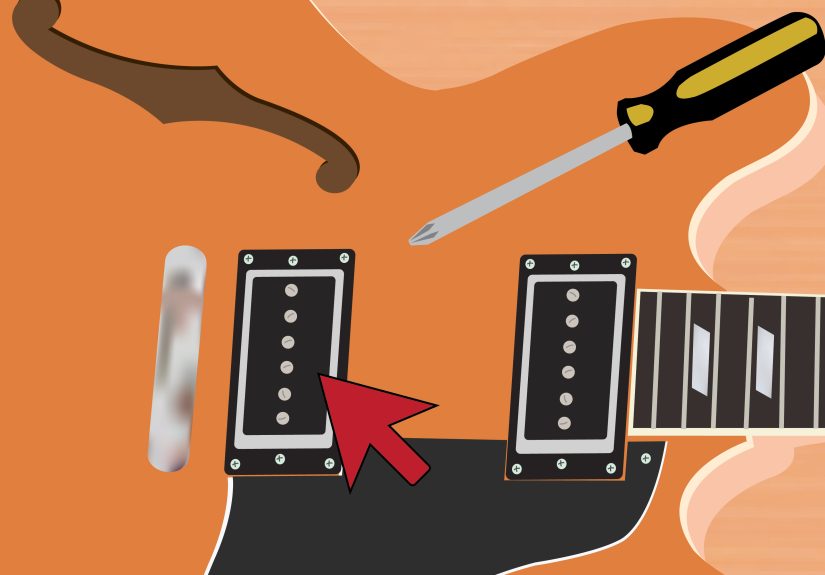
Not all buzzing is fret buzz. Loose tuner bushings, strap buttons, bridge screws, pickup springs, pickguard screws, tremolo springs, jack plates, and control knobs can all rattle. On an acoustic guitar, loose braces or battery compartments can also create annoying noises.
Play the buzzing note and lightly touch different hardware parts. If the buzz stops when you touch a specific part, you have found a suspect. Tighten screws gently. Do not over-tighten, especially into wood. The goal is secure, not “installed by a gorilla with a power drill.”
6. Check Neck Relief
Neck relief is the slight forward curve that gives vibrating strings room to move. A perfectly straight neck is not always ideal. If the neck is back-bowed, the strings may buzz against the lower frets. If there is too much forward bow, the guitar can feel high and still buzz in certain areas.
A common way to check relief is to capo the first fret, hold down the low E string near the last fret, and measure the gap between the bottom of the string and the top of the fret around the 7th or 8th fret. Different guitars have different ideal measurements, so consult your manufacturer’s setup specifications when possible.
7. Adjust the Truss Rod Carefully
The truss rod controls neck relief. If the neck has too little relief or is back-bowed, loosening the truss rod slightly can add forward bow and reduce buzz. If the neck has too much relief, tightening the truss rod can straighten it.
Make tiny adjustments, usually about one-eighth to one-quarter turn at a time, then retune and recheck. Never force a truss rod. If it feels stuck, stop. A broken truss rod turns a simple setup into a wallet workout. If you are unsure, take the guitar to a qualified technician.
8. Measure the String Action
String action is the height of the strings above the frets. Low action feels fast, but it also leaves less room for string vibration. That is why “super low action with zero buzz” is the guitar setup version of wanting a sports car that also hauls furniture and makes waffles.
Measure action at the 12th fret using a string action gauge or ruler marked in small increments. Electric guitars often run lower than acoustics, but every instrument and player is different. If the action is extremely low and the buzz is widespread, raising it slightly may solve the problem.
9. Raise the Bridge Saddles
If the neck relief is correct but the strings still buzz, the bridge saddles may be too low. On many electric guitars, each saddle can be adjusted individually. Raise the buzzing string a small amount, retune, and test again.
On tune-o-matic style bridges, you may raise the bass or treble side of the bridge. On acoustic guitars, saddle height adjustment usually requires removing material or replacing the saddle, so it is easier to lower than to raise. If an acoustic saddle has already been sanded too low, a new saddle may be the cleanest fix.
10. Check the Nut Slots
If open strings buzz but fretted notes sound clean, the nut slots may be too low. A string sitting too deep in the nut can rattle against the first fret. This is common after aggressive nut filing or years of wear.
Nut work requires precision. A slot that is too high makes the guitar hard to play in first position. A slot that is too low causes buzz. Temporary fixes exist, but the proper solution may be filling and recutting the slot or replacing the nut. Unless you have the right files and experience, nut repair is usually a job for a pro.
11. Look for High or Uneven Frets
If one note buzzes badly while nearby notes are clean, a high fret may be the culprit. Frets can lift, wear unevenly, or settle differently over time. A fret rocker tool can help identify high spots by rocking across three frets at a time.
Uneven frets may require seating, leveling, crowning, and polishing. This is real guitar repair work, not a “let’s wing it with sandpaper from the garage” moment. Done correctly, fretwork can make a guitar play beautifully. Done badly, it can make your fretboard look like it lost a fight with a cheese grater.
12. Consider Humidity and Weather
Wood moves with humidity. In dry conditions, a guitar can lose moisture, the neck can change shape, and the top of an acoustic guitar may sink slightly. These changes can lower action and create buzzing. In very humid conditions, the neck may develop more relief and the action may rise.
For many acoustic guitars, a relative humidity range around 40% to 50% is considered healthy. Use a room hygrometer or case hygrometer instead of guessing. If your guitar gets buzzy every winter, the problem may not be the guitar. It may be the air in your room doing its best desert impression.
13. Match String Gauge to Your Setup and Tuning
String gauge affects tension, tone, and playability. Lighter strings are easier to bend and fret, but they may buzz more if your action is low or your picking hand is aggressive. Heavier strings create more tension at the same pitch and may reduce buzz in lower tunings.
If you move from 10s to 9s on an electric guitar, or from medium to light strings on an acoustic, the neck may respond to the reduced tension. That can change relief and action. After a gauge change, check tuning, relief, action, intonation, and buzz again.
14. Set Intonation After Action Adjustments
Intonation does not usually cause buzzing, but action changes can affect intonation. Once relief and string height are where you want them, check whether the guitar plays in tune up the neck. Compare the open string to the fretted note at the 12th fret using a tuner.
If the 12th-fret note is sharp, the string length usually needs to be increased. If it is flat, the string length usually needs to be shortened. Many electric guitars make this easy with adjustable saddles. Acoustic intonation is more limited and may require compensated saddles or professional work.
15. Know When to Visit a Guitar Technician
Some buzzing problems are safe to fix at home. New strings, careful hardware tightening, small saddle adjustments, and basic measurement are beginner-friendly. Truss rod adjustments are manageable if you move slowly and understand what you are doing.
However, fret leveling, nut cutting, acoustic saddle replacement, neck angle correction, loose braces, and persistent mystery buzzes are technician territory. A good setup can transform a guitar. It can also save you from spending months blaming strings, picks, humidity, your amp, your chair, your carpet, and possibly the moon.
Quick Diagnosis: What Your Buzz Location Means
Buzz on Open Strings
Open-string buzz often points to low nut slots, loose hardware, poor string seating, or a back-bowed neck. Check the nut and hardware first, then inspect relief.
Buzz on the First Few Frets
Buzz near the first frets can mean the neck needs more relief. It may also suggest low nut slots, especially if the buzz is strongest on open notes.
Buzz in the Middle of the Neck
Middle-neck buzz is often related to relief and action. The string may not have enough space to vibrate in its widest arc.
Buzz Above the 12th Fret
High-fret buzz can come from low bridge saddles, uneven frets, or neck angle issues. If raising the action slightly does not help, have the frets checked.
Common Mistakes to Avoid
Do not adjust everything at once. If you change the truss rod, bridge height, string gauge, and pickup height in one heroic afternoon, you will not know which change helped or hurt. Work step by step.
Do not force the truss rod. Do not sand an acoustic saddle unless you understand that lowering is easy and un-lowering is called “buying another saddle.” Do not file nut slots with random tools. And do not assume every buzz is bad. Some guitars with low action have light acoustic buzz that never reaches the amp.
Real-World Experience: What Guitar Buzz Teaches You Over Time
After dealing with guitar buzzing noise on different instruments, one lesson becomes clear: buzz is not always a defect. Sometimes it is a message. The guitar is telling you that something in the balance has shifted. Maybe the weather changed. Maybe you installed lighter strings. Maybe you lowered the action because you wanted buttery playability, then discovered the butter came with bees.
One common experience is the “new strings surprise.” You put on a different gauge, tune up, and suddenly the guitar feels unfamiliar. The neck reacts to the new tension. The action changes slightly. Notes that were clean yesterday now buzz today. This does not mean the guitar is ruined. It means setup is connected. Strings, neck relief, and action are teammates, not separate departments.
Another classic case happens with seasonal humidity. A guitar that played perfectly in summer may buzz in winter when indoor heating dries the air. Acoustic guitars are especially sensitive. The top can move, the neck can shift, and the action can drop just enough to make the strings complain. A simple case humidifier and hygrometer can prevent a lot of drama. Think of it as giving your guitar a tiny weather report.
Electric guitars have their own personality. A Strat-style guitar with very low saddles might buzz unplugged but sound perfectly clean through an amp. In that case, the buzz may be acceptable if sustain and tone are not affected. On the other hand, if the buzz comes through the amplifier or makes bends choke out, the setup needs attention.
Players also learn that technique matters more than expected. A beginner may hear buzz because the fretting finger lands too far from the fret. Move that finger closer to the fret wire and the note suddenly clears up. A heavy-handed player may need slightly higher action than a lighter player. There is no universal “perfect” setup. There is only the setup that works for your guitar, your hands, your strings, your tuning, and your musical habits.
The most useful habit is to diagnose before adjusting. Keep a small notebook or phone note with your preferred string gauge, tuning, relief, and action measurements. When buzz appears, compare the current setup to your baseline. This turns panic into process. Instead of thinking, “My guitar hates me,” you can think, “The low E is buzzing from frets 3 to 6, so I will check relief first.” Much calmer. Much cheaper.
Finally, every guitarist eventually learns the value of a great technician. A pro setup can make an average guitar feel inspiring and reveal whether the problem is simple adjustment or deeper repair. There is no shame in getting help. Guitars are simple enough to invite tinkering and complex enough to punish overconfidence. The sweet spot is learning what you can safely do yourself and knowing when to hand the instrument to someone with the right tools.
Conclusion
Getting rid of unwanted guitar buzzing noise starts with careful listening. Find where the buzz happens, check your technique, tune accurately, inspect the strings, and look for loose hardware. Then move into setup basics: neck relief, truss rod adjustment, string action, saddle height, nut slots, fret condition, humidity, and string gauge.
The best fix is not always the biggest fix. Sometimes one-eighth of a truss rod turn, a tiny saddle adjustment, a fresh set of strings, or better humidity control is enough. Other times, the guitar needs professional fretwork or nut repair. Either way, the goal is the same: a guitar that plays comfortably, rings clearly, and lets you focus on music instead of chasing metallic gremlins across the fretboard.