Table of Contents >> Show >> Hide
- 1. Arthur Conan Doyle Was Born Into a Struggling but Creative Family
- 2. He Trained as a Doctor Before Becoming a Famous Writer
- 3. Sherlock Holmes Was Inspired by a Real Professor
- 4. Sherlock Holmes First Appeared in 1887
- 5. Doyle Got Tired of Sherlock Holmes
- 6. He Wrote Much More Than Sherlock Holmes
- 7. Doyle Was an Adventurer at Heart
- 8. He Was Knighted, but Not for Sherlock Holmes
- 9. He Investigated Real-Life Miscarriages of Justice
- 10. The Creator of Sherlock Holmes Believed in Spiritualism
- 11. He Was Fooled by the Cottingley Fairies
- Why Arthur Conan Doyle Still Matters
- Reading Arthur Conan Doyle Today: A Personal Experience With the Mystery Behind the Man
- Conclusion
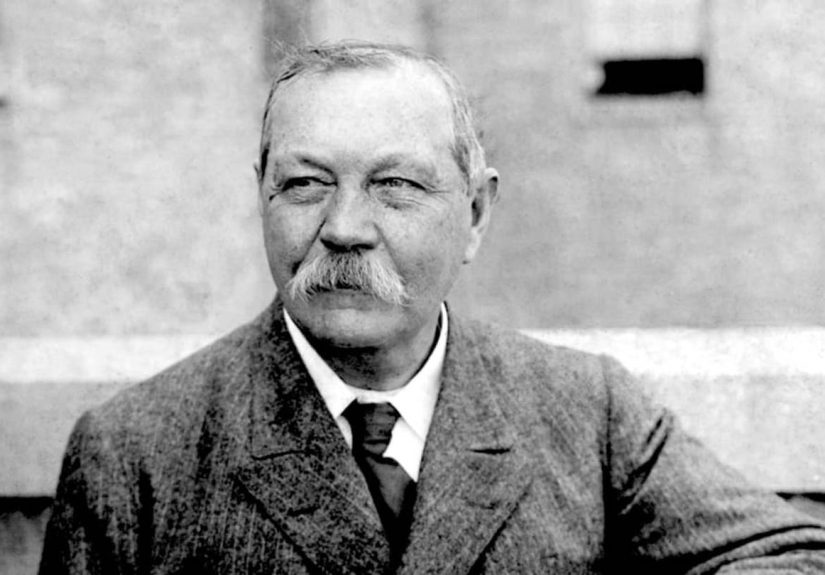
Arthur Conan Doyle is one of those rare writers who managed to create a character more famous than himself. Ask a crowd who Sherlock Holmes is, and hands shoot up faster than a detective spotting cigar ash on a Persian slipper. Ask the same crowd about Doyle, and someone may confidently say, “Wasn’t he Watson?” Close, but no cigar ash.
Sir Arthur Conan Doyle was far more than the author of Sherlock Holmes. He was a trained physician, an adventurer, a sportsman, a political campaigner, a public defender of wrongly accused men, a science-fiction pioneer, and a passionate believer in spiritualism. His life was a strange, exciting mixture of logic and mystery, evidence and faith, success and frustration. In other words, the man who created literature’s greatest rational detective lived a life that was anything but simple.
Below are 11 fascinating facts about Arthur Conan Doyle that reveal the human being behind Baker Street, the magnifying glass, and the world’s most famous fictional detective.
1. Arthur Conan Doyle Was Born Into a Struggling but Creative Family
Arthur Ignatius Conan Doyle was born on May 22, 1859, in Edinburgh, Scotland. His family had artistic talent but not much financial comfort. His father, Charles Altamont Doyle, was an illustrator, while his mother, Mary Foley Doyle, became one of the most important influences on young Arthur’s imagination.
Doyle later remembered his mother as a remarkable storyteller. Her dramatic tales helped shape his love of narrative, suspense, heroism, and adventure. That early storytelling atmosphere matters because Doyle’s best work often feels like a campfire tale told by someone who knows exactly when to lower his voice.
His childhood was not easy. The family struggled with poverty, and his father’s personal difficulties added emotional strain. Yet those early pressures did not crush Doyle’s imagination. Instead, they gave him a deep interest in courage, justice, loyalty, and moral testingthemes that would later appear again and again in his fiction.
2. He Trained as a Doctor Before Becoming a Famous Writer
Before Arthur Conan Doyle became a literary celebrity, he trained as a medical doctor at the University of Edinburgh. He began his medical studies in the 1870s and received his medical qualifications in 1881. Medicine was not just a brief detour before writing; it deeply shaped how he thought, observed, and built characters.
This medical background gave Doyle a professional eye for detail. Doctors are trained to notice symptoms, habits, posture, complexion, and tiny clues that may reveal a larger truth. Sound familiar? Sherlock Holmes’s famous method of deduction owes a great deal to this world of diagnosis.
Doyle later opened a medical practice in Portsmouth, England. Business was slow, which was unfortunate for his wallet but wonderful for world literature. With few patients waiting outside his door, he had time to write. Sometimes failure is just success wearing a fake mustache.
3. Sherlock Holmes Was Inspired by a Real Professor
One of the most fascinating facts about Arthur Conan Doyle is that Sherlock Holmes was partly inspired by a real person: Dr. Joseph Bell, one of Doyle’s professors at the University of Edinburgh. Bell was known for his extraordinary observational skills. He could often infer details about patients from their appearance, behavior, accent, clothing, and mannerisms.
Doyle served for a time as Bell’s clerk, which allowed him to watch these methods up close. The experience left a permanent mark. Years later, Doyle transformed that medical style of observation into Holmes’s dazzling detective technique.
This is why Sherlock Holmes often feels more like a scientist than a traditional crime solver. He studies footprints, handwriting, tobacco ash, mud, clothing fibers, and facial expressions. Doyle did not simply invent a clever detective; he translated the discipline of medical observation into fiction. The result was a character who made thinking look dramatic.
4. Sherlock Holmes First Appeared in 1887
Sherlock Holmes made his debut in A Study in Scarlet, published in 1887. The novel introduced Holmes and Dr. John Watson, one of literature’s most famous partnerships. At first, the world did not explode into Holmes mania overnight. The detective’s true popularity grew later, especially when Doyle began publishing short stories in The Strand Magazine.
The short story format was perfect for Holmes. Each case offered a mystery, a trail of clues, a burst of deduction, and a satisfying reveal. Readers loved the rhythm. It was like receiving a perfectly wrapped puzzle every month.
By the early 1890s, Sherlock Holmes had become a sensation. Readers waited eagerly for new installments, and Doyle became one of the most popular writers of his time. His detective stories helped define modern crime fiction and influenced generations of mystery writers.
5. Doyle Got Tired of Sherlock Holmes
Today, many writers would be thrilled to create a character as famous as Sherlock Holmes. Doyle, however, eventually felt trapped by his own success. He wanted to be known for historical novels, serious literature, poetry, plays, and other ambitious works. Instead, the public kept demanding more Holmes.
To Doyle, Sherlock Holmes became both a blessing and a nuisance. The detective brought fame and money, but he also overshadowed everything else Doyle wrote. Eventually, Doyle decided to solve the problem in the most dramatic way possible: he killed Holmes.
In the 1893 story The Final Problem, Holmes and Professor Moriarty plunge over Reichenbach Falls. Doyle probably hoped this would free him from Baker Street forever. Readers had other plans. Public reaction was intense, and many fans were furious. In modern terms, Doyle had canceled the internet before the internet existed.
After years of pressure and attractive publishing offers, Doyle brought Holmes back. The detective returned first through stories set before his supposed death and then through a full resurrection. The public won. Holmes lived.
6. He Wrote Much More Than Sherlock Holmes
Although Sherlock Holmes remains Doyle’s most famous creation, Arthur Conan Doyle wrote across many genres. He produced historical novels, adventure stories, plays, poems, essays, war writings, and science fiction. One of his most important non-Holmes works is The Lost World, published in 1912.
The Lost World introduced Professor Challenger and imagined a remote South American plateau where prehistoric creatures still survived. The story became a major influence on later adventure and dinosaur fiction. Long before modern blockbuster films filled screens with roaring creatures, Doyle was already sending readers into a land of danger, wonder, and very bad travel insurance.
Doyle cared deeply about these other works. In fact, he often wished readers would admire them as much as they admired Holmes. But literary fame is not always fair. Sometimes one character walks into the room with a violin and a magnifying glass, and everyone else becomes background furniture.
7. Doyle Was an Adventurer at Heart
Arthur Conan Doyle did not spend his entire life quietly at a desk. As a young medical student, he served as a ship’s surgeon on a whaling voyage to the Arctic. The experience exposed him to harsh weather, dangerous work, and the wild beauty of ice and sea.
That adventurous streak stayed with him. Doyle also traveled widely, took interest in sports, and embraced physical challenges. He played cricket, enjoyed boxing, and even helped popularize skiing among British readers after spending time in Switzerland.
This love of action explains the energy in his writing. Doyle’s stories rarely sit still for long. Someone is always rushing across a moor, chasing a cab, boarding a train, decoding a clue, or stepping into a room where the wallpaper practically screams, “Something suspicious happened here.”
8. He Was Knighted, but Not for Sherlock Holmes
Many people assume Arthur Conan Doyle was knighted because he created Sherlock Holmes. Surprisingly, that is not the main reason. Doyle received his knighthood in 1902, largely connected to his service and writings related to the Second Boer War.
During the war, Doyle served as a volunteer physician in South Africa. He later wrote in defense of Britain’s actions during the conflict. His public support of the British position helped raise his national profile and contributed to his knighthood.
This fact adds complexity to Doyle’s legacy. He was not only a novelist but also a public figure with strong political opinions. Some of those views remain debated today, but they show how deeply he wanted to participate in the moral and national arguments of his time.
9. He Investigated Real-Life Miscarriages of Justice
One of the most admirable facts about Arthur Conan Doyle is that he used his fame to fight for people he believed had been wrongly convicted. Two of the best-known cases were those of George Edalji and Oscar Slater.
George Edalji, a young solicitor, had been convicted in a case involving animal mutilation. Doyle studied the evidence and became convinced that Edalji was innocent. He noticed, among other things, that Edalji’s poor eyesight made the alleged nighttime crimes highly unlikely. Doyle’s public campaign helped bring attention to flaws in the case.
Doyle also campaigned for Oscar Slater, who had been convicted of murder in Scotland. Doyle argued that the investigation and trial were deeply flawed. Slater eventually gained his freedom after many years in prison.
These cases show Doyle at his best: energetic, morally serious, and willing to challenge authority. He did not merely write about justice. He tried to practice it, even when the evidence was messy and the stakes were painfully real.
10. The Creator of Sherlock Holmes Believed in Spiritualism
Here is the great irony at the heart of Arthur Conan Doyle’s life: the creator of literature’s most logical detective became one of the world’s most famous advocates of spiritualism. Doyle believed that the dead could communicate with the living, often through mediums.
His spiritualist beliefs became especially important after the losses and grief surrounding World War I. Like many people of his era, Doyle searched for comfort and meaning after enormous personal and social tragedy. He wrote books, gave lectures, and traveled widely to promote spiritualism.
To modern readers, this can seem like a contradiction. How could the mind behind Sherlock Holmes believe in séances and spirit messages? But human beings are rarely as tidy as fictional characters. Doyle wanted evidence, but he also wanted hope. His life reminds us that intelligence does not cancel longing, and logic does not make grief disappear.
11. He Was Fooled by the Cottingley Fairies
Perhaps the most famous example of Doyle’s spiritualist enthusiasm is the Cottingley Fairies episode. In the early 20th century, photographs appeared to show two girls posing with fairies. Doyle believed the images supported the existence of supernatural beings and helped publicize them.
Decades later, the photographs were revealed to be a hoax. The fairies were paper cutouts. For critics, the episode became proof that Doyle’s desire to believe sometimes overpowered his skepticism.
Yet the story remains fascinating because it reveals the emotional side of Doyle’s personality. He was not simply gullible in a cartoonish way. He lived in a world wounded by war, death, and rapid scientific change. Spiritualism offered him a bridge between science and faith, between evidence and comfort. The Cottingley Fairies were embarrassing, yes, but they also show how deeply Doyle wanted the universe to contain wonder.
Why Arthur Conan Doyle Still Matters
Arthur Conan Doyle matters because he helped shape the modern detective story. Sherlock Holmes changed how readers think about clues, evidence, and criminal investigation. Before Holmes, many fictional detectives relied on coincidence, confession, or melodrama. Holmes made detection feel like a method. He turned observation into entertainment and reasoning into suspense.
Doyle also matters because his contradictions make him human. He was a doctor who wrote fiction, a rational storyteller who believed in spirits, a patriot who argued fiercely, a celebrity who resented his most profitable creation, and a writer who wanted to be remembered for more than the one character everyone adored most.
His legacy continues in books, films, television, theater, games, comics, and fan culture. Sherlock Holmes has become one of the most adapted fictional characters in history. Yet behind every version of Holmes stands Doyle: the ambitious, restless, complicated man who gave the detective life.
Reading Arthur Conan Doyle Today: A Personal Experience With the Mystery Behind the Man
Reading Arthur Conan Doyle today can feel like opening a time capsule that still has a pulse. The language belongs to another era, the hansom cabs have vanished, and the foggy London streets are now more likely to contain delivery bikes than mysterious gentlemen with coded notes. Yet the stories still move. The reason is simple: Doyle understood curiosity.
The experience of reading Sherlock Holmes is not just about finding out who committed the crime. It is about learning how to look. A muddy boot, a nervous glance, a strange phrase in a letter, or a dog that does not bark can suddenly become the key to everything. Doyle makes the reader feel that the world is readable if only we pay close attention. That is a powerful feeling, especially in a noisy age when most of us misplace our keys while holding them.
For many readers, the first encounter with Holmes is exciting because he seems almost superhuman. He sees what others miss. He connects details instantly. He appears calm when everyone else is confused. But after spending more time with Doyle’s world, another pleasure appears: Watson. Dr. Watson gives the stories warmth. He is brave, loyal, intelligent, and wonderfully human. Without Watson, Holmes might be impressive but cold. With Watson, the stories gain friendship, humor, and emotional balance.
Exploring Doyle’s biography makes the stories even richer. Once you know that Doyle trained as a doctor, Holmes’s methods feel less like magic and more like diagnosis. Once you learn about Joseph Bell, you can see how medical observation became literary deduction. Once you know that Doyle grew tired of Holmes, the dramatic “death” at Reichenbach Falls becomes more than a plot twist; it becomes a frustrated author trying to escape his own creation.
The strangest experience comes when you compare Holmes’s icy logic with Doyle’s passionate belief in spiritualism. At first, the contrast feels almost impossible. How could the creator of “when you have eliminated the impossible” become so devoted to séances and fairies? But that tension is exactly what makes Doyle interesting. He was not a machine of reason. He was a grieving, hopeful, imaginative person living through an age of scientific discovery and mass loss. His beliefs may not persuade modern skeptics, but they reveal his hunger for meaning.
Visiting Doyle’s work as a modern reader is also a reminder that literary fame has a mischievous sense of humor. Doyle wanted recognition for historical fiction and grand adventure, but Sherlock Holmes took over the house, sat in the best chair, and refused to leave. That can feel unfair, but it is also part of the charm. Writers do not always control which creations become immortal. Sometimes the character grabs the magnifying glass and runs ahead.
The best way to appreciate Arthur Conan Doyle is to read beyond the most famous cases. Start with Holmes, of course, but do not stop there. Try The Lost World to see his adventure imagination at full roar. Read about his justice campaigns to understand his public conscience. Learn about his spiritualist writings to see the complicated hopes that shaped his later years. The more you discover, the less Doyle looks like merely “the Sherlock Holmes guy.” He becomes something more interesting: a full Victorian and Edwardian personality, bursting with confidence, contradictions, mistakes, courage, and creative fire.
That is why Arthur Conan Doyle remains fascinating. His greatest detective taught readers how to examine evidence, but Doyle’s own life asks us to examine the person behind the evidence. And the verdict is clear: he was far more mysterious than he probably intended.
Conclusion
Arthur Conan Doyle created Sherlock Holmes, but his own life could fill a shelf of mysteries, adventures, arguments, and surprises. He was a physician, traveler, sportsman, novelist, campaigner, public intellectual, and spiritualist. He helped shape detective fiction, influenced science-fiction adventure, fought for wrongly accused men, and became trapped in a friendly duel with his own most famous character.
The most fascinating facts about Arthur Conan Doyle show a man full of contradictions. He valued reason but embraced the supernatural. He created an immortal detective but wanted to be remembered for other books. He wrote fiction about justice and then stepped into real legal battles. That complexity is exactly why Doyle still matters. Sherlock Holmes may be the legend, but Arthur Conan Doyle is the mystery worth solving.
Note: This article is written from synthesized historical and biographical information from reputable literary, archival, educational, medical, and cultural-history references. It is fully rewritten in original language for web publication.