Table of Contents >> Show >> Hide
- Why “Another” B-17 Loss Hits Like a Punch
- Meet the Flying Fortress: What Made the B-17 So Legendary
- The Crew: Ten Roles, One Flying Neighborhood
- “Saying Farewell” in the Modern Era: When Warbirds Become Living History
- Two Modern Tragedies That Reshaped the Conversation
- What We’re Really Mourning: More Than Metal
- How to Honor a B-17 and Its Crew Without Turning History Into a Trophy
- Preservation vs. Risk: The Hardest Question in Warbird Aviation
- Conclusion: A Farewell That Becomes a Promise
- Extra : The “Experience” of Saying Farewell to a Flying Fortress
There are airplanes that make you look up, and then there are airplanes that make you stop mid-sentence, point like a kid, and say,
“No way. Is that a B-17?” The Boeing B-17 Flying Fortress doesn’t just fly through the skyit flies through memory. It’s the
kind of machine that carries more than aluminum and rivets. It carries stories.
So when we say goodbye to another B-17whether lost to time, an accident, or the hard math of keeping old warbirds in
the airwe aren’t only losing an aircraft. We’re losing a moving museum, a living soundscape of radial engines, and a doorway into the
lives of the crews who once trusted their entire future to a cockpit full of dials and hope.
And the crew? The crew is the heart of this story. Because a Flying Fortress is never really just a plane. It’s a teamten jobs, one
mission, and a bond forged in cold air at altitude (and occasionally in coffee strong enough to qualify as aviation fuel).
Why “Another” B-17 Loss Hits Like a Punch
The word “another” is doing a lot of heavy lifting here. It suggests repetition, and repetition is exactly what makes these moments
sting: another historic aircraft gone, another set of families grieving, another chapter closed in a book that’s already too thin.
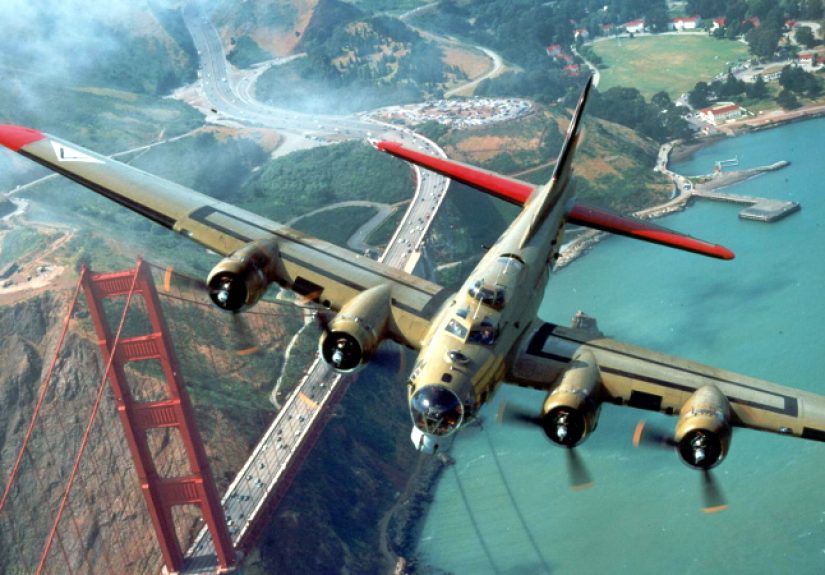
During World War II, the B-17 became an icon of American air powerrugged, heavily armed, and designed to press on even when damaged.
Thousands were built, and thousands didn’t come home. After the war, most surviving aircraft were scrapped because the world was moving
forward fast and aluminum was valuable. Today, only a small number remain intact, and fewer still can fly. Every loss now is amplified
because the “spares” are gone. History doesn’t have a warehouse you can reorder from.
When a flying B-17 is lost in the modern era, it’s not just an “aviation incident” headline. It’s also:
- A rare artifact removed from the skies forever
- A community of restorers, volunteers, and veterans’ families shaken
- A reminder that preservation is brave, expensive, and never guaranteed
Meet the Flying Fortress: What Made the B-17 So Legendary
The B-17 was built for high-altitude strategic bombing, most famously in the daylight campaign over Europe. In simple terms: it was made
to fly far, carry a serious bomb load, and defend itself with a downright intimidating number of .50-caliber machine guns.
The nickname “Flying Fortress” wasn’t marketing fluff. It reflected the aircraft’s defensive firepower and the way formations of B-17s
could look like a porcupine made of metalspiky, determined, and absolutely not interested in being bothered.
But the legend wasn’t only the airplane. It was the combination of airplane + crew + formation tactics + relentless repetition of
dangerous missions. The B-17 became a symbol because it represented a kind of teamwork that’s hard to picture until you understand how
the crew worked.
The Crew: Ten Roles, One Flying Neighborhood
A typical B-17 crew had ten people, and each one had a job that mattered. If you imagine the aircraft as a flying
factory, these were the specialists keeping the whole operation running while the world outside tried very hard to stop it.
Pilot and Co-Pilot: The Hands on the Monster
Up front, the pilot and co-pilot managed an aircraft that could feel more like a small building than a vehicle. Four engines, heavy
controls, and constant decision-makingespecially during takeoff, landing, or emergencies.
Navigator and Bombardier: The Mission’s Brain
The navigator helped get the aircraft where it needed to go, often through weather that didn’t care about your plan. The bombardier,
positioned in the nose, handled the bombsight and timingturning “somewhere over there” into a specific target on a specific run.
Flight Engineer / Top Turret Gunner: Systems and Protection
The flight engineer watched engines, fuel, and systemsbecause four radial engines are amazing until they aren’t. Often, this role also
overlapped with manning the top turret, which meant switching from “mechanic” to “defender” without a break.
Radio Operator: The Voice (and Often Another Gun)
Communications weren’t a casual group chat. The radio operator had to keep contact in conditions that could be unpredictable, while also
helping defend the aircraft depending on configuration and mission needs.
Waist Gunners, Ball Turret Gunner, Tail Gunner: The Watchers
These positions demanded constant attentionscanning the sky, tracking threats, and coordinating with the rest of the crew. The ball
turret was famously cramped, and the tail position was isolated. None of these jobs were glamorous. All of them were essential.
If this sounds like a lot of people for one plane, that’s because it was. A B-17 didn’t just “have a crew.” It was a crew.
“Saying Farewell” in the Modern Era: When Warbirds Become Living History
Many surviving B-17s later served in non-combat rolessearch and rescue, training, testing, and other dutiesbefore eventually landing in
museums or private collections. Some organizations chose a bold path: restore them to flying condition so people could experience living
history.
And that’s where the story gets both inspiring and complicated. Flying a 1940s heavy bomber in the 21st century is not like taking your
grandpa’s classic car to a Sunday show. It’s more like running a traveling mechanical theater production where every performance includes:
- Vintage systems that require specialized knowledge
- Constant maintenance and inspection
- Parts that may need custom fabrication
- Insurance, safety procedures, and regulatory compliance
- Weather realities and operational limitations
When it goes right, it’s breathtaking. When it goes wrong, it’s heartbreakingbecause the cost is measured in both history and human
lives.
Two Modern Tragedies That Reshaped the Conversation
Recent years have included painful reminders that even with careful planning and experienced pilots, operating warbirds carries real risk.
Two events in particular became turning points in public awareness:
The 2019 “Nine-O-Nine” B-17 Accident
In October 2019, a B-17 operating on a living-history flight experience suffered serious trouble shortly after takeoff and crashed while
attempting to return. The loss included lives as well as the aircraft itself. The investigation and public discussion that followed
focused on maintenance, pilot decisions under pressure, and the unique challenges of operating historic aircraft.
The 2022 Wings Over Dallas Mid-Air Collision
In November 2022, the B-17 “Texas Raiders” was involved in a mid-air collision during an air show, resulting in a devastating loss of life
and the destruction of a rare, flying example of the type. Beyond the grief, it prompted renewed attention to air show procedures, safety
planning, and how vintage aircraft are managed in dynamic performance environments.
Mentioning these isn’t about re-living tragedy. It’s about acknowledging why “farewell” has become part of the modern warbird storyand
why safety conversations matter just as much as nostalgia.
What We’re Really Mourning: More Than Metal
A B-17 is a physical object, sure. But the reason people gather, cry, salute, and tell stories is because that object connects us to
peopleespecially the crews who flew similar aircraft in wartime.
When a Flying Fortress is lost, we mourn:
- Craftsmanship: the industrial skill that built it
- Service: the sacrifices tied to the aircraft’s role in history
- Community: the volunteers who kept it alive for decades
- Memory: the stories a flying aircraft can spark in a way a photo can’t
We also mourn the crewthe modern crew members and passengers in today’s incidents, and the wartime crews whose experiences echo through
every rivet. Aviation has a unique way of making history personal: it puts you inside the machine, close enough to imagine the fear, the
focus, the camaraderie, and the determination.
How to Honor a B-17 and Its Crew Without Turning History Into a Trophy
There’s a thin line between honoring and romanticizing. The B-17 is undeniably impressive, but it’s also tied to the reality of war. A
respectful farewell doesn’t pretend the story is simple. It holds two truths at once:
- The aircraft is a marvel of design and teamwork.
- The missions were dangerous, the losses were real, and the stakes were human.
Honoring the crew means focusing on their humanity: young people with jobs to do, relying on each other, navigating fear with skill and
humor, and building bonds under pressure. If you want a detail that captures this without drama: crews often developed ritualssmall
habits, jokes, nicknames, and routinesbecause routine is how humans stay steady when the world isn’t.
Preservation vs. Risk: The Hardest Question in Warbird Aviation
The question behind every modern farewell is uncomfortable but necessary: Should these aircraft still fly?
There isn’t a one-size-fits-all answer. Keeping a B-17 airworthy helps people connect with history in a visceral way. It can support
education, fundraising for museums, and veteran outreach. But flying also exposes the aircraftand everyone involvedto risk.
What’s clear is that preservation demands humility. It requires:
- Relentless maintenance and conservative decision-making
- Clear safety culture and continuous training
- Strong oversight, transparent learning, and updated procedures
- Community support, because this work is expensive and specialized
The goal isn’t to stop remembering. The goal is to remember responsibly.
Conclusion: A Farewell That Becomes a Promise
Saying farewell to another B-17 and its crew is a moment that can either fade into a headlineor become a promise. A promise to keep
telling the stories, to keep teaching the context, to keep learning from losses, and to keep honoring the people behind the machines.
If you’ve ever seen a Flying Fortress overhead and felt your chest tighten a little, you already understand: that sound is history
breathing. When one goes silent, it’s on us to carry the meaning forwardcarefully, respectfully, and with enough curiosity to keep the
past from becoming just a paragraph.
Extra : The “Experience” of Saying Farewell to a Flying Fortress
If you’ve never been close to a B-17, it’s hard to explain how quickly it stops being “an airplane” and becomes “a place.” You don’t just
look at ityou enter it, the way you’d step into an old church, a ship, or a family home that still has the original creaky
stairs. The first thing you notice is scale. Photos flatten the B-17 into a neat silhouette, but standing beside one feels like meeting a
friendly metal dinosaur that somehow learned aerodynamics.
Then there’s the texture of it all: rivet lines marching like disciplined little soldiers, panels that look smooth until sunlight reveals
every tiny wave, and windows that suddenly make you realize how much of WWII aviation was basically “let’s put people in a high-altitude
freezer and give them goggles.” You imagine the crew climbing aboard with gear, parachutes, maps, and nerves, and it becomes obvious that
bravery wasn’t a dramatic speechit was showing up and doing your job again.
At air shows, the experience starts before the aircraft even moves. You’ll hear it first: that unmistakable radial-engine rumble that
sounds like thunder deciding to become organized. People stop walking. Conversations pause mid-word. Phones appear, surebut so do smiles,
because the sound is bigger than technology. It’s a time machine powered by combustion and stubbornness.
And when you learn that a B-17 has been lost, the “experience” flips. It becomes quiet and strangely personal, even for people who never
met the crew. You see it in the way museum volunteers speak more softly. You see it in the way comments online turn from casual to
reverent. You feel it when someone says, “I took my dad to see that one,” or “My grandpa’s unit flew B-17s,” and suddenly the aircraft is
not just an objectit’s a bridge between generations.
Grief in aviation communities often looks like storytelling. People share photos taken from the rope line, memories of crawling through
the fuselage on a tour, or the moment they watched a B-17 lift off and realized they were holding their breath. They talk about the crew
with a special kind of respectbecause anyone who flies a vintage machine is part pilot, part mechanic, part historian, and part guardian.
The humor is there too, because that’s how humans cope: jokes about “vintage wiring” and “parts sourced from the Museum of Unobtainium,”
followed by sincere appreciation for the professionals and volunteers who keep history alive.
The most meaningful experience, though, is what comes after: deciding that a farewell isn’t the end. Maybe you donate to a museum, or
attend a lecture, or record an older relative’s memories before they fade. Maybe you simply teach a younger kid what a B-17 was and why
ten people had to work as one. Because the real point of a Flying Fortressespecially in peacetimeisn’t to celebrate war. It’s to
remember people, understand costs, and keep history human-sized, even when the machines were enormous.