Table of Contents >> Show >> Hide
- Way 1: Listen Like You’re Trying to Understand, Not Like You’re Waiting to Speak
- Way 2: Learn Her “Inner Map” (Values, Stress Signals, and What Love Looks Like to Her)
- Way 3: Handle Conflict Like Teammates (Soft Starts, “I” Statements, and Quick Repairs)
- FAQ: Quick Answers to Common “I’m Trying, I Swear” Moments
- Conclusion: Understanding Is a Practice, Not a Personality Trait
- Experiences: What This Looks Like in Real Life (500+ Words)
“Understanding your girlfriend” isn’t a secret code you crack once and then unlock the deluxe relationship DLC forever.
It’s more like keeping a plant alive: consistent attention, decent lighting, and please stop watering it with unsolicited advice.
(Yes, you mean well. No, it’s still not what she asked for.)
The good news: you don’t need to be a mind reader. The better news: you can become a better listener, a better teammate,
and a better “I actually get you” partnerwithout turning every conversation into a TED Talk.
Below are three practical, research-backed ways to understand your girlfriend more deeplyplus examples you can steal immediately.
No manipulation, no weird “alpha” nonsense, and no pretending you’re calm when your nervous system is doing parkour.
Way 1: Listen Like You’re Trying to Understand, Not Like You’re Waiting to Speak
Most relationship misunderstandings aren’t caused by “bad intentions.” They’re caused by two people running different
mental software and assuming it’s the same version. Listening fixes thatif you do it in a way that actually makes
your girlfriend feel heard.
What “good listening” looks like (and what it doesn’t)
- Good listening: “Help me understand what this felt like for you.”
- Not-so-good listening: “Here’s why you shouldn’t feel that way.”
- Good listening: “So what I’m hearing is…”
- Not-so-good listening: “Okay, but technically” (Dangerous word. Handle with oven mitts.)
Try the 4-step “HEAR” method
-
Halt your fixes.
If she’s sharing feelings, the goal is connection first, solution second (and only if she wants it).
A fast fix can feel like a fast dismissal. -
Echo the meaning.
Paraphrase what she said in your own words: “It sounds like you felt ignored when I stayed on my phone.”
This is not “copying.” This is proving you’re tracking. -
Affirm the emotion.
You don’t have to agree with every conclusion to validate the feeling:
“That makes sense you’d feel hurt.” Validation is emotional CPR. It brings the conversation back to life. -
Request what she needs next.
Ask: “Do you want comfort, solutions, or a hype-man speech where I remind you you’re a legend?”
(Okay, maybe don’t say “legend” unless that’s your vibe.)
Specific examples you can use today
- Instead of: “You’re overthinking.” Try: “I can see why that would stick with you.”
- Instead of: “I didn’t mean it like that.” Try: “I get how it landed, even if I meant something else.”
- Instead of: “What do you want me to do?” Try: “What would help most right now?”
Mini-checklist: signs she feels understood
- Her shoulders drop, voice softens, or she starts explaining more clearly.
- She says things like “Exactly,” “Yes,” or “That’s it.” (Rare, beautiful wildlife sightings.)
- The problem shifts from “me vs. you” to “us vs. the issue.”
If you only improve one thing, improve this. Listening is the front door to empathyand empathy is how you get invited
into someone’s inner world without needing a password.
Way 2: Learn Her “Inner Map” (Values, Stress Signals, and What Love Looks Like to Her)
Understanding your girlfriend isn’t just about what she saysit’s about the patterns underneath what she says.
Think of it as her “inner map”: the stuff that shapes how she interprets life, conflict, affection, and safety.
Start with values: what matters most to her?
Values are like relationship gravity: you might not see them, but you’ll feel them pulling decisions and emotions.
For example, if she values reliability, “I forgot” can hit harder than you intended.
Try questions like:
- “What makes you feel most loved in a normal week?”
- “What’s something you never want in a relationship again?”
- “When do you feel most like yourself?”
- “What’s a small thing I do that has a big impact?”
Notice her stress language (not just her love language)
Pop culture loves “love languages,” and they can be a useful conversation starterbut real relationships are more like a balanced
menu than a single favorite dish. People usually appreciate many forms of care, and needs can change with context.
A more practical approach: learn her stress signals and soothing signals.
- Stress signals: quiet withdrawal, sharper tone, rapid problem-solving, sarcasm, “I’m fine” with suspicious punctuation.
- Soothing signals: a walk, a hug, time alone, reassurance, a plan, humor, food (yes, food is sometimes emotional support).
Build a “user manual” together (not as a jokeseriously)
Do this when you’re both calm (not mid-argument). Keep it simple:
- When I’m stressed, I tend to… (shut down / talk a lot / need space)
- What helps me most is… (a hug / reassurance / time to think / a clear plan)
- When you’re stressed, I should avoid… (fixing / debating / teasing / going silent)
- One thing that always makes me feel cared for is… (specific and doable)
Don’t skip the nonverbal part
A lot of “I don’t feel understood” is nonverbal: tone, timing, eye contact, posture, and whether your phone is basically
glued to your palm like it owes you rent. If your body says “I’m elsewhere,” her nervous system will believe your body.
Bottom line: ask good questions, observe patterns, and treat her inner world like it mattersbecause it does.
This isn’t about decoding women. It’s about understanding your girlfriend.
Way 3: Handle Conflict Like Teammates (Soft Starts, “I” Statements, and Quick Repairs)
If you want to understand your girlfriend faster, pay attention to conflict. Not because you should pick fights
like it’s a hobbyplease don’tbut because conflict reveals needs, boundaries, fears, and expectations.
Step 1: Start soft (the opening sets the ending)
How a hard conversation begins heavily influences where it goes. A harsh start (“You always…”) invites defensiveness.
A soft start (“I’m feeling… and I need…”) keeps the door open.
Harsh start: “You never prioritize me.”
Soft start: “I’ve been missing you. Can we plan a night this week that’s just us?”
Step 2: Use “I” statements that actually work
“I” statements aren’t magic words. They’re a structure that reduces blame and increases clarity.
Here’s a version that doesn’t sound like a corporate apology email:
- I feel (emotion) when (specific situation) because (meaning) and I’d like (clear request).
Example: “I feel anxious when plans change last minute because I’m trying to manage my week, and I’d like a heads-up when possible.”
Step 3: Watch for the “relationship potholes”
Some communication habits predict worse conflict and less connection over timethings like constant criticism, contempt,
defensiveness, or shutting down. You don’t need to diagnose your relationship; just learn to recognize the patterns early.
Step 4: Make repair attemptssmall moves that save big moments
Repair attempts are those little bids to de-escalate: humor, a softer tone, “Can we restart?”, “I’m on your side,”
or even “Okay, that came out wrong.” The point isn’t to “win.” It’s to protect the relationship while you solve the issue.
Step 5: Take breaks when flooded (yes, timing matters)
If either of you is too angry or overwhelmed, the conversation may become unproductive. It’s okay to pause and return
when you’re calmerespecially if one of you is going silent or spinning up.
Try: “I want to do this right. I’m too heated to be helpfulcan we take a short break and come back?”
A quick “teammate mindset” script
- “I care more about understanding you than being right.”
- “What’s the real issue under the issue?”
- “What would ‘good’ look like for both of us?”
- “What’s one small change we can try this week?”
Conflict handled well becomes a shortcut to closeness. Conflict handled poorly becomes a recurring subscription you never meant to buy.
Choose wisely.
FAQ: Quick Answers to Common “I’m Trying, I Swear” Moments
How do I understand her when she says “I’m fine”?
Take “fine” as a signal to gently check in, not as a courtroom verdict. Try:
“I’m hearing ‘fine,’ and I also sense something’s off. Do you want to talk now, later, or not at all?”
What if she wants to vent and I want to fix it?
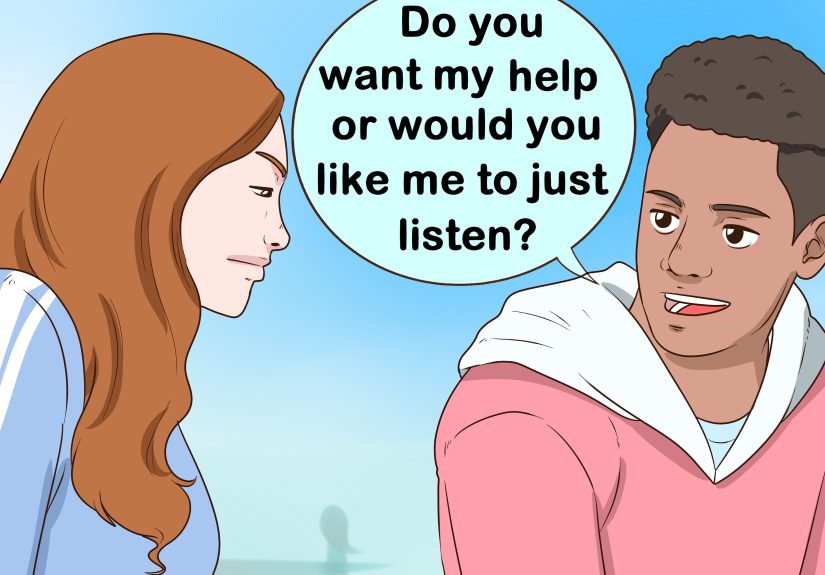
Ask what she wants: “Do you want me to listen, help solve it, or just be on your side?”
This question alone prevents a surprising number of unnecessary arguments.
What if I feel like I’m doing everything “right,” but she still feels misunderstood?
Ask for calibration instead of guessing: “What would make you feel more understood by me this week?”
Then pick one concrete change and follow through. Consistency beats grand gestures.
Is it normal to misunderstand each other sometimes?
Completely. Two different people will have different histories, triggers, and expectations.
The goal isn’t zero misunderstandingsit’s faster, kinder repairs.
Conclusion: Understanding Is a Practice, Not a Personality Trait
Understanding your girlfriend isn’t about having perfect lines or never messing up. It’s about showing consistent curiosity,
listening in a way that lands, learning her inner map, and handling conflict like you’re on the same team.
If you want one “cheat code,” it’s this: be responsive. Notice what she’s feeling, take it seriously, and respond with care.
You don’t need to be flawless. You just need to be present, honest, and willing to learn.
Experiences: What This Looks Like in Real Life (500+ Words)
Below are a few “composite” experiencesrealistic situations many couples describeshowing how these three ways play out.
(Not personal stories from mejust the patterns that show up again and again in everyday relationships.)
Experience #1: The Text Message That Started World War III
Scenario: You send “K” after she tells you about a stressful day. In your head, “K” means “I got it.” In her head, “K” means
“I am emotionally unavailable and possibly upset, and also I have joined a monastery.”
Way 1 (listening) fix: Instead of defending your texting style like it’s a constitutional right, you try:
“I can see how that read as cold. I meant ‘I hear you.’ Do you want to tell me more about what happened?”
You paraphrase: “So your coworker put you on the spot in front of everyone,” and you validate:
“That’s frustrating and embarrassing.” Suddenly, the conversation isn’t about the letter “K.” It’s about her day.
Experience #2: The “You Don’t Plan Anything” Argument
Scenario: She says, “I always have to plan everything.” You hear: “You’re a failure.” She means:
“I want to feel pursued and prioritized.”
Way 2 (inner map) fix: You realize she values thoughtfulness and reliability. So you ask better questions:
“When do you feel most cared forspontaneous dates, planned nights, or daily small things?” She tells you it’s not about
expensive outings; it’s about not feeling like an afterthought.
You build a tiny “user manual” agreement: once a week, you plan one thingcould be tacos and a walk, a movie with phones away,
or breakfast on Saturday. The point is the signal: “I chose you on purpose.”
Experience #3: The Fight That Keeps Repeating
Scenario: You fight about the same thing every month: time, chores, friends, money, social planspick your classic hit.
The surface topic changes, but the emotional pattern is identical.
Way 3 (teammate conflict) fix: You start with a soft start-up:
“I’ve been feeling overwhelmed lately, and I don’t want us to keep bumping into this. Can we talk about how to split things
in a way that feels fair to both of us?”
You use an “I” statement without the hidden knife:
“I feel stressed when the apartment is messy because it’s hard for me to relax, and I’d like us to pick two cleanup moments
each week.” She responds with her own needs: maybe she’s been exhausted, or she feels criticized, or she needs clearer expectations.
Mid-conversation, tension rises. Instead of pushing harder, you make a repair attempt:
“Okay, I’m getting defensive. I don’t want to fightcan we reset?” Maybe you take a short break and come back calmer.
The fight becomes a collaboration: two people solving a shared problem, not two people trying to prove who’s more right.
What these experiences have in common
In each scenario, understanding didn’t come from guessing. It came from choosing a skill:
listening to reflect (Way 1), learning what matters underneath (Way 2), and communicating in conflict without lighting the house on fire (Way 3).
Do that consistently, and “I don’t feel understood” becomes “Thank you for hearing me”which is basically relationship gold.