Table of Contents >> Show >> Hide
- Why Rowing Machines Deserve the Hype
- Muscles Worked on a Rowing Machine
- Correct Rowing Form (So You Get Results, Not Regrets)
- 9 Rowing Machine Benefits (The Real Ones You’ll Feel)
- 1) Full-body training in one machine
- 2) Low-impact cardio that’s kinder to joints
- 3) Strong cardiovascular fitness (heart and lungs get upgraded)
- 4) Calorie burn that scales with effort
- 5) Posture help for desk-bound humans
- 6) Serious core strength (without a million crunches)
- 7) Stress relief and mood support
- 8) Better sleep and more daytime energy
- 9) Flexible training: steady state, intervals, or “I only have 12 minutes”
- Beginner-Friendly Rowing Workouts (Simple, Effective, Repeatable)
- Safety Tips (Especially if You’re New or Coming Back After a Break)
- 500+ Words of Real-World Experiences (What People Often Notice)
- Wrap-Up: Rowing Machine Benefits You Can Actually Use
Rowing machines are the rare piece of gym equipment that can make cardio people and strength people stop arguing for five minutes.
They’re low-impact, full-body, and scalable enough that a beginner can use the same machine as a terrifyingly fit person who thinks
“warm-up” means “a casual 2,000 meters at race pace.”
In this guide, we’ll break down the biggest rowing machine benefits, the correct rowing form (so your lower back doesn’t send a complaint letter),
and the muscles worked during each phase of the strokeplus practical workouts and real-world “what you’ll actually notice” experiences.
Why Rowing Machines Deserve the Hype
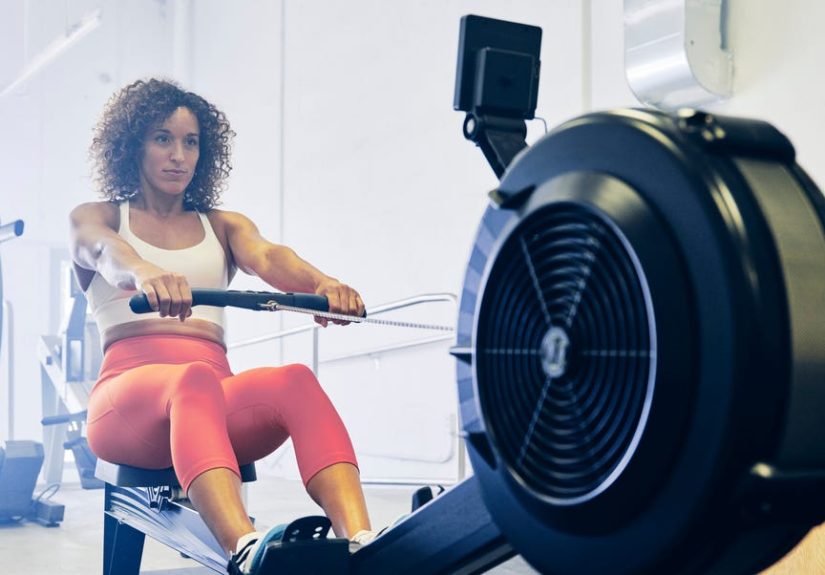
A rowing machine (often called an “erg”) combines an aerobic workout with meaningful muscle engagementespecially when you row with
solid technique and intention. Cleveland Clinic notes rowing has both an “aerobic aspect and a strength aspect,” and that adjusting the machine
to a heavier pull can challenge the legs significantly.
The best part: rowing is naturally joint-friendly because it’s performed in a seated position and avoids the pounding you’d get from running,
while still delivering a legit cardio stimulus.
Muscles Worked on a Rowing Machine
Rowing looks like “arms pulling a handle,” but the power comes from the lower body. USRowing explains that while rowing may look like an upper-body sport,
the strength of the stroke comes from the legs.
The big muscle groups you’ll hit
- Legs: quads, hamstrings, calves (especially during the drive)
- Glutes: hip extension power and stability
- Back: lats, rhomboids, traps (posture and pull strength)
- Core: abs, obliques, lower back (bracing and control)
- Arms/shoulders: biceps, forearms, deltoids (finishing the stroke and controlling the handle)
Muscles worked by stroke phase (simple version)
Concept2 breaks the stroke into four partscatch, drive, finish, recoveryand the sequence matters.
- Catch: core bracing + hamstrings/glutes loaded, shoulders relaxed (ready position)
- Drive: legs press first, then torso swing, then arms pull (legs do the heavy lifting)
- Finish: slight lean back supported by core; handle below ribs; wrists flat
- Recovery: arms away first, hinge forward, then knees bend (control > rush)
Correct Rowing Form (So You Get Results, Not Regrets)
Good form is the difference between “full-body training” and “why does my lower back feel like it paid rent and moved in?”
Cleveland Clinic warns that poor form can lead to upper and lower back issues and even shoulder problemsespecially if you pull too high
(like toward your chin instead of your chest).
The four positions: Catch → Drive → Finish → Recovery
- Catch: Arms straight, shoulders relaxed (not hunched), head neutral. Hinge forward from the hips, shins vertical or close to it.
- Drive: Push with your legs first, then swing your torso through vertical, then add the arm pull. Keep hands moving in a straight line.
- Finish: Legs extended, slight lean back supported by core, handle lightly below your ribs, wrists flat.
- Recovery: Arms extend first, then hinge forward at the hips, then bend knees once hands clear the knees. Smooth and controlled.
Two magic phrases that fix 80% of technique
- Drive: Legs → Body → Arms (press, swing, pull)
- Recovery: Arms → Body → Legs (hands away, hinge, slide)
Common rowing mistakes (and quick fixes)
- “All arms” rowing: If your biceps burn but your legs feel ignored, slow down and focus on the leg drive first.
- Rushing the recovery: Make recovery calmer than the drive; control builds rhythm and protects form.
- Over-compressing at the catch: Keep shins near vertical; don’t force knees past a comfortable position.
- Shrugging shoulders: Keep shoulders low and relaxed, especially during the drive and finish.
- Pulling too high: Aim the handle toward the lower ribs, not the neck.
Stroke rate (SPM): go slower than you think
If you’re new, you’ll be tempted to row at “washing-machine spin cycle.” Instead, use stroke rate strategically.
Concept2 explains that intensity isn’t determined by how high your cadence isit’s based on how hard you’re pulling.
Their general guidelines: lower rates like 18–22 spm help practice technique (but “long hard workouts” there aren’t recommended),
24–28 spm is commonly comfortable for longer steady rows, and higher rates are typically for intervals/racing practice.
9 Rowing Machine Benefits (The Real Ones You’ll Feel)
1) Full-body training in one machine
Rowing recruits major muscle groups from legs to core to upper back, which is why it’s so efficient.
Cleveland Clinic highlights that your abdominal muscles, lower back, obliques, glutes, and hamstrings all get involved, and your upper back
gets meaningful work too.
2) Low-impact cardio that’s kinder to joints
Rowing is often described as low-impact because you’re seated and not repeatedly pounding the ground.
Cleveland Clinic notes it can give joints a break compared with high-impact options like running, while still delivering a strong cardio workout.
3) Strong cardiovascular fitness (heart and lungs get upgraded)
Aerobic activity improves cardiorespiratory fitnessbasically how well your heart and lungs deliver oxygen during effort.
The American Heart Association explains that cardio activity gets your heart rate up and benefits your heart by improving cardiorespiratory fitness.
Rowing fits that bill nicely because it can be sustained (steady state) or pushed hard (intervals).
4) Calorie burn that scales with effort
Rowing can burn a meaningful amount of energy, especially when you row with purpose.
Cleveland Clinic ranks rowing high for calorie burn (below running but above an elliptical), and notes your speed, intensity, and resistance matter.
For context, Mayo Clinic’s calorie table (based on a 160-lb person) shows cardio activities like moderate elliptical at 365 calories/hour and running at 606 calories/hour,
illustrating how intensity and modality change burn rate.
5) Posture help for desk-bound humans
If you spend your day folded over a laptop like a sad shrimp, rowing can be a great counterbalance.
Cleveland Clinic points out that strengthening the upper back adds a postural element and can be crucial for people who spend their days looking down at screens.
6) Serious core strength (without a million crunches)
The rower is sneaky: it trains your core not by “moving your torso a lot,” but by demanding stability while power transfers from legs through torso to arms.
Cleveland Clinic emphasizes that core engagement is part of every step when form is solid, and that strengthening those muscles supports stability and speed.
7) Stress relief and mood support
The rhythm of rowing can feel almost meditative for some people, and physical activity is widely associated with stress and mood benefits.
Cleveland Clinic notes the repetitive nature of rowing can have a meditative effect and pairs that with the mood-boosting benefits of activity.
MedlinePlus also notes exercise releases chemicals that can improve mood and help you deal with stress and manage anxiety.
8) Better sleep and more daytime energy
If your brain tends to throw a midnight afterparty, exercise may help.
MedlinePlus notes exercise can help you fall asleep faster and stay asleep longer, and it can boost energy by helping your heart and lungs work better.
A rowing sessionespecially earlier in the dayoften works well as a “productive tired.”
9) Flexible training: steady state, intervals, or “I only have 12 minutes”
Rowing works for long, moderate sessions and for short interval training.
Concept2 explains stroke rate and workout type can be matched (lower for technique, mid-range for longer steady work, higher for intervals).
And if your schedule is chaotic, remember the bigger picture: the CDC recommends adults get at least 150 minutes of moderate-intensity activity per week
(or 75 minutes vigorous), plus muscle-strengthening activity on 2 days.
Rowing can help you check both the “move” box and the “muscles were involved” box.
Beginner-Friendly Rowing Workouts (Simple, Effective, Repeatable)
These are practical templates you can rotate through without needing a PhD in Ergonomics (or an existential crisis about damper settings).
Always start with 3–5 minutes easy rowing to warm up, then ramp effort gradually.
Workout A: Technique + Easy Aerobic (20 minutes)
- 5 minutes easy (focus on Catch and Recovery)
- 10 minutes steady at 24–26 spm (smooth, controlled)
- 5 minutes easy cooldown
Use Concept2’s sequencing cues: legs first on the drive, arms away first on recovery.
Workout B: Beginner Intervals (12–18 minutes)
- 4 minutes easy warm-up
- 8 rounds: 30 seconds “hard but controlled” + 60 seconds easy
- 2–4 minutes cooldown
Keep form tidyintervals are where technique likes to run away screaming. If your stroke falls apart, reduce intensity before increasing speed.
Workout C: “I Have Meetings” Micro-Session (10 minutes)
- 2 minutes easy
- 6 minutes moderate steady
- 2 minutes easy
The CDC notes you can break activity into smaller chunks; it doesn’t have to be all at once.
Safety Tips (Especially if You’re New or Coming Back After a Break)
- Start easier than you want to. Your heart is excited; your tendons are cautious.
- Prioritize posture. Shoulders relaxed, handle to ribs, neutral spine.
- Progress gradually. Add time or intensity, not both in the same week.
- If you have medical concerns, check in with a clinician. That’s especially true for heart issues, severe joint pain, or back problems.
500+ Words of Real-World Experiences (What People Often Notice)
No two bodies respond exactly the same way, but certain patterns show up again and again when people use a rowing machine consistently.
Think of these as “common experiences” reported by beginners, desk workers, runners, and strength traineesnot promises, not magic, just reality with a pulse.
The “desk worker posture surprise”
People who sit all day often notice that rowing feels like it “wakes up” muscles they forgot existedespecially the upper back and the muscles around the shoulder blades.
After a few weeks, many report standing a little taller without trying, because rowing repeatedly trains pulling mechanics and back endurance.
Cleveland Clinic specifically calls out the upper-back/posture benefit as important for people staring down at computers and phones.
The funny part is that the first sign is not a mirror transformationit’s more like: “Huh, my shoulders aren’t living in my ears today.”
The “runner who finally found a joint-friendly cardio day”
Runners who add rowing often describe it as cardio that doesn’t feel like punishment for the knees and ankles.
Because rowing is low-impact and seated, it can function as a high-aerobic day without the pounding.
A common experience is that the lungs get a challenge similar to hard running, but recovery feels gentler on the joints.
That makes it easier to stay consistentespecially during weeks when life says, “You’re not sleeping,” and the body says, “Please stop sprinting.”
The “beginner technique glow-up”
Early on, many people row too fast and feel it mostly in the armsthen they learn the sequence (legs, body, arms) and everything changes.
Suddenly the legs do the heavy work, the stroke feels smoother, and the effort is distributed across the whole body.
Concept2’s technique cuespress with legs, swing the back through vertical, then add the arm pullare exactly the kind of “a-ha” that transforms rowing from awkward to addictive.
There’s usually a moment around week two or three where someone says, “Ohhhh. So that’s why it’s called rowing.”
The “core you didn’t schedule” effect
Lots of people don’t feel the core much on day one, then start noticing it during daily stuff: carrying groceries, sitting upright longer, feeling more stable during squats.
That’s because good rowing asks your torso to transfer power from legs to arms without collapsingcore work without the drama.
Cleveland Clinic notes that the abdominal muscles, obliques, glutes, hamstrings, and lower back all get involved with proper form.
The “mental reset” session
People also describe rowing as a surprisingly good stress “off switch.” The rhythmcatch, drive, finish, recoverycan become calming,
and that pairs well with the mood benefits associated with exercise.
Cleveland Clinic mentions rowing’s repetitive nature can feel meditative, and MedlinePlus notes exercise can help you feel more relaxed and better able to deal with stress.
It’s not that problems disappear; it’s that your brain stops buffering like a bad Wi-Fi signal.
The “sleep got easier” report
Another common experience: people fall asleep faster on days they rowespecially when the workout is earlier rather than right before bed.
MedlinePlus notes exercise can improve sleep quality and duration.
Many people find that even a moderate 15–20 minute row can create the kind of physical tiredness that makes bedtime feel less like a negotiation.
The “I can do this even when life is busy” win
One of rowing’s underrated benefits is logistical: it works in short blocks.
People with packed schedules often stick with rowing because 10–15 minutes still feels meaningful.
The CDC emphasizes that activity can be spread out and broken into smaller chunksconsistency beats perfection.
In real life, this looks like: row for 12 minutes, shower fast, feel accomplished, carry on.
Not glamorous. Extremely effective.