Table of Contents >> Show >> Hide
- What Is Melanoma, Exactly?
- Musicians Whose Voices Were Silenced by Melanoma
- Actors and Entertainment Figures Lost to Melanoma
- Public Servants and Leaders Who Died of Melanoma
- Athletes Whose Stories Raised Awareness
- What These Celebrity Melanoma Deaths Teach Us
- Experiences and Reflections Around Celebrity Melanoma Deaths
When most of us think about skin cancer, we picture a suspicious little mole that a dermatologist zaps off in a quick office visit. Melanoma doesn’t always play that nicely.
It’s the troublemaking cousin in the skin cancer family – less common than other types, but far more likely to spread and turn deadly if it isn’t caught early.
Over the years, melanoma has claimed the lives of musicians, actors, athletes, politicians, and other public figures. Their names remind us that this disease doesn’t care how famous you are, how many Grammys you’ve won, or how many touchdowns you’ve scored.
In this guide, we’ll look at some of the most famous people who died of melanoma, explore what we can learn from their stories, and talk about how you can protect yourself and the people you love.
This isn’t meant to be a doom-and-gloom list. Think of it as a mix of remembrance, reality check, and gentle nudge to schedule that skin exam you’ve been putting off.
Along the way, we’ll also break down what melanoma is, why it’s so dangerous, and the warning signs that deserve attention.
What Is Melanoma, Exactly?
Melanoma is a type of skin cancer that starts in melanocytes, the cells that make melanin – the pigment that gives skin its color.
While it accounts for a minority of skin cancer cases, melanoma causes the majority of skin cancer deaths because it’s more likely to invade deeper tissues and spread to other organs if it’s not caught early.
The classic warning signs are summed up by the ABCDE rule for moles and spots on the skin:
- A – Asymmetry: One half doesn’t match the other.
- B – Border: Edges are irregular, ragged, or blurred.
- C – Color: Multiple colors or very dark color.
- D – Diameter: Usually bigger than a pencil eraser, though smaller spots can be cancer too.
- E – Evolving: Any change in size, shape, color, or symptoms like itching or bleeding.
Melanoma can appear on sun-exposed skin, but it can also show up in surprising places: under nails, on the soles of the feet, on the scalp, and even in the eyes.
That’s one reason regular skin checks – both at home and with a dermatologist – are such a big deal for early detection.
Musicians Whose Voices Were Silenced by Melanoma
Bob Marley – A Reggae Legend Lost at 36
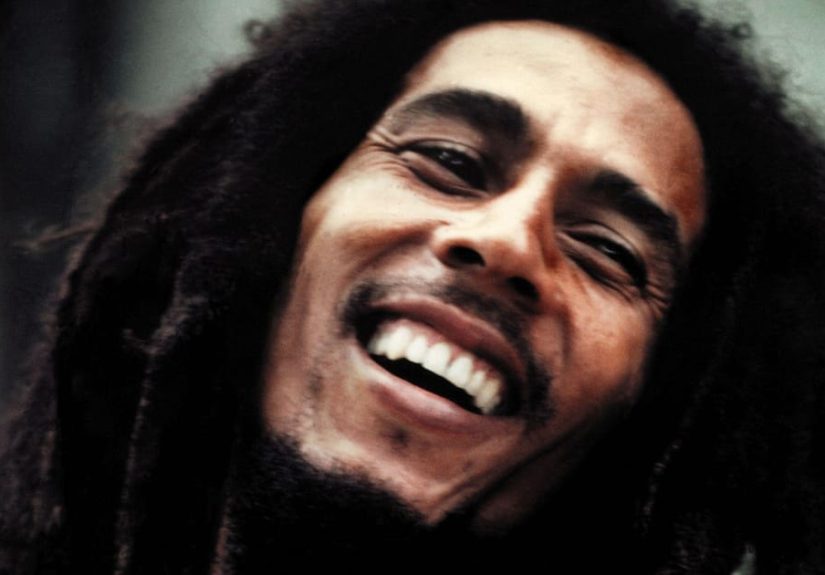
One of the most widely known melanoma stories is that of reggae icon Bob Marley. In the late 1970s, Marley noticed a dark spot under the nail of his right big toe. At first, he thought it was just a soccer injury – understandable when you live in cleats.
Eventually, doctors diagnosed him with acral lentiginous melanoma, a rare form of melanoma that tends to appear on the hands, feet, and under nails and is more common in people with darker skin.
Surgery removed part of the nail and tissue, but Marley declined the recommended amputation of the toe because of his beliefs and his music career. Over the next few years, the melanoma spread to other parts of his body. He died in 1981 at just 36 years old, at the height of his influence.
His story is a powerful reminder that melanoma can affect anyone, including people who rarely burn and who don’t fit the stereotypical “fair-skinned beachgoer” image.
Eva Cassidy – The Singer the World Discovered Too Late
American singer Eva Cassidy had a stunning, genre-blending voice that moved effortlessly between jazz, folk, and blues. During her lifetime, she was beloved in the Washington, D.C. music scene but largely unknown elsewhere.
In the early 1990s, Cassidy had a malignant mole removed from her back. A few years later, she began to experience hip pain that turned out to be from melanoma that had spread to her bones and lungs. Despite aggressive treatment, she died in 1996 at the age of 33.
Ironically, her international fame exploded after her death, when recordings like “Fields of Gold” and “Over the Rainbow” reached listeners around the world.
Cassidy’s story shows how melanoma can recur or spread even years after a suspicious mole is removed, and why ongoing follow-up is essential.
Tom Cora – An Experimental Music Innovator
Experimental cellist and composer Tom Cora pushed the boundaries of what a cello could do, blending rock, jazz, and avant-garde improvisation. He recorded with artists such as John Zorn and played in influential bands like Curlew and Skeleton Crew.
Cora died of melanoma in 1998 at the age of 44, cutting short a career built on fearless creativity.
Sergei Rachmaninoff – A Classical Giant
Not all celebrity melanoma stories are modern. Russian composer and piano virtuoso Sergei Rachmaninoff, known for his emotionally intense concertos and symphonies, spent his final years in the United States.
He moved to Beverly Hills in the early 1940s because of declining health and died there in 1943 from melanoma, just days before his 70th birthday.
Even in an era with less advanced cancer care, his story underscores how serious this disease has always been.
Actors and Entertainment Figures Lost to Melanoma
James Rebhorn – The Familiar Face You Saw Everywhere
You may not instantly recognize the name James Rebhorn, but you’ve almost certainly seen his face. He appeared in dozens of films and TV series, including Homeland, Independence Day, Scent of a Woman, and My Cousin Vinny.
Rebhorn died of melanoma in 2014 at the age of 65, according to his agent.
Like many character actors, Rebhorn was the “that guy” audiences recognized without always knowing his name. His death pushed some fans to look more closely at their own health and the idea that even seemingly minor skin changes shouldn’t be ignored.
Brandon Blackstock – A Behind-the-Scenes Power Player
Talent manager Brandon Blackstock was best known to the public as the former husband of singer Kelly Clarkson, but inside the music industry he had a long career managing artists and working behind the scenes. In 2025, news outlets reported that he died at age 48 after a multi-year battle with melanoma.
According to reports, Blackstock had been living with melanoma for about three years before his death and received hospice care at home surrounded by family.
His story is a reminder that cancer journeys don’t always play out in public – many people quietly juggle treatments, work, and family life long before anyone realizes how serious things are.
Public Servants and Leaders Who Died of Melanoma
Vic Fazio – Longtime California Congressman
Victor “Vic” Fazio represented California in the U.S. House of Representatives from 1979 to 1999 and was known for his work on budget issues and environmental policy.
Fazio died in 2022 at age 79 from melanoma at his home in Virginia.
His death adds to the list of high-profile political figures affected by skin cancer and highlights that long hours indoors don’t completely erase the risk from past sun exposure.
Michael O’Keefe – Influential Louisiana Politician
Michael O’Keefe served for decades in the Louisiana State Senate and was once its president.
He died of melanoma in 2021 at age 89 at his home in New Orleans.
While his career was complex and sometimes controversial, his cause of death again underlines how commonly melanoma appears across different professions and lifestyles.
T. F. Gilroy Daly – Federal Judge
T. F. Gilroy Daly, a U.S. District Court judge from Connecticut, is another public figure whose obituary notes melanoma as his cause of death.
Judges aren’t exactly spending their days tanning on the beach in their robes, which shows how much earlier-life sun exposure, individual genetics, and other factors can add up over time.
Athletes Whose Stories Raised Awareness
Joe Roth – Cal Quarterback with a Quiet Battle
In the 1970s, Joe Roth was a star quarterback for the University of California, Berkeley. Reportedly, he learned he had melanoma but chose to keep the severity quiet so he could complete his final season with his team.
He died in 1977 at just 21 years old.
Roth’s story has been featured in documentaries and tributes that stress both his courage and the importance of early detection and honest conversations about serious illness, even in the hyper-competitive world of college sports.
Jim Umbricht – Major League Pitcher
Jim Umbricht pitched for the Pittsburgh Pirates and the Houston Colt .45s (now the Astros). In the early 1960s, he was diagnosed with melanoma and underwent surgery, managing to return to the mound for a period.
On April 8, 1964, at age 33, he died of melanoma, just days before Houston’s season opener.
The team retired his number and honored him with a plaque, turning his battle into a lasting reminder of the disease for baseball fans.
What These Celebrity Melanoma Deaths Teach Us
Looking across these stories, a few themes jump out:
- Melanoma doesn’t care who you are. From reggae legends and classical composers to judges and athletes, melanoma cuts across race, fame, and profession.
- Early detection is everything. When melanoma is caught and removed early, survival rates are high. Once it spreads, treatment becomes more complex and outcomes are worse.
- It can appear in unexpected places. Bob Marley’s cancer under his toenail is a textbook example of acral lentiginous melanoma, which often appears on the palms, soles, and nails and can be misdiagnosed.
- People with darker skin are not immune. While lighter skin is a risk factor, melanoma can and does occur in people with skin of color, often in those “hidden” areas like the feet or nails.
- Follow-up matters. Eva Cassidy’s story shows how melanoma can recur or metastasize after an initial lesion is removed, making regular checkups and imaging crucial for people with a history of the disease.
For the rest of us, the takeaway is straightforward, even if the execution requires a little discipline: protect your skin, know your body, and get medical advice when something looks or feels off. Sunscreen, shade, hats, and routine skin exams are a lot less scary than late-stage melanoma.
Experiences and Reflections Around Celebrity Melanoma Deaths
Reading about famous people who died of melanoma hits differently than a generic brochure in a doctor’s office. When you learn that Bob Marley’s life was cut short by a dark spot under his toenail, or that a young quarterback like Joe Roth never made it past 21, it suddenly feels very real. Many people first take melanoma seriously not because of a medical article, but because they stumble on a story about a favorite musician, actor, or athlete.
Maybe you’ve had a similar “wake-up call” moment. You see a headline about James Rebhorn or Brandon Blackstock and catch yourself thinking, “Wait, melanoma can actually kill you?” That thought sticks in your mind the next time you notice a weird freckle on your shoulder or a mole that looks darker than you remember. You start doing little things differently: buying the broad-spectrum sunscreen instead of whatever’s on sale, throwing a hat in your bag when you go to a game, asking your hair stylist to mention any odd spots on your scalp.
People who’ve lost loved ones to melanoma often describe how subtle the first signs seemed. A partner talks about the tiny nail streak they assumed was a bruise. A parent remembers the “birthmark” on a teen’s leg that didn’t get checked until it started itching. Only with hindsight does everyone realize those were the early warning bells. Hearing the same pattern echoed in celebrity stories – a spot ignored, a delay in diagnosis, a cancer that had already spread – can be both painful and strangely validating. It confirms that you’re not the only one who underestimated this disease at first.
On the flip side, celebrity melanoma stories can also spark positive change. Fans decide to schedule dermatology appointments after an anniversary article about Eva Cassidy. Coaches and athletic trainers incorporate skin checks and sun-safety talks into team meetings, inspired by the legacies of Joe Roth or Jim Umbricht. Public figures who’ve had skin cancer but survived – from TV personalities to pro athletes – speak openly about biopsies and scars, making it less scary for everyday people to get suspicious spots checked.
If you’ve ever sat in a waiting room, hospital wristband on, scrolling through articles about famous people with melanoma, you know how strangely comforting those stories can be. They don’t erase the fear, but they do offer company. You realize that wealth, fame, and success don’t grant immunity to cancer, and that you’re part of a huge, diverse community trying to navigate the same questions: Is this treatment going to work? What does “stage” really mean? How do I balance hope with realism?
Ultimately, the experiences tied to these celebrity melanoma deaths point in the same direction: information plus action. Knowing that melanoma took the lives of people whose names light up marquees can be the extra push we need to take our own skin health seriously. It might be the reason you book that full-body skin exam, remind a friend to reapply sunscreen at the pool, or finally pay attention to the little “ABCDE” chart on the exam-room wall. If their stories nudge even one person toward an earlier diagnosis, their legacy includes something more than awards and highlight reels – it includes lives quietly saved.