Table of Contents >> Show >> Hide
- Solingen: Why the Name Isn’t Just a Label
- Meet the Cult Maker: Windmühlenmesser (Robert Herder)
- The Secret Sauce: Thin, Lively Blades (Not Just “Sharp”)
- Forged vs. Stamped: Why “How It Starts” Still Matters
- The Shapes That Built the Following
- Solingen Work Culture: The Kotten and the Specialist Mindset
- How “Cult” Happens: Performance, Personality, and a Little Bit of Myth
- Buying With Your Brain: What “Made in Solingen” Should Mean
- Longevity: The Anti-Disposable Kitchen Tool
- The Solingen Knife Experience: of What It Feels Like to Join the “Windmill” Crowd
- Conclusion: A Cult Favorite for a Reason
Solingen has a nickname that sounds like it belongs on a superhero’s business card: “City of Blades.”
And in a world where “premium” can mean “comes in a fancy box,” Solingen is the rare place where the hype has receiptshistory, law, and a
stubborn commitment to doing things the slow way when the fast way would be easier.
That’s why a small Solingen maker called Windmühlenmesser (the “Windmill Knife”), from the
Robert Herder tradition, has earned something like rock-band status among knife people. Not “celebrity chef endorsement” famous.
More like “if you know, you know” famous. The kind of following that makes grown adults lovingly debate blade grinds with the intensity of
sports commentatorsexcept the trophy is a tomato that falls into perfect slices.
Solingen: Why the Name Isn’t Just a Label
Solingen sits in North Rhine-Westphalia, Germany, and its blade-making reputation stretches back centuries. The city’s identity is so tied to
cutting toolsknives, scissors, razors, and morethat “Solingen” became shorthand worldwide for well-made cutlery.
But here’s the twist: “Solingen” isn’t just marketing. The name is protected under German regulations often referred to as the
Solingen Decree, which sets requirements for when a product can legally carry the Solingen designation. In other words, it’s closer to a
protected origin standard than a vibes-based slogan. That matters in an industry where imitation has been a long-running sport.
For the consumer, the point is simple: the word “Solingen” is meant to signal that a knife isn’t merely “German-ish.” It’s connected to
place-based standards of production and quality. For the makers, it’s a line in the sand: reputation is hard-earned and easy to counterfeit.
Meet the Cult Maker: Windmühlenmesser (Robert Herder)
Windmühlenmesser is associated with the Robert Herder knife-making tradition in Solingen, with roots in the region’s historic metalworking
community. Robert Herder founded his company in 1872, and the “windmill” mark became a recognizable emblem of the brand’s
identity and methods.
Today, the appeal isn’t about chasing trends. It’s about staying weirdly loyal to old-school craftthe kind of manufacturing that
emphasizes handwork, careful grinding, and finishing touches that are hard to automate without turning the product into something else entirely.
A design-and-kitchen audience discovered Windmühlenmesser years ago as a “beyond the big brands” optionless mainstream than the household names,
but obsessively loved by people who cook a lot and notice details like how a blade releases from an onion instead of clinging like it pays rent.
The Secret Sauce: Thin, Lively Blades (Not Just “Sharp”)
Knife marketing loves the word sharp. But “sharp” is the bare minimumlike bragging that your car has wheels.
What makes Windmühlenmesser feel different is the way the blade is ground and finished.
Many fans point to the brand’s famously thin grinds, which create a light, nimble cutting feel.
A thin blade can move through ingredients with less resistance, which is why people describe the sensation as “gliding” instead of “forcing.”
Done well, it’s efficient and precise. Done poorly, it’s fragile. Windmühlenmesser’s reputation comes from threading that needle:
thin where it matters, sturdy enough to be practical, and finished with traditional techniques that prioritize cutting performance.
You’ll also see the brand described as using heritage-style handworkoften including careful polishing and glazing steps associated with
traditional Solingen grinding culture. The result is a knife that feels less like a blunt tool and more like a tuned instrument.
Forged vs. Stamped: Why “How It Starts” Still Matters
Not all good knives are forged, and not all forged knives are goodlet’s get that out of the way. Still, forging remains meaningful because it
reflects a philosophy: building a dense, robust blank and then shaping it with deliberate grinding and finishing.
Windmühlenmesser has been described in design coverage as favoring traditional forming methods such as drop-forging for certain knives.
The practical takeaway isn’t “forged = better,” but that the company’s process often emphasizes old industrial muscle followed by
human-scale refinement. It’s a two-act play: power first, finesse second.
The Shapes That Built the Following
A cult following doesn’t form around “perfectly adequate.” It forms around character.
Windmühlenmesser knives are full of itespecially in their shapes.
The Buckels: The “Old German” Breakfast Legend
If you’ve never seen a Buckels, imagine a blade that looks pleasantly round-nosedalmost like it’s smiling.
It’s often described as an “Old German” blade shape, historically associated with table use: slicing bread, spreading butter, handling cheese,
and generally being the reliable friend who shows up early and helps clean up.
The Buckels has become a favorite because it’s charmingly practical. The rounded tip feels safer and less pokey (a technical term),
and the wide belly makes spreading and slicing feel natural. It’s the kind of knife that makes you wonder why more table knives don’t look like it.
The K2: Small, Award-Winning, and Surprisingly Serious
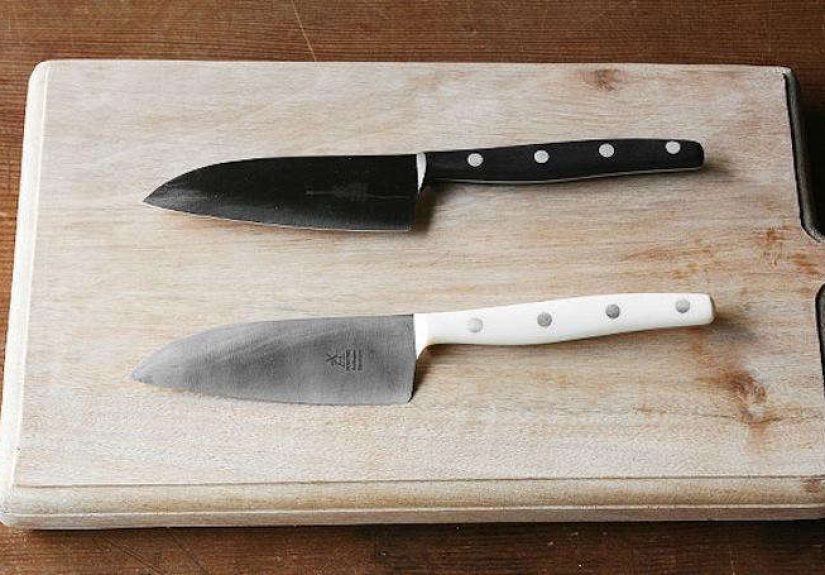
The K2 is often described as a compact knife that still behaves like a “real” chef’s knife on a cutting board.
Design coverage has highlighted the K2 for its blend of approachable size and high-performance grindan example of how the brand makes
practicality feel special instead of boring.
The “K” Series and Modern Hybrids
Knife culture loves cross-pollination, and Windmühlenmesser participates without losing its accent. Some of its modern lines are discussed as
being influenced by contemporary chef-knife profiles while retaining Solingen traditions in grinding and finish. The result: knives that feel
familiar to serious home cooks, but still distinctly “Solingen” in spirit.
Solingen Work Culture: The Kotten and the Specialist Mindset
Solingen’s blade ecosystem historically included small grinding workshopsoften referred to as Kottenwhere specialists sharpened and
finished blades. The city’s reputation wasn’t built by one factory doing everything; it grew from a network of crafts and roles:
forging, hardening, grinding, fitting, finishing.
In Windmühlenmesser’s own historical storytelling, you’ll find references to early sharpening work happening in specific Kotten and the way the
company’s production connected to the wider Solingen grinding tradition. It’s a reminder that “made in Solingen” is often less about one
dramatic artisan and more about a local culture that took blades personally.
If that sounds romantic, it kind of is. But it’s also practical: specialization tends to improve outcomes.
When your job is to grind blades all day, you get extremely good at grinding blades all day.
How “Cult” Happens: Performance, Personality, and a Little Bit of Myth
“Cult” in the knife world usually means three things: performance you can feel, design you recognize,
and a story that’s real enough to repeat.
- Performance you can feel: Thin grinds and thoughtful geometry create a cutting experience that stands out in everyday cooking.
- Design you recognize: A Buckels doesn’t look like every other knife. Neither does a compact “small chef” profile like the K2.
- A story worth telling: Solingen’s protected name, the brand’s long history, and the persistence of handwork add credibility.
The myth part is optional, but humans are humans. Give us a windmill logo and a century-plus of tradition and we will absolutely narrate our
dinner prep like we’re starring in a documentary.
Buying With Your Brain: What “Made in Solingen” Should Mean
A quick reality check: the “Solingen” designation is supposed to mean more than geography. It’s tied to defined requirements about production
within the Solingen industrial area and suitability/quality standards for the category of cutting tool.
So if you’re evaluating a Solingen knife, you’re not just looking for a word stamped on steelyou’re looking for clarity about the maker,
the origin, and the intended use. Reputable sellers and manufacturers tend to be transparent about these details.
Safety note: Knives are tools designed to cut. Treat them with respect, store them safely, and follow household and local rulesespecially around kids and teens.
Longevity: The Anti-Disposable Kitchen Tool
Part of Windmühlenmesser’s appeal is that it feels like a rebuttal to throwaway culture. A well-made knife can last for yearssometimes decades
not because it’s indestructible, but because it’s maintainable. Handles can be cared for, blades can be refreshed, and the tool
stays useful instead of becoming clutter.
That longevity is also emotional. When people talk about these knives, they often describe the way the blade “learns” their kitchen:
a patina that develops on carbon steel, a handle that becomes familiar in the hand, a favorite profile that becomes your default.
You don’t just own ityou start to rely on it.
The Solingen Knife Experience: of What It Feels Like to Join the “Windmill” Crowd
Ask someone why a Windmühlenmesser feels special and you’ll rarely get a single tidy answer. You’ll get a storyusually starting with an
underwhelming expectation. “It’s small,” they’ll say, or “It looks simple,” or the classic, “I thought it was just a cute German knife with a
windmill.” Then they’ll describe the first real prep session as if a curtain opened in their kitchen.
The experience tends to be sensory. A thin grind doesn’t announce itself with fireworks; it shows up as a lack of struggle.
A carrot that normally demands a bit of muscle suddenly feels like it’s cooperating. Herbs get sliced cleanly instead of bruised. Onion layers
separate neatly. You notice the sound firstmore whisper than crunchbecause less force is being used. And then you notice your own grip relax,
as if your hand is thinking, “Oh, we don’t have to wrestle dinner tonight?”
There’s also a very specific kind of satisfaction in a knife that looks almost plain until you use it. It’s the opposite of a showroom object.
It’s more like a vintage bicycle: not flashy, but tuned. The “cult” part isn’t about showing off; it’s about recognizing something.
Knife fans love to talk steel, but what they’re really chasing is the feeling of a tool that makes the task smoother.
Then comes the personality. Many Windmühlenmesser knivesespecially the classic shapeshave a little eccentric charm. The Buckels profile feels
like it wandered in from a German breakfast table and refused to leave. It spreads butter with surprising grace. It slices rolls without
shredding them. It makes you consider the radical possibility that a table knife can be genuinely pleasant to use. Suddenly you’re the person
who cares about table knives. Congratulations and apologies.
For carbon-steel fans, the “experience” includes the visual evolution. Over time, the blade can develop a patinasubtle darkening and color
shifts that signal use, not damage. Some people find this deeply satisfying, like a leather jacket breaking in. Others prefer stainless and
enjoy the same cutting feel with less visual drama. Either way, users often report that these knives nudge them toward more mindful habits:
wiping the blade, storing it properly, treating it like a valued tool instead of a utensil you toss into a sink full of mystery water.
And finally there’s the story you tell yourself: that you own something connected to Solingen’s “City of Blades” heritage, where the name is
protected and the craft has survived industrial shortcuts. It’s not magicit’s manufacturing culture plus design plus performance. But in a
kitchen, that combination can feel magical. Especially when dinner prep stops being a chore and starts feeling like flow.
Conclusion: A Cult Favorite for a Reason
Windmühlenmesser’s cult status isn’t an accident. It’s the product of Solingen’s blade culture, a long-running Robert Herder tradition, and a
commitment to thin, high-performance grinds that make everyday cooking feel smoother. Add distinctive shapes like the Buckels, compact stars like
the K2, and a place name that’s legally protected for a reasonand you get a maker that inspires real loyalty.
If you’re tired of kitchen gear that’s “fine” but never delightful, Solingen’s windmill knives offer a different promise:
not perfection, but character plus capability. And honestly, that’s a pretty great recipe.