Table of Contents >> Show >> Hide
- What “Customizable, Made-to-Order” Actually Means (and Why It Matters)
- Meet In Common With: Brooklyn Roots, Systems Thinking, and a Love of Collaboration
- Inside the Collection: Where Customization Gets Real
- How to Customize Lighting Without Creating a Franken-Fixture
- Room-by-Room Ideas for Customizable Lighting
- Buying (and Installing) Tips That Save You From Regret
- Conclusion: Lighting You Can Live With (Even When It’s Off)
- Real-Life Notes: of “Experience” With Customizable Lighting
There are two kinds of lighting decisions. The first is: “This looks cute.” The second is:
“Why does my kitchen island look like it’s being interrogated by a UFO?” If you’ve ever bought a pretty fixture
only to realize it’s either too dim, too harsh, too low, too high, too something… welcome. You’re not “bad at lighting.”
You’re just shopping in a world where most fixtures act like they were designed in a vacuumthen dropped into your home
like a surprise pop quiz.
That’s why the idea behind In Common With hits differently: customizable, made-to-order lighting that’s built more like a
system than a one-and-done object. Instead of forcing you to accept a single “designer’s choice” configuration, the brand’s
approach lets you tailor the details that actually matterscale, finish, light quality, and how the fixture behaves in real life.
The result is lighting that looks intentional, feels comfortable, and (bonus) won’t make your living room resemble a hospital hallway.
What “Customizable, Made-to-Order” Actually Means (and Why It Matters)
Customizable doesn’t have to mean complicated
In the lighting world, “custom” can be a code word for “prepare to email someone 37 times and learn the difference between satin and
brushed like you’re cramming for a metal finish final exam.” In Common With takes a calmer route: a systems-based design approach
where key components are designed to play well together. You’re not reinventing the chandelier from scratchyou’re choosing
from a thoughtfully engineered set of options that snap into a cohesive visual language.
Think of it like ordering a really good burger. You pick the bun, the patty, the cheese, the toppings. You’re still getting a burger
(not a confusing soup), but it’s your burger. In lighting terms, customization often lives in:
the fixture format (pendant, sconce, flush mount), finish and hardware details, shade material and shape, stem/cord length,
bulb type or integrated LED behavior, andmost importantlythe mood of the light.
Made-to-order is practical, not precious
“Made-to-order” isn’t just romantic craftsmanship talk. It can also be a practical way to avoid overproduction while building pieces
that suit real projectshomes, restaurants, hotels, studios, and the many spaces in between. In Common With was founded with the goal
of combining meticulous, made-to-order craft with scalable manufacturing, which is a fancy way of saying:
“Let’s make beautiful things efficiently, without turning every order into a bespoke nightmare.”
Meet In Common With: Brooklyn Roots, Systems Thinking, and a Love of Collaboration
In Common With is a Brooklyn-based lighting design studio founded by Felicia Hung and Nick Ozemba. Their origin story is the kind
designers love: school, shared taste, complementary skills, and the realization that lighting is one of the fastest ways to transform a room.
The studio leans hard into collaborationbetween materials, artisans, and creative partnersso the catalog feels cohesive but never flat.
Over time, that collaborative energy has extended beyond fixtures into community: the founders created Quarters, a concept store and
gathering space in New York City, styled like a residence and used for installations, events, and a more “come hang out with design” approach
to shopping. It’s part showroom, part social space, and part proof that lighting people are, in fact, fun at parties. (They control the dimmers.)
Inside the Collection: Where Customization Gets Real
The best way to understand customizable lighting is to see how it plays out in actual fixturespieces where the variables (finish, format,
scale, and light quality) genuinely change the experience of a space. Here are a few examplesboth early hits and newer evolutionsthat
show how the brand’s approach works in practice.
The Tipi Pendant: Simple shape, surprisingly flexible personality
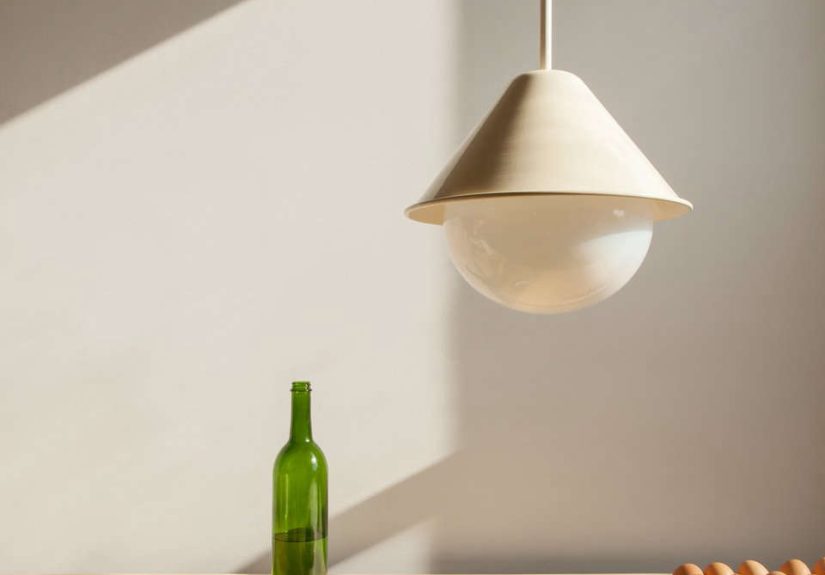
One of the early standouts in the brand’s debut era was the Tipi Pendant: a hand-spun metal shade available in multiple finishes and
offered as either a surface-mount fixture or a drop pendant. That’s not just a catalog noteit’s the difference between
“clean ceiling, minimal profile” and “statement pendant that frames the room.”
Even small customization pointsfinish choices, mount style, and bulb shapechange how the pendant reads. In a tight entryway, a
surface-mount version keeps things crisp and architectural. Over a breakfast nook, the drop pendant creates intimacy and focus.
Same family, different vibe. Like siblings who went to different colleges and now dress differently at holidays.
The Up Down Sconce: A customizable workhorse that still looks chic
If you want a masterclass in “small fixture, big impact,” look at the Up Down Sconce series. Built around a simple U-shaped form and
hand-assembled to order, it’s designed for adaptabilitymeaning it can work in hallways, beside beds, flanking a mirror,
or wherever your walls feel emotionally unsupported.
Practical details matter here too: damp rating (helpful in bathrooms), ADA compliance (helpful in tighter corridors), and warm-on-dim bulbs
that shift color temperature as you dimso the light feels cozy at night instead of weirdly blue and judgmental.
In other words: it’s customizable where it counts, not just where it photographs well.
Saga: Task lighting that moonlights as ambiance
Saga takes the idea of modularity and aims it at the way people actually live nowworking, hosting, cooking, creating, and trying to do all
of that without changing fixtures every time the mood shifts. In retailer specifications, the Saga Pendant shows up as a linear LED system
with multiple configurations (often listed as Solo/Duo/Trio), paired with dim-to-warm technology (commonly noted in the 1800K–3000K range)
so it can swing from “focused task light” to “soft evening glow.”
The point isn’t just that it’s LED. It’s that the light behaves like a human being with social skills. Bright when you need clarity,
warmer when you want comfort. For kitchens and workspaceswhere lighting needs can change by the hourthis kind of tunability is the difference
between a room that works and a room that merely exists.
Collaborations that expand the “system” without breaking it
In Common With’s world isn’t only about strict minimalism. Collaborations bring in new material languages while keeping the brand’s DNA intact:
considered proportions, material sensitivity, and lighting that feels sculptural even when it’s turned off.
The Terra collaboration with ceramicist Danny Kaplan is a great example: hand-thrown ceramics paired with clean hardware and forms
that hide the fussy stuff (like wiring and mounting) so the object reads as calm, functional sculpture. The collection has included a range of
fixture typespendants, surface mounts, sconces, and moreshowing how a collaboration can still behave like a flexible system across rooms.
On the glass side, the Flora collaboration with Sophie Lou Jacobsen demonstrates how playful, decorative shapes can still be
engineered for repeatable production. The work draws inspiration from Venetian glassmaking traditions and techniques like fazzoletto,
where rippled edges create that “handkerchief” movement. The result feels whimsical and artisanal, but still designed to live in real interiors,
not just in a gallery where nobody’s allowed to eat spaghetti.
How to Customize Lighting Without Creating a Franken-Fixture
Customization is powerful, but it’s also how people accidentally build a fixture that looks like it was assembled during a power outage.
Here’s a sanity-preserving way to approach it.
1) Decide what the light needs to do
Start with function, not vibes. Ask:
Is this ambient light (overall glow), task light (work surfaces, reading), or accent light (highlighting art, texture, corners)?
Many spaces need a layered mix. A single overhead fixture trying to do everything is how you get the UFO-interrogation kitchen.
2) Pick the light behavior (not just the shape)
The most overlooked customization choice is the quality of the light: color temperature, dimming style, and glare control.
“Warm dim” or “dim-to-warm” is especially helpful in rooms that shift from daytime productivity to nighttime relaxation.
If you only remember one thing: choose a fixture you can dim well, and your home will instantly feel more expensive.
3) Let the room tell you the scale
A fixture can be gorgeous and still wrong if it’s out of proportion. Use the room’s architecture to guide you:
ceiling height, table width, vanity size, bed placement, walkway clearance. Customizable systems shine because you can adjust drop lengths
and configurations instead of forcing a “close enough” fit.
4) Keep finishes cohesive (or intentionally contrasted)
Finishes are like seasoning. Enough makes everything better. Too much and you’re in chaos territory. If your home already has
a dominant metal (say, brushed nickel faucets), either match itor choose one contrasting metal and repeat it across a few touchpoints
so it feels intentional. Random mixed finishes can look “collected,” but they can also look like you lost a bet at the hardware store.
Room-by-Room Ideas for Customizable Lighting
Kitchen: The land of shifting needs
Kitchens need task light for prep, bright light for cleaning, and softer light for everything that happens after 8 p.m.
A modular or dim-to-warm linear pendant works beautifully over islands because it can cover a wider surface evenly,
while still dialing down to a warmer mood when the kitchen becomes the social center of the house.
Dining: One fixture, many moods
The dining room is where customizable lighting earns its keep. You want enough brightness for weeknight meals and enough softness for
long dinners where someone starts telling a story that begins with “So anyway, back in 2009…” A pendant with warm dimming or a chandelier
with shades that reduce glare keeps faces flattering and the vibe relaxed.
Bedroom: Calm, layered, and not overhead-only
If your bedroom relies solely on an overhead light, it’s time. Wall sconces beside the bed free up nightstand space and create a more
hotel-like feel. Customizable sconces are especially useful here because you can choose how far they project, how they dim,
and whether the light is more direct (reading) or more ambient (winding down).
Hallways and entries: Small fixtures, big architectural payoff
Corridors and entries are often narrow, which makes fixture depth and projection critical. ADA-compliant wall lights can keep pathways clear
while adding rhythm and warmth. This is where a customizable sconce series can be used repeatedly for continuitysame family, different rooms,
different configurations.
Bathrooms and covered outdoor areas: Don’t ignore ratings
Moisture changes everything. If a fixture is damp-rated, it’s better suited for bathrooms and covered outdoor spaces.
In those areas, pick lighting that avoids harsh glare on mirrors and lets you dim down for nighttime routines.
Nobody wants to brush their teeth under “stadium mode.”
Buying (and Installing) Tips That Save You From Regret
Measure like you mean it
For a dining pendant, a common rule of thumb is to hang the bottom of the fixture about 30–36 inches above the tabletop,
adjusting based on ceiling height and fixture scale. Over kitchen islands, similar clearances often applybut pay attention to sightlines
so you can still talk to people without feeling like you’re speaking through a chandelier obstacle course.
Dimmers are not optional accessories
If you’re investing in thoughtful lighting, add the right dimmer. “Universal dimmer” compatibility varies by LED drivers and bulb types,
so check what your fixture supports. Warm-dim tech is incredible, but only if it’s paired with a dimmer that lets it perform smoothly
instead of flickering like it’s auditioning for a haunted house.
Think in layers, not hero fixtures
One beautiful fixture can anchor a room, but it shouldn’t carry the entire lighting plan on its back like an exhausted pack mule.
Pair overhead fixtures with lamps, sconces, or accent lighting. Customizable collections make layering easier because you can keep a consistent
design language across different fixture types.
Conclusion: Lighting You Can Live With (Even When It’s Off)
In Common With’s “new collection of customizable lighting” idea is ultimately about realism: people live in their homes at different times of day,
doing different things, with different moodsand lighting should flex with that reality. A systems-based approach keeps the design cohesive.
Made-to-order production keeps the details intentional. Thoughtful dimming and material choices keep the experience comfortable.
The best lighting doesn’t just look good in photos; it makes your everyday life feel better. It softens the edges of a long day,
makes rooms more usable, and turns “We should really fix the lighting in here” into “Wait… why does this suddenly feel like a boutique hotel?”
That’s the win. And yes, you’re allowed to feel smug about it.
Real-Life Notes: of “Experience” With Customizable Lighting
Let’s talk about what tends to happen after customizable lighting gets installedbecause the real magic isn’t in the spec sheet,
it’s in the “ohhh” moments that show up in normal life. One common scenario: someone installs a dim-to-warm pendant over a kitchen island
and suddenly realizes their kitchen has been living in one emotional gear. Breakfast used to be “bright or nothing.” Now it can be
“bright while cooking” and “soft while lingering with coffee,” without changing fixtures or relying on a single sad under-cabinet strip
that makes everything look like a crime scene.
Another frequent win is bedside lighting. People often think they want a table lamp until they live with a well-placed sconce.
The nightstand gets its surface area back (hello, water glass that isn’t balancing on a novel), and the light becomes more directional and personal.
With a customizable sconce series, you can decide whether you want a sharper reading pool or a softer halo. The difference feels small until you’re
reading at night and realize you’re not blasting your partner with light like a lighthouse searching for ships.
Hallways are where the “system” approach quietly shows off. A repeated sconce familysame silhouette, slightly varied configurationscreates rhythm.
It’s subtle, but it makes a home feel designed rather than accidentally assembled. People describe this as the “why does this feel nicer?” effect.
You might not consciously notice the repetition, but your brain clocks it as order and calm. And calm, in 2026, is basically a luxury material.
Then there’s the unexpectedly emotional part: how lighting changes the way you use rooms. A dining area with a fixture that dims beautifully
becomes a place you sit longer. A living room with layered ambient light becomes a place you actually relax, not just scroll.
A bathroom with a soft, glare-controlled sconce becomes less “fluorescent panic chamber” and more “I can face the day without being roasted.”
Customizable lighting also tends to reduce buyer’s remorse because you’re not forced into a one-size-fits-all choice. If the room’s proportions
are weird (and most rooms are, in their own charming way), adjustable drop lengths and configuration options let the fixture land correctly.
That’s especially valuable in renovations, where the final ceiling height or furniture placement is often “final-ish” until it suddenly isn’t.
When the lighting can adapt, you don’t have to start overyou just fine-tune. It’s the difference between “we bought a pretty thing”
and “we solved a problem.”
In short: customizable lighting isn’t about endless options for the sake of options. It’s about getting the fundamentals right
the mood, the scale, the functionso the fixture feels like it belongs. When that happens, you stop thinking about your lighting all the time.
And that’s the greatest compliment lighting can get: it quietly makes your life better, then steps back and lets you live.