Table of Contents >> Show >> Hide
- What Is Halasana (Plow Pose), Exactly?
- The Big Benefits of Halasana
- 1) A full-length back-body stretch (without needing to be a contortionist)
- 2) Posture support through spinal awareness
- 3) A calm, grounded nervous-system shift
- 4) Core engagement that’s sneakily effective
- 5) Digestive support (the gentle “fold and breathe” effect)
- 6) Breath regulation and the “unclench your throat” lesson
- 7) A supportive pose for winding down and sleep routines
- 8) Traditional claims (thyroid, “energy,” and what to believe)
- Who Should Avoid or Modify Plow Pose?
- How to Do Halasana Safely (Step-by-Step)
- Beginner-Friendly Modifications (Because Your Neck Deserves Nice Things)
- Common Mistakes (and Easy Fixes)
- A Simple Mini-Sequence to Prepare for Plow Pose
- FAQ: The Questions People Whisper to Their Yoga Mat
- Conclusion: Harvest the Benefits, Skip the Ego
- Experiences & Real-World Feel: What Practicing Halasana Is Often Like ()
If yoga poses had job titles, Halasana (Plow Pose) would be “the quiet overachiever.”
It doesn’t show up to the party doing handstands in the kitchen, but it does deliver a deep back-body stretch,
a nervous-system downshift, and a surprisingly honest mirror for your habitslike whether you tend to force things when patience would work better.
Plow Pose is also one of those postures where “beneficial” and “not for everyone” can both be true at the same time.
Done with smart setup and respect for your neck, it can feel like hitting the reset button.
Done aggressively, it can feel like your cervical spine is filing a complaint with HR.
What Is Halasana (Plow Pose), Exactly?
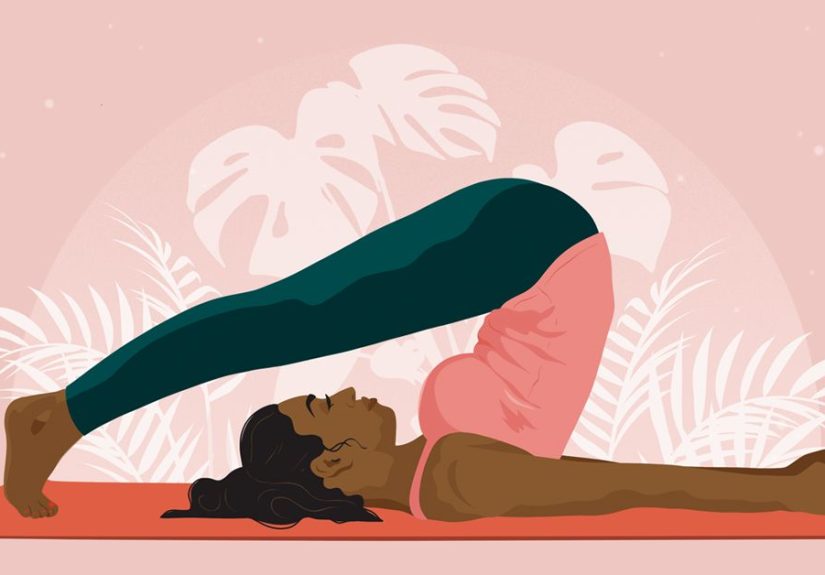
Halasana is a yoga inversion-ish posture (your hips go over your shoulders) where you roll onto your upper back and
bring your legs overhead until your toes land behind your head (or onto a prop if the floor is a bit too ambitious today).
The shape resembles a plowfitting, because it’s often described as a pose that “turns the soil,” making space for new growth.
On a purely practical level, it’s a potent posterior-chain stretch (think: spine, glutes, hamstrings, calves),
plus a shoulder-and-upper-back opener. On a mental level, it’s calming for many people because it flips your perspectiveliterally.
The Big Benefits of Halasana
1) A full-length back-body stretch (without needing to be a contortionist)
Halasana is famous for lengthening the spine and stretching the muscles along your back body.
Many practitioners notice relief from “desk posture” tightness: the neck and shoulders soften, the upper back feels less stuck,
and the hamstrings get a long, steady opening.
This matters for daily life because flexibility and mobility aren’t just for yoga photosthey support better movement mechanics,
which can reduce the odds of strains from everyday tasks (like lifting groceries or sprinting for a closing elevator).
2) Posture support through spinal awareness
Plow Pose asks you to stack, organize, and move segment by segmentespecially when you roll in and roll out slowly.
That controlled “one vertebra at a time” exit is basically posture training disguised as a yoga transition.
Over time, many people report feeling more aware of their alignment in standing and sitting postures.
3) A calm, grounded nervous-system shift
While the sensation can be intense at first, Halasana is often practiced near the end of a class because it can feel
quietinglike turning down the volume on a busy mind.
The shape encourages stillness, steady breathing, and a “curl inward” quality that supports relaxation for many bodies.
If you’ve ever finished Plow Pose and thought, “Oh wow, my brain stopped refreshing itself like a broken browser tab,”
that’s the general vibe.
4) Core engagement that’s sneakily effective
Getting into Halasana isn’t about flinging your legs overhead. It’s about controlled abdominal engagementlifting, stabilizing,
and moving with intention. When you enter and exit smoothly, you train deep core control that supports the spine.
It’s less “six-pack theatrics,” more “spinal support staff doing excellent work behind the scenes.”
5) Digestive support (the gentle “fold and breathe” effect)
In yoga traditionand in many modern explanationsHalasana is described as stimulating digestion through gentle abdominal compression.
People commonly practice it as part of routines aimed at relieving sluggishness or occasional constipation.
As always, digestion is personal: for some it feels soothing; for others it can feel like “maybe not right after a burrito.”
6) Breath regulation and the “unclench your throat” lesson
Plow Pose can teach you how to breathe steadily under mild constraint.
If you’re collapsing into your throat or jamming your chin, your breath will immediately let you know.
With proper setup (more on that soon), many people experience a smoother, calmer breathing rhythm
that carries into the rest of practice.
7) A supportive pose for winding down and sleep routines
Because Halasana is often calming, it’s frequently recommended as a late-practice posture that helps downshift
before restespecially when paired with longer exhales, gentle holds, and a slow exit.
Some practitioners include an easier version (like legs on a chair) in evening routines when they want the benefits
without the full intensity.
8) Traditional claims (thyroid, “energy,” and what to believe)
You’ll often hear that Halasana “stimulates the thyroid” because of the throat/chin position.
That’s a traditional yoga claim and a common teaching point. From a modern evidence standpoint,
it’s best to treat this as a tradition-based explanation rather than a guaranteed medical outcome.
The safe takeaway: the pose strongly affects the neck and throat regionso prioritize alignment and comfort,
not hormone promises.
Who Should Avoid or Modify Plow Pose?
Halasana is powerful. That’s why it deserves your respect. You should skip itor only do a modified version under qualified guidanceif any of the following apply:
- Neck, shoulder, or spinal injuries (including disc issues) or persistent neck/back pain
- Glaucoma or elevated eye pressure (inversions and head-below-heart positions can raise intraocular pressure)
- Uncontrolled high blood pressure or certain heart conditions
- Pregnancy (especially later stages) unless your clinician and a prenatal-trained instructor explicitly approve modifications
- Severe osteoporosis or any condition where spinal flexion is high-risk
- Hernias or conditions aggravated by abdominal pressure
Also: if you feel tingling, numbness, sharp pain, or a “pinched” sensationespecially in the neckback out immediately and choose a safer alternative.
Yoga is not a “push through it” sport. It’s more of a “listen closely and adjust” practice.
Important safety note: never turn your head in Plow Pose. Rotating the neck under load is a classic way to turn “self-care” into “appointment with a specialist.”
How to Do Halasana Safely (Step-by-Step)
The safest Plow Pose is usually the one done with props. A folded blanket under the shoulders is not “cheating.”
It’s “creating space for your neck to be a neck.”
Setup: the neck-saving secret
-
Place 2–3 folded blankets on your mat so your shoulders will rest on the blankets and your head rests on the mat.
This helps keep the front of the neck long and reduces compression. -
Lie back with shoulders near the blanket edge and the back of your head on the floor.
Keep a little space behind the neckno “neck pancake” situations.
Entering the pose
- Lie on your back with arms alongside you, palms down.
- Inhale, lift legs toward the ceiling to about 90 degrees (or as far as control allows).
-
Exhale, use your core to roll hips up and bring legs overhead.
Move slowly, like you’re trying not to wake up a sleeping cat on your abdomen. -
If your toes reach the floor behind you, great. If not, place them on a chair, block, or the wall.
The goal is steadiness, not floor contact at all costs. - Keep arms pressing down. If it’s comfortable, interlace fingers and extend arms, but only if your shoulders allow it without strain.
Holding and breathing
- Keep the breath steadyno breath-holding heroics.
- Feel weight in the shoulders/upper arms, not jammed into the neck.
- Stay for 3–8 breaths to start. Longer holds are optional, not mandatory.
Exiting (the part most people rushand shouldn’t)
- Unlace hands if clasped and bring arms back down.
-
Slowly roll down one vertebra at a time.
If you “thud,” you went too fasttry again with less range or more support next time. - Pause and let the spine re-settle before moving into the next posture.
Beginner-Friendly Modifications (Because Your Neck Deserves Nice Things)
Half Plow (Ardha Halasana variation)
Keep the legs partway overhead without stacking hips directly over shoulders.
This reduces pressure and can be a smart stepping stone.
Chair Plow
Place a sturdy chair behind your head and rest shins or thighs on the seat.
You still get the back-body opening and calming effect, with way less strain.
Wall-supported version
Practice with feet against a wall behind you. It offers feedback and prevents overreaching.
Knees bent (the “today’s hamstrings are not signing up” option)
Bending knees can reduce intensity. You can keep toes off the floor and rest knees toward the forehead
if that feels safer and more stable.
Common Mistakes (and Easy Fixes)
-
Mistake: Forcing toes to the floor.
Fix: Use a chair/block/wall. Flexibility is earned, not demanded. -
Mistake: Weight dumping into the neck.
Fix: Add blankets under shoulders, press arms down, broaden upper back, and reduce range. -
Mistake: Turning the head to look around.
Fix: Don’t. Keep gaze steady. If you need to scratch your nose, exit the pose first like a responsible adult. -
Mistake: Holding the breath.
Fix: Shorter hold, more props, and slower entry. Your breath is the safety alarm.
A Simple Mini-Sequence to Prepare for Plow Pose
Halasana usually goes best after you’ve warmed up the spine, hamstrings, and shoulders. Here’s a practical flow:
- Gentle supine knee-to-chest (1 minute)
- Supine hamstring stretch with a strap (each side 45–60 seconds)
- Bridge Pose or supported Bridge (5–8 breaths)
- Happy Baby (5–8 breaths)
- Halasana (3–8 breaths, supported as needed)
- Reclined twist (each side 5–8 breaths)
- Savasana (2–5 minutes)
If you’re practicing for stress relief or sleep, keep everything slow and keep the transitions softer than your favorite hoodie.
FAQ: The Questions People Whisper to Their Yoga Mat
Is Plow Pose good for back pain?
It can feel helpful because it stretches back muscles and hamstrings, which often contribute to tightness.
But if you have acute back pain, disc issues, osteoporosis, or pain that worsens with spinal flexion, it may be inappropriate.
Think “supportive stretch,” not “medical cure.” When in doubt, choose a gentler substitute and consult a qualified clinician.
How long should I hold Halasana?
Start with a short hold3 to 8 breaths is plenty. You can build gradually if the pose feels stable, breath is smooth,
and there’s no strain in the neck or low back. Quality beats duration every time.
Does it really “stimulate the thyroid”?
That’s a traditional teaching and a common way yoga describes the throat-area effect of the posture.
It’s better to treat that claim as a philosophical framework rather than a guaranteed physiological outcome.
What’s certain: the pose meaningfully affects the neck area, so safe alignment matters.
Can beginners do Plow Pose?
Many beginners can explore supported versions (like feet on a chair or wall) safely,
especially if they already have decent hamstring mobility and good core control.
The full expressionfeet flat on the flooroften takes time, and it’s not a required milestone.
Conclusion: Harvest the Benefits, Skip the Ego
Halasana is a little like gardening: you don’t get strong plants by yanking them upward.
You create the conditionswarmth, support, patienceand growth happens naturally.
Practice Plow Pose with props, progress gradually, and treat your neck like the VIP it is.
If you do, you’ll likely reap the best of what Halasana offers: a longer back body, a calmer mind, and a stronger relationship with
the art of not forcing it.
Experiences & Real-World Feel: What Practicing Halasana Is Often Like ()
People’s first experiences with Halasana tend to fall into one of three categories: “This is surprisingly soothing,”
“I feel like a folding chair,” or “Why is my hamstring auditioning for a steel cable?” All three are normal.
In classes, teachers often introduce Plow Pose near the end because it changes the internal tone of the room: chatter drops,
breaths deepen, and even the fidgety folks get quiet for a moment. The pose has that effect because it’s immersiveyou can’t
scroll your mental feed as easily when your legs are overhead and your attention is on your breath.
A common early sensation is a strong stretch running from the calves up through the hamstrings into the back.
Some students describe it as “a line of tension being politely unzipped.” Others feel a more blunt message:
“Hello, posterior chain. We need to talk.” In either case, the most useful learning is that the stretch changes dramatically
when you stop trying to reach the floor. The moment someone uses a chair or blocks, their face softens, breathing improves,
and the pose becomes something they can actually receive instead of merely endure.
Another experience many people report is a shift in the shoulders and upper back. When the shoulders are tight,
Plow Pose can feel cramped; when they’re supported and broadened, the chest feels more open and the posture becomes steadier.
That’s why props and careful setup can feel like a “cheat code.” Students often realize that the pose isn’t about flexibility alone
it’s about organization: where your weight is, how your shoulder blades behave, and whether your neck has space.
Emotionally, Halasana can be oddly revealing. Some people feel calm immediately; others feel a flash of claustrophobia
or restlessness. Teachers often normalize this: being in an inverted, folded shape can bring up sensations that don’t appear
in more upright poses. The practice becomes learning how to stay steadysoftening the jaw, letting the eyes relax, breathing
out longer than you breathe in. For many, that’s the real benefit: training the ability to downshift on purpose.
Practitioners who keep Halasana in their routine often talk about “the after-feel.” When they roll out slowly and pause,
the spine can feel longer, the back muscles less grippy, and the mind quieterlike a noisy room just got carpeted.
People who pair it with a twist or a short Savasana often describe a sense of closure, as if the body has finished its sentence.
And that’s the best way to think of Plow Pose: not a stunt, not a requirement, but a toolone that works beautifully when used
with patience, props, and the humility to do the version that’s right for today.