Table of Contents >> Show >> Hide
- Why squids are masters of survival (and why you’re not trying to “survive” your own life)
- What “being like squid” looks like in real life
- Why it’s so easy to become a “squid”
- Don’t be a squid: practical ways to stop people-pleasing without becoming a jerk
- Specific examples: how to not be a squid at work, at home, and with friends
- The irony: squids are honest about what they are
- Conclusion: choose clarity over camouflage
- Experiences: on the day I realized I was “inking” my own life
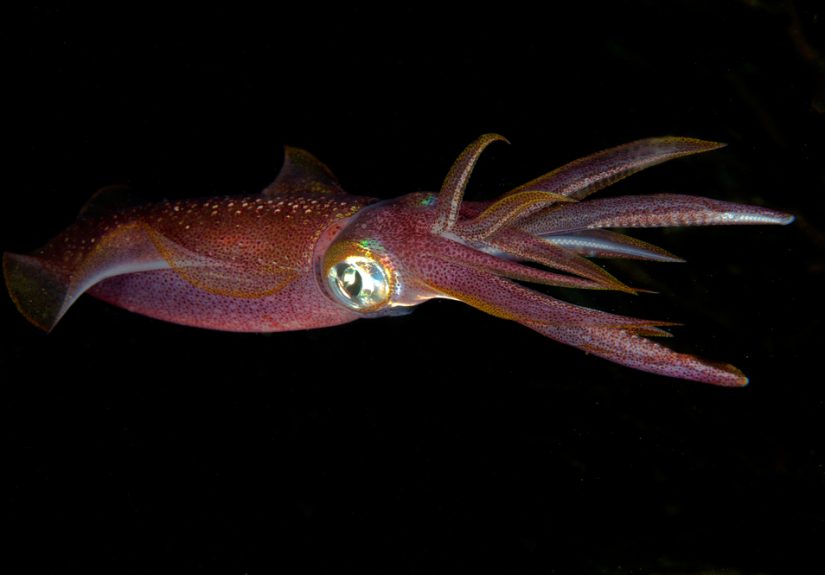
Squid are incredible. They can vanish in plain sight, repaint themselves in a heartbeat, and leave a dramatic ink cloud like they’re exiting a bad meeting with a fog machine. They move with jet propulsion. They’re basically the ocean’s special-effects department.
And that’s exactly why “being like squid” is such a tempting life strategy: blend in, dodge conflict, squirt metaphorical ink when you’re uncomfortable, and rocket out of the room before anyone asks a follow-up question.
The problem? What keeps a squid alive in the sea can make a human miserable on land. Squids survive by avoiding attention. People thrive by earning trust, building relationships, and having a clear point of view. In other words: squid energy is great for escaping predators… and terrible for living your actual life.
Why squids are masters of survival (and why you’re not trying to “survive” your own life)
Camouflage: the art of disappearing
Squid and their cephalopod relatives can rapidly change color and pattern using specialized skin structures (like chromatophores) that expand and contract. In the ocean, that’s survival: hide from predators, confuse prey, communicate “back off” without filing paperwork.
In human terms, “camouflage” looks like constant self-editing. You’re agreeable with everyone. You mirror opinions like it’s a sport. You laugh at jokes you don’t like. You become a walking “Whatever you want!” menu.
Camouflage feels safe because it reduces friction in the moment. But long-term, it creates a quiet crisis: nobody knows what you actually think, including you.
Ink: the mess-free escape plan
When threatened, squid can release ink to distract predators and create a window to escape. It’s not petty. It’s not passive-aggressive. It’s a legitimate defense mechanism when something bigger and toothier wants to make you lunch.
Human “ink,” however, is usually emotional fog. It’s the vague response. The sudden topic change. The “I’m fine” delivered like a thunderstorm. It’s not communicationit’s concealment.
Ink works for squid because the goal is escape. But if you keep “inking” in relationships, the people who care about you don’t get claritythey get confusion. And confusion doesn’t build trust.
Jet propulsion: fast movement, not always wise direction
Squid use a powerful, efficient way of movingjet propulsionshooting water to push themselves away from danger. It’s quick, effective, and not especially interested in your five-year plan.
Human jet propulsion is the fast yes, the panicked pivot, the instant “Sure!” before you’ve checked your calendar or your sanity. It’s the reflex to flee discomfort instead of facing it.
Speed is not the same as progress. You can move quickly and still end up exactly where you didn’t want to be: overwhelmed, resentful, and wondering how your life became a series of “sure, I guess.”
What “being like squid” looks like in real life
Let’s name the behavior. The “human squid” isn’t a bad person. They’re often kind, helpful, and widely considered “so easy to work with.” Their problem is that they’re easy to work with in the way a doormat is easy to use.
1) You blend in so hard you forget your own shape
You change your preferences based on the room. You don’t order what you want; you order what seems least complicated. You don’t share the idea you believe in; you share the idea that won’t get side-eyed.
Over time, you become “low maintenance,” which sounds flattering until you realize it often means “not expressing needs.”
2) You avoid conflict like it’s radioactive
You say yes to avoid awkwardness. You accept extra work to avoid disappointing someone. You tolerate behavior you don’t like because speaking up feels scarier than staying uncomfortable.
Many people-pleasers give and give to the point of their own detriment, which can build stress, frustration, and resentment. That resentment doesn’t vanish; it just goes underground and starts building a little subway system.
3) You “ink” instead of speaking plainly
Instead of saying, “I can’t take that on,” you say, “We’ll see,” then hope the request disappears. Instead of addressing an issue directly, you withdraw, get short, or act “busy” as a substitute for boundaries.
Ink is not honesty. Ink is avoidance wearing a trench coat.
4) You sprint away from your own priorities
You fill your week with other people’s emergencies. You volunteer for things you don’t care about. Your goals sit in the corner like a forgotten houseplant, slowly losing the will to live.
Why it’s so easy to become a “squid”
If this is you, it’s not because you’re weak or “too nice.” It’s because the strategy worksat least short-term.
- It earns quick approval. People like people who make things easy.
- It reduces immediate anxiety. Saying yes ends the tension fast.
- It avoids the discomfort of being misunderstood. Clear boundaries can trigger pushback.
- It can be learned early. Some people grow up believing harmony is their responsibility.
But here’s the trade: you get short-term peace at the price of long-term self-respect. And self-respect is not optional if you want a life that feels like yours.
Don’t be a squid: practical ways to stop people-pleasing without becoming a jerk
You don’t need to become harsh. You don’t need to start answering every request with “Absolutely not, peasant.” You just need to become clear.
Step 1: Replace camouflage with a “default self”
Squids change patterns instantly because their survival depends on it. Your survival does not require you to shapeshift at brunch.
Build a default version of you that you can bring into most rooms:
- Three values you won’t trade (e.g., honesty, health, family time, creative work).
- Two non-negotiable boundaries (e.g., no work after 7 p.m., no last-minute favors that require driving across town).
- One priority for the next 30 days (something you’ll protect with actual calendar space).
When you know your defaults, you don’t need camouflage. You have a spine-plan.
Step 2: Learn assertivenessbecause it’s a stress skill
Assertiveness is not aggression. It’s the ability to express your needs and point of view while respecting others. It can reduce stress, improve communication, and help you stand up for yourself without lighting anything on fire.
Try these simple assertive structures:
- The clear no: “I can’t do that.” (Full sentence. No apology marathon.)
- The no + reason (brief): “I’m at capacity this week.”
- The no + alternative: “I can’t help today, but I can review it Friday.”
- The boundary statement: “I don’t take calls after 8 p.m.”
- The pause: “Let me check my schedule and get back to you.”
Step 3: Stop “inking” and start naming
If your instinct is to get vague when you’re uncomfortable, practice naming what’s happening in plain language. This is the opposite of squid behaviorand it’s powerful.
Examples:
- Instead of: “We’ll see.” → Say: “I can’t commit to that.”
- Instead of: “I’m fine.” → Say: “I’m overwhelmed, and I need a quiet night.”
- Instead of: disappearing → Say: “I need time to think before I respond.”
Naming is respectful. It gives people something real to work with. Ink gives them a mystery novel.
Step 4: Use “tiny nos” to train your nervous system
If saying no feels terrifying, start small. Your brain learns safety through repetition, not speeches.
- Decline a low-stakes invite you don’t want.
- Tell a friend, “I can’t talk right now, but I can tomorrow.”
- Send an email that says, “I can’t take on additional tasks this week.”
Each tiny no is a vote for your time and energy. And your time and energy are not community property.
Step 5: Expect pushbackand don’t treat it as a disaster
When you stop being “easy,” some people will notice. That doesn’t mean you’re doing it wrong. It often means the old system benefited them.
A boundary is not a negotiation. It’s information. If someone reacts badly to reasonable limits, that’s useful data, not a reason to surrender.
Specific examples: how to not be a squid at work, at home, and with friends
At work: the “extra task” trap
Scenario: A coworker asks you to “quickly” handle something that’s not actually quick.
Squid response: “Sure!” (Then you ink-cloud your evening and jet-propel into burnout.)
Better response:
- “I can’t take that on today. What’s the deadline?”
- “I’m at capacity. I can help you prioritize what to do first.”
- “If this is urgent, which current task should I deprioritize?”
Notice the theme: clarity plus boundaries. You’re not refusing the person; you’re managing the workload like an adult with limited hours in the space-time continuum.
At home: the default helper role
Scenario: You’re always the one who remembers birthdays, plans meals, solves problems, and absorbs chaos like a sponge with a driver’s license.
Squid response: silently do it all, then ink-cloud resentment when nobody notices.
Better response:
- “I need help with this. Let’s divide it up.”
- “I’m not available for that tonight.”
- “I can do X, but I’m not doing Y.”
With friends: the “I’m chill” illusion
Scenario: Your group picks plans you don’t like, and you go along because you don’t want to be difficult.
Squid response: “Whatever works!” (Translation: “I’m disappearing.”)
Better response:
- “I’m not up for that, but I’d love to meet for coffee instead.”
- “I can join for the first hour, then I’m heading out.”
- “I’m trying to save money this monthcan we do something low-cost?”
The irony: squids are honest about what they are
A squid isn’t pretending to be a crab. It’s not apologizing for having tentacles. It doesn’t host a meeting to explain why it inks. It responds to reality with the tools it has.
The human version of squid behavior is what happens when you don’t believe you’re allowed to have toolsneeds, boundaries, preferences, a voice.
So don’t “be a squid” doesn’t mean “stop being adaptable.” It means stop disappearing. Stop treating your personality like a costume you rent based on who’s in the room. Stop confusing peacekeeping with peace.
Conclusion: choose clarity over camouflage
Being like squid is easy because it’s reactive. It’s fast. It’s the path of least resistance: blend in, avoid conflict, and escape discomfort.
But you’re not built for a life of constant escape. You’re built for connection, meaning, and decisions that reflect what you actually value. Squid strategies keep you safe in the short termand stuck in the long term.
Trade camouflage for clarity. Trade ink for honest words. Trade jet-propulsion panic for deliberate choices. You don’t have to be harsh. You just have to be real.
Experiences: on the day I realized I was “inking” my own life
The first time I noticed my inner squid wasn’t in the oceanit was in my inbox.
A coworker messaged me with the classic opener: “Quick question.” This phrase is never followed by a question that is quick. It’s followed by a favor that grows legs, puts on shoes, and moves into your weekend.
My reflex was immediate: “Sure!” I didn’t check my workload. I didn’t check my calendar. I didn’t check my pulse. I just did what human squids docamouflage as “easygoing,” then jet-propel straight into overtime.
That night, I stayed up late finishing the “quick” task, and something strange happened: I wasn’t just tired. I was irritated in a way that felt… theatrical. Like my emotions were wearing a cape. I thought, “Why am I so mad? They just asked.”
Then it hit me: I wasn’t mad they asked. I was mad I said yes without thinking. I had inked the situationmade it foggy with politenessso I didn’t have to face the tiny discomfort of a boundary. And the price of avoiding that tiny discomfort was paying for it later with a huge, exhausting mood.
Once I saw it, I couldn’t unsee it. I did it everywhere. If a friend picked a restaurant I didn’t like, I’d say, “Love it!” (Camouflage.) If a family member pushed a plan on me, I’d say, “We’ll see.” (Ink.) If someone asked for help at the worst possible time, I’d say yes, then complain privately to myself like a dramatic narrator in a documentary titled The Tragedy of My Own Choices.
The turning point wasn’t a grand speech. It was a tiny script.
The next time someone said, “Quick question,” I replied: “I can answer tomorrowtoday is packed.” That was it. No lecture. No apology trilogy. Just a boundary. And here’s what surprised me: the world didn’t end. There was no angry mob outside my house holding pitchforks and performance reviews. The person said, “No worries.”
I realized I had been acting like discomfort was danger. But discomfort is just a sensation. It’s a momentary “yikes” in your chest that passesespecially when you stop feeding it with frantic yeses.
Over time, I practiced “tiny nos.” I declined things I didn’t want. I asked for time to decide. I started saying what I meant the first time, instead of hiding behind haze. And the funny part? I didn’t become mean. I became clearer. I became calmer. People didn’t trust me lessthey trusted me more, because my yes actually meant yes.
Squids are magnificent, but I’m not trying to live my life like I’m constantly evading a shark. I’m trying to live like I belong in my own choices. And that starts with refusing to disappear.