Table of Contents >> Show >> Hide
If you’ve ever tried to flip a pancake with a dinner fork or carve a turkey with a steak knife, you already know: the right cooking tools are not “nice to have,” they’re the difference between cooking and chaos. A well-chosen spatula or skillet won’t magically turn you into a Food Network star, but it will make dinner faster, safer, and a lot more fun.
Professional test kitchens spend years putting kitchen gear through its paces, and the pattern is clear: you don’t need every gadget on the infomercial. You need a small, smart toolkit of essentials, plus a few specialty pieces that match the way you actually cook. Think of this guide as your friendly shortcut to that pro-level setupminus the culinary school tuition.
Below, we’ll walk through the essential cooking tools, how to choose them, how to use them, and how to keep them in good shape. By the end, you’ll know exactly what to buy, what to skip, and how to get more mileage out of the tools you already own.
Build Your Essential Cooking Toolkit
Most U.S. cooking schools, meal-planning sites, and equipment testers agree on a core list of kitchen essentials: a good chef’s knife, reliable cutting board, solid cookware, a few baking basics, and accurate measuring tools. With that foundation, you can cook almost anything from weeknight pasta to weekend roast chicken.
Your Core Prep Tools
Start with the tools you’ll touch every single day:
- Chef’s knife: Your primary cutting tool for slicing vegetables, mincing herbs, and portioning meat. Choose an 8- or 10-inch knife that feels balanced in your hand.
- Paring knife: Great for small, detailed tasks like peeling apples, hulling strawberries, or deveining shrimp.
- Serrated knife: Essential for crusty bread, tomatoes, and anything with a tough exterior and soft interior.
- Cutting boards: Have at least twoone for raw proteins and one for fruits, vegetables, and bread. Plastic boards are easy to sanitize; wood is gentler on knife edges.
- Measuring cups and spoons: Dry and liquid measuring sets keep your recipes consistent and your baking from turning into science experiments gone wrong.
- Mixing bowls: A nested set of lightweight metal or glass bowls works for whisking sauces, tossing salads, and marinating meat.
- Colander: For draining pasta, rinsing beans, and washing produce.
- Heat-safe spatulas and tongs: Silicone spatulas are ideal for scraping bowls and cooking in nonstick pans; locking tongs act like an extra pair of heat-proof hands.
If this list feels long, remember: these are multitaskers. You’ll use them for dozens of recipes, not just that one viral dish you make exactly once.
Knives: The Non-Negotiable Upgrade
A sharp, well-made knife is the ultimate cooking tool upgrade. Culinary schools and knife educators emphasize that a chef’s knife does 80–90% of your cutting tasks, from chopping onions to carving roasted vegetables. A curved blade lets you rock it back and forth for fast, efficient mincing.
Here’s how to get more from your knives:
- Buy fewer, better knives: A chef’s knife, paring knife, and serrated bread knife are enough for most home cooks.
- Keep them sharp: Use a honing steel before or after cooking to realign the edge, and have the knife professionally sharpened a few times a year depending on use.
- Use the right board: Avoid glass or marble boardsthose are basically knife-dulling devices disguised as décor. Stick with wood or plastic.
- Store safely: Use a magnetic strip, in-drawer organizer, or knife block to protect the blades (and your fingers).
A good knife doesn’t just cut better; it’s actually safer. You apply less force, have more control, and are less likely to slip and nick yourself.
Pots, Pans, and Picking the Right Cookware
Walk through any cookware aisle and it’s easy to get overwhelmed. Stainless steel! Nonstick! Cast iron! Ceramic! Copper! The good news: you don’t need them all. You just need a small lineup that plays to each material’s strengths.
Stainless Steel vs. Nonstick vs. Cast Iron
Stainless steel pans are the workhorses of restaurant kitchens. They can handle high heat, go from stove to oven, and develop beautiful fondthe browned bits that become pan sauces. They shine for searing meat, sautéing vegetables, and boiling pasta. With proper preheating and enough oil, they can behave almost nonstick, but they’re not ideal for delicate eggs or fish.
Nonstick skillets are best for foods that love to stick: eggs, pancakes, delicate fish, or cheesy quesadillas. Test kitchens consistently recommend lightweight nonstick pans with heat-resistant handles and a high-quality coating that releases food easily and heats evenly. These pans are not heirlooms; even the best coatings wear out over time, so think of them as tools you’ll replace every few years rather than forever pans.
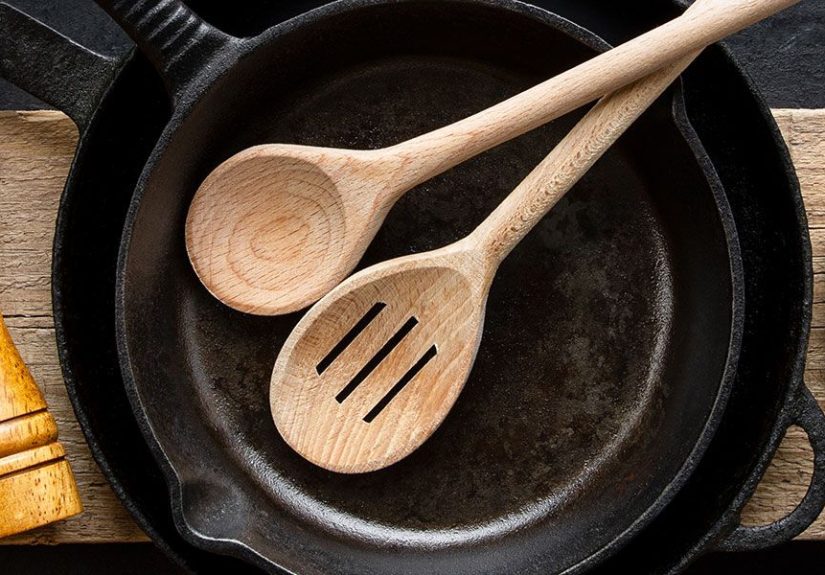
Cast iron is the heavyweight champ of versatility. It holds heat like a champ, making it perfect for searing steaks, baking cornbread, frying chicken, or making deep-dish pizza. Modern cast iron often comes pre-seasoned, so you can wash, dry, add oil, and start cooking right away. Regular use actually improves the seasoning, creating a slicker, more nonstick surface over time.
So what do you actually need? For most home cooks, a smart starter lineup looks like this:
- 10–12 inch stainless steel skillet
- 10-inch nonstick skillet for eggs and quick sautés
- 10–12 inch cast iron skillet
- 3–4 quart saucepan for grains, sauces, and soups
- Large stockpot for pasta, stocks, and big-batch cooking
How to Season and Care for Cast Iron
Cast iron has a reputation for being fussy, but once you understand a few rules, it’s straightforward:
- Clean gently: After cooking, while the pan is still warm, wipe out excess grease and food bits. Use hot water and a scrub brush or sponge. A little mild soap is okay on well-seasoned pans.
- Dry immediately: Water is cast iron’s enemy. Dry the pan thoroughly with a towel and, if needed, set it over low heat for a few minutes to evaporate remaining moisture.
- Oil lightly: Rub a thin layer of neutral oil (like vegetable or canola) over the surface while it’s still warm, then wipe away the excess. This preserves and builds the seasoning.
- Re-season when needed: If food starts sticking or the surface looks dull, re-season in the oven: scrub, dry, coat thinly with oil, then bake upside down at high heat for about an hour.
One extra tip: avoid simmering very acidic foods like long-cooked tomato sauces or wine-heavy stews in your cast iron for hours, especially in newer pans. Acid can strip seasoning and leave metallic flavors. Save those for enamel-coated Dutch ovens or stainless steel.
Baking Tools Without the Clutter
Baking can make it seem like you need an entire aisle’s worth of tools, but professional bakers and pastry chefs usually lean on a tight set of essentials that do most of the work.
Here’s a smart, clutter-free baking toolkit:
- Half-sheet pans: Sturdy rimmed baking sheets for cookies, roasting vegetables, toasting nuts, and sheet-pan dinners.
- Digital scale: Measuring by weight removes a lot of guesswork. Many U.S. test kitchens consider it the single best upgrade you can make for baking consistency.
- Mixing bowls: Again, a nested set in metal or glass works beautifully for batters and doughs.
- Silicone spatulas: Flexible enough to scrape batter from bowls and strong enough for folding and stirring.
- Wire cooling racks: Crucial for letting cakes, cookies, and breads cool evenly so they don’t steam and get soggy. Multi-tier racks and stackable designs are especially helpful in small kitchens.
- Whisk and hand mixer or stand mixer: A balloon whisk is essential; electric mixers help with whipped cream, meringues, and heavy doughs.
- Sifter or fine-mesh sieve: Aerates flour and cocoa and removes lumps, which can be the difference between a tender cake and a dense one.
If you bake bread often, extra tools like a bench scraper, dough scraper, proofing baskets, and specialty loaf pans make the process easier and more consistent. But you can start with the basics and layer in more as your skills grow.
Smart Habits That Make Your Tools Last Longer
Buying the right tools is half the battle; the other half is not destroying them in the sink.
Take Care of Nonstick the Right Way
Most nonstick pans die young because of three habits: cooking on too high heat, using metal utensils, and putting them in the dishwasher. To extend the life of your nonstick cookware:
- Keep heat at medium or medium-high; nonstick coatings aren’t designed for screaming-hot sears.
- Use wood, silicone, or plastic utensils instead of metal.
- Wash by hand with a soft sponge; avoid abrasive cleaners.
- Skip aerosol cooking sprays, which can build up and get stickyuse a small amount of regular oil or butter instead.
When the coating is visibly scratched or food begins to stick even with proper use, it’s time to replace the pan. Think of a nonstick skillet like a printer cartridge: incredibly useful, but not immortal.
Know Which Tools Are “Consumables”
Some tools are naturally long-lived (cast iron, stainless steel, quality knives), while others are essentially consumables. A great example is a fine-toothed zester or microplane. Over time, its tiny teeth dull and can’t be sharpened like a knife blade. Professional chefs recommend replacing these periodically so you’re not endlessly sawing at lemons and wondering why nothing smells like citrus.
The same goes for cheap sheet pans, silicone baking mats, and nonstick baking tins that get warped, stained, or scratched. Retiring a $15 pan that no longer performs is often cheaper than salvaging ruined cookies or overcooked dinners.
Store Smart, Not Just Pretty
Instagram pan racks are fun, but storage is really about protecting your tools:
- Stack carefully: Slip felt or silicone pan protectors between nonstick or enamel-coated pans to prevent scratches.
- Hang what you can: Hanging sturdier tools like cast iron, stainless skillets, and strainers keeps them dry and accessible.
- Give knives their own space: Avoid tossing them into a drawer; that dulls the edge and increases the risk of cuts.
Good storage doesn’t need to be fancy; it just needs to be deliberate.
Common Mistakes People Make with Cooking Tools
Even experienced cooks fall into a few tool-related traps. Here are some to watch forand easy fixes.
Using the Wrong Pan for the Job
If your chicken won’t brown or your fish always sticks, you might be using the wrong pan. Crowding food in a small skillet traps steam and prevents browning. Using nonstick for high-heat searing can damage the coating. Cooking delicate fish or eggs in an under-seasoned cast iron pan almost guarantees sticking and frustration.
Match the tool to the task: stainless or cast iron for searing, nonstick for sticky or delicate foods, and larger pans when you need room for browning.
Ignoring Heat Control
Many people crank burners to high and leave them there, which can warp pans, scorch food, and shorten the life of coatings. Instead, preheat over medium heat, give the pan time to warm up, and adjust as you cook. Your tools and your dinner will both last longer.
Letting Tools “Live” in the Sink
We’ve all been there: the pan “soaking” in the sink for three days. Prolonged soaking is rough on wooden handles, carbon steel, and cast iron. Wash and dry important tools soon after cooking, especially anything prone to rust. Future-you will be grateful.
Real-Life Cooking Tool Lessons: Experience in the Kitchen
Gear talk is helpful, but real learning happens in the middle of weeknight chaos, when you’re trying to cook, referee homework, and not burn the garlic. Here are some practical, experience-based lessons about cooking tools that only show up once you’ve actually lived with them.
1. One great knife is better than a whole block of strangers. Many home cooks receive big knife blocks as gifts and end up using only one or two. When you invest in a single, comfortable chef’s knife and learn to use it well, prep gets faster and less stressful. You’ll stop searching for the “right” knife because it’s always the same one. Over time, you’ll naturally learn how hard you can push, how finely you like to chop, and how to move through a pile of onions like it’s no big deal.
2. A few “favorite” tools become your personal shortcut system. Every experienced cook has a small rotation that does most of the daily heavy lifting: a certain spatula that flips eggs perfectly, a skillet that heats evenly on your stove, a heavy wooden spoon that stirs everything from tomato sauce to cookie dough. Once you notice which tools you reach for on autopilot, it becomes easier to declutter. If a gadget hasn’t earned a spot in that rotation after a few months, it’s probably not essential for your style of cooking.
3. Cooking tools teach you about heat and timing. After enough dinners, you’ll know that your cast iron skillet needs a few extra minutes to preheat, while your nonstick pan gets hot fast and needs a gentler flame. You’ll feel the difference between simmer and boil by the sound of bubbles in a stockpot. You’ll know exactly how much oil to swirl around a stainless pan before adding chicken thighs so they don’t weld themselves to the surface. That awarenessbuilt through repetition with the same toolsdoes more for your cooking than any fancy gadget.
4. Maintenance habits quietly raise your cooking game. It doesn’t feel glamorous to wipe a thin sheen of oil on a cast iron skillet or run a honing steel over your chef’s knife after dinner. But those little rituals stack up. A well-seasoned pan makes eggs slide out with no drama. A sharp knife turns a mountain of vegetables into a quick meditation instead of a chore. Over time, you start to see maintenance not as extra work, but as the tiny cost of keeping future meals easier.
5. Your tool choices reflect your cooking personality. Some people love a heavy Dutch oven and all-day braises; others live for quick stir-fries in a carbon steel or nonstick pan. Bakers might prioritize a stand mixer and digital scale, while smoothie people swear by a high-powered blender. There’s no single “correct” kitonly the one that makes your everyday cooking smoother. Paying attention to what you actually cook (not what you wish you cooked) helps you choose tools that fit your life, not your Pinterest board.
6. Small upgrades can make a big emotional difference. Replacing a warped sheet pan, upgrading to a more comfortable set of tongs, or finally buying that sturdy cutting board is surprisingly satisfying. Those changes don’t just improve results; they reduce friction. Suddenly you’re not fighting your tools. When you open the drawer and see gear that works every time, you’re more likely to cook instead of ordering takeout “because I’m tired.”
7. Tools are there to serve you, not intimidate you. It’s easy to feel self-conscious if you don’t own a matching cookware set or the exact pans a celebrity chef uses. But the real goal of cooking tools is to make it easier to feed yourself and the people you care about. If your current mix of thrift-store skillets and hand-me-down pots is helping you get dinner on the table, that’s already a win. Upgrade slowly, intentionally, and without pressure. Your skills, not your gadget collection, are what truly transform your cooking.
The longer you cook, the more your tools begin to feel like old friends. You’ll know which pan to grab without thinking, which knife belongs in your hand, and which spatula can flip a burger without breaking it. That familiarity doesn’t come from buying more; it comes from cooking more. Use your tools, care for them, and let experience slowly turn your kitchen into a place that truly works for you.