Table of Contents >> Show >> Hide
- Meet Joshua Goode: The “Archaeologist” of an Invented Past
- How Fake Ancient Artifacts Get So Believable
- Why Pop Characters Make Perfect “Ancient” Mythology
- 30 Pics, 30 “Finds”: A Mini Museum Tour of Goode’s Faux Antiquities
- Real Fakes, Real Consequences: Why Authenticity Still Matters
- How to Enjoy Faux Archaeology Without Getting Duped
- Conclusion
- Extra: of Experience With “Pop Relics” (Because Your Brain Deserves Dessert)
Imagine you’re wandering through a museum when you spot an “ancient” bronze relic: a winged bull with a very familiar bald head and a permanently concerned dad-brow.
Your brain does the Windows shutdown sound. Is that… Homer? That cognitive hiccuphalf laughter, half “wait, what?”is exactly the point.
Contemporary artist Joshua Goode makes fake ancient artifacts that look like they survived fires, floods, dynasties, and at least one angry museum registrar.
Then he sneaks in pop culture characters, childhood toys, and modern icons like they’re part of some long-lost civilization’s official mythos.
It’s archaeology for the internet age: dusty, dramatic, and suspiciously nostalgic.
Meet Joshua Goode: The “Archaeologist” of an Invented Past
Goode doesn’t just sculpt objectshe builds an entire alternate-history framework around them. He’s created a fictional Texas-based civilization called the
Aurora–Rhoman world, complete with a faux research institute, staged “discoveries,” and exhibitions presented like museum finds.
The best part: he’s not faking it from the outside. Goode has studied history, worked on real excavations, and then uses that know-how to produce
artifacts that feel convincingly “institutional”labels, lore, and allwhile still being gleefully absurd.
Pop culture as “heritage,” not just a punchline
In Goode’s version of the past, childhood objects and characters don’t vanishthey fossilize into mythology. His artist bios describe reimagining imagery from youth
as iconic relics, including the kinds of stuff many Americans grew up with (think: baseball cards, action figures, and other collectible ephemera).
That’s why his work lands: it’s funny, sure, but it also pokes at how we decide what counts as “culture” worth preservingand who gets to tell that story.
If a bronze emperor bust can survive 2,000 years, why not a cartoon icon with equal cultural reach?
How Fake Ancient Artifacts Get So Believable
Goode’s “relics” work because they borrow the visual language of real antiquities: worn edges, chipped surfaces, patinas, “excavation” narratives,
and those dead-serious museum-style descriptions that make even a donut-themed sea goddess sound historically inevitable.
1) The artifact types feel authentic
He leans into forms we associate with the ancient worldsmall bronzes, reliefs, fragments, mosaics, and mythic beaststhen twists the content.
You’ll see creatures and scenes that read like classical mythology… until your eyes catch something weirdly contemporary.
2) The “dig” becomes part of the artwork
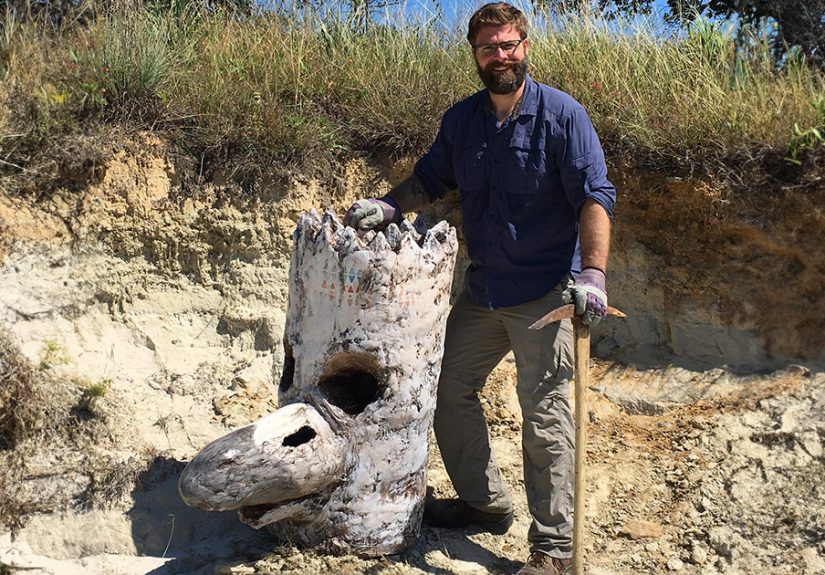
Goode’s practice includes staged excavations and mockumentary-style projects where “discoveries” are found and interpreted as evidence of his invented civilization.
That performative layer is crucial: it mimics how authority gets built in real-world archaeologyfieldwork, documentation, and storytelling.
Why Pop Characters Make Perfect “Ancient” Mythology
Pop culture already behaves like mythology: shared origin stories, recognizable heroes, endlessly remixed narratives, and symbols that travel faster than geography.
Goode’s trick is to treat that reality literally. If future archaeologists excavated our era, the remnants wouldn’t just be coins and ceramics
they’d be the icons we mass-produced, adored, and argued about online.
This idea isn’t limited to Goode. Artist Daniel Arsham has built a career around “fictional archaeology,” turning contemporary cultural objects into relic-like works
that look unearthed from a distant future.
In one prominent example, Arsham merged Greco-Roman-inspired sculpture aesthetics with Pokémon imagery, even discussing how modern character universes can parallel
older myth systems.
Put simply: today’s “silly characters” are tomorrow’s carved deities. The only difference is whether the museum gift shop sells the tote bag.
30 Pics, 30 “Finds”: A Mini Museum Tour of Goode’s Faux Antiquities
Below is a gallery-style walkthrough of thirty works and motifs from Goode’s faux-archaeological universepresented like a museum case you’re absolutely
not supposed to touch (but you’ll lean in anyway). Titles and descriptions reflect how these works are presented across galleries and profiles.
- Apotheosis of Bartius A wink at the way cultures canonize their icons… even if the icon once said “Eat my shorts.”
- Bartosaurus Like a paleontology diagram got scribbled on by pop culture and then cast in bronze.
- Homer Headed Winged Bull Ancient guardian-lion energy, but with sitcom dad chaos baked in.
- Victory and Shield A “heroic” relief vibe, reframed through modern references and collectible culture.
- Donut Narwhal A tiny mythic figure that treats breakfast pastries like sacred offerings.
- Donut Narwhal Eater Proof that every religion eventually invents a monster for the buffet line.
- Serperus A multi-headed snake-horse guardian, described like a serious underworld sentinel.
- Two Assed Serperus Mythology, but with the subtle maturity of a middle-school doodle.
- Hydra Classic monster form, the kind of thing you’d expect on a shattered frieze… until the details get weird.
- Hulktaur A half-man, half-dinosaur legend presented with excavation lore (and unmistakable comic-book muscle logic).
- Long-Legged Mammoth Prehistoric proportions pushed into cartoon territory, as if “accuracy” is optional in legend.
- Mammoth Tapestry Like a medieval wall-hanging discovered in a storage unit labeled “DO NOT OPEN.”
- Marriage of the Long-Legged Mammoth Tapestry Romance, but make it Ice Age and ceremonially dramatic.
- Woolly T-Rex Skull A “natural history” relic that feels almost plausible… until you say it out loud.
- Conjoined T-Rex A strange specimen that reads like an ancient curiosity cabinet centerpiece.
- Medieval Monster Truck Armor The sacred relic of a civilization that worshipped horsepower… literally.
- Horse Head Armor with Carved Baby Mammoth Tusk Bridle Ornate, martial, and just strange enough to be “museum real.”
- Rhoman Sword A clean archetype: the ceremonial blade, now part of a fictional provenance chain.
- Rhoman Ceremonial Lovers’ Spoon I Proof that even empires need a cute, weird keepsake category.
- Rhoman Ceremonial Lovers’ Spoon II The sequel spoon. Because collectors exist in every era.
- Rhoman Ceremonial Lovers’ Spoon III The trilogy spoon. Somewhere, a curator is sweating.
- Sacrifice and Temple I Ritual imagery that looks like it belongs in an archaeology textbook… until you notice the anachronisms.
- Sacrifice and Temple II The companion piece that doubles down on “this is totally how it happened.”
- Portrait as a Woman as Victorious Venus A mashup of classical portraiture energy and modern identity play.
- Venus de Margo A Venus-type figure with the kind of naming joke that feels like it should be illegal in Latin.
- Venus of Margendorf Another Venus riff, framed like a newly cataloged “find.”
- The Birth of Rhomulus and Rhemus A legendary origin story, because every civilization needs twins and drama.
- Wildcat Hunting A fragment-like scene that echoes ancient hunting imageryfiltered through Goode’s invented lore.
- Mosaic Segment of a Thermopolium Floor (Double Dragon Sandwich) A “Roman snack shop” mosaic that reads like an artifact and an inside joke at once.
- Mosaic Depicting the Attack of the Cyclops Epic scene composition with the vibe of a myth retold on a kitchen floor.
Notice the pattern? These pieces aren’t just “pop stuff made old.” They’re built like evidence: the kind of objects museums use to anchor big stories
origins, heroes, monsters, rituals, snack food.
Real Fakes, Real Consequences: Why Authenticity Still Matters
Goode’s work is intentionally fakeand clearly framed as art. That’s different from the real-world market for antiquities and artifacts, where fakes can distort history,
finances, and even national heritage.
Museums and collectors have wrestled with authenticity for decades. The Getty’s famous kouros case is a classic example of how complicated (and publicly fraught)
authenticity debates can become, spawning major scholarly discussion.
Even manuscripts and “biblical-era” fragments can be targeted: reports have found that purported Dead Sea Scroll fragments held by the Museum of the Bible were fakes,
underscoring how persuasive modern fabrication can be.
And law enforcement gets involved more often than people think. The FBI’s Art Crime Team investigates theft, fraud, forgery, and cultural property traffickingincluding
antiquities cases and repatriations.
That context actually makes Goode’s satire sharper. When he builds an entire “institute” and research narrative, he’s parodying how legitimacy is manufacturedand how easily
we accept a story if it comes with the right tone, label, and glass case.
How to Enjoy Faux Archaeology Without Getting Duped
Look for the wink (and the wall text)
In contemporary art, the “fake artifact” genre usually announces itself: galleries, artist statements, and exhibition framing are part of the point.
Goode explicitly positions his discoveries as false but research-based and comedic.
Remember: the story is the medium
The artifact isn’t just an objectit’s a delivery system for a narrative. Goode’s staged digs and mockumentaries make the process visible, turning “authentication”
into performance.
Enjoy the big question underneath the joke
Why do we believe some stories and dismiss others? Why do certain icons become “heritage” while others get filed under “guilty pleasure”?
Goode’s work is playful, but it’s also a surprisingly effective mirror.
Conclusion
Joshua Goode’s fake ancient artifacts hit the sweet spot between museum-serious and internet-brained. They look like the kind of treasures that
“prove” a civilization existedthen they smuggle in pop characters, childhood memories, and modern absurdity like contraband in a clay amphora.
The result is funny, yes, but also oddly moving: a reminder that what we love today might be the mythology someone studies tomorrow.
Extra: of Experience With “Pop Relics” (Because Your Brain Deserves Dessert)
There’s a particular kind of joy that happens when you encounter faux antiquities in the wildonline, in a gallery, or in that uncanny corner of your brain
where “serious history” and “Saturday morning cartoons” should never overlap. It starts with recognition. Your eyes clock the object as ancient: the surface looks
aged, the form feels canonical, and the presentation whispers, “Please do not touch.” Then your second brain (the one powered by memes and nostalgic theme songs)
kicks in and says, “Hold up… is that my childhood?”
People describe this moment like a magic trick, because it scrambles the normal rules of looking. In a museum, we’re trained to treat artifacts as evidence:
proof that a place existed, that a ritual mattered, that a civilization was real. With something like Goode’s work, you still feel that tug toward belief
because the object looks like it belongs to a system of authoritycollection, classification, provenance, and scholarship.
But the content refuses to behave. It’s too modern, too familiar, too unserious. So instead of passive reverence, you get active interpretation. You lean in.
You reread the label. You start laughing, then immediately wonder why you’re laughing, then you laugh again because now you’re overthinking a donut deity.
Another common experience: the “myth upgrade.” After you’ve seen a few of these pieces, your brain starts treating pop culture like folklore. Characters stop feeling
like disposable entertainment and start feeling like symbolslike they’re carrying values, fears, and social habits the way ancient gods did. That’s why the broader
fictional-archaeology idea works so well in contemporary art: it doesn’t just parody the past; it reframes the present as already-historical.
Even if you’re not an art-world person, you can feel the truth of it. We already build shrines (shelves), make offerings (limited editions), and argue theology
(fandom discourse) with astonishing devotion.
Finally, there’s the collector’s-daydream factor. Faux artifacts invite you to imagine your own life as an excavation site. What would someone “discover” about you?
Your phone case? Your old game console? Your stack of concert wristbands? Seen through an archaeological lens, the mundane becomes meaningful. And that may be the
most unexpectedly wholesome part of the whole thing: the work nudges you to value your own cultural memoriesnot because they’re “high art,” but because they’re
the stuff your identity is made from.
So yes, it’s funny to see a pop character treated like a sacred relic. But it’s also weirdly comforting. If future historians ever dig up our era, at least they’ll know
we believed in heroes, monsters, snacks, and a little bit of nonsensesometimes all at once.