Table of Contents >> Show >> Hide
- Why a Buffet Is the MVP of Farmhouse Chic
- Picking the Right Buffet (or Choosing One That Picks You)
- Colorful Farmhouse Chic: The Palette That Doesn’t Fight the Room
- Prep Like You Mean It: The Not-So-Pretty Secret to a Gorgeous Finish
- Paint and Primer: How to Get That “Boutique Finish” Look
- Farmhouse Chic Details That Make the Piece Look Custom
- How to Style a Buffet So It Looks Designed (Not Like a Landing Zone)
- Organization Inside the Buffet: Where the Magic Actually Happens
- Common Mistakes (So You Don’t Learn Them the Hard Way)
- Conclusion: A Buffet That Feels Like Home (But Better)
- My Experience: Turning “Just a Buffet” Into a Colorful Farmhouse Moment
Some people collect stamps. I collect “perfectly good furniture” that looks like it lost a fight with time and a moving truck. Enter:
my buffeta classic sideboard shape, reborn in a colorful farmhouse chic vibe that’s equal parts cozy,
practical, and “yes, I meant to do that.”
If you love the warmth of farmhouse style but refuse to live in a world where every surface is either white, beige, or “greige,” you’re in the right place.
This guide breaks down how to choose a buffet (or rescue one), prep and paint it properly, and style it so it looks collectednot cluttered.
Why a Buffet Is the MVP of Farmhouse Chic
A buffet (also called a sideboard or credenza) is basically the home’s most underrated multitasker. In farmhouse spaceswhere function is part of the charm
it earns its keep fast: it stores serving pieces, hides the random cables of modern life, and gives you a long surface for seasonal decor without sacrificing
your dining table to the “decor-only” lifestyle.
Farmhouse function, but make it colorful
Modern farmhouse decor usually leans on clean lines, neutral foundations, layered textures, and natural materials. That’s your perfect launchpad for color:
keep the room’s “big ingredients” calm, then let the buffet be your statement piece. Think of it like adding hot sauceeverything else can stay balanced, but
now you’re awake.
Picking the Right Buffet (or Choosing One That Picks You)
You can buy new, thrift vintage, inherit one from family, or adopt a curbside “free if you lift it” special. The best choice depends on how you’ll use it
and how much patience you have for sanding (also known as “arm day with consequences”).
What to look for before you fall in love
- Size and proportion: Aim for a buffet that’s long enough to anchor the wall, but not so deep it turns the room into an obstacle course.
- Storage layout: Cabinets for bulky platters, drawers for linens, and at least one “junk drawer” because we’re adults, not magicians.
- Surface durability: If it’ll hold drinks, serving trays, or a coffee station, plan for a finish that can take a little real life.
- Feet and base style: Farmhouse chic loves a grounded silhouettechunky legs, a simple plinth base, or tapered feet that feel lightly vintage.
Where a buffet works beyond the dining room
Buffets aren’t loyal to one room. They’re happy in an entryway (mail + shoes + keys), living room (media console energy), kitchen (extra storage),
or even a hallway that needs purpose. The magic is pairing function with a finish that complements your home’s materialswood, metal, stone, woven textures
then adding color in a way that feels intentional.
Colorful Farmhouse Chic: The Palette That Doesn’t Fight the Room
“Colorful farmhouse” doesn’t mean neon. It means warm, lived-in, and slightly unexpectedlike a vintage quilt next to crisp white walls.
The sweet spot is a hue that has a little dustiness or depth, so it plays well with wood tones, black accents, and natural textures.
Color ideas that feel farmhouse-friendly
- Muted greens: Sage, olive-gray, and misty greens read nature-inspired and timeless.
- Dusty blues: Blue-gray or blue-green tones feel calm but still “designed.”
- Warm heritage tones: Deep mustard, clay, terracotta-leaning accentsbest used thoughtfully, like jewelry, not a full suit of armor.
- Classic contrast: A bold buffet color paired with warm white walls and natural wood is farmhouse chic’s favorite power couple.
A simple rule to keep color from taking over
Keep your room’s big surfaces (walls, rugs, large upholstery) relatively calm, and let the buffet carry the color. Then echo that color in small ways:
a pillow stripe, a vase, artwork, or a stack of cookbooks. Your buffet becomes a “theme,” not a random event.
Prep Like You Mean It: The Not-So-Pretty Secret to a Gorgeous Finish
Farmhouse chic is relaxed, but your paint job shouldn’t be. The most common furniture-paint heartbreak is skipping prep, then watching the finish chip
the first time someone’s jean button grazes a drawer front.
Step 1: Clean (yes, even if it “looks clean”)
Kitchen and dining furniture collects invisible grimeoils, wax, old polish, and the ghost of every holiday meal. Start with a serious clean so your primer
and paint can actually bond. Let everything dry completely before you move on.
Step 2: Scuff sand for grip
You usually don’t need to sand down to bare wood; you just need to dull the sheen and create tooth for primer. A medium grit for initial scuffing, then
finer sanding where needed, can make a huge difference in durability and smoothness.
Step 3: Dust removal is not optional
If sanding dust stays on the surface, it becomes a weak layer under your finishbasically a tiny failure sandwich. Wipe thoroughly before priming.
(This is also where you realize dust can teleport. It can’t, but it feels personal.)
Paint and Primer: How to Get That “Boutique Finish” Look
Your buffet can look expensive without costing expensive. The trick is using the right sequence: prep → prime → thin, even coats → light sanding between coats → protect.
That’s the path to a finish that looks smooth, resists chipping, and doesn’t feel sticky two weeks later.
Primer: the unsung hero of long-lasting color
Primer helps paint adhere and evens out the surface so your color looks consistent. It’s especially helpful on glossy finishes, laminate, and anything that
might be stain-prone. Let primer dry properly before paintrushing here is how you end up with fingerprints permanently preserved like a fossil.
Paint application that avoids brush-stroke drama
- Go thin: Thin coats look smoother and cure better than one heavy “get it done” coat.
- Use the right tool: A high-quality brush for edges and detail, plus a fine-finish roller for flat areas.
- Sand lightly between coats: A gentle scuff between layers helps knock down texture and keeps the finish looking professional.
Optional (but gorgeous): spray paint for a super-smooth look
Spraying can create that sleek, factory-like finish, especially on spindles or detailed trim. If you spray, prep still matters: scuff, clean, prime, and
use even passes. The goal is “smooth and even,” not “frosted cupcake.”
Topcoat: when you need extra durability
If your buffet will be used hardcoffee station, kid snack zone, entertaining centralconsider a protective topcoat compatible with your paint.
The best topcoat is the one that matches your real life: water resistance, wipeability, and enough toughness to handle daily use.
Farmhouse Chic Details That Make the Piece Look Custom
This is where your buffet stops being “painted furniture” and starts being a statement. Small changes can make a huge difference, especially when your color
is bold or moody.
Hardware upgrades that instantly level things up
- Matte black pulls: Classic farmhouse contrastworks with greens, blues, creams, and natural wood.
- Antique brass: Warm, vintage, and especially pretty against blue-green or deep navy.
- Glass or ceramic knobs: Adds cottage charm and a touch of sparkle without feeling fancy-fussy.
Add texture, not chaos
Farmhouse chic thrives on texture: woven baskets, linen runners, ceramic pottery, wood cutting boards, and aged metals. With a colorful buffet, texture
keeps the look groundedso your statement color feels intentional, not like it wandered in from a different house.
Distressing: do it thoughtfully (or skip it)
A little wear can look authentically vintage. A lot of wear can look like you fought your buffet with a chain and lost. If you distress, focus on natural
high-touch areas: edges, corners, drawer pulls. Keep it subtle.
How to Style a Buffet So It Looks Designed (Not Like a Landing Zone)
Styling is where farmhouse chic shines: functional, cozy, and a bit collected. The buffet top is prime real estate for layering height, texture, and a few
meaningful pieceswithout turning into a shrine to “things I couldn’t find a home for.”
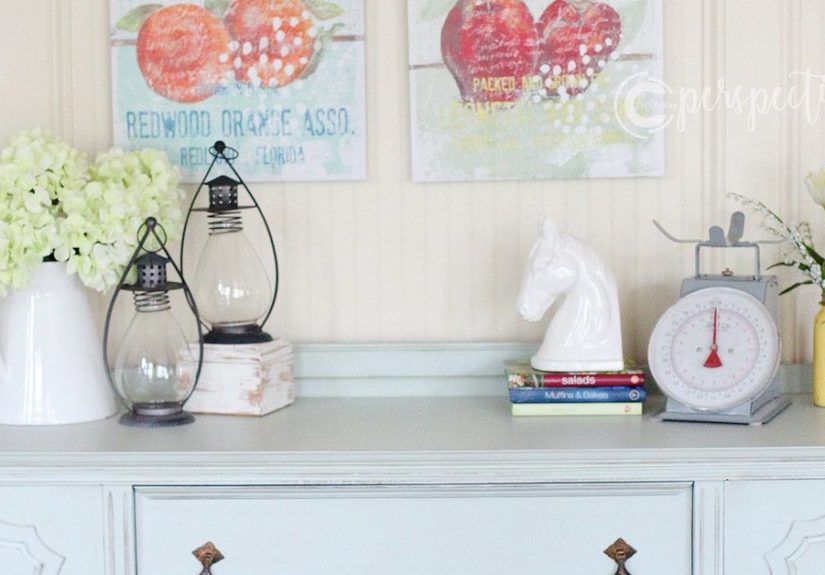
The “anchor + layers” formula
- Anchor: A large piece of art, a mirror, or a pair of sconces to frame the buffet.
- Height: A lamp, tall vase, or branchy greenery to lift the eye.
- Mid-layer: A tray, a stack of books, a bowl, or a ceramic piece.
- Small details: Candles, a small framed photo, or a tiny bud vase for charm.
Functional styling ideas (that still look good)
If you actually use your buffet during meals or gatherings, let function guide the styling. A pretty tray can corral napkins and salt + pepper. A lidded
crock can hide matches or tea bags. A slender vase can hold stirrers or serving utensils when entertaining.
Seasonal swaps without redecorating your whole life
Farmhouse chic loves seasonal touches: a simple wreath, winter greens, spring branches, summer citrus in a bowl, fall dried stems. Keep a neutral base
(tray, lamp, art), then swap the smaller accents. Your buffet stays styled, and you don’t have to store seventeen themed figurines. Everyone wins.
Organization Inside the Buffet: Where the Magic Actually Happens
A buffet is only as good as what it hides. The goal is to make it easy to set the table, host, or live daily lifewithout doing a cabinet avalanche every time
you need a serving platter.
Simple zones that keep things tidy
- Top drawer: Napkins, candles, lighters, small serving tools.
- Second drawer: Linen runners, placemats, extra cutlery.
- Cabinet shelves: Platters, bowls, seasonal serveware.
- One “real life” bin: Batteries, tape, command stripsbecause farmhouse chic still uses Wi-Fi.
Pro tip: use bins and shelf risers
If your buffet has deep cabinets, add bins to prevent “lost in the back” chaos. A shelf riser can double your usable space for plates or serving boards.
The outside can be cute, but the inside should be smart.
Common Mistakes (So You Don’t Learn Them the Hard Way)
- Skipping prep: Paint hates grease and gloss. Clean and scuff sand for a finish that lasts.
- Heavy coats: Thick layers stay soft longer and show more texture. Thin coats win.
- Not letting paint cure: Dry to the touch is not cured. Be gentle for the first couple weeks.
- Overstyling: Leave breathing room. A buffet top needs negative space to look polished.
- Choosing color in isolation: Test your color against your floors and walls. Lighting changes everything.
Conclusion: A Buffet That Feels Like Home (But Better)
“Colorful farmhouse chic” is all about balance: a cozy foundation, natural textures, and one confident pop of color that makes the space feel personal.
When your buffet is prepped well, painted thoughtfully, and styled with purpose, it becomes more than storageit becomes a signature piece that makes the
whole room feel finished.
And the best part? Every time you walk by, you’ll get that tiny spark of joy that says, “Yep. That used to be boring. Not on my watch.”
My Experience: Turning “Just a Buffet” Into a Colorful Farmhouse Moment
I’ll be honest: my buffet started out as the kind of brown that can only be described as “former office furniture, now retired.” The finish was shiny in a
way that suggested it had been polished with equal parts furniture wax and pure determination. But the bones were goodsolid shape, great storage, and
enough drawer space to hide the evidence of real life. I brought it home and immediately did the most responsible thing possible: stared at it for a full
day like it might makeover itself out of fear.
The turning point was deciding what I actually wanted the piece to do. Not just “look cute,” but function. This buffet needed to hold serving bowls, napkins,
and the random entertaining supplies that multiply like rabbits. Once I knew the job, the design choices got easier. I wanted farmhouse warmth, but I also
wanted colorsomething that felt cheerful without screaming “children’s museum gift shop.” So I leaned into a muted blue-green that looked calm in daylight
and a little moodier at night. It felt like the color equivalent of a deep breath.
Prep was the unglamorous part, but it was the part that made everything else work. I cleaned it like I was preparing it for a health inspection, then scuff
sanded until the sheen was gone. And yes, I discovered dust can appear five minutes after you wiped it down, even if you live alone and nobody else is
secretly sanding furniture behind your back. I wiped again anyway. Primer went on next, and I let it dry properlybecause I’ve learned the hard way that
impatience is how fingerprints become permanent decor.
Painting was where the buffet started to feel like “my” piece. I used thin coats and tried to channel calm energy, even though part of my brain was yelling,
“Just slap it on and move on!” Between coats, I did a light sanding to keep things smooth. It felt fussy in the moment, but the finish looked so much more
professional afterwardless “craft project,” more “boutique find.”
Hardware was my favorite upgrade. Swapping the old pulls for warm metal instantly made the color look richer. That small detail pushed the buffet into farmhouse
chic territoryespecially once I styled it with natural textures: a woven tray, a ceramic vase, and a simple lamp for warmth. I kept the styling practical,
too. One lidded container hides small items, and a tray keeps daily clutter from spreading like it pays rent.
The biggest lesson? Color doesn’t have to fight farmhouse style. If your room has a calm basewarm whites, wood, black accents, natural fibersyour buffet can
be the hero piece. The second biggest lesson? Let the paint cure before you host a party, unless you want a permanent “memory” of someone’s plate sliding
across the surface. (Ask me how I know. Actually, don’t.)
Now, every time I set the table or grab a serving platter, the buffet feels like a little win. It’s functional, it’s charming, and it’s proof that a single
colorful piece can make a whole room feel more alivewithout giving up the cozy farmhouse vibe that makes you want to stay awhile.