Table of Contents >> Show >> Hide
- Why So Many Soviet Buildings Were Left Behind
- Before You Go: A Reality Check on Urbex, Safety, and Respect
- The 28 Photos
- What These Buildings Teach You (If You Let Them)
- How I Photograph Soviet Relics (Without Turning It Into a Comedy of Errors)
- Conclusion: Concrete Can Crack, But Memory Sticks
- Field Notes: 10 Experiences That Stuck With Me (Extra )
The Soviet Union had a talent for building big, bold, and permanent-looking thingsthen history did that annoying thing where it
refuses to be permanent. Across the former Soviet republics, you can still find the shells of sanatoriums, radar towns, theaters,
factories, and civic “palaces” that once promised a bright collective future. Now they promise something else: peeling paint,
broken windows, and the quiet, humbling reminder that every era thinks it’s the final draft.
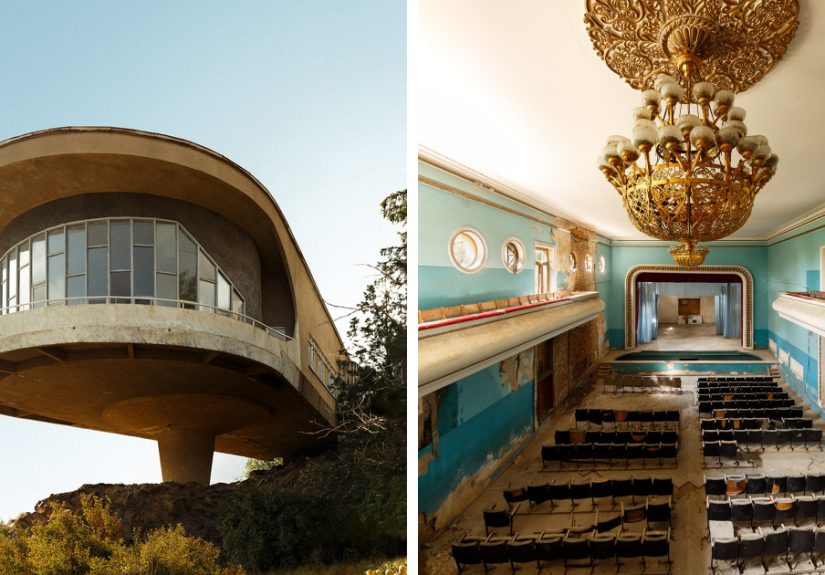
This is a photo-essay-style tour of 28 abandoned (or long-neglected) Soviet-era buildings across multiple former Soviet
republicsplaces where brutalist geometry meets ivy, where mosaics outlive ministries, and where a chandelier can still look fancy
even when it’s hanging over a puddle.
Why So Many Soviet Buildings Were Left Behind
Abandoned Soviet architecture isn’t one storyit’s a whole anthology. Some sites emptied out after 1991 when state industries collapsed
or funding evaporated. Others were vacated after military withdrawals, border changes, or conflict. Some were “abandoned” in the tourist
sense but not in the human sense, because people found shelter in the structures when they had nowhere else to go.
Common reasons these places went quiet
- Economic whiplash: factories, resorts, and mono-towns lost subsidies and customers overnight.
- Military secrecy to public silence: radar and base towns were built to be invisiblethen became unwanted.
- War and displacement: some buildings became ruins or emergency housing instead of “heritage.”
- Decommissioning: nuclear and industrial sites may be closed, restricted, or partly repurposedbut still feel frozen in time.
- Demographics: young people moved away, leaving oversized infrastructure behind.
And then there’s the emotional reason: the Soviet project loved symbols. Many of these buildings were designed to impressyour health,
your education, your culture, your leisure, your “progress.” When the symbol stops being useful, it can become awkward to maintain.
Awkward, however, is a wonderful condition for photography.
Before You Go: A Reality Check on Urbex, Safety, and Respect
“Urban exploration” sounds romantic until you meet the unromantic trio of rotting floors, exposed wiring, and legal consequences.
Many abandoned buildings are dangerous, restricted, or privately owned. Some are also connected to tragic histories that deserve more
respect than a goofy pose.
My personal rules (aka: how to not become a cautionary tale)
- Don’t trespass. If a location is restricted, fenced, guarded, or clearly off-limits, treat it like lava.
- Don’t take souvenirs. The best relic is the photo you made, not the object you pocketed.
- Assume the building is trying to win. Rust, rot, and gravity are undefeated champions.
- Be culturally decent. If locals are living nearby (or inside), you’re a guest, not the main character.
- Skip “dark tourism” clowning. If a site is tied to disaster or displacement, act like a grown-up.
With that said: let’s open the creaky door, step carefully, and look at what’s left.
The 28 Photos
I’m grouping these images by region to make the journey feel less like a scavenger hunt and more like a story: the Baltics, the Caucasus,
Central Asia, and the long shadow of nuclear modernity.
The Baltics: Secrecy, Concrete, and Forest Silence
The Caucasus: Sanatorium Grandeur, War Echoes, and Mosaics That Refuse to Die
The Caucasus is where “abandoned” gets complicated. Some places are empty; some are partially inhabited; some are ruins shaped by politics.
Your camera will love the textures, but your brain should stay switched on.
Central Asia: Space Dreams, Industrial Afterlives, and Big-Sky Melancholy
Central Asia’s Soviet relics feel different because the landscapes are so vast. When a building empties out here, it doesn’t just feel
abandonedit feels small, like a chess piece left on an enormous board.
Ukraine and the Nuclear Shadow: Ruins That Demand Respect
Any discussion of abandoned Soviet buildings eventually runs into the Chernobyl Exclusion Zone and Pripyatarguably the most iconic
“instant abandonment” site of the 20th century. Because of the ongoing war and security concerns, access can be restricted or suspended;
always follow official guidance and current travel advisories.
What These Buildings Teach You (If You Let Them)
Photographing abandoned Soviet buildings isn’t just an aesthetic hobbythough yes, the textures are basically catnip for your camera.
It’s also a lesson in how systems leave physical footprints. You see what was prioritized (scale, symbolism, collectivism), and you also
see what was vulnerable (maintenance, flexibility, local needs).
The recurring visual themes in Soviet relic photography
- Monumentality: Buildings that look like they were designed to outlast weather, politics, and possibly the sun.
- Public life architecture: Houses of Culture, sanatoriums, youth campsstructures built for organized community.
- Brutalism + decoration: Hard concrete softened by mosaics, murals, and hopeful design touches.
- Nature’s redesign: Roots in stairwells, trees in auditoriums, vines in window frames.
- Human traces: Not “spooky props,” but real leftoverssignage, furniture, worn steps that still remember feet.
The best images don’t treat these places like haunted houses. They treat them like archivesmessy, emotional archives you can walk through.
How I Photograph Soviet Relics (Without Turning It Into a Comedy of Errors)
My goal is to make photos that feel like you’re standing there, breathing the cold air, hearing a distant drip, and noticing the tiny details
a chipped tile, a faded slogan, a curtain hook that outlived the curtain by decades.
My go-to approach
- Start wide, then go small: establish the building’s scale, then hunt for human-scale details.
- Use natural light: broken windows create dramatic beamsfree production design, courtesy of entropy.
- Look for story pairings: a propaganda mural next to modern graffiti; a grand staircase next to a bucket catching rain.
- Respect the living: if people are present, I ask before photographing anything that feels personal.
And yes, I sometimes take the “fun” shotlike a perfectly centered hallway that looks like it’s leading to a boss battle. But I never forget:
these aren’t sets. They’re leftovers of real lives.
Conclusion: Concrete Can Crack, But Memory Sticks
The Soviet Union is gone, but its buildings are still negotiating with the present. Some will be restored. Some will collapse. Some will be
repurposed into museums, hotels, or the world’s most dramatic coworking spaces (don’t laughsomeone, somewhere, is pitching it).
Until then, these relics sit in forests, spa towns, and industrial edgeshalf history lesson, half visual poem. And if you photograph them
with respect, they give you something rare: a chance to see ideology as architecture, and time as a slow, patient editor.
Field Notes: 10 Experiences That Stuck With Me (Extra )
First: the silence is never total. In the “quietest” buildings, there’s always a soundtrackwind in a broken stairwell, a loose metal sheet
tapping like a metronome, pigeons arguing in the rafters as if they pay rent. One time, in a sanatorium corridor, the breeze pushed a door
just enough to make a slow, theatrical creak. My brain immediately offered a horror-movie explanation. My common sense answered, “Congrats,
you’ve discovered air.”
Second: Soviet spaces have a unique emotional scale. A small town’s House of Culture can feel like an opera venue. A bathhouse can look like a
palace. A lobby can be bigger than your apartment, your ambitions, and your ability to sweep it. Photographing that scale is tricky because
cameras love to flatten everything. I learned to include “anchors”a chair, a doorway, a human silhouette (when appropriate)so the viewer
can feel how oversized these places were meant to be.
Third: the mosaics. Always the mosaics. In multiple republics, I kept finding walls that were basically propaganda turned into stained-glass
energy: athletes, scientists, wheat, suns, starshope rendered in tile. Even when the building is failing, those mosaics hang on like they’re
refusing to accept the memo. Standing in front of them feels like meeting the most optimistic person at a party that ended thirty years ago.
Fourth: “abandoned” rarely means “empty of meaning.” In places like Tskaltubo, the story isn’t just decayit’s survival. You see signs of life
in the corners: a line of laundry, a carefully swept patch of floor, a door that someone bothered to fix. Those details changed how I shot the
space. Instead of aiming only for dramatic ruin, I looked for the overlapwhere a grand staircase meets a lived-in corner. That’s where the
real narrative is.
Fifth: the ethics hit you hardest when the history is heavy. The most photogenic frame is not always the right frame. I stopped myself from
treating every scene like a set. If a site is tied to displacement or disaster, I shoot with restraint: fewer “wow” angles, more truthful
documentation. A good photo can still be quiet.
Sixth: every building teaches humility. Floors sag. Stairs crumble. Handrails wobble. You realize quickly that the real antagonist is not a
ghostit’s structural fatigue. I also learned that “just one more step” is the most dangerous phrase in photography. The second-most
dangerous phrase is “I’m sure it’s fine.”
Seventh: locals often have the best perspective. I heard variations of the same sentence again and again: “We used to come here,” or “My
cousin worked here,” or “It was beautiful once.” That’s when the buildings stop being “aesthetic decay” and start being personal memory
with walls.
Finally: after enough Soviet relics, you start recognizing a design languagegrand entrances, long corridors, civic symbolism, and the belief
that architecture could shape society. Whether that belief succeeded is up for debate. But as a photographer, I can say this: the buildings
still shape us. They slow you down. They make you listen. And they remind youpolitely, with a cracked mosaic and a broken window
that nothing built by humans is immune to time.