Table of Contents >> Show >> Hide
- Why Mussels Provençal Belongs in Your Weeknight Rotation
- What “Provençal” Means in a Pot
- Ingredients That Make This the Best Mussels Provençal
- How to Buy, Store, and Clean Mussels (Without Losing Your Appetite)
- Step-by-Step: Mussels Provençal in 20 Minutes
- Recipe Card: Mussels Provençal (Fennel + Tomato + Pastis)
- Pro Tips for Next-Level Broth (AKA, The Part People Remember)
- Easy Variations (Because Mussels Love Options)
- What to Serve with Mussels Provençal
- FAQs
- Conclusion
- Kitchen Experiences & Lessons Learned (The 500-Word Reality Check)
Mussels Provençal is the rare dinner that feels like you should be wearing linen and speaking in an effortless French accent…
even if you’re actually in sweatpants, standing over a pot, whispering, “Please open, little guys.” The good news:
this dish is fast, deeply flavorful, and basically impossible to make boringbecause garlic + tomatoes + olive oil is
the culinary equivalent of a hit song with a catchy chorus.
Provençal-style mussels are all about bright Mediterranean flavors: juicy tomatoes, herbs, a little fennel perfume,
and (if you’re feeling fancy) a splash of pastis for that subtle anise aroma that makes the whole pot smell like a seaside café.
You’ll end up with glossy shells, tender mussels, and a broth so good you’ll consider drinking it like soup. (No judgment.
I mean… the broth is the point.)
Why Mussels Provençal Belongs in Your Weeknight Rotation
Mussels cook quicklylike, “your pasta water isn’t even boiling yet” quickly. They’re also one of the most
restaurant-looking meals you can make with minimal effort. Put a big bowl of mussels on the table with a baguette,
and suddenly it’s not Tuesday night; it’s Tuesday Night: The Special Edition.
- Speed: Most mussels open in 3–7 minutes once steaming.
- Big flavor, small ingredient list: The broth does the heavy lifting.
- Built-in “wow” factor: People think shellfish requires wizardry. It doesn’t. You own a pot. You’re qualified.
What “Provençal” Means in a Pot
“Provençal” cooking (in the cozy, weeknight sense) signals sun-kissed flavors: tomatoes, olive oil, garlic,
herbs like thyme and parsley, and often something aromatic like fennel. For mussels, that translates to a fragrant base
that steams the shellfish and becomes a broth you absolutely must mop up with bread.
The Signature Twist: Fennel + Pastis
Many classic French mussel recipes lean on white wine. Provençal versions often play with anise notes
fennel, anise, and sometimes a dash of pastis (like Pernod). The result isn’t “licorice soup,” promise.
It’s more like: “Wait… what is that amazing aroma?” Then you pretend you always cook like this.
Ingredients That Make This the Best Mussels Provençal
Here’s the short list, plus smart swaps so you can cook without panic-texting your group chat.
The Mussels
- Live mussels (about 2 pounds): Look for closed shells or ones that close when tapped.
- Tip: Plan on about 1 pound per person for a generous appetizer or light main.
The Provençal Base
- Extra-virgin olive oil: For fruitiness and that Mediterranean vibe.
- Fennel bulb: Sliced thin so it softens quickly and perfumes the broth.
- Garlic: Don’t be shy. Provençal cooking isn’t shy.
- Tomatoes: Fresh chopped tomatoes for brightness; canned works when tomatoes are out of season.
- Pastis: The optional-but-iconic flourish. White wine can step in if needed.
Finishers That Make It Taste “Restaurant”
- Parsley: Fresh and grassy, cuts through brininess.
- Lemon: A squeeze at the end sharpens everything.
- Butter (optional): Whisk in a little for a richer, silkier broth.
- Crusty baguette: Non-negotiable. This is your broth-delivery system.
How to Buy, Store, and Clean Mussels (Without Losing Your Appetite)
Mussels are simple, but they do have opinions. Mainly: they prefer to be alive until you cook them.
Here’s how to handle them like a pro.
Buying Mussels: The 30-Second Checklist
- Smell: Fresh should smell clean and ocean-like, not fishy or funky.
- Shells: Skip cracked or broken shells.
- “Tap test”: If a shell is slightly open, tap itlive mussels close up.
Storing Mussels
Keep mussels cold in the fridge and cook them soon. Don’t store them submerged in water (it can kill them).
Instead, place them in a bowl, cover with a damp towel, and let them chillliterally.
Cleaning + Debearding (Quick and Practical)
- Rinse mussels under cold running water and gently rub the shells to remove grit.
- Remove the “beard” (the stringy bit) by grabbing and pulling it toward the hinge end.
- Discard any mussels that are cracked, broken, or won’t close when tapped.
Step-by-Step: Mussels Provençal in 20 Minutes
The secret is treating mussels like the delicate little sea divas they are: hot steam, quick cook, then off the heat
before they turn chewy. Your job is to build a flavorful broth firstthen let the mussels finish the story.
Recipe Card: Mussels Provençal (Fennel + Tomato + Pastis)
Yield: 4 servings
Total time: about 20 minutes
Ingredients
- 2 Tbsp extra-virgin olive oil
- 1 medium fennel bulb, cored and thinly sliced
- 4 cloves garlic, roughly chopped
- 1/4 tsp kosher salt (plus more to taste)
- 2 large tomatoes, chopped (or 1 (14–15 oz) can diced tomatoes, drained)
- 1/2 cup pastis (or substitute: 1/2 cup dry white wine + 1–2 tsp pastis, optional)
- 2 lb live mussels, cleaned and debearded
- 2 Tbsp chopped fresh parsley
- 1/2 lemon, cut into wedges (optional but recommended)
- Baguette, toasted or warm, for serving
- Optional richness: 1–2 Tbsp butter
- Optional heat: pinch of red pepper flakes
Directions
-
Build the base: In a large pot (7–8 quarts is ideal), heat olive oil over medium heat.
Add fennel, garlic, and salt (plus red pepper flakes if using). Cook, stirring often, until fennel begins to soften,
about 5 minutes. -
Add tomatoes + aromatic splash: Stir in tomatoes and pastis. Simmer 3 minutes to marry flavors.
(If using wine instead, simmer 2–3 minutes to cook off the raw edge.) -
Steam the mussels: Add mussels, cover, and cook 3–5 minutes, stirring or shaking the pot once or twice,
until most shells open. -
Finish like a champ: Turn off heat. Stir in parsley. Add butter if you want a glossier broth.
Squeeze in a little lemon juice to brighten, then taste and adjust salt. -
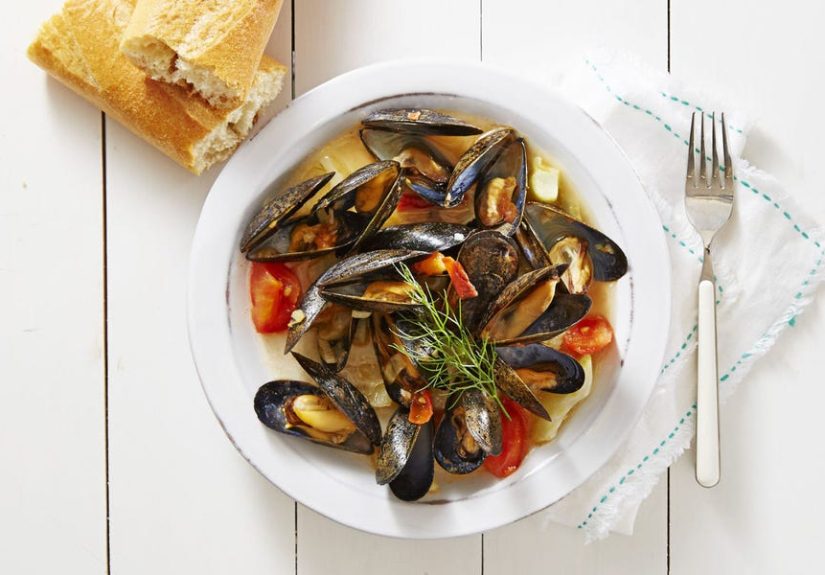
Serve immediately: Ladle mussels and broth into bowls. Pile baguette nearby for maximum dunking efficiency.
Discard any mussels that never opened.
Pro Tips for Next-Level Broth (AKA, The Part People Remember)
1) Don’t brown the aromatics
Keep the heat moderate. You want fennel and garlic to soften and sweeten, not turn bitter. Think “gentle sauté,” not “stir-fry.”
2) Use the right pot-to-mussel ratio
Mussels need space for steam to circulate. A cramped pot leads to uneven cooking: some mussels perfect, others rubbery.
Bigger pot = more even results.
3) Steam just until openthen stop
Mussels are at peak tenderness when they just open. Once most shells are open, remove from heat.
They’ll finish gently in the residual steam.
4) Brighten at the end
Acid is your best friend. A squeeze of lemon (or a tiny splash of vinegar) makes tomato taste more tomato-y
and keeps the broth from feeling heavy.
Easy Variations (Because Mussels Love Options)
White Wine Mussels Provençal
Swap pastis for dry white wine. Keep the fennel for that Provençal flair, and finish with lemon + parsley.
It’s classic, clean, and endlessly dunkable.
Spicy Provençal Mussels
Add red pepper flakes at the start, or stir in a spoonful of Calabrian chili paste near the end.
Not traditional-Provence, but your taste buds don’t have to show a passport.
Tomato-Forward “Long-Simmer” Version
If you want a deeper tomato base, simmer the tomatoes with herbs (thyme, parsley stems, a bay leaf) for 15–25 minutes
before adding mussels. This tastes more like a rich seafood stew while still cooking the mussels quickly at the end.
Creamy Finish
Remove mussels once opened, then stir a splash of cream (or crème fraîche) into the broth. Return mussels to warm through.
It becomes lusciouslike a cozy bistro dinner that forgot to tell you it’s also extremely easy.
No-Alcohol Option
Use seafood stock, clam juice, or a mix of broth and a squeeze of citrus. You’ll still get a bold, aromatic pot
just without the booze.
What to Serve with Mussels Provençal
- Baguette: Warm or toasted, ideally with a crunchy crust and soft center.
- Fries: The classic “moules-frites” energy, now in your living room.
- Simple salad: Arugula + lemon + olive oil keeps things bright.
- Pasta or rice: Spoon the broth over cooked pasta, or serve with rice to soak it up.
FAQs
How many mussels do I need per person?
A good rule: about 1 pound per person for a light main or hearty appetizer, more if you’re feeding serious bread-dunkers.
What if some mussels don’t open?
For home cooking, the safest move is to discard mussels that never opened after cooking.
(And yes, it feels wasteful. But it feels worse to gamble with shellfish.)
Can I make this ahead?
Mussels are best cooked and eaten right away. If you want to prep ahead, slice fennel, chop tomatoes, and mince garlic,
then cook everything fresh when you’re ready to eat.
Do mussels make good leftovers?
Not really. The broth reheats beautifully, but mussels can turn chewy when warmed again. If you have leftovers,
remove mussels from shells and gently warm them in the broth just until hotno boiling.
Conclusion
The best Mussels Provençal is all about contrast: briny shellfish, sweet tomatoes, aromatic fennel, and that bright herb-and-lemon finish.
It’s fast enough for weeknights, dramatic enough for guests, and delicious enough to make you wonder why you ever paid restaurant prices
for something you can cook in one pot. Keep a baguette on standby, because the broth is the real main character.
Kitchen Experiences & Lessons Learned (The 500-Word Reality Check)
Cooking mussels at home has a funny effect on people: it makes you feel like you’ve “leveled up” as a cook, even though the
process is basically steam + timing. The most common experience is the sudden realization that the fancy part isn’t
the techniqueit’s the presentation. A big pot hits the table, shells clatter into bowls, and everyone starts acting like
you trained in Marseille. (If someone calls you “chef,” accept it. This is your moment.)
The first practical lesson most home cooks learn: mussels have a schedule, and it’s not flexible. If you overcook them,
they don’t get “extra done”they get chewy and a little sad. The sweet spot is when most shells have opened. That’s your cue
to turn off the heat and let the residual steam finish the stragglers. If you want dinner to feel effortless, cook your sides
first (bread warmed, salad tossed, fries crisped), because once mussels are ready, it’s go-time.
Another common moment: the “beard” discovery. The first time you see those little stringy bits, it can feel mildly
prehistoric, like you unearthed something. The good news is it’s quick to remove, and you don’t have to be perfect.
Many farmed mussels arrive already mostly cleaned; you’re just giving them a rinse and a quick once-over. A paper towel
improves grip and reduces the “why is this slippery?” factor.
Then there’s the broth obsession. People think they’re making mussels; they’re actually making a broth worth fighting over.
The most common “upgrade experience” is learning how tiny finishing touches change everything: parsley at the end (not early),
lemon right before serving (not in the simmer), andif you want to feel like a bistro magiciana small knob of butter stirred
in off heat for gloss. It’s a low-effort flex that tastes expensive.
One more reality: the pot will look a little chaotic. Shells pile up. Broth splashes. Someone will ask where the shell bowl is.
This isn’t a flaw; it’s the charm. Set out an extra bowl for empty shells, plenty of napkins, and expect hands-on eating.
Mussels are social food. They slow people down in a good waypeeling, dunking, passing bread, and inevitably arguing over who
gets the last toasted slice. If your goal is a dinner that feels warm and lively, mussels Provençal is basically a guaranteed win.