Table of Contents >> Show >> Hide
- Quick answer: what should you buy?
- What these terms actually mean (no engineering degree required)
- Power and performance: torque vs RPM (and why it changes how cutting feels)
- Ergonomics: visibility, balance, and the “all-day” factor
- Corded vs cordless: the 2026 reality check
- Maintenance, durability, and cost: the ownership part nobody brags about
- Safety: both saw types will bite, but kickback doesn’t care about your preferences
- Which one is best for you? Real-life buyer profiles
- Bottom line
- Field Notes: of Real-World Experiences (What It Feels Like on Actual Projects)
Choosing between a worm drive circular saw and a direct drive (a.k.a. “sidewinder”) can feel like ordering coffee at a place
where the menu has 47 kinds of milk. Both tools cut wood. Both can absolutely ruin your Saturday if you disrespect them.
And both have die-hard fans who will defend their favorite saw like it’s a family member.
The good news: this isn’t a mysterious “pro-only” decision. Once you understand how each design delivers powerand how that
affects feel, visibility, fatigue, and maintenanceyou can pick the right saw for your projects (and stop doom-scrolling
tool forums at 1:00 a.m.).
Quick answer: what should you buy?
Pick a worm drive (rear-handle) if you:
- Do a lot of framing, decking, roofing, or long rip cuts where torque and steady tracking matter.
- Like a longer saw with a narrow body and a handle behind the motor for reach and leverage.
- Prefer the “planted” feel of a heavier saw that wants to keep moving through thick lumber.
- Don’t mind a little extra upkeep (some worm-drive gearboxes require oil checks).
Pick a direct drive (sidewinder) if you:
- Want the lightest, most compact option for general DIY, remodeling, and overhead work.
- Care most about speed, maneuverability, and quick setup for mixed tasks.
- Cut lots of sheet goods and want a tool that’s easy to control all day.
- Prefer “grab-and-go” ownership with minimal maintenance.
Still undecided? Here’s the most honest answer: many pros end up owning both because each style shines in
different moments. If you’re buying one saw to cover everything, your body (and your to-do list) usually decide the winner.
What these terms actually mean (no engineering degree required)
Direct drive / sidewinder: the classic, compact layout
A direct drive circular saw places the motor next to the blade, spinning it either directly on the same axis or through a small
gear set. This layout keeps the saw short and relatively light, which is why sidewinders dominate the “one saw for everything”
category. It’s the multitool of circular saw designs: not always the strongest at one specialized job, but very good at most jobs.
Worm drive / rear-handle: torque through gearing
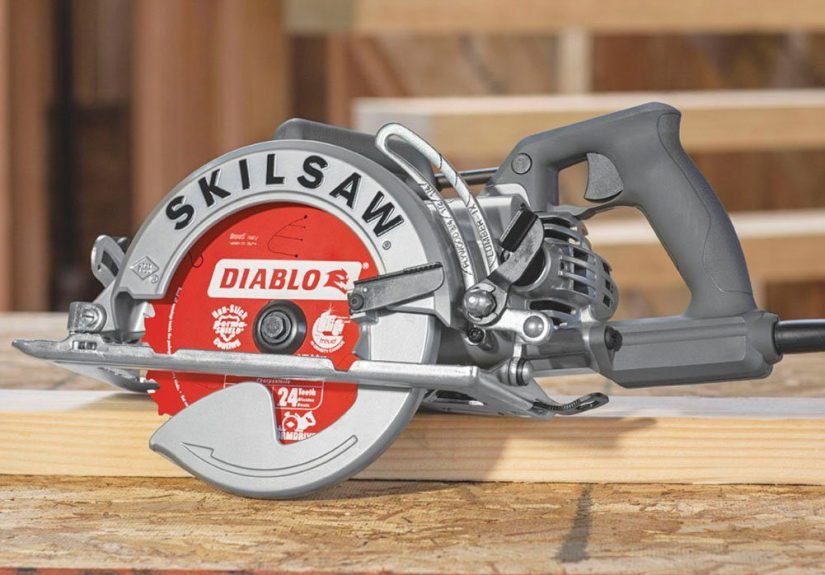
A worm drive uses a worm gear system to transfer power from a motor positioned behind the blade (typically at a right angle).
The design trades some blade speed for more torque and a long, narrow form factor. That’s why it has a reputation for chewing
through tough framing lumber and staying stable on long cuts.
What about “worm drive style” and hypoid?
You’ll also hear “worm drive style” and see saws that look like worm drives but use a different gear geometry (often hypoid).
In practice, they land in the same family: rear-handle ergonomics, geared power delivery, and a workhorse feeloften with less
emphasis on traditional worm-drive oil maintenance.
Power and performance: torque vs RPM (and why it changes how cutting feels)
Torque: who wins when the wood fights back?
Worm drives are famous for torque. Think of torque as “how stubbornly the saw keeps cutting when you feed it into dense material.”
When you’re ripping wet framing lumber, stacking up pressure-treated boards, or pushing through knots that seem to have personal
beef with you, torque feels like confidence.
Modern sidewinders can be plenty powerfulespecially higher-end models and many cordless optionsbut the traditional advantage of
worm drive is that it’s harder to stall under heavy load, and the saw tends to feel steady when the cut gets ugly.
RPM: who feels faster?
Sidewinders often run at higher blade speeds, which can feel “snappier” on crosscuts and lighter ripping. Higher RPM can mean
cleaner cutting in some materials when paired with the right blade and feed rate. For many homeowners, the faster, lighter feel
translates to better control because the saw isn’t wrestling your wrists.
Cut quality is mostly a blade story
Here’s the part tool marketing doesn’t love: for most users, blade choice and technique matter more than drive style.
A sharp, correct-tooth-count blade, a straightedge guide, and a supported workpiece will improve your results more than switching
drivetrain types. Pick the saw style for how it handles; pick the blade for how the cut looks.
Ergonomics: visibility, balance, and the “all-day” factor
Blade visibility: left vs right isn’t just a trivia fact
Traditionally, many worm drive saws put the blade on the left side, which can improve the sightline for many right-handed users
when the cut line is on the waste side. Many sidewinders put the blade on the right. But there are exceptionsso treat this as a
“common pattern,” not a law of physics.
The best approach: pick a layout that lets you see the blade and the line without twisting your neck or crossing your arms
like you’re trying to solve a yoga puzzle mid-cut.
Weight and fatigue: your shoulders have opinions
Worm drives are usually heavier and longer. That can be a perk on long rips because the mass helps the saw track smoothly and
resist wandering. But weight becomes a tax during overhead cuts, ladder work, and any task where you’re constantly lifting,
repositioning, and starting/stopping.
Sidewinders tend to win on “use it all day without feeling like you arm-wrestled a vending machine” comfortespecially for
smaller users or anyone doing mixed-duty remodeling where the saw is in your hands more than it’s on a work surface.
Form factor: narrow vs compact
Worm drives are often narrower (less motor sticking out to the side), which can help in some tight spots, but they’re
also longer. Sidewinders are usually shorter and more compact front-to-back, but can feel “wider” because
the motor sits beside the blade. Which one fits better depends on the space you’re working in and how you hold the saw.
Corded vs cordless: the 2026 reality check
The old wisdom used to be: “Worm drive for power, sidewinder for convenience.” That’s not as clean-cut anymore. Cordless saws have
gotten shockingly strong, and many rear-handle cordless saws deliver performance that makes the choice feel more like
handle preference than raw cutting muscle.
If you’re already invested in a battery platform, that ecosystem can matter as much as drivetrain type. But if you’re choosing a
corded saw for heavy-duty, uninterrupted cutting (especially on a jobsite), worm drive ergonomics still appeal to many builders.
Maintenance, durability, and cost: the ownership part nobody brags about
Maintenance
Many direct drive saws are basically “keep it clean, keep the blade sharp, don’t drop it off the roof.” Worm drives may require
attention to gearbox lubrication (often oil), which is simplebut it’s one more thing to remember before you start ripping.
Durability
Worm drives have a long-standing reputation for jobsite durability, partly because the gearing and housing are built for
sustained heavy use. Sidewinders range from bargain DIY models to professional-grade tools built for years of abuse. In other words:
drivetrain matters, but build quality matters more.
Price
In general, worm drive (and worm-drive-style) saws often cost more than basic sidewinders. But the price gap narrows when you compare
professional-grade sidewinders to professional-grade rear-handle saws. The most cost-effective move is buying the tool that best
fits what you cut most oftennot the one that looks coolest in a garage photo.
Safety: both saw types will bite, but kickback doesn’t care about your preferences
No matter which style you pick, use these rules like they’re your jobsite religion:
- Let the blade guard work. If the guard sticks, fix it. Don’t “just be careful.”
- Support the workpiece. Pinching the blade is a common path to kickback.
- Stand out of the kickback line. Don’t position your body where the saw will launch if it binds.
- Use the right blade. Wrong blade + wrong material = sketchy cut + bad time.
- Slow down for plunge cuts. Control beats confidence here.
Portable circular saws should be equipped with proper guardingupper and lower guards are not optional “accessories.” If you’re
working professionally, follow applicable jobsite rules and regulations for guarding and PPE.
Which one is best for you? Real-life buyer profiles
1) The weekend DIYer (shelves, flooring, basic projects)
A direct drive/sidewinder is usually the best fit: lighter, simpler, and more forgiving. You’ll appreciate it when you’re making
a bunch of short cuts, moving around the garage, and trying not to bump your blade into everything you own.
2) The remodeler (a little of everything, often in awkward spaces)
Sidewinder againmostly because remodeling is a marathon of weird angles, cramped corners, and repeated repositioning. A lighter,
compact saw reduces fatigue and tends to feel more nimble when you’re bouncing between tasks.
3) The framer/deck builder (thick lumber, long rips, all-day cutting)
Worm drive or worm-drive-style becomes very compelling here. The torque-heavy feel and rear-handle leverage can make repetitive,
heavy cuts feel more controlled. If you regularly cut wet lumber or dense stock, that “won’t stall on me” confidence is worth a lot.
4) The plywood-and-sheet-goods person (cabinet carcasses, shop work)
Many people prefer a sidewinder for breaking down sheet goods because it’s easier to lift and guide repeatedlyespecially when paired
with a straightedge or track-style guide. That said, some builders like the reach of a rear-handle saw for long, guided rips.
If sheet goods are your main thing, weight and visibility tend to matter more than raw torque.
5) The “one saw only” buyer
If you’re buying one saw and you’re not sure what you’ll build next, a quality sidewinder is the safest all-around pick.
It’s the “compact SUV” of saws: not the absolute specialist in every category, but it handles the most situations without drama.
Bottom line
Worm drive vs direct drive isn’t really about which saw is “better.” It’s about which one feels like an extension of your hands for
the kind of cuts you make most. Worm drives lean toward torque, reach, and stability. Sidewinders lean toward speed, light weight,
and versatility.
If you cut framing lumber all day, you’ll likely love a worm drive. If you do mixed projects and value maneuverability, you’ll likely
love a sidewinder. And if you do a little of everything… congratulationsyou’ve just discovered why tool collections happen.
Field Notes: of Real-World Experiences (What It Feels Like on Actual Projects)
Picture a Saturday deck project. You start optimistic: fresh coffee, a clean tape measure, and the irrational belief that you’ll be done
by lunchtime. Then the cutting begins. With a sidewinder, the first thing you notice is the agilitypick it up, set it down, shift your
stance, trim an end, repeat. It feels like the saw is cooperating with your pace, especially when you’re moving between stations and
making a hundred “just a little” cuts. When you’re not cutting continuously, a lighter tool simply feels nicer. Your forearms don’t
protest as quickly, and ladder work doesn’t turn into a strength test.
Now swap in a worm drive for a run of long rips. The vibe changes. The saw feels more “committed,” like it wants to stay on course.
On thicker, wetter lumber, that torque-forward delivery can feel like the motor is saying, “Is that all you’ve got?” When you maintain a
steady feed rate, the cut can feel smoother and less twitchyparticularly when you’re following a guide line for several feet and you want
the saw to track instead of dart. Many builders describe it as a “planted” sensation: heavier, but stable.
The tradeoff shows up the minute you do anything overhead or awkward. Holding a heavier, longer saw in a slightly weird stancelike trimming
rafter tails, notching something in place, or cutting while balancing materialcan get tiring fast. That’s when the sidewinder earns points,
because you can reposition it quickly, keep your grip relaxed, and finish the cut without feeling like you just did a set of pull-ups.
Visibility preferences also feel very real in the moment. If you naturally stand to one side and want the blade line in view without leaning,
you’ll develop a strong opinion about which side the blade sits on. It’s not about “right-handed vs left-handed” as much as it’s about how
you set up your work and where your body wants to be. On repetitive cuts, a comfortable sightline can be the difference between smooth,
confident progress and constant micro-adjustments.
Finally, there’s the ownership reality. Sidewinders tend to feel like low-maintenance teammates: keep the blade sharp, keep the base plate true,
and they show up ready to work. Worm drives (and worm-drive-style saws), depending on the design, may ask for a little more attentionlike
checking lubricationespecially if you’re using them hard. That’s not a dealbreaker; it’s just part of the “workhorse” lifestyle.
The most common real-world conclusion? People don’t switch teams because the other saw can’t cut. They switch because one saw fits their body,
workflow, and typical materials betterand that’s the kind of “best” that actually matters.