Table of Contents >> Show >> Hide
- Quick Prep: What Beginners Actually Need (Not a Craft Room the Size of Texas)
- 27 Easy Sewing Projects for Beginners
- Level 1: Straight-Line Wins (No Patterns, No Drama)
- Level 2: Slightly Spicier (Elastic, Layers, and Useful Stuff)
- 10) Scrunchie
- 11) Headband (Twist or Simple)
- 12) Key Fob Wristlet
- 13) Fabric Bunting
- 14) Microwave Bowl Cozy
- 15) Fabric Placemats
- 16) Reusable Snack Bag (Velcro or Snap)
- 17) No-Waste Sponges / Cloth Wipes
- 18) Potholders / Hot Pads
- 19) Simple Apron (Half Apron or Waist Apron)
- 20) Bandana Bib (Baby Bib)
- Level 3: Bags That Make You Feel Like a Sewing Wizard
- Level 4: Zippers Without Tears (Okay, Maybe One Tiny Tear)
- How to Pick Your First 3 Projects (A Simple Strategy That Works)
- Common Beginner Mistakes (And How to Fix Them Like a Calm Adult)
- Beginner Sewing Experiences: What It’s Really Like (500-ish Words of Realistic Encouragement)
- Conclusion
Sewing is one of those skills that looks like wizardry until you realize it’s mostly “measure, cut, stitch,
press… and occasionally whisper apologies to your fabric.” The good news: you don’t need fancy tailoring
tricks to make things you’ll actually use. You just need a short list of beginner-friendly projects that
build confidence fastwithout requiring a PhD in Thread Tension Studies.
This guide rounds up 27 easy sewing projects for beginners, organized from “straight lines
only” to “okay, I can handle a zipper now.” Each idea includes what you’ll learn, why it’s beginner-safe,
and small pro tips that prevent the classic rookie mistake: sewing the pocket shut. (It happens. To good
people.)
Quick Prep: What Beginners Actually Need (Not a Craft Room the Size of Texas)
You can start with a basic sewing machine (or a mix of machine + hand sewing). Most beginner projects use
forgiving materials like quilting cotton, cotton blends, canvas, or flannelfabrics that behave nicely and
don’t slide around like they’re late for an appointment.
Beginner supplies that make everything easier
- Universal needles (size 80/12 is a solid default for quilting cotton)
- All-purpose polyester thread in a neutral color
- Fabric scissors (don’t let them “borrow” them for wrapping paperthis is how scissors die)
- Seam ripper (your tiny, pointy best friend)
- Iron + ironing board (pressing is not “extra,” it’s how things look professional)
- Measuring tape, ruler, pins or clips, and a washable fabric marker
Three habits that instantly improve your results
- Prewash and press fabric when possible (shrinking after you sew is a heartbreak you don’t need).
- Practice a straight stitch on scrap fabric before every sessionwarm up like an athlete, but cuter.
- Press seams as you go. “Sewing neat” is 50% stitching and 50% ironing with purpose.
27 Easy Sewing Projects for Beginners
These projects are designed to teach foundational skills: straight seams, simple hems, turning corners,
sewing curves, adding elastic, working with layers, and eventuallyyeszippers.
Level 1: Straight-Line Wins (No Patterns, No Drama)
1) Fabric Bookmarks
Why it’s easy: Two rectangles, stitch around, turn, press.
Skills: seam allowance, turning, topstitching.
Pro tip: Add a strip of interfacing for a crisp, sturdy feel.
2) Simple Coasters
Why it’s easy: Tiny and forgiving.
Skills: pivoting at corners, trimming seam allowances.
Pro tip: Use cotton batting or a layer of felt for thickness.
3) Lavender Sachets (or “Drawer Fresheners That Look Fancy”)
Why it’s easy: Small squares + a little filling.
Skills: leaving a turning gap, ladder stitch (optional).
Pro tip: Use dried lavender, cedar chips, or even rice + a drop of essential oil.
4) Two-Minute Napkins
Why it’s easy: Just hems.
Skills: folding and stitching hems, corner turning.
Pro tip: Mitered corners look impressive, but simple double-fold hems are beginner gold.
5) Basic Table Runner
Why it’s easy: Long rectangle = lots of straight practice.
Skills: long seams, pressing, topstitching.
Pro tip: Choose a bold print so your seams don’t have to be perfect to look great.
6) Envelope-Style Pillow Cover
Why it’s easy: No zipper, no buttonsjust overlapping fabric in the back.
Skills: hem finishing, layering, clean corners.
Pro tip: Make covers instead of full pillows so you can wash them (and switch styles).
7) Reusable Gift Bag
Why it’s easy: Basically a small sack with a top hem.
Skills: casing/hem channel, straight seams.
Pro tip: Use ribbon or cord; your future self will thank you during gift season.
8) Drawstring Pouch
Why it’s easy: One of the best first “functional” bags.
Skills: creating a casing, threading a drawstring.
Pro tip: Sew two small buttonholes or grommets for a polished drawstring exit.
9) Pet Bandana
Why it’s easy: Triangles, simple seams, instant cuteness.
Skills: sewing diagonal seams, turning points.
Pro tip: Add a little sleeve so the collar slides throughno knots required.
Level 2: Slightly Spicier (Elastic, Layers, and Useful Stuff)
10) Scrunchie
Why it’s easy: Small, fast, and a great way to use fabric scraps.
Skills: sewing a tube, threading elastic, closing by hand.
Pro tip: Cut your elastic a bit shorter than you thinkyou want “snug,” not “sad spaghetti.”
11) Headband (Twist or Simple)
Why it’s easy: A wearable project without complicated fitting.
Skills: sewing curves, turning, pressing.
Pro tip: Use a knit for comfort, but start with cotton for control.
12) Key Fob Wristlet
Why it’s easy: Short and sturdy.
Skills: sewing through layers, topstitching.
Pro tip: Use webbing or add interfacing so it holds its shape.
13) Fabric Bunting
Why it’s easy: Repeatable triangles; perfection is not required.
Skills: batch sewing, turning corners, consistent seam allowance.
Pro tip: Chain-piece your triangles like a pro to save time.
14) Microwave Bowl Cozy
Why it’s easy: Practical and mostly straight stitching with a bit of shaping.
Skills: darts, quilting lines (optional).
Pro tip: Use 100% cotton fabric, thread, and batting for microwave safety.
15) Fabric Placemats
Why it’s easy: Like coasters, but bigger.
Skills: even topstitching, working with batting.
Pro tip: Stitch around the edges slowlywobbly topstitching shows most on big rectangles.
16) Reusable Snack Bag (Velcro or Snap)
Why it’s easy: Small bag construction with a simple closure.
Skills: sewing boxed corners (optional), attaching Velcro.
Pro tip: Use food-safe laminated cotton or line with a wipeable fabric.
17) No-Waste Sponges / Cloth Wipes
Why it’s easy: Tiny squaresgreat for practicing consistency.
Skills: sewing with thicker textures (like terry cloth).
Pro tip: Use a longer stitch length on bulky layers to avoid puckering.
18) Potholders / Hot Pads
Why it’s easy: Classic beginner project that teaches layering and durability.
Skills: quilting lines, binding (optional), sewing thick layers.
Pro tip: Heat-safe batting matters; check packaging before trusting your fingertips.
19) Simple Apron (Half Apron or Waist Apron)
Why it’s easy: A rectangle + ties + optional pockets.
Skills: hemming, gathering (optional), pocket placement.
Pro tip: Press the pocket edges first, then stitchcrooked pockets are surprisingly loud.
20) Bandana Bib (Baby Bib)
Why it’s easy: Curves, snaps, and an adorable payoff.
Skills: sewing curves, turning, adding snaps/Velcro.
Pro tip: Clip curves before turning so the edges lie flat.
Level 3: Bags That Make You Feel Like a Sewing Wizard
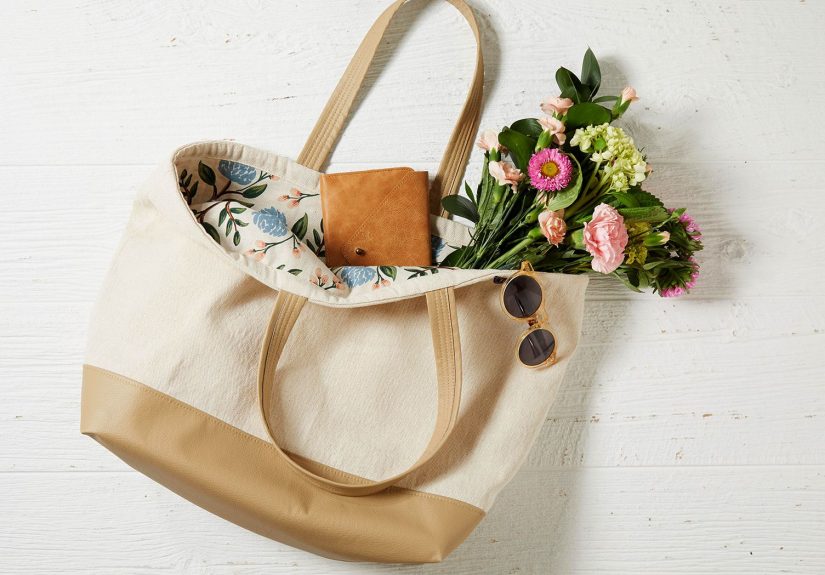
21) Basic Tote Bag
Why it’s easy: Straight seams, big pieces, forgiving shape.
Skills: straps, boxed corners (optional), topstitching.
Pro tip: Add interfacing to the straps so they don’t collapse like wet noodles.
22) Reusable Market Bag
Why it’s easy: Tote bag’s practical cousingreat for daily use.
Skills: pockets, reinforced seams.
Pro tip: Use canvas or duck cloth if you want it to carry “one too many” groceries.
23) Pillowcase (Two Easy Methods)
Why it’s easy: Mostly straight lines; great first “real” project.
Skills: clean hems, seam finishing.
Pro tip: A cuffed pillowcase looks boutique-level with beginner-level effort.
24) Simple Curtains (Straight Panels)
Why it’s easy: It’s just long hems and a rod pocket or clips.
Skills: long straight seams, measuring, patience.
Pro tip: Measure twice, hem once. Fabric is not cheap, and math is unforgiving.
25) Fabric Basket (Soft Bin)
Why it’s easy: Teaches structure without complex pattern pieces.
Skills: boxed corners, working with interfacing, turning bulky edges.
Pro tip: Use a heavy interfacing for a basket that actually stands up.
Level 4: Zippers Without Tears (Okay, Maybe One Tiny Tear)
Zippers feel intimidating until you do one and realize it’s mostly “sew close to the teeth, don’t sew
over the teeth, move the zipper pull when it gets in the way.”
26) Flat Zipper Pouch
Why it’s easy: Rectangles + zipper = instant usefulness.
Skills: zipper installation, lining, topstitching.
Pro tip: Use a zipper foot if you have it, but go slow even if you don’t.
27) Boxy Zipper Pouch
Why it’s easy: Same concept as a flat pouch, just with more “shape.”
Skills: boxed corners, lining, zipper confidence.
Pro tip: Open the zipper before sewing the final seamunless you enjoy existential dread.
How to Pick Your First 3 Projects (A Simple Strategy That Works)
If you’re staring at this list like it’s a menu and everything looks good, here’s an approach that builds
skills quickly without overwhelming you:
-
One “straight lines only” project (napkins, bookmarks, coasters) to learn seam allowance
and machine control. - One “functional” project (drawstring bag, scrunchie, potholder) so you get a useful win.
-
One “confidence stretch” project (tote bag, pillowcase, zipper pouch) that introduces
a new technique.
This sequence works because it stacks skills: you learn to sew straight, then you learn to build something,
then you learn one new “grown-up” technique. That’s how beginners turn into people who casually say things
like, “Oh, I made that.”
Common Beginner Mistakes (And How to Fix Them Like a Calm Adult)
Your seams look wavy
Usually it’s speed. Slow down and guide the fabricdon’t pull it. Let the machine feed it through. Use
the edge of your presser foot or a seam guide to keep a consistent seam allowance.
The fabric bunches under the needle
Check that you’re starting with the presser foot down, holding thread tails at the beginning, and using
the right needle. Lightweight fabrics may benefit from a slightly shorter stitch length and gentle handling.
Everything looks “homemade” in a bad way
Press your seams. Then press them again. The iron is the difference between “I made this!” and “I made this
and it looks like it belongs in a store.”
Beginner Sewing Experiences: What It’s Really Like (500-ish Words of Realistic Encouragement)
Here’s the most honest thing about beginner sewing: your first few projects will teach you more about
patience than about fabric. You’ll start with big hopes and a fresh spool of thread, and within minutes
you’ll be squinting at the needle area like it owes you money. That’s normal. Sewing is a skill where
tiny adjustmentshalf a turn of tension, a different needle, a slower pacecan turn chaos into clean seams.
Many beginners report the same early “aha” moment: the machine isn’t trying to ruin your day, it’s reacting
to setup. When stitches look messy, the fix is often boring (rethread the machine, change the needle,
insert the bobbin correctly, clean lint). It’s not glamorous, but it’s empowering. Once you realize you can
troubleshoot the basics, you stop feeling like sewing is magic and start feeling like it’s a system.
Another common experience: you’ll become emotionally attached to your seam ripper. At first, ripping out
stitches feels like failure. Then it becomes a normal steplike erasing pencil lines when you draw.
Beginners who improve fastest are the ones who treat mistakes as information. If your tote bag straps end
up uneven, you just learned to measure from a consistent reference point. If your zipper pouch has a weird
pucker, you just learned that pressing and topstitching matter. Sewing gives immediate feedback, and that’s
why it’s such a satisfying hobby once you stop taking it personally.
You’ll also learn what “good enough” means. A coaster doesn’t need museum-quality corners to protect your
coffee table. A scrunchie can be slightly lumpy and still do its jobplus, your hair will hide the evidence.
This is why beginner sewing projects are so effective: they’re useful even when you’re imperfect. That
usefulness keeps you motivated.
Beginners often find a rhythm that makes sewing feel easier: cut carefully, pin or clip generously, sew
slower than you think you should, then press. That last steppressingfeels optional until you see the
difference. Pressing flattens seams, sharpens edges, and makes your work look intentional. It’s like
putting a frame on a photo: suddenly it looks “finished.”
Finally, you’ll start noticing something fun: after a handful of easy sewing projects for beginners,
you stop asking “Can I make that?” and start asking “How would I make that?” You’ll see a tote bag in a
store and think about seam allowances. You’ll notice a pillow cover closure and recognize it as an envelope
back. That shift is the real win. Sewing isn’t just about the finished projectsit’s about gaining the
confidence to solve small, practical problems with fabric and thread (and maybe a little sass).
Conclusion
The best beginner sewing projects are the ones that keep you sewing. Start small, collect a few quick wins,
and let each project teach one new technique. Before you know it, you’ll have a stack of handmade items
around your homecoasters, bags, pillow covers, and pouchesplus the calm confidence of someone who knows
that mistakes can be fixed with a seam ripper and a deep breath.