Table of Contents >> Show >> Hide
- PLG vs. Product-Led Retention: Same Engine, Different Finish Line
- Why Retention Often Matters More Than Growth (Yes, Even in “Growth Stage”)
- The Metrics That Tell the Truth About Product-Led Retention
- The Product-Led Retention Playbook: Make the Product Hard to Replace (Not Hard to Cancel)
- 1) Win the first 30 days with ruthless clarity
- 2) Reduce time-to-value like it’s an emergency (because it is)
- 3) Make deployment, integrations, and migration embarrassingly easy
- 4) Drive product adoption, not just logins
- 5) Embed into workflows and organizations
- 6) Combine product-led and human-led at the right moments
- How to Operationalize Product-Led Retention (So It’s Not Just a Poster in the Kitchen)
- Mini Examples: What Product-Led Retention Looks Like in the Wild
- Common Traps: Retention Theater (Starring Everyone’s Favorite Excuses)
- Conclusion: Make Retention a Product Priority, Not a Renewal Surprise
Product-led growth (PLG) is the SaaS world’s favorite “easy button.” Sales costs feel high? Add a free tier. Pipeline feels slow? Add a free trial.
Investors love it. Users love it. Your CFO… tolerates it (after the AWS bill arrives).
But here’s the punchline too many teams learn the hard way: acquisition is exciting, retention is solvent.
You can grow your sign-ups with clever distribution, shiny landing pages, and the irresistible promise of “Start for free.”
You cannot retain customers with vibes.
SaaStr’s Jason Lemkin makes a blunt observation: in B2B, everyone talks about PLG, but far fewer teams obsess over
product-led retentionthe product doing the heavy lifting to keep customers around because it’s genuinely indispensable.
Not because canceling requires a carrier pigeon and a notarized letter.
PLG vs. Product-Led Retention: Same Engine, Different Finish Line
PLG is a go-to-market strategy where the product becomes the primary driver of acquisition, conversion, retention, and expansion.
In practice, that often means self-serve sign-up, fast onboarding, and a clear path to value without waiting for a demo.
Product-led retention (PLR) is what happens after the “Aha!” momentwhen your product keeps proving its value,
embeds itself into workflows, and gets renewed because leaving feels like ripping out plumbing, not deleting an app.
PLG gets a customer in the door. PLR makes sure they don’t treat your product like a free sample at Costco.
Why Retention Often Matters More Than Growth (Yes, Even in “Growth Stage”)
1) Churn turns your funnel into a leaky bucket
You can pour more leads into the top, but if customers keep leaving, your “growth” becomes an expensive treadmill.
Churn also hides in plain sight: revenue can rise while customer health declinesuntil renewals arrive like a surprise pop quiz.
2) Retention compounds (and churn compounds faster than your optimism)
Even “small” churn adds up. A few percentage points monthly can quietly become a big annual haircut.
Meanwhile, small improvements in retention can have outsized impact on profitability over timean idea emphasized for decades in classic retention research.
3) Retention creates optionality
Strong retention means you can fund growth from your existing base (expansion), be pickier about who you acquire,
and invest in product quality instead of constantly firefighting revenue losses.
Weak retention means you’re always one bad quarter away from panic-discounting and “strategic re-prioritization” (a.k.a. chaos).
The Metrics That Tell the Truth About Product-Led Retention
Product-led retention isn’t a feeling. It’s measurable behavior and measurable revenue.
The trick is choosing metrics that reveal whether customers stick because they’re winningnot because contracts make it annoying to leave.
Logo retention and churn
Customer churn is the percentage of customers who leave in a given period. One common formula looks like this:
Track churn by segment (SMB vs. mid-market vs. enterprise; by use case; by acquisition channel).
Blended churn is how problems hide.
GRR: Gross Revenue Retention
GRR tells you how much revenue you keep from existing customers excluding expansions.
It’s the “no excuses” measure of whether customers are downgrading or leaving.
If your GRR is weak, expansion revenue might be masking the leak.
NRR (or NDR): Net Revenue / Net Dollar Retention
NRR is the retention metric SaaS teams love because it captures the full picture: retained revenue plus expansion, minus churn and contractions.
It answers: “If we stopped acquiring new customers today, would our existing base grow or shrink?”
The north star idea is simple: NRR above 100% means your base is expanding faster than it’s shrinking.
That’s not just “good.” It’s the closest thing SaaS has to a cheat codebecause it’s powered by customers who keep paying and often pay more.
Activation, time-to-value, and retention cohorts
Product-led retention starts earlier than most teams admit. If activation is messy, retention becomes an uphill climb.
Track:
- Time-to-value (TTV): how quickly a user reaches a meaningful outcome.
- Activation rate: what percent of new users hit your “Aha!” event within a target window.
- Cohort retention curves: do users come back week after week, month after month?
A retention curve is basically the product telling you, “Yes, they keep coming back,” or “No, they used it once and moved on with their life.”
The Product-Led Retention Playbook: Make the Product Hard to Replace (Not Hard to Cancel)
If product-led retention had one job description, it would be:
reduce customer effort while increasing customer outcomes.
Here’s how the best teams do itwithout resorting to villainy.
1) Win the first 30 days with ruthless clarity
The early lifecycle is where customers either build a habit or build an exit plan.
Your goal is to get users to a quick, undeniable winthen repeatable wins.
- Guide in-app, don’t lecture: short, contextual prompts beat “Read our 27-page onboarding PDF.”
- Use templates and defaults: blank states are where motivation goes to die.
- Make the first success visible: show progress, outcomes, and “what’s next” in plain English.
2) Reduce time-to-value like it’s an emergency (because it is)
Customers don’t churn when they’re winning. They churn when they’re stuck, confused, or underwhelmed.
Reducing time-to-value means removing friction between “sign up” and “benefit.”
- Segment onboarding paths: different personas need different first steps.
- Put help where the confusion happens: tooltips, checklists, and contextual docs.
- Teach “the job,” not the UI: users want outcomes, not button tours.
3) Make deployment, integrations, and migration embarrassingly easy
SaaStr highlights a retention truth B2B teams often avoid: your product may be good, but switching costs (and setup pain)
determine whether customers stay long enough to experience “good.”
If customers must run a six-week project plan just to see value, you’re not selling softwareyou’re selling a lifestyle.
Reduce the setup burden:
- Self-serve deployment: even if larger customers still want guidance, self-serve capability improves everything.
- One-click integrations where possible: fewer steps = more adoption.
- Migration that doesn’t require a therapist: make data import predictable, fast, and validated.
The goal is not “perfect automation.” The goal is “less dread.”
4) Drive product adoption, not just logins
Product adoption is the journey from awareness to habitual use. True adoption means the value outweighs the effort of change,
and the product becomes part of a daily routinenot a bookmarked tab of shame.
Tactics that work:
- Feature discovery with purpose: recommend the next best action based on the user’s job-to-be-done.
- “Mastery moments”: teach users the workflows that make them faster or smarter.
- Multi-user value: retention improves when teams collaborate, share dashboards, assign tasks, and build internal dependencies.
5) Embed into workflows and organizations
Retention strengthens when your product becomes part of the customer’s operating system.
That often means:
- Workflows: your product becomes “where the work happens,” not “where the work is reported later.”
- Integrations: your product connects to the tools customers already trust.
- Organizational hooks: roles, permissions, audit logs, governance, and admin confidence for larger customers.
Translation: make it useful for end users and safe for the people who worry about security, compliance, and “who broke the dashboard.”
6) Combine product-led and human-led at the right moments
Product-led retention doesn’t mean “no humans allowed.”
It means humans show up where they have leverage: complex setups, strategic workflows, expansion opportunities, and rescue missions.
Your product handles the basics at scale; your team handles the high-impact moments with context and empathy.
How to Operationalize Product-Led Retention (So It’s Not Just a Poster in the Kitchen)
Create a retention cadence
- Weekly: activation + early retention cohorts, top friction points, and onboarding drop-offs.
- Monthly: GRR/NRR trends, churn reasons, expansion drivers, and product usage health.
- Quarterly: retention by segment, pricing/package fit, and what’s changing in customer expectations.
Build the “Retention Dashboard” that your board can’t ignore
SaaStr’s point about “no board slide” is a warning: if retention isn’t visible, it won’t be prioritized.
A practical dashboard includes:
- NRR and GRR over time (with segment splits)
- Logo retention and churn (again: segment splits)
- Activation rate and time-to-value
- Retention cohorts by persona/use case
- Top product friction points (qual + quant)
Use cohort analysis to find the truth
Cohorts show whether new onboarding improvements actually change behavior over time.
Instead of asking, “Did sign-ups go up?” you ask, “Do these users still come back in week 4, week 8, and month 6?”
Mini Examples: What Product-Led Retention Looks Like in the Wild
The “hard to rip out” enterprise benchmark
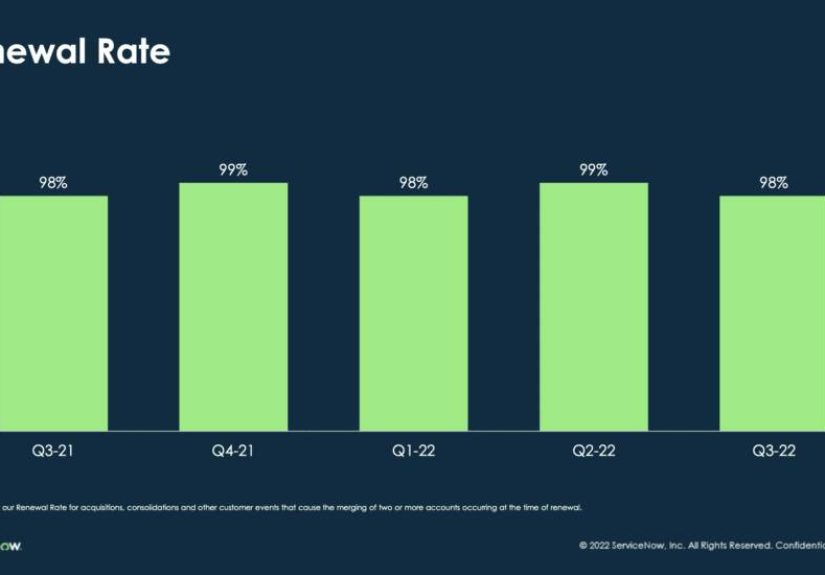
SaaStr points to companies with extremely high renewal rates as the retention ideal: the product is deeply embedded,
customers build workflows around it, and churn becomes rare.
That’s the benchmark mindset: become essential to the operating model, not just “nice to have.”
The self-serve expectation (Slack/Dropbox-style)
In modern B2B, users expect consumer-grade speed: sign up, try it, get value quickly.
When that experience is smooth, adoption spreads inside organizationsand retention becomes less about “convincing”
and more about “supporting what’s already working.”
Targeted in-app messaging that improves adoption
Product analytics platforms and in-app guidance tools often highlight a simple win:
messages and onboarding steps tailored to user behavior outperform generic onboarding.
When users see the right next step at the right time, activation and long-term adoption improve.
Common Traps: Retention Theater (Starring Everyone’s Favorite Excuses)
Trap 1: “Customer Success will fix it”
Customer Success is powerful, but it’s not a patch for a product that’s confusing, slow to value, or missing core outcomes.
If CS is spending most of its time explaining basic setup, your product isn’t product-ledit’s “PowerPoint-led.”
Trap 2: Confusing expansion with love
NRR can look great even if customers are unhappyespecially if price increases or contract terms drive revenue up.
That’s why GRR and logo retention matter. They tell you whether customers would stay if they had an easier exit.
Trap 3: Dark patterns that raise short-term numbers and long-term anger
Making cancellation hard is not product-led retention. It’s customer-hostage management.
Real PLR improves outcomes so customers want to stay.
Conclusion: Make Retention a Product Priority, Not a Renewal Surprise
Product-led growth gets all the applause because it’s flashy: sign-ups spike, conversions climb, and the funnel looks alive.
But product-led retention is what makes the whole thing durablebecause it turns initial curiosity into lasting value.
The practical shift is simple (and inconvenient): stop treating retention like a downstream metric that Customer Success “handles.”
Treat it like a product capability. Design for fast wins, deep adoption, easy integrations, and workflows that stick.
Then measure it with cohorts, GRR/NRR, and activationnot just vibes and vanity metrics.
Experience Appendix : What Teams Commonly Learn When They Chase Product-Led Retention
When SaaS teams seriously prioritize product-led retention, the first “experience” is usually emotional: mild discomfort.
That’s because retention work forces you to look at what customers actually do, not what you hoped they’d do after a lovely demo.
Funnels feel comfortingeveryone moves left to right on a slide. Retention is messier. People bounce, stall, come back, disappear,
and return months later after their boss asks, “Are we still paying for this?”
One of the most common lessons is that teams often argue about the definition of activation before they improve it.
Marketing might say activation is “created an account.” Product might say it’s “completed setup.” Customer Success might say it’s
“achieved the first meaningful outcome.” The retention-minded version of activation wins: it’s the moment the user can say,
“Ohthis helps me.” Once that definition is shared, the team can redesign onboarding to make that outcome happen faster.
Another repeated pattern: the biggest retention wins come from reducing customer effort, not adding more features.
Teams will frequently discover that churn is driven by unglamorous frictionpermission errors, confusing configuration,
unclear pricing boundaries, integrations that “work” but require seven steps and a strong coffee. Fixing those issues rarely makes
the release notes go viral. But it does make customers feel competent, successful, and safethree feelings that quietly beat “excited”
when it comes to renewals.
Teams also learn that retention is a segmentation problem. A single blended retention number can hide the truth:
one use case retains beautifully, another falls apart; one customer size segment expands, another contracts; one acquisition channel
brings in “tourists” who churn, another brings in committed users who grow. Retention-focused organizations get disciplined about cohort analysis:
they track behavior over time by persona, use case, industry, and “how they first found us.” That’s usually when the roadmap gets sharper,
because the team can finally answer, “Which customers are we truly built for?”
There’s also a cultural change that shows up: the organization stops celebrating sign-ups alone and starts celebrating adoption.
Teams begin to share stories like, “Customer X automated a workflow and saved five hours a week,” not just “We hit 10,000 new trials.”
That shift matters because it nudges the product toward outcomes and away from surface-level engagement. It also changes internal incentives:
if PMs, Growth, and CS all share responsibility for activation and retention, the product becomes easier to use and more aligned with real work.
Finally, many teams experience a counterintuitive result: once retention improves, growth feels easier.
Support load drops because users understand the product. Word-of-mouth improves because customers have something good to say.
Expansion becomes more natural because satisfied users invite teammates and adopt more workflows. In other words, product-led retention doesn’t replace
product-led growthit powers it. PLG is the front door. PLR is the foundation that keeps the house standing.