Table of Contents >> Show >> Hide
- Why Pets Get Caught Red-Handed (It’s Not SpiteIt’s Science)
- The 236 “Caught-in-the-Act” Moments, Sorted into 9 Classic Pet Crimes
- The “Guilty Look” Isn’t a Confession (But It’s Great Theater)
- What to Do When You Catch Your Pet Red-Handed
- Mischief-Proofing: Prevent the Photo Ops
- When It’s Not Funny: Red Flags That Deserve a Vet or Behavior Pro
- Why We Laugh (Even While Holding a Trash Bag)
- of “Caught Red-Handed” Pet-Parent Experiences
- Conclusion
There are two kinds of homes: ones where the trash can has a lid, and ones where the dog has a résumé.
If you’ve ever walked into a room and immediately thought, “This happened on purpose,” you already know
the unique chaos of living with animals who are equal parts adorable and unlicensed professionals in petty crime.
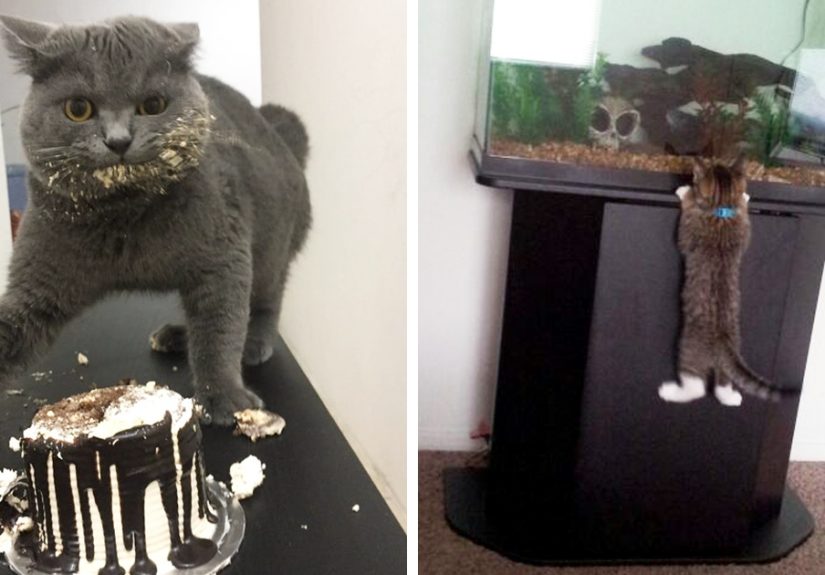
This is a love letter to the 236 moments we’ve all seen (or survived): the shredded tissue snowstorm, the
suspiciously shiny peanut-butter tongue, the cat sitting inside the box it just destroyed, staring at you like
you’re the weird one. We’re not here to shame your petsokay, maybe gently, with comedic effect.
We’re here to explain what’s really going on, why pets get “caught in the act,” and how to prevent repeat offenses
without turning your living room into a maximum-security facility.
Why Pets Get Caught Red-Handed (It’s Not SpiteIt’s Science)
When pets do something “bad,” it’s tempting to treat it like a personal attack on your furniture, your schedule,
and your will to live. But most pet mischief falls into a handful of predictable buckets: instincts, boredom,
stress, opportunity, and accidental training (yes, we sometimes reward crimes without realizing it).
1) Instincts: The Original “I Regret Nothing”
Dogs are natural scavengers. Cats are natural climbers, stalkers, and gravity researchers. If your dog raids the
trash or your cat launches a spoon off the counter, they’re not trying to ruin your daythey’re running ancient
software on modern hardware.
2) Boredom: Mischief Is a Hobby
A bored pet will invent entertainment. Unfortunately, their idea of “fun enrichment activity” may involve
relocating every sock you own to a secret underground bunker (behind the couch). If an action consistently
gets attentionlaughing, yelling, chasingit can become self-reinforcing.
3) Stress or Anxiety: Chewing, Scratching, and “I Panicked” Energy
Some behaviors aren’t comedy; they’re coping. Destructive chewing, shredding, and escape attempts can show up
when pets feel anxiousespecially when left alone. If the destruction is concentrated around doors, windows,
or your personal items, that can be a clue your pet isn’t being “bad,” they’re being overwhelmed.
The 236 “Caught-in-the-Act” Moments, Sorted into 9 Classic Pet Crimes
If we tried to list 236 individual incidents, this would become a full-length encyclopedia titled
Why Is There Spaghetti on the Rug? Instead, here are the nine repeat-offender categories behind most
red-handed pet photosplus what they usually mean and how to reduce future… documentation.
1) The Trash Raid
Evidence: Banana peels on the floor, suspicious chicken bone “art,” and a dog who suddenly can’t make eye contact.
Why it happens: Smell is basically a superpower. Trash is a buffet of fascinating scents and forbidden snacks.
Do this: Use a latched bin, keep trash behind a closed door, and train a solid “leave it.”
Bonus: prevent dangerous snacking on sharp, spoiled, or toxic items.
2) The Counter-Surfing Cat
Evidence: A loaf-shaped cat on the cutting board like they’re filming a cooking show.
Why it happens: Counters are high, interesting, and often smell like food. Also: counters reliably summon humans.
Do this: Remove food cues, clean surfaces, and provide a “legal” high perch nearby (cat tree, shelf, window seat).
Reward the perch like it’s the VIP lounge.
3) The Shoe Shredder
Evidence: One shoe untouched. One shoe turned into modern art.
Why it happens: Shoes smell like youcomforting, intense, and deeply chewable. Puppies also explore with their mouths.
Do this: Management first (put shoes away), then teach what to chew by rotating safe chews and rewarding correct choices.
4) The Toilet Paper Blizzard
Evidence: Your bathroom looks like it hosted a tiny winter festival. Your pet looks proud.
Why it happens: It’s easy to grab, fun to shred, and makes a dramatic messbasically a pet’s version of confetti.
Do this: Close the bathroom door, use a covered dispenser, and offer shreddable alternatives (paper bags, safe cardboard)
under supervision.
5) The Sofa Excavation
Evidence: A couch with “archaeological layers,” plus a pet who found the stuffing and decided it needed freedom.
Why it happens: Digging and chewing can be boredom relief, stress relief, or a self-made “nest.”
Do this: Increase exercise and mental work, provide a designated dig zone (snuffle mat, dig box), and limit unsupervised access.
If it happens mainly when you leave, consider an anxiety component.
6) The Plant Massacre
Evidence: Soil on the floor, leaves everywhere, and a pet sitting beside the pot like a confused gardener.
Why it happens: Plants move, dangle, and smell interesting. Some pets chew greenery out of curiosity or stomach upset.
Do this: Check plant safety, elevate plants, and offer greens designed for pets if appropriate (and vet-approved).
If eating plants is frequent, consider a behavior or medical check-in.
7) The “I Knocked It Over Because Physics” Cat
Evidence: A mug on the floor. A cat looking at the empty table like it’s a job well done.
Why it happens: Instinct (batting at objects), boredom, attention-seeking, or a learned “this makes my human react” loop.
Do this: Give structured play, puzzle feeders, and don’t accidentally reward the behavior with big reactions.
Quietly reset, then redirect to play.
8) The Laundry Basket Buffet
Evidence: A trail of socks leading to the dog bed like a breadcrumb path in a very specific fairy tale.
Why it happens: Scent, texture, and the thrill of stealing. Some pets also swallow fabric, which is dangerous.
Do this: Use a lidded hamper. Teach “drop it.” Offer safe tug toys and chews.
If swallowing happens, treat it like an emergency-risk habit, not a quirky personality trait.
9) The “It Was Like That When I Got Here” Frame-Up
Evidence: Something broken. A pet sitting nearby, perfectly still, as if practicing for a courtroom drama.
Why it happens: Sometimes… it truly was an accident. Sometimes it was play that got out of paw.
Sometimes it was a bored pet improvising.
Do this: Increase supervision during high-risk times, pet-proof tempting zones, and train replacement behaviors.
Think: “what do I want you to do instead?”
The “Guilty Look” Isn’t a Confession (But It’s Great Theater)
Let’s talk about the famous guilty dog face: head lowered, eyes big, body slightly curved like a croissant of regret.
It’s incredibly convincingand it often shows up even when the dog didn’t actually do the thing.
What’s happening? Many dogs are responding to you: your tone, posture, and the emotional temperature in the room.
The “guilty look” is frequently more about anticipating a human reaction than understanding moral wrongdoing.
In other words, your dog is reading your vibes like a bestselling novel.
What to Do When You Catch Your Pet Red-Handed
The moment matters. If you catch the behavior mid-action, you can interrupt and redirect. If you discover the mess later,
a lecture won’t helpyour pet won’t connect your anger to the earlier behavior, and anxiety can get worse.
Interrupt, Don’t Intimidate
- In the moment: Calmly interrupt (“ah-ah,” clap once, or call their name) and redirect to an appropriate option (toy, chew, scratcher).
- Reward the right thing: The instant they choose the approved item, reinforce it like they just won a medal.
- Skip the punishment spiral: Harsh corrections can increase fear, avoidance, and sneaky behaviorwithout teaching a better alternative.
Teach the Replacement Behavior
Training works best when it answers one simple question: “What should I do instead?”
If “don’t chew the shoe” is the rule, the replacement is “chew this toy.” If “don’t jump the counter” is the rule,
the replacement is “go to your perch.” Clear options reduce confusionand reduce crimes.
Mischief-Proofing: Prevent the Photo Ops
The highest-quality behavior plan is still no match for an unattended rotisserie chicken. Management is not failure.
Management is strategy. The goal is to prevent rehearsals of the unwanted behavior while you build better habits.
Quick Home Tweaks That Pay Off
- Lock or block trash and recycling. Food scraps and dangerous items are a double risk.
- Store shoes, kids’ toys, and laundry behind doors or in bins.
- Use baby gates to control “high temptation” areas.
- Provide legal outlets: chew stations, scratching posts, puzzle feeders, and elevated cat perches.
- Rotate enrichment so it stays interesting (novelty is powerful).
When It’s Not Funny: Red Flags That Deserve a Vet or Behavior Pro
Most pet mischief is normal. But some patterns deserve a closer lookespecially if they appear suddenly or escalate.
Consider professional help if you notice:
- Destruction focused around exits when you leave (possible separation distress).
- Chewing or eating non-food items (risk of intestinal blockage).
- Sudden changes in behavior, appetite, sleep, or energy alongside the “bad behavior.”
- Self-injury, frantic pacing, or nonstop vocalizing.
A veterinarian can rule out medical causes and guide next steps. A qualified trainer or behavior specialist can build a plan
that fits your pet’s brainnot just your living room.
Why We Laugh (Even While Holding a Trash Bag)
The reason “pets caught red-handed” content never gets old is simple: it’s deeply relatable.
These moments remind us that animals are curious, emotional, and hilariously committed to whatever makes sense in
their tiny, confident logic. They also remind us that behavior isn’t about “good pets” and “bad pets.”
It’s about needs, habits, and the environment we set up.
So yestake the picture. Then hide the bread. Then teach the “go to mat” cue. Then laugh again tomorrow when your
cat steals a single spaghetti noodle and sprints like they just robbed a bank.
of “Caught Red-Handed” Pet-Parent Experiences
If you live with pets long enough, you develop a sixth sense. You can hear the exact moment “quiet” becomes
“suspiciously quiet.” You know the difference between normal chewing sounds and the crisp, devastating crunch of
something expensive. And you learn that pets don’t plan crimes the way humans dothey just follow opportunities
like they’re written in glowing neon.
One of the most common “red-handed” stories starts with food. A family turns their back for ten seconds, and the
dog performs a clean extraction: sandwich gone, plate untouched, and the only witness is a tail wagging at
half-speed like it’s trying to look casual. The lesson pet owners tend to learn isn’t “my dog is evil.” It’s
“my counters are not safe storage.” Once food stops being available, the behavior often fades because the payoff
disappears. (The dog will still check, of course. Due diligence is important.)
Cat households collect a different set of classics. There’s the “counter audition,” where your cat hops up as soon
as you start cookingbecause attention is happening and they would like to be where the plot is. Owners who succeed
often describe the same strategy: they stop treating counters like forbidden magic and start providing an
approved high spot nearby. Suddenly the cat can supervise dinner prep from a perch, feel included, and you can
chop onions without an extra paw in the mix.
Then there are the destruction stories that turn from funny to concerning: dogs who only shred things when left
alone, or who target doors and windows like they’re trying to tunnel out of the house. Many owners report that
the biggest shift comes when they reframe it as distress instead of disobedience. With guidance, they increase
exercise, use food puzzles, adjust departure routines, and build calm alone-time gradually. The “crime scene”
starts shrinking because the feeling behind it starts shrinking.
A final category is the accidental training loop. Pets do something mildly chaotic, humans react big, and the pet
learns, “Wow. Instant attention.” Owners who break that loop usually do two things: they reduce their reaction in
the moment and get proactive about scheduled play. Ten minutes of focused engagement can prevent an hour of
cleanup, because pets often choose the weird option when the normal options aren’t meeting the need.
Taken together, these experiences point to a comforting truth: most red-handed moments are predictable, fixable,
and not personal. The goal isn’t a perfectly behaved petit’s a pet whose needs are met, whose environment makes
success easy, and whose “crimes” are limited to stealing a single sock and falling asleep on it like a dragon
guarding treasure.
Conclusion
“Pets caught red-handed” will always be funny because it sits at the intersection of chaos and cuteness.
But behind the laugh is a practical playbook: reduce temptation, meet needs, reward the behavior you want,
and treat big destruction as a cluenot a character flaw. Do that, and you’ll still get hilarious moments…
just fewer that require a mop.