Table of Contents >> Show >> Hide
- How Fate Turns History Into a Superpowered Grail War
- Royalty Reimagined: Kings, Queens, and Emperors
- Saints, Martyrs, and Divine Icons
- Mythic Heroes From Legend and Folklore
- From the History Books to the Battlefront
- How Accurate Is Fate’s Version of History?
- Why Historical Figures Make the Fate Series So Addictive
- Fan Experiences: Meeting History Through Fate (Extra Deep Dive)
- Conclusion: When Anime Makes History Feel Legendary Again
One of the biggest joys of the Fate anime series is realizing that the dramatic sword fight you’re watching is technically a history lesson.
Behind every glittering armor set and over-the-top Noble Phantasm is a real (or at least legendary) figure pulled from myth, religion, and the history books.
If you’ve ever paused an episode of Fate/stay night, Fate/Zero, or Fate/Grand Order just to Google, “Wait, was this person actually real?”, you’re definitely not alone.
In the Fate universe, “Servants” are Heroic Spirits summoned for a deadly battle royale called the Holy Grail War.
Many of these spirits are based on kings, warriors, saints, and even serial killers who’ve been reshaped into anime icons.
The result is a wild mash-up where King Arthur is a stoic blonde knight in shining armor, Joan of Arc slings holy flames, and Gilgamesh hoards treasures like the world’s angriest dragon.
In this guide, we’ll look at some of the most striking historical figures who show up in the Fate anime series,
how their real-world stories compare to their on-screen counterparts, and why this franchise has quietly become one of the most entertaining ways to fall in love with history.
How Fate Turns History Into a Superpowered Grail War
The core premise of the Fate series is simple enough: modern mages summon legendary figures from across time as Servants, then battle for the wish-granting Holy Grail.
The nuance comes from how these Heroic Spirits are chosen and reimagined. Many are drawn from real historical sources, while others come from myth or religion, then remixed into stylized anime heroes.
The franchise pulls from everywhere: Mesopotamian epics, Celtic mythology, Japanese history, European war chronicles, even Victorian-era crime.
Sites that track Fate characters and their inspirations note how frequently the series layers factual history with creative license: personalities are exaggerated, genders are flipped, and timelines get extremely flexible.
But there’s almost always some recognizable connection, whether it’s a specific battle, a famous quote, or a well-known legend that the show playfully references.
Let’s break down some of the most notable historical and mythological figures you’ll encounter as you watch Fate’s many anime entries.
Royalty Reimagined: Kings, Queens, and Emperors
King Arthur (Artoria Pendragon)
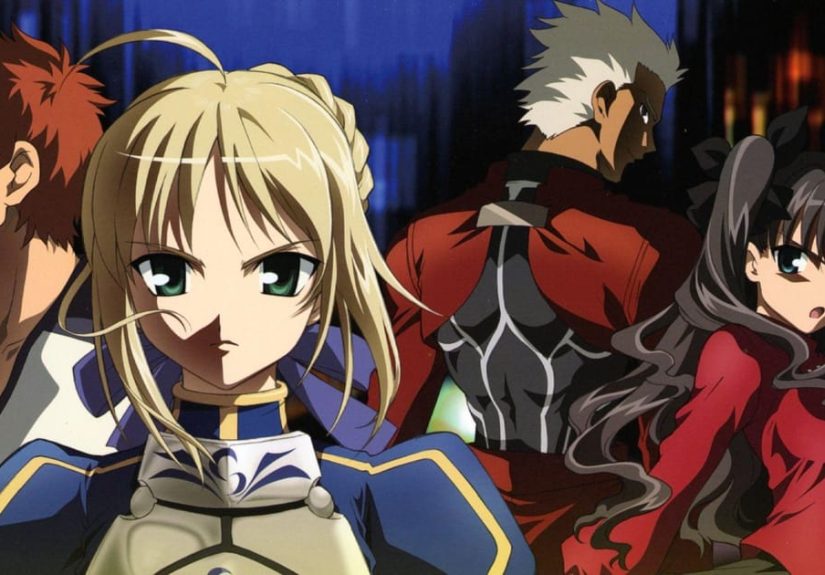
The most iconic Fate character is undoubtedly Saber, whose true identity is Artoria Pendragon, a gender-flipped version of King Arthur.
In Western legend, Arthur is the once and future king of Britain, tied to the sword Excalibur, the Knights of the Round Table, and the quest for the Holy Grail.
Fate keeps all those themes: Artoria is noble, painfully idealistic, and obsessed with her “perfect king” duty to her country.
The twist is that Fate turns Arthur into a woman who concealed her gender to take the throne.
Historically, Arthur’s existence is debated, with many historians treating him as a composite or mythic figure rather than a single documented king.
Fate leans into this ambiguity, treating Artoria as a real but legend-wrapped monarch whose regrets about her reign drive her every decision.
Her Noble Phantasm, Excalibur, visually embodies that myth by firing off a world-slicing beam of light instead of just… you know, being a sword.
Gilgamesh
If Artoria represents noble kingship, Gilgamesh is the absolute monarch dialed up to 11.
Based on the ruler from the ancient Mesopotamian Epic of Gilgamesh, he is one of humanity’s earliest known literary heroes.
Historical and literary sources depict him as a powerful but flawed king who goes on a journey to confront mortality.
In Fate, he shows up in golden armor, calling himself the “King of Heroes” and treating everyone else like they’re barely worthy of standing in his shadow.
His signature ability, Gate of Babylon, is a brilliant reference to his mythic status: he stores the prototypes of countless legendary weapons, symbolizing how early Mesopotamian culture influenced later myths.
In other words, Fate turns a classical epic hero into the smug final boss of history.
Alexander the Great (Iskandar)
In Fate/Zero, the Rider class is Iskandar, better known as Alexander the Great.
The real Alexander was the Macedonian king who conquered a vast empire stretching from Greece to India before his death in his early 30s.
Historians describe him as bold, ambitious, charismatic, and occasionally recklesstraits that Fate leans into with obvious delight.
Iskandar in Fate is loud, larger-than-life, and constantly recruiting people to his dream of conquest.
His Noble Phantasm, Ionioi Hetairoi, summons his legendary army, the Companion Cavalry, as a reality-warping battlefield in which his loyal soldiers charge alongside him once more.
It’s a visually spectacular way of expressing how Alexander’s charisma rallied people to follow him into territory the world had never seen.
Nero Claudius
Nero Claudius, a Roman emperor with a notoriously messy historical reputation, becomes a flamboyant Saber-class Servant in some Fate entries.
Ancient sources often depict Nero as a tyrant associated with extravagance, artistic vanity, and political cruelty, though modern historians debate how much of that is biased propaganda.
Fate leans into the “theater kid emperor” angle. Nero is bombastic, constantly referencing herself as a performer, and wields her sword with operatic flair.
Her Roman Imperial motifs, laurel wreath, and obsession with “audience approval” all play off the caricature of Nero as a ruler who wanted to be adored for her artistic genius as much asif not more thanher political power.
Saints, Martyrs, and Divine Icons
Jeanne d’Arc (Joan of Arc)
Jeanne d’Arc appears in Fate/Apocrypha as a Ruler-class Servant.
Historically, Joan of Arc was a French peasant girl who claimed to receive divine visions during the Hundred Years’ War,
helped lift the siege of Orléans, and was eventually captured and executed for heresy.
Centuries later, she was canonized as a saint and transformed into a national symbol of French resilience.
Fate captures both the religious devotion and tragic weight of Jeanne’s story.
She carries a massive flag rather than a typical weapon, representing her role as a standard-bearer and spiritual leader rather than a straightforward warrior.
Her abilities draw on divine protection and judgment, mirroring her real-world status as someone who stood between earthly politics and heavenly conviction.
Other Notable Saints and Religious Figures
The broader Fate franchise also borrows from Christian and other religious traditions, weaving in heroic or infamous figures tied to faith.
Characters inspired by saints, prophets, and divine messengers often appear with powers that visually echo miracles or sacred relics.
While the series takes obvious creative liberties, it usually keeps the core theme of faith, sacrifice, or moral conflict intact,
turning theological debates into intense magical showdowns.
Mythic Heroes From Legend and Folklore
Cu Chulainn
Cu Chulainn, who appears as a Lancer-class Servant, comes from Irish mythology, particularly the Ulster Cycle.
The original tales describe him as a ferocious hero with superhuman battle rage, wielding the cursed spear Gáe Bolg and fighting in defense of Ulster.
Fate’s version keeps his spear, his loyalty, and his tragic destiny.
His Noble Phantasm, Gáe Bolg, reverses cause and effect so that its strike is guaranteed to pierce the opponent’s heartan anime-friendly way of dramatizing the spear’s inevitability in folklore.
The blue outfit and casual demeanor are modern embellishments, but the core concept of a loyal yet doomed warrior comes straight from the old stories.
Medusa
In Greek mythology, Medusa is a Gorgon whose gaze turns onlookers to stone.
In Fate, she appears as Rider, a tall, mysterious woman bound by a blindfold and chains, hinting at her dangerous power.
The infamous stone-gaze becomes the Noble Phantasm Bellerophon and other Medusa-inspired abilities that can petrify opponents.
The show reimagines her not just as a monster, but as a tragic figure whose beauty, curse, and isolation are all connected to how others treated her.
This reflects a more modern reading of the Medusa myth, where she is sometimes interpreted less as a villain and more as a victim of the cruelty of gods and men.
Heracles
Heracles (Hercules in Roman myth) appears as Berserker, towering and nearly unstoppable.
Mythologically, Heracles is known for his Twelve Labors, feats of superhuman strength, and moments of madness influenced by the gods.
Fate channels that history by placing him in the Berserker class, amplifying his raw power but limiting his reason.
His Noble Phantasm, God Hand, grants multiple resurrectionsan echo of how mythic heroes often survive impossible trials.
Where legend describes many near-death experiences and impossible labors, Fate translates this into a literal extra-life mechanic, turning mythic resilience into game-like combat rules.
From the History Books to the Battlefront
Oda Nobunaga
One of Japan’s most popular historical figures to show up in Fate is Oda Nobunaga, the “Demon King of the Sixth Heaven,” a powerful daimyo who helped unify Japan during the Sengoku period.
Historical records highlight his military brilliance, ruthless political strategy, and dramatic death at Honnō-ji.
Fate cheerfully turns Nobunaga into a stylish, gun-toting rockstar warlord.
Her design fuses traditional Japanese armor with exaggerated stage presence, and her Noble Phantasms often emphasize firearms, fire, and battlefield domination.
The playful take still nods to reality: her association with firearms reflects Nobunaga’s early and effective adoption of guns in actual warfare.
Okita Souji
Okita Souji was a real captain of the Shinsengumi, a special police force in late Edo-period Japan.
He was known for his swordsmanship and reportedly died young from tuberculosis.
Historical accounts describe him as both talented and ill-fated, a combination Fate loves to dramatize.
In the series, Okita appears as a quick, powerful swordswoman whose combat style emphasizes speed and precision.
Her attacks and story beats often foreshadow her poor health, turning the image of the “smiling, deadly swordsman” into a bittersweet character arc.
Florence Nightingale
Yes, Florence Nightingale shows up toobecause why shouldn’t the founder of modern nursing become a terrifying Berserker?
Historically, Nightingale revolutionized hospital sanitation and statistics during the Crimean War, saving countless lives and reshaping medical care.
Fate exaggerates her uncompromising will into a battle philosophy: she will heal you, even if she has to violently break through the battlefield to do it.
Her design mixes nurse iconography with militaristic imagery, turning her obsession with patient care into a full-on war against anything that threatens human health.
It’s historically ridiculous and thematically brilliant at the same time.
Jack the Ripper
Fate doesn’t shy away from darker corners of history, either. Jack the Ripper, the unidentified serial killer from Victorian London, appears as a Servant whose identity embodies the fear and mystery surrounding the real case.
Because Jack’s true identity was never confirmed, the character becomes an embodiment of urban legend as much as historical record.
Different Fate works interpret Jack differently, but the common thread is that this Servant’s existence is tied to the misery of a specific time and place.
This approach mirrors how historians and true-crime researchers still debate what Jack’s crimes say about Victorian society, poverty, and exploitation.
How Accurate Is Fate’s Version of History?
Let’s be honest: the Fate series is not trying to be a documentary.
Fans and critics who’ve compared the anime to historical sources generally agree that its first priority is drama, character appeal, and rule-of-cool battle scenesaccuracy comes second.
Gender flips, personality overhauls, and magical power sets are all used freely.
That said, the writers clearly did their homework.
Many Noble Phantasms reference specific events (like Alexander’s famed cavalry), artifacts (like Excalibur or holy relics), or themes (like Gilgamesh’s association with ancient civilization’s “treasures”).
Even when the details are embellished, there’s often a kernel of truth at the center that curious viewers can trace back to real-world history or myth.
The result is a fun, layered experience: if you just want cool fights, Fate delivers.
If you also enjoy connecting those fights to real people and legendsfrom Babylon to Ireland to Japanthe series becomes a gateway into world history wrapped in flashy animation.
Why Historical Figures Make the Fate Series So Addictive
Using historical figures in anime isn’t new, but Fate’s formula is especially sticky.
Each Servant isn’t just a random warriorthey come preloaded with centuries of symbolism.
When Artoria struggles with kingship, viewers are really engaging with the idea of ideal rulership.
When Iskandar laughs his way toward conquest, the show is nudging you to think about ambition and legacy.
When Jeanne stands between warring factions, it’s echoing her real-life role as a religious and national symbol.
The more you know about the underlying history, the richer these scenes become.
But even if you start with zero background knowledge, Fate often serves as the spark that gets you exploring mythology, medieval politics, or ancient epics on your own time.
Fan Experiences: Meeting History Through Fate (Extra Deep Dive)
Beyond the screen, historical figures in the Fate anime series have shaped how many fans experience and learn about history.
Plenty of viewers start out just looking for a stylish fantasy series and end up falling down a rabbit hole of online articles, documentaries, and books about the “real” versions of their favorite Servants.
For newer anime fans, Fate often becomes a kind of unofficial world history sampler.
You might watch Fate/Zero and walk away curious about Alexander the Great’s actual campaigns, then discover ancient Macedonian politics, the Persian Empire, and the Hellenistic world.
Or maybe you meet Jeanne d’Arc in Fate/Apocrypha and suddenly find yourself reading about the Hundred Years’ War, medieval France, and the politics of canonization.
Classroom discussions sometimes get an unexpected boost from Fate, too.
Students who already know these “anime versions” of historical figures may recognize names and events when they appear in textbooks.
Teachers occasionally use that familiarity as a hook: “Yes, Joan of Arc is in that anime you likenow let’s look at what actually happened and what the show changed.”
The gap between Fate’s version and the textbook can become a starting point for talking about bias, myth-making, and how stories evolve over time.
Conventions and fan spaces add another layer.
Cosplayers dress as Artoria, Gilgamesh, or Nobunaga and end up learning historical details just to make their outfits more accurateor at least to include clever references.
You’ll see fans debating which depiction of King Arthur across media is their favorite, or whether Fate’s Florence Nightingale, ridiculous as she is, captures anything true about her relentless work ethic and demanding standards for care.
Fate/Grand Order, the mobile game spin-off, amplifies this effect by introducing dozens more historical and mythological figures from all over the world.
Players collect and interact with people they might never have encountered in a typical classroom curriculumobscure kings, revolutionaries, inventors, and deities from underrepresented cultures.
That sense of discovery is part of the appeal: it feels like building your own cross-cultural, cross-era pantheon, even if everyone’s wearing very anime outfits.
Of course, there are downsides.
If someone relies only on Fate, they’ll walk away with a wildly distorted view of historyno, Gilgamesh was not actually a blonde anime man in golden armor, and Florence Nightingale did not beat enemies into good health.
But most fans understand that Fate is a springboard, not a syllabus.
It’s a starting point for curiosity, a stylish remix that nudges viewers toward deeper research if they want the “serious” version.
In that sense, the experience of watching Fate is a mix of entertainment, puzzle-solving, and self-driven learning.
You’re constantly asking, “What part of this is real? What part is embellished? Why did the creators choose this angle?”
That questioning mindset is exactly what good historical storytelling should inspirewhether it’s coming from a textbook or a supernatural Holy Grail War.
So if you’re obsessed with Fate’s Servants, you’re already halfway to being a history nerd.
All you have to do is follow the breadcrumbsfrom anime battlefield to real-world timelineand suddenly the names scrolling past in the end credits feel a lot closer to home.
Conclusion: When Anime Makes History Feel Legendary Again
The Fate anime series takes kings, saints, warriors, and legends from across human history and drops them into a single, chaotic magical war.
Is it historically accurate? Not really.
Is it a brilliant way to make history feel alive, emotional, and relevant to modern viewers? Absolutely.
By reimagining figures like King Arthur, Gilgamesh, Alexander the Great, Jeanne d’Arc, Oda Nobunaga, Cu Chulainn, Medusa, Heracles, Florence Nightingale, and Jack the Ripper,
Fate turns old names from textbooks into characters you care about.
It invites you to explore the stories behind the spectacle and to see historical and mythological figures not as dusty relics, but as people whose legends still echo today.
If you’re already a Fate fan, diving into the real history behind your favorite Servants will only deepen your appreciation for the franchise’s creativity.
And if you’re a history lover who hasn’t watched Fate yet, consider this your official excuse to call anime “research.”
SEO JSON DATA