Table of Contents >> Show >> Hide
- Quick Anatomy: Where the Humerus Breaks (and Why Location Matters)
- Types of Humerus Fractures
- Common Causes and Risk Factors
- Symptoms: What a Humerus Fracture Feels Like
- Diagnosis: How Clinicians Confirm the Fracture
- Treatment Options
- Healing Time: What “Recovery” Really Means
- Rehab and Physical Therapy: Where the Real Work Happens
- Possible Complications (and How They’re Managed)
- Prevention: How to Reduce the Risk of a Humerus Fracture
- Frequently Asked Questions
- Real-Life Recovery Experiences (What People Commonly Report)
- Conclusion
Your humerus is the long bone in your upper armthe one connecting your shoulder to your elbow. It’s sturdy, hardworking, and (tragically) named like it should come with a joke. But a humerus fracture is not the funny kind of “humerus.” It’s a real break that can range from a small crack to a more complex injury that needs surgery and a carefully planned recovery.
This guide explains the major types of humerus fractures, what usually causes them, how clinicians decide between a sling, a brace, or an operation, and what a realistic healing time looks like for different fracture locations and age groups. You’ll also get a clear rehab roadmapbecause healing isn’t just about the bone knitting back together; it’s about getting your arm back to doing arm things without feeling like it’s made of rusty hinges.
Quick Anatomy: Where the Humerus Breaks (and Why Location Matters)
The humerus has three main regions, and the “zip code” of your fracture strongly influences treatment and recovery:
- Proximal humerus: the upper part near the shoulder (including the “ball” of the shoulder joint).
- Humeral shaft: the long middle portion of the bone.
- Distal humerus: the lower end near the elbow joint.
Shoulder-adjacent fractures often affect arm lifting and rotation. Shaft fractures raise special concerns about nearby nerves. Distal fractures may impact elbow motion and sometimes require more precise alignment because the elbow joint is less forgiving.
Types of Humerus Fractures
1) Types by Location
Proximal Humerus Fracture (Near the Shoulder)
These are common after fallsespecially in older adults with osteoporosis. Many are minimally displaced (bone pieces still mostly lined up) and can be treated without surgery. More complex fractures may involve multiple fragments, or the bone may shift enough to affect shoulder mechanics.
In severe cases (particularly in older adults with a shattered or “comminuted” proximal humerus), surgeons may recommend fixation with plates/screws or, sometimes, a type of shoulder replacement to restore function when the fracture can’t be reliably rebuilt.
Humeral Shaft Fracture (Middle of the Upper Arm)
Shaft fractures happen from higher-energy events (sports collisions, vehicle crashes) but also from simple falls. Many shaft fractures can heal well with non-surgical treatment using a splint at first and then a functional brace (often called a Sarmiento brace) that stabilizes the bone while allowing controlled movement.
A key issue here: the radial nerve travels near the humeral shaft. It helps control wrist and finger extension. Some shaft fractures are associated with temporary nerve irritation or palsy, which usually improves over timebut it must be checked carefully.
Distal Humerus Fracture (Near the Elbow)
Distal humerus fractures can involve the elbow joint surface. Because elbow mechanics rely on precise alignment, these fractures are more likely to need surgery if the joint is disrupted or the fracture is displaced.
2) Types by Fracture Pattern (What the Break Looks Like)
- Non-displaced vs. displaced: whether the bone ends stayed aligned.
- Simple vs. comminuted: one clean break vs. multiple fragments.
- Transverse, oblique, or spiral: direction and shape of the fracture line.
- Open vs. closed: whether the skin is broken (open fractures require urgent medical care).
- Pathologic fracture: a break through weakened bone (e.g., from osteoporosis or a tumor).
Common Causes and Risk Factors
Most humerus fractures are caused by traumaeither high-energy (sports, crashes) or low-energy (a simple fall). The same fall can be “no big deal” for one person and a fracture for another, largely due to bone quality and age.
Typical Causes
- Falls: especially onto an outstretched hand or directly onto the shoulder/elbow.
- Sports injuries: contact sports, cycling crashes, skating falls, and similar impacts.
- Motor vehicle collisions: direct blows, twisting forces, or multiple injuries.
- Direct trauma: a hard hit to the upper arm.
Risk Factors That Raise the Odds
- Osteoporosis/osteopenia: weaker bones fracture more easily.
- Older age: higher fall risk + lower bone density in many adults.
- Certain medical conditions: that affect bone strength (your clinician can guide this).
- Tobacco use: associated with slower bone healing.
- Nutrition issues: inadequate protein, calcium, and vitamin D can matter for recovery.
Symptoms: What a Humerus Fracture Feels Like
Symptoms vary, but these are common:
- Sudden, severe pain in the upper arm, shoulder, or elbow
- Swelling and bruising
- Decreased ability to move the shoulder or elbow
- Deformity or the arm looking “off”
- Grinding sensation with movement (don’t test thislet imaging do the work)
Red Flags That Need Urgent Evaluation
- Numbness, tingling, or weakness in the hand/wrist/fingers (possible nerve involvement)
- Coldness, pale color, or weak pulse in the hand (possible blood flow problem)
- Skin is broken near the injury (possible open fracture)
- Pain that seems out of proportion or rapidly worsening swelling
Diagnosis: How Clinicians Confirm the Fracture
Diagnosis usually starts with a physical exam and imaging. Providers assess:
- Alignment: how far pieces shifted
- Stability: likelihood the fracture will stay aligned in a brace/sling
- Joint involvement: especially in proximal and distal fractures
- Nerves and blood vessels: sensation, strength, pulse, and circulation
Imaging Tests
- X-rays: the main test for most humerus fractures.
- CT scan: sometimes used to map complex fractures near joints.
- MRI: less common for the fracture itself, more for soft-tissue injuries in select cases.
Treatment Options
Treatment depends on location, displacement, fracture pattern, age, activity goals, and whether nerves/vessels are involved. The overall goals are simple: align the bone well enough to heal, keep you safe, and restore function with rehab.
Non-Surgical Treatment (Often Effective)
Many humerus fractures heal without surgery. Typical non-operative tools include:
- Sling or shoulder immobilizer: common for proximal fractures and early support for many injuries.
- Splinting: often used initially for shaft fractures to control pain and swelling.
- Functional bracing: commonly used for humeral shaft fractures after the early phase.
- Pain control: typically acetaminophen and other clinician-directed options; some injuries may require short-term stronger medication.
- Physical therapy: started at the right time to prevent stiffness and rebuild strength.
A key concept: “non-surgical” doesn’t mean “do nothing.” It means structured immobilization plus progressive rehab. Follow-up X-rays are used to confirm alignment and healing progress.
Surgical Treatment (When It’s the Best Option)
Surgery may be recommended when the fracture is too displaced/unstable, involves a joint surface, is open, or is associated with certain nerve/vascular problems. Common procedures include:
- ORIF (Open Reduction and Internal Fixation): plates and screws align and stabilize the bone.
- Intramedullary nailing: a rod placed inside the bone canal (often used in some shaft fractures).
- External fixation: less common for routine cases, sometimes used in complex trauma.
- Shoulder arthroplasty (replacement): considered for some severe proximal fractures, especially in older adults when reconstruction is unlikely to succeed.
Surgery is not a “shortcut” to healing. It’s a strategy to create stable alignment so the bone can heal and rehab can start safely. It still requires time, careful activity limits, and structured physical therapy.
Healing Time: What “Recovery” Really Means
“Healing time” has two layers:
- Bone healing (union): the fracture knits together enough to be stable.
- Functional recovery: strength, range of motion, coordination, and confidence return.
Typical Bone Healing Timelines (General Ranges)
- Proximal humerus: often around 3–4 months for bone healing in many cases, with functional improvement continuing beyond that.
- Humeral shaft: commonly around 8–12 weeks for bone union in many non-surgical brace protocols, though it varies widely.
- Distal humerus: timeline varies; joint involvement and surgery can influence rehab length, and elbow stiffness risk makes therapy especially important.
Why Healing Time Varies So Much
Two people can have “a humerus fracture” and experience totally different recoveries because of:
- Age and baseline bone quality
- Fracture displacement and complexity
- Smoking and certain health conditions
- Nutrition and overall activity level
- Adherence to restrictions (yes, lifting that “tiny” grocery bag can be a big deal early on)
A Practical Recovery Roadmap (What Many People Experience)
Every plan is individualized, but a typical pathway often looks like this:
Weeks 0–2: Protect, Control Pain, Get a Plan
- Immobilization (sling/splint/brace) is common.
- Swelling and bruising peak early; sleep can be awkward.
- Clinicians focus on nerve and circulation checks, plus follow-up imaging.
Weeks 2–6: Gentle Motion (When Approved)
- Some shoulder or elbow range-of-motion work may startoften guided by PT.
- The goal is to prevent stiffness without stressing the fracture.
- Many shaft fractures transition into a functional brace in this phase.
Weeks 6–12: Bone Union Momentum + Early Strength
- X-rays often show clearer healing.
- Therapy may progress from motion to light strengthening.
- Daily activities become easier, but lifting limits are still common.
Months 3–6: Strength, Endurance, Return to More Normal Life
- Many people can do most everyday tasks comfortably.
- Heavier lifting, sports, and full overhead work may still need more time and clearance.
- Some stiffness can lingerespecially after proximal or distal fractures.
It’s normal for full recovery to take several months, and in some cases (especially complex fractures or older age), meaningful improvement can continue for 6–12 months.
Rehab and Physical Therapy: Where the Real Work Happens
Bones heal by biology; function returns by practice. Rehab is how you prevent your shoulder or elbow from turning into a grumpy door hinge. Physical therapy often focuses on:
- Restoring range of motion safely
- Rebuilding strength in the shoulder, arm, and upper back
- Improving scapular mechanics (how the shoulder blade moves)
- Gradual return to lifting, sports, or job tasks
Common Rehab Milestones (Examples)
- Desk work: sometimes possible earlier with restrictions and comfort accommodations.
- Driving: depends on pain control, sling/brace status, reaction time, and clinician guidance.
- Overhead reach: often returns gradually; proximal fractures may take longer.
- Sports: typically later, after strength and control are restored and the bone is solidly healed.
Possible Complications (and How They’re Managed)
Most people heal well, but complications can happenespecially with more complex fractures.
Nerve Issues (Especially Radial Nerve in Shaft Fractures)
Some humeral shaft fractures are associated with radial nerve palsy (weakness with wrist/finger extension and sensory changes). Many cases improve spontaneously, but clinicians monitor closely and may recommend additional testing if recovery stalls.
Stiffness
Stiffness is commonparticularly in proximal and distal fracturesbecause shoulder and elbow joints can tighten quickly. This is why the timing of safe motion exercises matters so much.
Delayed Union or Nonunion
Sometimes a fracture heals slowly (delayed union) or doesn’t heal (nonunion). Risk factors can include smoking, severe displacement, infection (for open fractures), or certain medical conditions. Treatment may involve continued bracing, bone stimulation strategies, or surgery.
Malunion (Heals, But Not Perfectly Aligned)
Some humeral fractures heal with mild angulation or rotation. Small imperfections are often well-tolerated in the humerus, but significant malalignment can affect function and may require corrective surgery in selected cases.
Infection (Mostly a Surgical/Open-Fracture Concern)
Infection risk is higher after open fractures or surgery. Surgeons use careful sterile technique and may prescribe antibiotics depending on the situation.
Prevention: How to Reduce the Risk of a Humerus Fracture
- Fall-proof your space: improve lighting, remove trip hazards, use rails where needed.
- Build bone strength: weight-bearing activity, adequate protein, calcium, and vitamin D as advised.
- Train balance: especially helpful as people get older.
- Use protective gear: helmets and appropriate pads for higher-risk sports.
- Address osteoporosis: screening and treatment can reduce fracture risk.
Frequently Asked Questions
Can a humerus fracture heal without surgery?
Yesmany humerus fractures heal well without surgery, especially minimally displaced proximal fractures and many humeral shaft fractures. Success depends on fracture stability, alignment, and follow-up adherence (brace/sling use, imaging checks, and rehab).
How do I know if it’s serious enough for the ER?
Seek urgent evaluation if you have severe pain after injury, visible deformity, numbness/weakness in the hand, poor circulation signs, or any break in the skin near the injury. When in doubt, get checkedearly evaluation helps prevent complications.
What’s the biggest mistake people make during recovery?
The classic trap is doing “just a little more” too earlylifting, pushing, or reaching beyond restrictions because the pain is improving. Pain can fade before the bone is ready for heavier stress. Another common issue is skipping rehab and then being surprised when stiffness shows up.
Real-Life Recovery Experiences (What People Commonly Report)
Not everyone’s recovery story is the same, but certain themes pop up again and againalmost like a support group for the inconveniences of gravity. Here are common experiences people report during humerus fracture recovery, plus practical ways they often adapt.
The “Sleep Is a Puzzle Now” Phase
In the first couple of weeks, sleep is often the biggest complaint. People describe feeling like they’re trying to nap while wearing a complicated backpack on one shoulder. A recliner or a wedge pillow setup can help some people feel more supported. Others find that carefully propping the injured arm with pillows reduces pulling at the shoulder or elbow. The key is avoiding positions that twist the arm or let it dangle unsupported.
Getting Dressed Turns Into an Olympic Event
Shirts become strategy. Many people learn the “injured arm first” rule for putting on clothing and “injured arm last” for taking it off. Button-ups, zip hoodies, and looser sleeves tend to be easier than tight pullovers. One surprisingly common tip: keep a small stash of easy-on clothes ready, because wrestling with a sleeve while half-asleep is not a personality test you want.
The Sling/Brace Love-Hate Relationship
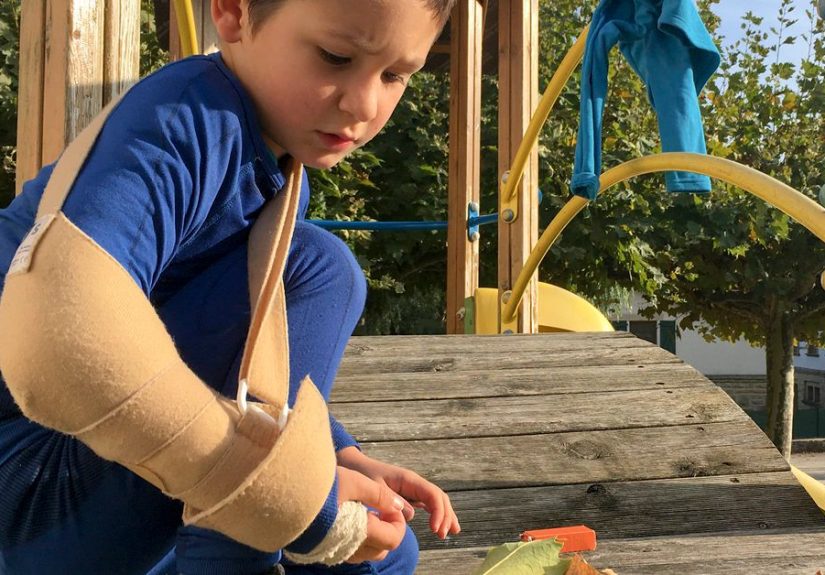
People often appreciate the stability of a sling or functional brace, then immediately get annoyed that it exists. Common frustrations include skin irritation, shoulder tightness, and the feeling that the brace is somehow both too loose and too tight at the same time. Clinicians and therapists often emphasize fit and wear schedules for a reasonsmall adjustments can make comfort and healing more consistent. People also report that frequent skin checks, gentle hygiene routines, and wearing soft layers under braces (when allowed) help reduce irritation.
The “I Feel Better… Am I Healed?” Trap
A big emotional moment happens when pain drops and movement improvesmany people feel like they’re basically done. Then they try to carry something heavier than recommended, or they reach overhead too confidently, and the arm reminds them that biology has its own calendar. People who do best long-term often treat the first “feels good” phase as the beginning of rehab momentum, not the finish line.
Physical Therapy Can Feel SlowUntil It Suddenly Doesn’t
Therapy progress is often non-linear. People describe plateaus where nothing seems to change for a week… followed by a sudden jump in range of motion or strength. Early PT might focus on gentle mobility and reducing stiffness; later stages often feel more like “training” againcontrolled strengthening, endurance, and return-to-activity work. Many people say consistency matters more than intensity: small, regular efforts add up.
Returning to Work or Sports Is More About Function Than the Calendar
People often ask, “When can I get back to normal?” What they learn is that “normal” is a series of checkpoints: comfortable daily activities, safe lifting, reliable grip strength, stable shoulder or elbow motion, and confidence with quick movements. A student carrying a backpack, a parent lifting a toddler, and an athlete returning to contact sports all have different “normal.” Many people find it motivating to set specific goals (like reaching a high shelf or doing a pain-free push from a chair) and celebrate those milestones.
If there’s one shared recovery lesson, it’s this: a humerus fracture usually heals, but it rewards patience. Follow-up visits, rehab work, and respecting restrictions aren’t busyworkthey’re how you get back to using your arm without fear, stiffness, or setbacks.
Conclusion
A humerus fracture can be a major interruptionpainful, inconvenient, and oddly educational (you’ll learn how many everyday tasks secretly require two arms). The good news is that most humerus fractures heal well with the right combination of stabilization, follow-up care, and rehabilitation. Understanding the fracture typeproximal, shaft, or distalhelps explain why treatment can range from a sling and early motion to surgery and structured therapy. With realistic expectations, a solid rehab plan, and attention to red flags, most people regain strong function over time.