Table of Contents >> Show >> Hide
- Meet the Enemy: Why Dandelions Are So Hard to Kill
- Before You Attack: Pick Your Dandelion Goal
- Prevention: The Best Dandelion Killer Is a Great Lawn
- Manual Removal: The “Get Out of My Yard” Method
- Selective Herbicides: Kill Dandelions Without Killing Grass
- Low-Chemical Options That Can Still Work
- A Practical Dandelion Takedown Plan (Without Losing Your Weekend)
- Common Mistakes That Keep Dandelions Coming Back
- Conclusion: Kill the Weed, Then Win the Lawn
- Extra: Real-World “Dandelion War” Experiences (About )
Dandelions are the freeloaders of the lawn world. They show up uninvited, throw a bright yellow party, and then leave behind thousands of tiny parachutes like they’re running a seed-distribution startup. If you’ve been staring out the window plotting revenge, you’re in the right place.
This guide walks you through real, proven dandelion control methodsno magical unicorn spray, no “just believe in your lawn” nonsense. We’ll cover prevention (the underrated MVP), mechanical removal (a.k.a. “get out of my soil”), selective weed killers that won’t nuke your grass, and lower-chemical options. You’ll also get a practical action plan and a long, honest “what I’d do if this were my yard” experience section at the end.
Meet the Enemy: Why Dandelions Are So Hard to Kill
Dandelions aren’t “tough” because they’re mean. They’re tough because they’re engineered (by nature) to survive normal lawn life:
- Deep taproot: Break it, and it can regrow from what you leave behind.
- Perennial habit: The top may die back, but the root system can live on and return.
- Seed confetti cannon: Once they go to puffball, the neighborhood gets invited.
- They love weak turf: Thin grass = open real estate = dandelion condos.
Translation: the best way to get rid of dandelions is not just “kill the plant.” It’s kill the plant, then fix the conditions that helped it move in.
Before You Attack: Pick Your Dandelion Goal
Not all lawns need the same strategy. Choose your level of intensity:
- Low drama: Knock them back before they seed; tolerate a few.
- Moderate control: Hand-pull and spot-treat; improve turf density.
- Operation Clean Sweep: Systematic treatment + lawn renovation habits.
One note: dandelions can feed early pollinators, and the greens are edible. If you want a compromise, keep them in a “wild corner” and defend the main lawn like it’s a tiny kingdom with HOA-level standards.
Prevention: The Best Dandelion Killer Is a Great Lawn
If your grass is thick, healthy, and actively growing, dandelions have a harder time getting established. This is the boring part that works unbelievably well.
Mow Like You’re Helping Your Grass (Not Punishing It)
Short mowing can weaken turf and invite weeds. Most lawn grasses do better when you mow high enough to shade the soil and discourage weed seedlings. Keep blades sharp so you’re cutting, not shredding.
Water Deeply, Not Constantly
Frequent light watering trains grass roots to stay shallow. Deep, infrequent watering encourages deeper turf rootsstronger grass, fewer openings for weeds.
Feed the Grass, Not the Problem
Appropriate fertilization (based on your grass type and season) strengthens turf density. Dense turf crowds out broadleaf weedsincluding dandelionsby reducing sunlight at the soil surface.
Overseed Thin Spots
If you can see soil between grass blades, so can dandelion seeds. Overseeding in the right season (often fall for cool-season lawns) fills gaps and reduces new infestations. After any weed removal, patch the spot so it doesn’t become a “vacant lot” for the next wave.
Manual Removal: The “Get Out of My Yard” Method
Hand-pulling worksif you respect the taproot.
When to Pull
Pull dandelions when the soil is moist (after rain or watering). Moist soil lets you remove more of the root with less snapping and fewer angry mutterings.
How to Pull So They Don’t Come Back
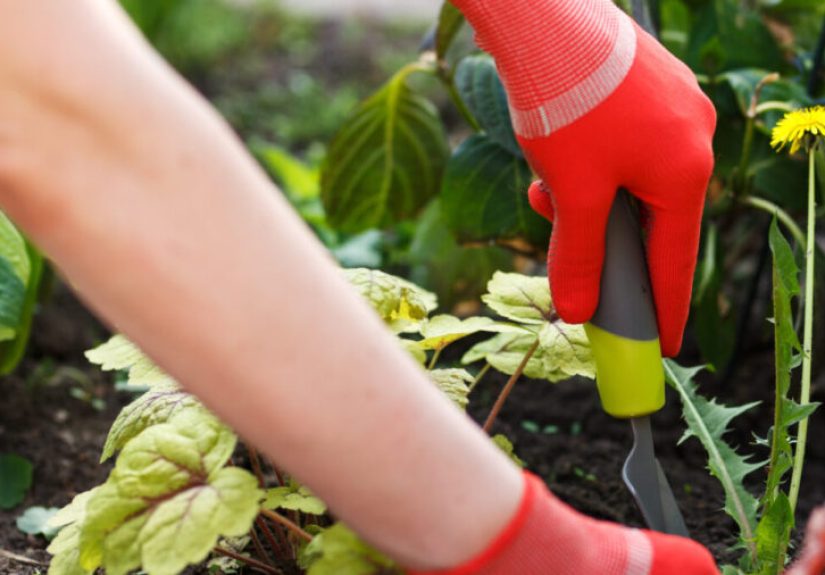
- Use a dandelion digger, weeding fork, or a stand-up weeder for leverage.
- Loosen soil around the base, then pull steadily.
- Aim to remove as much root as possible. If it snaps, dig out the remaining root section.
- Fill the hole with soil and reseed (or plug) the spot so weeds don’t reoccupy it.
Pro tip: If you have only a handful of weeds, manual removal is often faster than mixing chemicals, calibrating a sprayer, and accidentally discovering you’re downwind of your own decisions.
Selective Herbicides: Kill Dandelions Without Killing Grass
If dandelions are widespread, manual removal can feel like trying to empty a swimming pool with a teaspoon. That’s when selective broadleaf herbicides become the practical toolused carefully and correctly.
What to Look for on the Label
Common active ingredients that target broadleaf weeds (like dandelions) while sparing most turfgrasses include:
- 2,4-D
- MCPP (mecoprop)
- Dicamba
- Triclopyr
- MCPA (in some blends)
Many effective lawn products use a blend of two or three of these, which improves control across multiple broadleaf weeds, not just dandelions.
Best Time to Apply (This Matters More Than Brand)
For perennial weeds like dandelions, late summer to fall is often the most effective time to treat because the plant naturally moves resources down into its roots. Spring applications can still helpespecially to reduce flowering and seed productionbut fall tends to deliver the “root knockout” results people want.
Spot Spray vs. Granules
Spot spraying is ideal when weeds are scattered. You use less product and reduce drift risk. Granular “weed and feed” products can work too, but they rely on the herbicide sticking to leaf surfaces (often best when grass is damp with dew). Sprays generally provide more direct coverage on dandelion leaves.
Application Rules That Save You From Regret
- Read the label. Always. The label is the law and the best instructions for your specific product.
- Avoid wind. Drift can damage gardens, shrubs, and neighbors’ prized tomatoes (and your social life).
- Don’t spray stressed weeds. Drought-stressed plants don’t absorb herbicide well.
- Keep kids and pets off until dry. Let treated areas fully dry before re-entry.
- Avoid dicamba around tree and shrub root zones. Some products can be absorbed by roots and cause injury.
How Long Until They Die?
Selective broadleaf herbicides often work slowly. You may see twisting, cupping, or discoloration first, followed by decline over 1–2+ weeks. If you’re expecting instant compost, you’ll be disappointed. If you’re expecting a reliable kill with proper timing, you’ll be happy.
Reseeding After Herbicide
Many broadleaf herbicides require a waiting period before seeding or overseedingoften a few weeks. If you’re planning a fall overseed, time your weed control so you don’t sabotage your own grass establishment.
Low-Chemical Options That Can Still Work
If you want fewer synthetic herbicidesor just like having optionsthese approaches can help, with realistic expectations.
Chelated Iron (FeHEDTA) “Burn-Down” for Broadleaf Weeds
Some iron-based selective products use chelated iron to cause rapid damage to broadleaf weeds, often turning them dark and crispy quickly while leaving turf mostly unharmed. These can be a good fit for people who want an alternative mode of action, especially for spot treatments.
Boiling Water, Vinegar, and Flame Weeding (Use With Care)
These methods are non-selective, meaning they can damage or kill grass along with weeds. They’re best for dandelions in cracks, gravel, or areas where you don’t care what dies. In lawns, they usually create bare spotswhich dandelions and other weeds love to recolonize. Also, concentrated horticultural vinegar can be hazardous to handle, and flame weeding can be a fire risk. Use common sense and local regulations.
Corn Gluten Meal: The “Maybe” Prevention Tool
Corn gluten meal is promoted as a natural pre-emergent. The key detail: it affects germinating seeds, not established perennial dandelions. It won’t erase existing taproots. At best, it may reduce some new seedlings under the right conditionsand it can add nitrogen, which may green up grass (and sometimes weeds). Treat it as a potential supplement, not your main weapon.
A Practical Dandelion Takedown Plan (Without Losing Your Weekend)
Week 1: Stop the Seed Parade
- Mow to remove flowers before they go to puffball.
- Hand-pull the biggest offenders (especially near sidewalks and driveways where seeds spread easily).
- Patch holes with soil and seed.
Week 2: Spot Treat (or Broadcast Treat, If It’s Everywhere)
- If infestations are light: spot spray a selective broadleaf herbicide on actively growing plants.
- If infestations are heavy: consider treating larger areas per label directions.
- Avoid spraying when flowers are open if pollinators are active.
Week 3–4: Follow-Up and Lawn Repair
- Check results. Retreat stubborn survivors according to label timing.
- Overseed thin turf at the proper season for your region and grass type.
- Adjust mowing and watering to strengthen turf density.
Best Annual Rhythm (Simple Version)
- Spring: Prevent seeding, spot-treat problem patches, strengthen turf.
- Fall: Prime time for perennial control and overseeding (timed around label restrictions).
Common Mistakes That Keep Dandelions Coming Back
- Mowing too short: Weakens grass and opens space for weeds.
- Pulling on dry soil: Snapped roots = quick regrowth.
- Using non-selective herbicide in a lawn: You’ll kill grass and create bare spots.
- Spraying at the wrong time: Timing matters more than shopping for the “strongest” bottle.
- Ignoring bare spots: Nature hates a vacuum; weeds fill it fast.
- Forgetting nearby trees/shrubs: Some products can injure ornamentals if misapplied.
Conclusion: Kill the Weed, Then Win the Lawn
If you want dandelions gone for the long haul, don’t rely on a single dramatic moment. Combine:
- Healthy turf habits (mow higher, water smarter, overseed thin areas)
- Mechanical removal (especially when infestations are small)
- Targeted treatment with selective broadleaf products when needed
- Seasonal timing (especially fall for deep control)
Do that, and your yard stops being a dandelion welcome center and starts looking like the lawn you actually wanted.
Extra: Real-World “Dandelion War” Experiences (About )
Here’s what tends to happen in real yardswhere life is busy, sprayers leak, and nobody has time to hand-pull 600 plants while listening to inspirational flute music.
1) The “I’ll just mow them” phase. Almost everyone tries this first. Mowing absolutely helps prevent seeds if you cut before puffballs form. But mowing alone doesn’t eliminate established plants. It’s like trimming a villain’s mustache and hoping they reform.
2) The “hand-pulling cardio program.” Hand-pulling feels heroic… until the taproot snaps and the dandelion returns like it paid rent. People who succeed at hand-pulling usually have two things in common: they pull after rain (or watering), and they use a tool that gets deep. A flathead screwdriver works in a pinch, but a proper dandelion digger saves your wrists and your vocabulary.
3) The “I bought a random weed killer and now my lawn has polka dots” lesson. This is the big one. Folks grab a non-selective product without realizing it’s meant for driveways or landscape beds. The dandelion dies, surebut so does the surrounding grass, leaving a bare spot that becomes the hottest new nightclub for weeds. If you’re treating a lawn, selective broadleaf control is the safer move.
4) The “timing makes me look like a genius” discovery. The same product can feel weak in the wrong season and amazing in the right one. When homeowners treat perennials at the right time (often fall) and follow label directions, results jump. It’s not because the bottle got stronger; it’s because the plant’s biology made it easier to hit the root system effectively.
5) The “my lawn got thicker and the weeds got bored” payoff. The most satisfying long-term wins usually come after people shift their focus. Instead of obsessing over each dandelion, they start upgrading the grass: mow a bit higher, sharpen the blade, water deeply, and overseed thin spots. Over time, fewer dandelions appear because there’s less open soil and less light for seedlings. It’s not glamorous, but it’s the closest thing lawn care has to a cheat code.
6) The “spot-treating is my love language” strategy. Many homeowners land here eventually: keep a small sprayer (or ready-to-use bottle) for spot treatments, hit weeds when they’re young and actively growing, and move on with life. It’s the “clean as you go” version of lawn careand it prevents the yearly “why is my yard yellow?” crisis.
7) The “I made peace with a few dandelions” moment. Some people decide a perfect lawn isn’t worth constant intervention. They aim for “mostly grass,” knock down seed production, and let the yard be a yard. That’s valid. The goal isn’t a museum exhibit. The goal is a yard you like standing in.
If you take one experience-based takeaway, make it this: every successful dandelion plan ends with better grass. Kill what you need to kill, then invest in the turf so the next generation of weeds has nowhere to move in.