Table of Contents >> Show >> Hide
- Table of Contents
- Quick Picks: Our Top 5
- What At-Home Celiac Tests Actually Measure
- Before You Test: Don’t Accidentally “Break” Your Results
- The 5 Best At-Home Celiac Tests (Deep Dive)
- How to Choose the Right Test for You
- How to Interpret Results (Without Spiraling)
- FAQs
- Is an at-home celiac test accurate?
- Can an at-home test diagnose celiac disease?
- What’s the difference between celiac disease and non-celiac gluten sensitivity?
- Should I stop eating gluten if I think I have celiac disease?
- How long do I need to be eating gluten before an antibody test?
- What if I’m IgA deficient?
- Bonus: Real-World Experiences With At-Home Celiac Testing (What People Wish They Knew)
- Wrap-Up
If your stomach has been acting like it’s auditioning for a daytime drama (bloating! cramps! mystery fatigue!),
it’s tempting to blame gluten and banish bread forever. But before you break up with bagels,
there’s a smarter first move: testing.
At-home celiac tests can be a convenient “first checkpoint” when you’re wondering whether your immune system
is throwing punches at gluten. The key word is checkpoint, not “final verdict.”
Celiac disease is a medical diagnosis that typically requires a clinician’s evaluation and, in many cases,
confirmatory testing. Still, the right at-home test can help you decide what to do nextwithout waiting months
for an appointment just to start the conversation.
Quick Picks: Our Top 5
Not all “celiac tests” are the same. Some look for antibodies (your immune system’s receipts),
and others look for genes (your biological “hardware” that makes celiac possible).
Here are five strong optionseach with a clear best-use scenario.
- Everlywell Celiac Disease Screening Test Best all-around mail-in antibody screen for most adults.
- imaware Celiac Disease Screening Test Best comprehensive antibody panel (multiple markers, broader coverage).
- Labcorp OnDemand Celiac Disease Antibody Test Best “skip-the-doctor-visit” lab test for people who prefer a traditional blood draw.
- empowerDX Celiac Risk Gene Test Best at-home genetic test to help rule out celiac risk (useful if you’re already gluten-free).
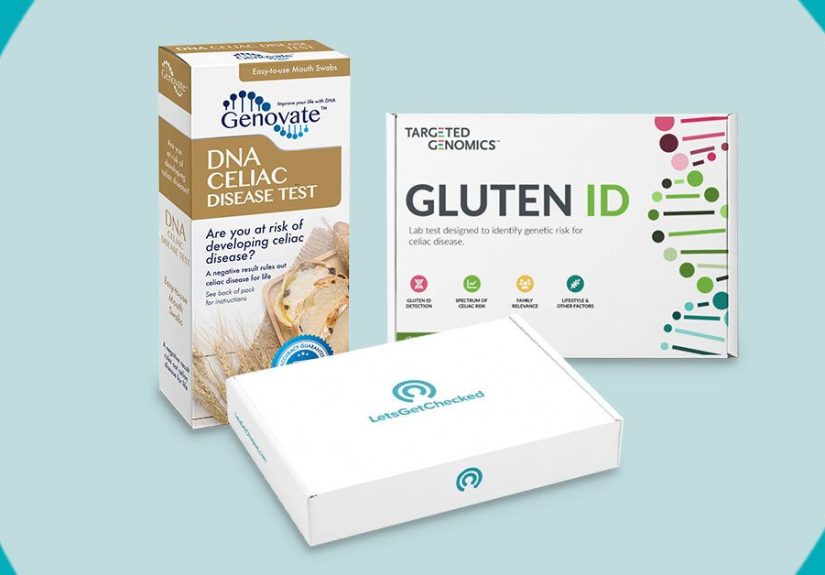
- Targeted Genomics GlutenID (Celiac Genetic Home Test) Best genetic test that reports a spectrum of risk (family planning / deeper risk detail).
What At-Home Celiac Tests Actually Measure
Antibody tests (the “immune reaction” approach)
These tests look for antibodies your body may produce when you have celiac disease and you’re eating gluten.
The most common (and most useful for screening) is tTG-IgA
(tissue transglutaminase immunoglobulin A). Many high-quality panels also check total IgA,
because an IgA deficiency can make an IgA-based test look falsely “normal.”
Some tests add DGP (deamidated gliadin peptide) antibodies, often in IgG form, as a backup
when IgA is low or when certain populations (like very young children) need extra sensitivity.
Genetic tests (the “do I have the risk genes?” approach)
Celiac disease is strongly associated with certain HLA typesmost commonly HLA-DQ2 and
HLA-DQ8. If you don’t have the relevant risk genes, your chance of celiac disease is extremely low.
Genetic tests can be especially helpful if:
- You already stopped gluten and antibody tests might be falsely negative
- You’re screening family members
- You want “rule-out” information before doing a gluten challenge
Important nuance: having the genes does not mean you have celiac disease. It means you have the
biological setup that makes celiac possiblelike having a fireplace doesn’t mean there’s currently a fire.
Before You Test: Don’t Accidentally “Break” Your Results
1) Keep eating gluten (unless a clinician tells you otherwise)
Antibody tests work best when you’re on a gluten-containing diet. If you go gluten-free first,
antibody levels can drop and your test may come back negative even if celiac disease is the real issue.
Translation: don’t ghost gluten right before the test and then act shocked when the test is confused.
2) Know what “at-home” can and can’t do
At-home tests can suggest whether your results are consistent with celiac disease risk. They generally
can’t confirm the diagnosis on their own. If your result is positive (or if symptoms are severe),
your next step is usually a medical follow-up that may include a full celiac panel and, in many cases,
an upper endoscopy with small intestine biopsies.
3) If you have red-flag symptoms, don’t DIY your way through this
Get medical care sooner (not later) if you have significant weight loss, persistent vomiting,
blood in stool, severe anemia, dehydration, fainting, or symptoms in a child that suggest poor growth
or malnutrition. At-home testing is for “start the conversation,” not “delay the conversation.”
The 5 Best At-Home Celiac Tests (Deep Dive)
1) Everlywell Celiac Disease Screening Test
Best for: Most adults who want a straightforward, mail-in antibody screen.
This is a popular at-home option that screens for key antibodies commonly used in celiac disease
evaluation. It’s designed as a first stepsomething you can share with a healthcare provider to
decide whether you need formal diagnostic testing.
What it typically measures
- tTG-IgA (primary screening antibody)
- Total IgA (helps interpret IgA-based results)
- Some testing pathways include reflex testing (additional markers) if indicated
Why people choose it
- At-home finger-prick collection with mail-in return
- Simple “screening” framing that encourages proper medical follow-up
- Useful when you suspect celiac disease but want data before booking specialist visits
Potential drawbacks
- Like all antibody tests, accuracy drops if you’ve already gone gluten-free
- Positive results still need medical confirmation
2) imaware Celiac Disease Screening Test
Best for: People who want a more comprehensive antibody panel (especially if symptoms are persistent).
imaware is known for combining multiple antibody markers in one test. Compared with minimalist screens,
broader antibody coverage can be helpful in edge caseslike when you have unusual symptoms, multiple risk
factors, or you want a bit more detail to bring to your clinician.
What it typically measures
- tTG antibodies (often both IgA and IgG)
- DGP antibodies (often both IgA and IgG)
Why people choose it
- More markers can reduce the chance of missing a signal in certain situations
- Can be a strong “documentation” tool when you’re preparing for a clinical workup
Potential drawbacks
- More markers can mean more “gray zone” results that require careful interpretation
- Still a screening testmedical confirmation remains the rule
3) Labcorp OnDemand Celiac Disease Antibody Test
Best for: People who want a traditional lab blood draw without starting with a doctor visit.
If finger-prick collection makes you queasy (fair), a direct-access lab test can feel more “classic.”
You order, visit a collection site for a blood draw, and get results you can bring to your clinician.
What it typically measures
- tTG-IgA
- Total IgA
- Reflex testing (additional IgG-based markers) may be run if IgA is low or results warrant it
Why people choose it
- Collection by trained phlebotomists (less “did I do this right?” anxiety)
- Results designed to align with commonly used screening algorithms
- Often a smoother handoff to follow-up care
Potential drawbacks
- Requires leaving home for the blood draw (still “at-home ordering,” not at-home collection)
- Still not a definitive diagnosis by itself
4) empowerDX Celiac Risk Gene Test
Best for: People who are already gluten-free (or who can’t do a gluten challenge) and want risk clarification.
Genetic testing doesn’t care whether you ate gluten this morning, last month, or in 2012.
It checks whether you carry key HLA markers associated with celiac disease risk.
What it typically measures
- HLA-DQ2
- HLA-DQ8
- Often includes additional HLA-related markers used in celiac risk assessment
Why people choose it
- Helpful “rule-out” tool: if negative for key risk markers, celiac becomes much less likely
- At-home mouth swab (no blood)
- Useful for family screening and long-term planning
Potential drawbacks
- Positive genetics only mean risknot diagnosis
- You may still need antibody testing and/or clinical confirmation depending on symptoms
5) Targeted Genomics GlutenID (Celiac Genetic Home Test)
Best for: People who want a more detailed genetic risk picture (especially with family history).
GlutenID is positioned as a deeper genetic look at celiac-related risk combinations, reporting risk as a spectrum
rather than a simple yes/no. This can be appealing if you’re trying to understand family risk patterns,
or if you want a more granular report to discuss with a clinician.
What it typically measures
- Genetic combinations associated with celiac risk (HLA-related risk profiles)
Why people choose it
- Can support risk conversations for relatives (especially first-degree family members)
- Doesn’t require gluten intake
- Often framed as a “next-step planner” (who should test with antibodies, who likely doesn’t need the workup)
Potential drawbacks
- As with all genetic tests, results are about predispositionnot diagnosis
- May be more expensive than a basic genetic screen
How to Choose the Right Test for You
If you’re currently eating gluten
- Start with an antibody test. A tTG-IgA + total IgA combo is a sensible baseline.
- If you want broader coverage (or have complicated symptoms), a multi-marker panel can be useful.
If you already went gluten-free
- Consider genetic testing first. It won’t be affected by diet and can help rule out celiac risk.
-
If genetic risk is present and symptoms are significant, discuss next steps with a clinicianthis may include
a supervised gluten challenge and formal testing, depending on your situation.
If you’re testing because of family history
- Genetics can be a helpful filter, but many families also do antibody screeningespecially if symptoms exist.
- If a child is being tested, follow pediatric guidance with a clinician; test selection and interpretation matter more.
If you want the most “doctor-friendly” handoff
- A direct-access lab test can make follow-up easier because it resembles standard clinical testing workflows.
How to Interpret Results (Without Spiraling)
Positive antibody result
A positive celiac-related antibody test suggests your immune system may be reacting in a way consistent with celiac disease.
Don’t self-diagnose in a vacuum. The smart move is to take the result to a healthcare professional for confirmatory evaluation,
which may include additional serology and often an endoscopy with biopsies.
Negative antibody result (but you still feel awful)
A negative test does not automatically mean “no celiac, congratulations, go eat croissants.”
Antibody tests can be less sensitive in mild disease, in young children, and in cases of IgA deficiency.
Also: if you reduced gluten before testing, your antibodies may have dropped.
If suspicion remains high, a clinician can guide next steps.
Positive genetic result
This means you have risk markers. Many people with these markers never develop celiac disease.
Use it as contextespecially for family screening and deciding whether antibody testing makes sense.
Negative genetic result
This makes celiac disease far less likely. If symptoms persist, you still deserve answersjust possibly in a different direction
(wheat allergy, non-celiac gluten sensitivity, IBS, inflammatory conditions, thyroid disease, and more).
FAQs
Is an at-home celiac test accurate?
The better ones use the same types of biomarkers used in clinical screening. The biggest accuracy killer is timing:
if you’re not eating gluten, antibody results can be falsely negative. Genetics are stable, but they only measure predisposition.
Can an at-home test diagnose celiac disease?
Usually no. Think “screening and guidance,” not “final diagnosis.” Positive screens should be followed up with a clinician.
What’s the difference between celiac disease and non-celiac gluten sensitivity?
Celiac disease is an autoimmune condition that can damage the small intestine. Non-celiac gluten sensitivity can cause symptoms,
but it doesn’t show the same autoimmune markers and intestinal injury pattern. Testing helps separate look-alikes.
Should I stop eating gluten if I think I have celiac disease?
Not before testingunless a healthcare professional instructs you to for a specific reason. Going gluten-free early can make diagnostic
testing harder and may delay the right care plan.
How long do I need to be eating gluten before an antibody test?
There isn’t one universal rule for everyone. If you’ve already reduced gluten, ask a clinician what’s appropriate for your symptoms
and medical history. The goal is reliable testing without making you miserable.
What if I’m IgA deficient?
This is one reason quality tests include total IgA. If IgA is low, IgG-based tests may be more informative, and clinicians can use
alternate markers and diagnostic pathways.
Bonus: Real-World Experiences With At-Home Celiac Testing (What People Wish They Knew)
The internet makes at-home testing look like a glamorous wellness ritual: candle lit, finger prick done flawlessly,
results arrive, you sip herbal tea, and the universe explains your gut problems in a single PDF. In real life,
the experience is usually more… human. Here are the most common themes people report when they try an at-home celiac test,
plus a few “wish I’d known that” moments that can save you time and frustration.
Experience #1: The “I panicked and went gluten-free first” detour.
A lot of people start with symptomsbloating, fatigue, brain fog, anemia, weird rashesand immediately ditch gluten
because it’s the fastest lever to pull. Sometimes they feel better (which is validating), then they test later and get
negative antibody results. Cue confusion. The lesson: if you suspect celiac disease, it’s often better to test
before changing your diet so you don’t accidentally lower the very antibodies the test needs to detect.
When someone realizes this after the fact, the next steps can be more complicated (and may involve a clinician-guided
gluten challenge).
Experience #2: The finger-prick fear is real… but manageable.
People who’ve never collected a blood sample at home often worry they’ll mess it up. The usual surprises:
hands are cold, blood flow is slow, the first drop is tiny, and suddenly you’re doing hand yoga like you’re trying
to summon circulation. Practical fixes tend to work: warm water on your hands, staying hydrated, using the provided
lancet correctly, and taking your time. Many users say the stress beforehand was worse than the actual prick.
Experience #3: “My result is borderline. Now what?”
Not every report comes back with a clean “positive” or “negative.” Some land in a gray zoneespecially with multi-marker
panels. People often interpret “borderline” as “the test is useless,” but it can still be actionable. A borderline
result may mean you need repeat testing, a different marker, evaluation for IgA deficiency, or a clinician’s input
to match results with symptoms. The best mindset is to treat the test as data, not destiny.
Experience #4: Genetic results can be emotionally confusing.
A genetic test that shows risk markers can feel alarming: “So I have celiac disease?” Not necessarily. Many people carry
risk genes and never develop celiac. The most helpful real-world use of genetics is often the opposite: if you’re negative
for key risk markers, it can be profoundly reassuring and helps redirect your search for answers. If you’re positive,
it’s a nudge to be thoughtfulmonitor symptoms, consider antibody testing (if eating gluten), and discuss family screening
with a clinician.
Experience #5: The biggest “win” is having something concrete to take to a doctor.
People often struggle to be taken seriously when symptoms are vague or intermittent. An at-home test can help you show up to
an appointment with a clearer story: “Here are my symptoms, here’s my family history, and here’s what the screening suggested.”
Even when the result is negative, it can move the conversation forward by narrowing the field. Many people describe the test
as a confidence boosternot because it replaced medical care, but because it helped them advocate for the next step.
Bottom line: at-home celiac testing is most useful when you treat it like a map, not a verdict. It can point you toward the
right clinic visit, the right confirmatory tests, and the right timingespecially if you avoid the most common pitfall:
changing your diet before you’ve captured reliable data.
Wrap-Up
The “best” at-home celiac test depends on where you are in the process. If you’re eating gluten, an antibody screen
(especially one that includes tTG-IgA and total IgA) is usually the most practical first step. If you’re already gluten-free,
a genetic test can help clarify risk without forcing you into a diet change just to test.
Use your results the way they’re meant to be used: as a tool to guide next steps with a healthcare professional.
Your body is giving you cluesthese tests help you read them with fewer guesses and more confidence.
SEO Tags (JSON)