Table of Contents >> Show >> Hide
- Before You Start: A 60-Second Sprinkler “Roll Call”
- Step 1: Confirm You’re Using the Right Sprinkler for the Job
- Step 2: Start With the “Boring” Stuff: Pressure, Level, and Clogs
- Step 3: Choose Full Circle or Part Circle Mode
- Step 4: Set Your “Do Not Water” Boundaries (Find the Edges First)
- Step 5: Adjust the Trip Collars/Stops to Dial in the Arc
- Step 6: Adjust the Throw Distance (Radius) Without Wasting Water
- Step 7: Improve the Spray Quality (Droplets, Wind, and “Misting”)
- Step 8: Test Coverage Like a Pro (Without Buying a Lab)
- Step 9: Troubleshoot the Classic Problems (Fast Fixes That Actually Work)
- Conclusion: Your Lawn Should Get the WaterNot the Sidewalk
- Field Notes: of Real-World Adjustment Experiences
Impact sprinklers are the little jackhammers of the lawn-watering world: thunk-thunk-thunk, water flies, birds judge you, neighbors pretend they “love the sound.”
The upside? They can cover big areas efficiently. The downside? If they’re misadjusted, they’ll water your driveway, your siding, andsomehowyour left shoe from 30 feet away.
This guide walks you through a clean, practical setup: set the arc, set the distance, dial in the droplet pattern, and fix the common “why are you doing THAT?” problems.
Whether you have a hose-end spike sprinkler or a pop-up impact head, the controls are usually similar: a trip lever/pin to choose full vs. part circle,
trip collars/stops to set the boundaries, and a diffuser screw or deflector to tame the throw.
Before You Start: A 60-Second Sprinkler “Roll Call”
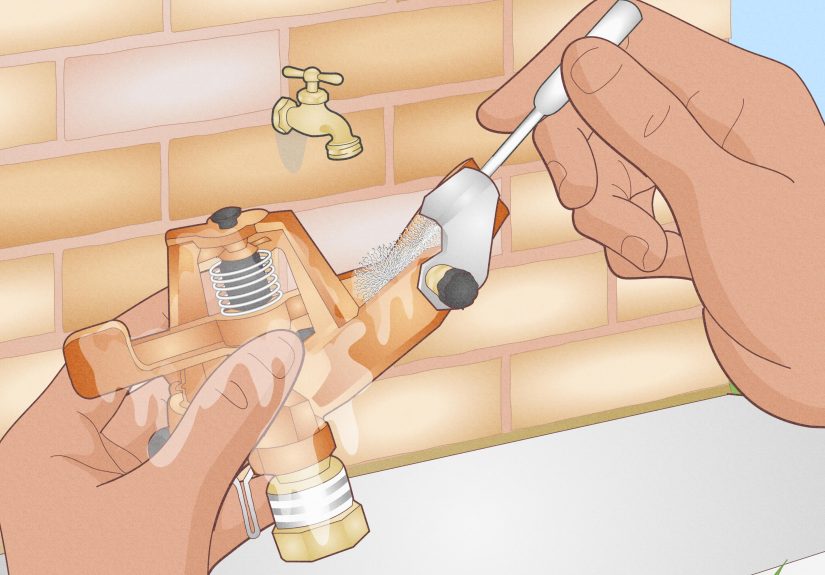
Take a quick look at your sprinkler head and locate these parts (names vary slightly by brand, but the ideas are consistent):
- Nozzle: where the main jet exits (this determines flow/throw more than you’d think).
- Impact arm: the spring-loaded arm that “taps” the stream to rotate the head.
- Trip lever/pin: selects full-circle vs. part-circle operation.
- Trip collars / friction collars / trip stops: two adjustable tabs/collars that define the left and right limits for part-circle watering.
- Diffuser screw / diffuser pin: interrupts the stream to shorten distance and break water into smaller droplets.
- Deflector flap/shield (on some models): swings into the stream to shorten throw and soften the spray.
Helpful tools: a flathead screwdriver, a small wrench/pliers (for stubborn nozzles), a stiff nylon brush, and a couple of small cups (for a quick coverage test).
And yeswear shoes. Impact sprinklers have a special talent for finding bare toes.
Step 1: Confirm You’re Using the Right Sprinkler for the Job
Before you adjust anything, make sure an impact sprinkler is actually what you want in that zone. Impact/impulse heads throw a strong, single jet and typically reach farther than many other styles,
which is great for larger lawnsbut the concentrated stream can be rough on delicate flowers at close range. If you’re trying to water a narrow flower bed hugging a wall,
an impact sprinkler is like using a leaf blower to frost a cupcake.
Practical example: If you’re watering a 30×40-foot lawn area, an impact sprinkler can be perfectespecially if you can set a clean part-circle arc to avoid hardscape.
If you’re watering a 3-foot-wide strip along a fence, consider a drip line, micro-sprays, or a gentler nozzle style for better control.
Step 2: Start With the “Boring” Stuff: Pressure, Level, and Clogs
The most common reason impact sprinklers misbehave isn’t “bad design.” It’s water pressure and debris.
Impact heads need enough pressure to keep the arm snapping and the head rotating smoothly, and the nozzle needs to be clean enough to form a stable stream.
- Make it level: If the sprinkler is tilted, the throw becomes lopsided and you’ll chase adjustments forever.
- Check for obvious blockage: Grass clippings, sand, and tiny plastic bits can lodge in the nozzle or bearing area.
- Flush if needed: If it’s an in-ground head, briefly flush the line (with the head removed) to blow out grit before you reassemble.
- Don’t “fix” it with oil: Lubricants can attract dirt and increase wear. If it’s sticky, cleaning is usually the better first move.
Quick reality check: if the sprinkler spins fine by hand but stalls during operation, it’s often pressure or internal friction from grit/mineral buildupnot a mysterious sprinkler curse.
Step 3: Choose Full Circle or Part Circle Mode
Most impact sprinklers can do either a full 360° rotation or a back-and-forth part-circle sweep.
The selector is usually a small trip lever/pin near the base of the rotating head.
- Full circle: Flip the trip lever/pin into the full-circle position (often “up”). The head will rotate continuously.
- Part circle: Flip the trip lever/pin into the part-circle position (often “down”). Now the head will reverse when it hits your trip collars/stops.
Pro move: Decide this first. If you set collars for a part-circle arc but the sprinkler is still in full-circle mode, it will happily ignore your plans and water everything.
Including your car. Especially your car.
Step 4: Set Your “Do Not Water” Boundaries (Find the Edges First)
Think of your arc like two invisible walls: a left limit and a right limit. You’re about to place those walls using the trip collars/stops.
Before you touch the collars, do a quick mapping pass:
- Stand behind the sprinkler and identify the areas you want to avoid (sidewalk, house, fence line, patio).
- Pick a “start edge” (for example, the left edge of the lawn border) and a “stop edge” (the right edge).
- Rotate the sprinkler head (gently) so the nozzle points at your start edge.
If you’re watering a rectangular lawn, the “edges” are often the property line and the hardscape boundary. If you’re watering a wedge-shaped front yard, your edges might be a driveway on one side and a walkway on the other.
The goal is to set the arc so the spray just kisses the lawnwithout painting the concrete.
Step 5: Adjust the Trip Collars/Stops to Dial in the Arc
With the sprinkler in part-circle mode, you’ll set two collars/stops that tell the sprinkler where to reverse direction.
Some are plastic sliders; others are metal tabs you pinch and rotate into place.
How to do it
- Set the first boundary: Move one collar/stop so the trip lever will hit it when the nozzle points at your first edge.
- Set the second boundary: Move the other collar/stop to your second edge.
- Test the sweep: Turn the water on and watch one full back-and-forth cycle. Make small collar adjustments until the sprinkler reverses exactly where you want.
Fine-tuning tip: If your sprinkler keeps “sticking” on one end and failing to reverse, widen the arc slightly (move the collars a bit farther apart),
then narrow back down after it’s rotating smoothly. Sometimes tight arcs increase friction demands or reveal a pressure shortfall.
Step 6: Adjust the Throw Distance (Radius) Without Wasting Water
Distance is where people get into trouble. Too far and you water the street. Too short and you end up with a dry strip that looks like it’s been personally offended.
Most impact sprinklers give you one or more ways to adjust throw:
Option A: Diffuser screw/pin (most common)
The diffuser screw interrupts the stream. Turning it into the stream usually shortens the radius and breaks the water into smaller droplets.
Backing it out restores maximum throw.
Many models can reduce distance by roughly “a quarter-ish” of maximum throw using this controlenough to solve overspray without changing the nozzle.
Option B: Deflector flap/shield or distance control dial (some models)
A deflector swings into the stream to shorten throw and soften the impact. It’s handy when you need to protect a flower bed near the sprinkler.
A distance control dial does a similar job, but with a knob you turn instead of a flap you position.
Option C: Water supply adjustment (hose bib or zone valve)
For hose-end sprinklers, turning the spigot down seems tempting, but it can create a “sad sprinkler” scenario:
not enough pressure to rotate consistently. If you need a major reduction, use the diffuser/deflector first, then fine-tune flow.
For in-ground zones, the better fix is often a pressure regulator or a properly sized zone designnot starving one head until it gives up.
Step 7: Improve the Spray Quality (Droplets, Wind, and “Misting”)
If your sprinkler looks like it’s making fog instead of watering, you’re likely dealing with one of these:
too much pressure, a partially blocked nozzle, or a diffuser/deflector set too aggressively.
Misting wastes water (wind carries it away) and can leave your lawn thirsty despite looking “wet.”
- For windy days: Use a slightly larger droplet pattern (less diffuser interference) and consider watering early morning when wind is calmer.
- For close-in watering: Use the diffuser/deflector to soften the stream so it doesn’t shred tender plants.
- If the stream sputters: Clean the nozzle and check for debris in the inlet/bearing area. A clean, stable stream helps rotation.
Specific example: If you’re watering a lawn area next to a newly planted bed, set the arc so the strongest portion stays on turf,
then use the diffuser screw just enough to keep the nearest edge from getting pummeled.
Step 8: Test Coverage Like a Pro (Without Buying a Lab)
“Looks fine” is not a measurement. The easiest DIY check is a mini catch-can test using identical cups (or tuna cans) spaced around the watered area.
- Place 6–10 cups around the arcnear, mid, and far distances.
- Run the sprinkler for 10–15 minutes.
- Compare the water levels. Big differences mean uneven distribution.
If the far cups are nearly empty, you may be short on pressure or the diffuser is turned in too much.
If the near cups are overflowing while far cups are dry, you might have overspray bounce-back, a bad angle, or the sprinkler is too close to an obstacle.
Adjust arc and distance in small increments, then retest.
Step 9: Troubleshoot the Classic Problems (Fast Fixes That Actually Work)
Problem: “It won’t rotate” (or it rotates… then quits)
- Check pressure: Low pressure is a top culprit. If only the last sprinkler in a line struggles, the zone may be overloaded.
- Clean the nozzle: Debris or mineral buildup increases friction and ruins the stream.
- Inspect the impact arm: A bent arm or weak spring reduces the “tap” force that drives rotation.
- Skip the lubricant: Oil can collect dirt and accelerate wear. Cleaning and washer replacement is usually smarter.
Problem: “It only waters one direction”
- Make sure the sprinkler is in part-circle mode and the trip collars aren’t set too tightly.
- If the collars are nearly touching, the sprinkler may never complete a proper sweep.
Problem: “It’s watering the sidewalk/driveway”
- Narrow the arc by moving the trip collars closer.
- Reduce throw with the diffuser screw/deflector flap before you reduce pressure too much.
- Re-level the head; a tilted sprinkler throws unevenly and often overshoots on one side.
Problem: “Puddles near the sprinkler, dry spots far away”
- Reduce run time and water in shorter cycles (especially on slopes or compacted soil).
- Check for a partially clogged nozzle that’s dumping water close-in instead of forming a clean jet.
- Confirm your spacing: sprinklers generally work best when coverage overlaps enough to avoid “dead zones.”
Conclusion: Your Lawn Should Get the WaterNot the Sidewalk
Adjusting an impact sprinkler isn’t complicated, but it is easy to do in the wrong order.
Pick full or part circle first, set boundaries with the collars, then control distance with the diffuser/deflector.
Finish with a quick coverage test and a little troubleshooting if rotation is inconsistent.
Do it once, do it right, and you’ll stop paying your water bill to keep the driveway “hydrated.”
Your grass will thank you. Your concrete will remain emotionally unavailable, as it should.
Field Notes: of Real-World Adjustment Experiences
In the real world, impact sprinkler adjustment usually happens in three acts: optimism, mild chaos, and victory (with a chance of getting sprayed in the face).
A common scenario is the “new sprinkler, old hose” setup. You stake the sprinkler into the lawn, turn on the spigot, and the sprinkler immediately launches a heroic stream
straight into the street like it’s trying to signal ships at sea. The first instinct is to turn down the water. That often creates the second problem: the sprinkler starts
doing a sluggish half-rotation, pauses dramatically, and then commits to watering one corner like it’s taken a personal oath. This is where the diffuser screw and arc controls
earn their keepreduce the throw mechanically first, then keep enough pressure for the head to rotate.
Another frequent experience shows up near hard edges: driveways, patios, and fences. You set a part-circle arc that looks perfect for about 20 seconds, then notice the sprinkler
“cheats” the boundary by a few degrees at each end. That tiny overshoot is usually fixed by micro-adjusting the trip collars/stopsnot by relocating the entire sprinkler
three inches at a time like you’re solving a lawn puzzle. People also learn quickly that a tilted sprinkler can mimic “bad arc settings.” If the spike leans,
the stream throws farther on one side, and suddenly your driveway is getting a weekly shower it never asked for. Pushing the spike in straighter (or using a sturdier base)
can clean up a lot of “mystery” overspray.
Then there’s the “it worked yesterday” problem. Impact sprinklers can be extremely consistent until grit, sand, or mineral deposits build up.
Homeowners often discover this after a water main repair, a new irrigation install, or even a simple hose swapanything that sends debris down the line.
The sprinkler may still spray, but the rotation slows down or stalls at one end. A quick nozzle check and a flush can bring it back to life.
If you’ve got hard water, you might see chalky buildup that increases friction and turns a once-snappy sprinkler into a reluctant sprinkler.
Cleaning the moving parts and keeping the nozzle clear tends to restore that crisp “tap-tap” motion that drives rotation.
Finally, there’s the surprisingly satisfying moment when you run a simple cup test and realize your lawn wasn’t “randomly” drying out
it was consistently dry in the same strip every time. That’s when small changes matter: backing the diffuser screw out a touch to regain distance,
nudging the arc a few degrees to overlap coverage, and shortening the watering session to avoid puddling. People who take 15 minutes to tune the sprinkler
typically end up watering less overall, because the water is actually landing where it counts. And yes, you’ll still get sprayed at least once.
Consider it the sprinkler’s way of saying, “Congratulationsnow you’re part of the irrigation club.”