Table of Contents >> Show >> Hide
- Why Sam Rockwell Roles Reward Rewatches
- Galaxy Quest: The Red-Shirt Panic That Never Fully Leaves
- Moon: Two Versions of the Same Man… With Different “Default Settings”
- Iron Man 2: Justin Hammer’s “Confidence Choreography”
- The Way, Way Back: The Mentor Who Teaches by Not Making It a Big Deal
- Confessions of a Dangerous Mind: A Showman Who Can’t Turn the Camera Off
- Matchstick Men: The Sidekick Who’s Always Half a Step Behind… On Purpose
- Seven Psychopaths: A Writer’s Ego in Human Form
- Three Billboards Outside Ebbing, Missouri: The Slow Shift from Loud to Quiet
- Jojo Rabbit: Costume Clues, Shoe Motifs, and a Quiet Rebellion
- Conclusion: The Best Rockwell “Easter Eggs” Aren’t PropsThey’re Choices
- Bonus: Fan Experiences Watching for Small Rockwell Details (About )
- SEO Tags
Some actors deliver a performance. Sam Rockwell delivers a performance plus a second, secret performance that lives in his shoulders,
his half-smiles, and the way he treats a hallway like it’s a dance floor with overhead lighting.
That’s why his movies have a special rewatch gravity: the first time you follow the plot; the second time you follow Rockwell’s micro-choices.
Fans love catching those blink-and-you-miss-it detailstiny physical habits, sneaky costume cues, and little character “tells” that make a scene land harder
(or funnier) than you realized in real time.
Below is a fan-style guide to the small stuff that pops once you know to look for itacross some of Rockwell’s most rewatchable roles.
No conspiracy corkboards required. Just your pause button and a willingness to say, “Wait… did he just do that with his hands again?”
Why Sam Rockwell Roles Reward Rewatches
Rockwell is a character actor with leading-man confidence, which means he’s constantly balancing two energies at once: what the character is
trying to project and what the character is desperately trying to hide. Fans notice that he often builds a role from the outside inposture,
pacing, and “busy hands”then lets the face catch up a second later, like the emotion arrives on a slight delay.
Another Rockwell hallmark: his body is usually telling the truth before the dialogue does. When a character is bluffing, he’ll over-sell with charm.
When a character is scared, he’ll get weirdly polite. When a character is feeling powerful, he’ll move like he’s on stageeven if he’s just
walking to a coffee machine. (And yes, sometimes he literally dances there.)
Keep that in mind as you read the movie-by-movie details. These aren’t random trivia nuggets. They’re a pattern: Rockwell treats every scene as a tiny
negotiation between confidence and panic… and he lets you see the negotiation happening.
Galaxy Quest: The Red-Shirt Panic That Never Fully Leaves
Rockwell’s Guy Fleegman is basically the patron saint of “I know how this genre works, and I would like to unsubscribe.”
The big joke is obvious: he’s the expendable crewman type. The smaller details are what fans keep replaying.
Details fans love spotting
-
His fear is specific, not generic. He doesn’t just act “scared.” He acts like someone who has watched the show,
memorized the pattern of doom, and is now trying to outsmart the writers in real time. -
He checks the social temperature constantly. In group scenes, notice how often he looks to the others for cueslike he’s asking,
“Are we panicking? Are we pretending not to panic? Cool cool cool.” -
The joke is that he commits too hard. Fans picked up on how Rockwell plays the anxiety as if it’s a life-or-death drama,
which makes it funnier because everyone else is operating on “space adventure” logic.
The rewatch kicker: his intensity doesn’t drop even when the movie shifts into pure comedy. That consistency is the detail.
He’s terrified from start to finishhe just gets better at functioning while terrified. Honestly, relatable.
Moon: Two Versions of the Same Man… With Different “Default Settings”
In Moon, Rockwell has the kind of acting challenge that makes other actors write polite emails about being “booked indefinitely.”
He’s carrying the film largely alone, and thenwithout spoiling the funhe has to play the same person as if they’re two different experiences
of the same life.
Details fans love spotting
-
Body language tells you who’s who. One version often moves like he’s conserving battery lifesmall steps, shoulders slightly rounded.
The other tends to claim space faster, like his survival instinct is louder than his manners. -
He “edits” his own voice. Fans notice tiny shifts: how quickly he answers, how much air he leaves between words, and whether he
sounds like he’s trying to soothe himself or confront the problem head-on. -
Routine becomes character. Watch how he interacts with the basebuttons, trays, doorways. The way he performs daily habits
becomes a map of his mental state. When the routine cracks, you feel it in the hands first.
The small detail that hits hardest on rewatch is how the film uses sameness to highlight difference:
Rockwell makes “the same guy” feel like two separate weather systems. You can tell which storm is approaching before a word is spoken.
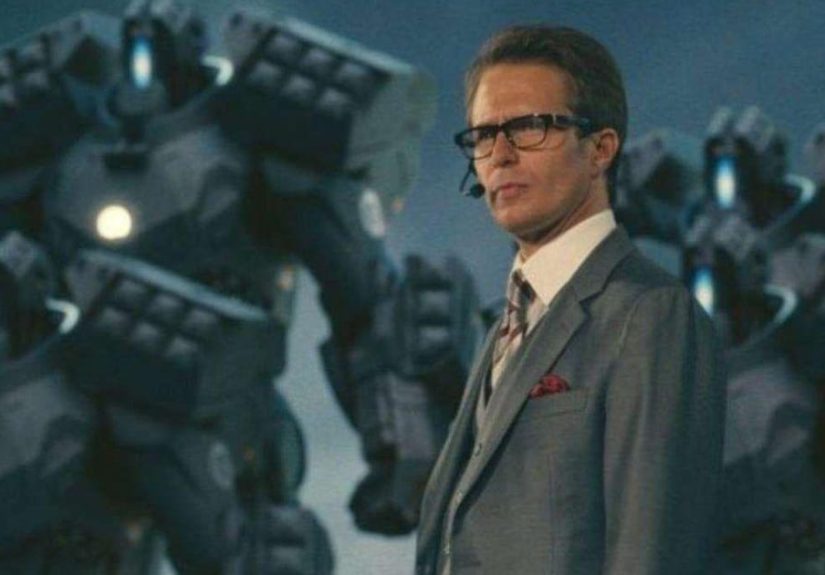
Iron Man 2: Justin Hammer’s “Confidence Choreography”
Justin Hammer is what happens when ambition puts on a suit and the suit still doesn’t believe in itself.
Fans have obsessed over the famous stage entrance because it’s not just a danceit’s a character thesis in motion.
Details fans love spotting
-
The dance is a stress response. It plays like adrenaline disguised as swagger. He’s pumping himself up the way a boxer bounces
before a fight… except Hammer is fighting insecurity, and insecurity is undefeated. -
He “performs” even when nobody’s watching. In boardroom and hallway scenes, notice the little showman toucheshand flourishes,
overly formal posture, the way he tries to turn basic movement into a presentation. -
Micro-face when Tony appears. Fans love catching the split-second recalibration: the smile that arrives a beat late, the eyes
scanning for dominance, the jaw tightening like his ego just got a parking ticket.
Rewatch tip: don’t just watch the dance. Watch what happens after ithow quickly he returns to “serious businessman mode,”
and how that seriousness looks like an outfit he rented for the day.
The Way, Way Back: The Mentor Who Teaches by Not Making It a Big Deal
As Owen, Rockwell plays the rare cinematic mentor who doesn’t deliver life lessons like a TED Talk.
Fans notice the small kindnesses: the choices that say, “I see you,” without turning it into a speech.
Details fans love spotting
-
Nicknames and repetition as comfort. Owen repeats phrases and labels in a way that sounds playful, but functions like structure.
For a kid who feels invisible, being consistently addressed is its own kind of rescue. -
He clocks the room’s power dynamics instantly. Watch how Owen’s eyes move when conflict shows up. He’s reading people like
a lifeguard reads wavesbefore they break. -
Humor as a shield for sincerity. Fans love the moments where he jokes, then softensbarely. The softness is quick, almost shy,
like sincerity makes him itchy.
The rewatch detail: Owen’s confidence is real, but it’s also curated. Rockwell lets you see him choosing which version of himself will help the kid most:
the clown, the coach, or the quietly steady adult who refuses to shame you for being young and overwhelmed.
Confessions of a Dangerous Mind: A Showman Who Can’t Turn the Camera Off
Playing Chuck Barris means playing a man who treats life like a set… and also treats the set like life.
Fans notice Rockwell’s constant toggling between performer and person, sometimes within the same sentence.
Details fans love spotting
-
He enters rooms like they’re stages. Even simple movements have “hosting energy”a subtle presentation stance, a face ready for applause,
a body that wants to hit a mark. -
He flirts with the audience even when there isn’t one. Watch for moments where he seems to “sell” an idea to an invisible crowd,
then immediately shrinks back into doubt. -
The smile is often a mask with cracks. Fans point out how his grin sometimes holds too longlike it’s protecting him from whatever
he’s about to admit.
The tiny detail that makes the character work: Rockwell doesn’t play Barris as simply charming or simply damaged. He plays him as someone who learned
charm as a survival skilland now can’t remember where the act ends.
Matchstick Men: The Sidekick Who’s Always Half a Step Behind… On Purpose
In Matchstick Men, Rockwell’s character often feels like the guy who laughs a little too hard at the boss’s jokes.
Fans notice how that “extra” energy becomes a clue: he’s not just eagerhe’s calibrating.
Details fans love spotting
-
He mirrors people. Watch how he adjusts his stance and tone depending on who’s in control of the conversation.
It’s social mimicry as self-defense… and as strategy. -
Nervous charm as a tool. His friendliness often arrives fast and bright, like he’s trying to outpace suspicion.
Fans love catching when that brightness flickers. -
He’s “listening” with his whole body. Even when he’s quiet, he’s activeshifting weight, glancing, absorbing.
The stillness never fully settles, which keeps you slightly on edge (even in calm scenes).
Rewatch payoff: once you know the genre games being played, Rockwell’s small moments read like breadcrumbs.
The performance is doing quiet math while the dialogue is doing small talk.
Seven Psychopaths: A Writer’s Ego in Human Form
Rockwell’s character energy here is a particular flavor of chaos: impulsive confidence with a side of “I did not think this through.”
Fans notice how he makes big choices feel spontaneous while still planting tiny tells that the character is chasing a fantasy of himself.
Details fans love spotting
-
He punctuates sentences with movement. A step forward, a lean in, a hand gesture that turns a thought into a sales pitch.
It’s not just talkit’s performance. -
He escalates like a kid dared him. Watch his expressions when someone questions him: he lights up with defiance, as if conflict
is proof he matters. -
He treats “story” like a weapon. Fans catch how often he reframes reality as narrativewho’s the hero, who’s the villain,
what would be “cool.” That framing becomes its own kind of danger.
The rewatch detail: underneath the bravado, there’s a steady hunger to be taken seriously. Rockwell lets you glimpse it, then covers it with a joke
before anyone can notice. Too late. We noticed.
Three Billboards Outside Ebbing, Missouri: The Slow Shift from Loud to Quiet
Officer Dixon is messy, volatile, and not designed to be comfortable to watch. Fans who rewatch the film often focus on the way Rockwell tracks change
without making it look like a “redemption montage.”
Details fans love spotting
-
He carries himself like a grown child. Early on, he takes up space with a kind of lazy entitlementchin forward, body loose,
aggression ready to burst. -
After consequences hit, his movement tightens. Fans notice how he becomes smaller: less swagger, more cautious steps,
a face that looks like it’s learning the cost of impulse. -
He starts to listen. The performance detail isn’t a new smile or sudden nobility. It’s the pausesmoments where Dixon
doesn’t rush to dominate the room.
On rewatch, the most haunting detail is how Rockwell keeps Dixon’s flaws present even as the character evolves. The change is real, but it isn’t clean.
It looks like hard, awkward learningbecause that’s what it is.
Jojo Rabbit: Costume Clues, Shoe Motifs, and a Quiet Rebellion
In Jojo Rabbit, Rockwell’s Captain Klenzendorf is one of those characters who feels funny until you realize he’s also tragic,
and then the humor becomes a coping mechanism you can’t unsee.
Details fans love spotting
-
The uniform is “off” in intentional ways. Fans watch for flamboyant touches that clash with the rigidity of the setting.
It’s visual character work: someone trapped inside a system, trying to smuggle in a self. -
Hidden symbols in plain sight. Viewers have pointed out small insignia choices that suggest marginalized identity and coded defiance
costume as subtext, not decoration. -
Shoes keep showing up for a reason. Fans often connect the film’s repeated focus on footwear to growing up, fear, and the grounding
reality of who gets to walk away. -
He uses comedy as camouflage. Watch his delivery: jokes land fast, but the eyes often arrive somewhere sadder a beat later.
The timing is the tell.
Rewatch tip: track when Klenzendorf performs “Naziness” versus when he performs “normal.” Rockwell makes the mask visible.
Once you see it, the character becomes less of a punchline and more of a survival story.
Conclusion: The Best Rockwell “Easter Eggs” Aren’t PropsThey’re Choices
When fans talk about small details in Sam Rockwell movies, they’re not just hunting for hidden objects in the background. They’re noticing the things
Rockwell hides in the foreground: a swagger that’s secretly panic, a grin that lasts one second too long, a dance step that’s basically therapy.
The fun of rewatching Rockwell isn’t proving you’re the smartest viewer in the room. It’s realizing that the performance was doing extra work the whole time.
And once you start spotting those details, you’ll catch them everywherebecause he keeps putting them there, like little notes to the audience that say,
“Hey. Keep up.”
Bonus: Fan Experiences Watching for Small Rockwell Details (About )
Fans who love “small detail” rewatches often describe Sam Rockwell movies as the perfect excuse to turn a casual movie night into a low-stakes scavenger hunt.
Not the annoying kind where someone pauses every ten seconds to announce they’re the only one paying attention (we all know that guy). More like the satisfying
kind where the movie gets better because you’re watching it with a new lens.
One common experience: the second viewing feels like the performance has been “unlocked.” The first time through, you register the headline traitsfearful crewman,
lonely astronaut, insecure weapons rival. On the rewatch, you start noticing the subtle machinery underneath. Fans talk about the moment they catch a tiny face change
a smile that slips, an eye flick that checks for approvaland suddenly the entire character reads differently. It’s like realizing a song has a bass line you never heard
until you listened with headphones.
Another thing people mention is how Rockwell’s physicality becomes a kind of signature language. Viewers will joke that you can tell when a Rockwell character is stressed
because his body starts negotiating with itself: hands get busy, shoulders reset, feet reposition like he’s trying to find the exact spot where he feels safe.
That’s why scenes like Justin Hammer’s entrance dance become such a fan favoritebecause it’s funny, yes, but it also feels recognizable. It’s bravado as a coping mechanism,
and fans love spotting the same “energy management” in quieter moments across other films.
A lot of fans also describe rewatching Rockwell movies with a “background acting” mindset. Instead of staring only at whoever is speaking, you track what Rockwell is doing
when he’s not the focus: how he listens, how he reacts to being ignored, how he telegraphs discomfort before a line lands. In ensemble scenes, this can feel like discovering
a second movie happening in the marginsone built from micro-reactions and timing. You don’t need trivia to enjoy it; you just need to notice that he’s almost never idle.
If you want to try the experience yourself, fans often recommend a simple game: pick one “detail category” per rewatch. One time, track posture (who slouches, who straightens,
when the change happens). Another time, track hands (who fidgets, who gestures like a salesman, who suddenly goes still). Another time, track costume cues (who wears the uniform
like armor, who wears it like a disguise). These categories sound silly on paper, but they train your eye to see what Rockwell is doing so well: making character psychology visible
without turning it into a speech.
And the best part of the fan experience is that it doesn’t ruin the magicit deepens it. The plot still works. The jokes still land. The heartbreak still hits.
You just leave with the satisfying feeling that you caught something real: a human moment, built out of tiny choices, hiding in plain sight.